The Philippines' Office of Civil Defense (OCD) terminated search and rescue operations on Thursday afternoon, after a 6.9-magnitude earthquake struck Cebu province on Tuesday evening, killing 73 and injuring over 200.
Authorities said that the decision was made as all missing persons had been accounted for and there were no further signs of trapped individuals. Efforts will now shift toward the distribution of relief goods and post-disaster reconstruction.
Near the hard-hit city of Bogo, the remote village of Barangay Binabag suffered devastating landslides during the Tuesday evening quake. Access to the area remains severely limited, with large vehicles unable to navigate the damaged roads, leaving motorcycles as the primary means of transport.
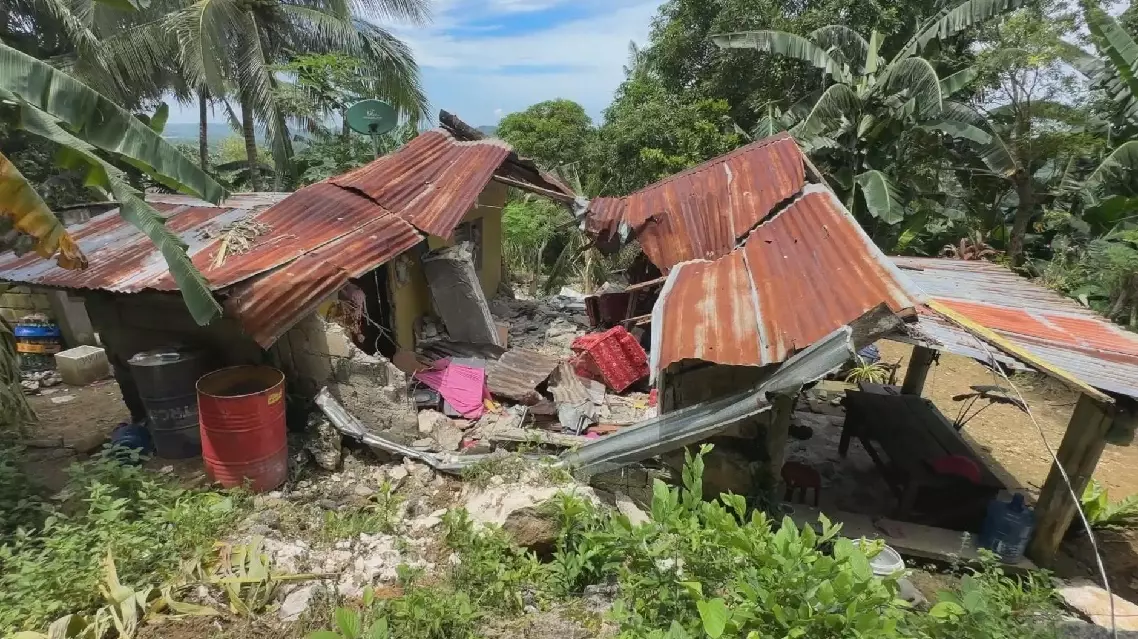
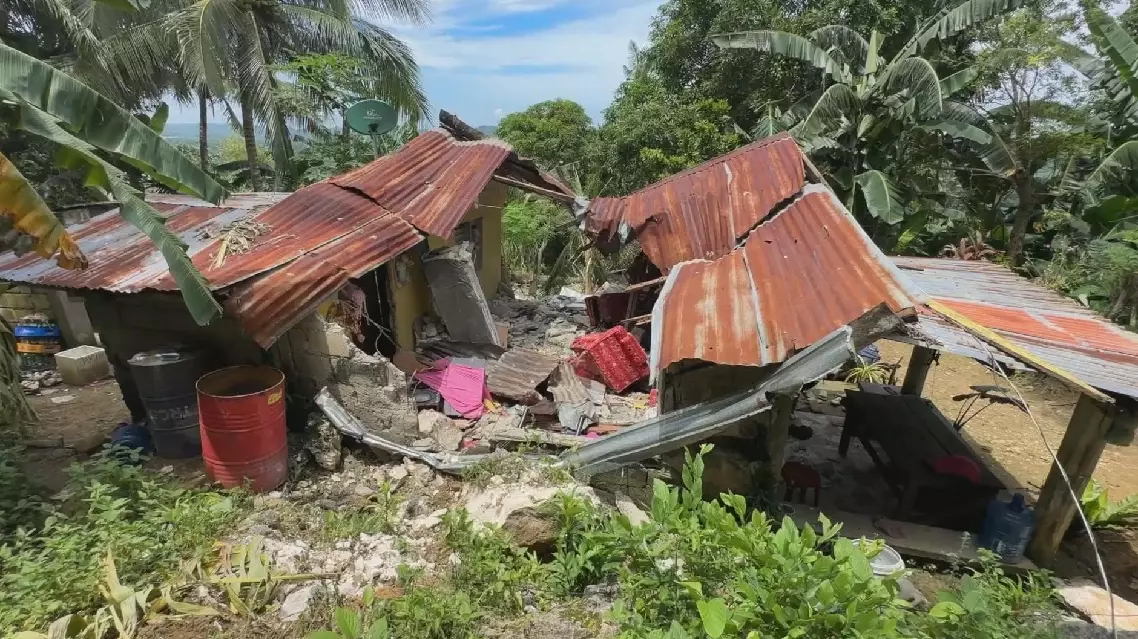
A visit by a China Media Group reporter to the most severely affected part of the village revealed extensive damage, where massive boulders had torn through houses after cascading down slopes. The earthquake struck around 22:00, when most residents were already asleep, making escape nearly impossible. Landslide scars remain visible throughout the community, with giant rocks still scattered across the village.
Local teacher Gehner Monsale told the reporter that a colleague residing in the village was among those killed. In a separate incident, four children from the family of a friend of Monsale had all died in the disaster.
"I'm really sad about the tragedy we've experienced here in Barangay Binabag. It's a very big change. So most of the people go down to the safe area or the evacuation area or the relocation site," he said.
Philippines concludes search for missing following quake that killed 73
Philippines concludes search for missing following quake that killed 73
Philippines concludes search for missing following quake that killed 73
China's 15th Five-Year Plan proposal sends a strong signal of the country's commitment to upholding openness and cooperation, which will promote further development for the country and the world, said officials and scholars around the world.
The draft 15th Five-Year Plan, the blueprint that will guide the world's second-largest economy from 2026 to 2030, is central to steer China to move toward modernization amid technological disruption, demographic shifts and an increasingly fractured global order, according to the scholars.
"China's 15th Five-Year Plan is not a rigid model; it is more like benchmarks for growth targets and focal points. Chinese economists and economic decision-makers are not just focusing on qualitative growth, but also on innovative development. We're witnessing new transportation methods, robotics and artificial intelligence," said Andrey Denisov, first deputy chair of Russia's Federation Council Committee on Foreign Affairs and former Russian Ambassador to China.
"The 15th Five-Year Plan is of great importance to China's development. The country is poised to make remarkable advancements in various sectors, including artificial intelligence, high-end manufacturing and infrastructure construction. Given the shifting global context and China's transition towards high-quality development, I am confident that this plan will herald a new era for China's development," said Kamel Mansari, news director of the French-language daily Le Jeune Independent.
Scholars also noted that China's commitment to high-quality development and high-level opening-up will promote win-win results and benefit the world.
"China has emerged as a key partner for most countries worldwide, and a preferred partner due to its closeness and integration with global communities, as well as its strong humanitarian perspective. The Chinese economy has not only benefited itself; it has helped many economies worldwide flourish through its partnerships," said Dirgham Muhammad Ali, an Iraqi economic expert.
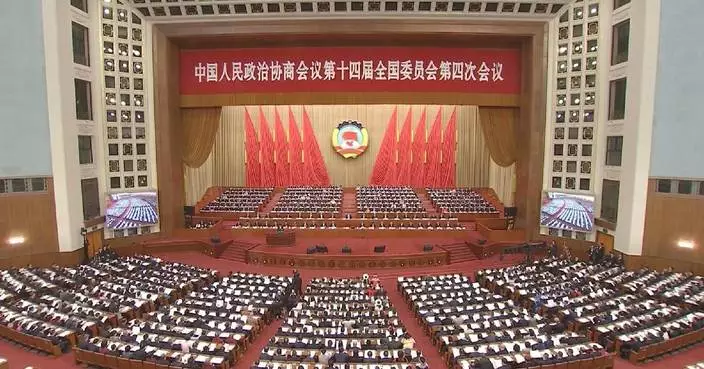
China's National People's Congress (NPC) is scheduled to open in Beijing on Wednesday, with lawmakers set to approve the 15th Five-Year Plan.

15th Five-Year Plan to guide China's development, benefit world: scholars