Skip to Content Facebook Feature Image

China's ancient capital city Luoyang makes historical, cultural blocks livable, profitable

China

China

China

China's ancient capital city Luoyang makes historical, cultural blocks livable, profitable

2025-10-03 17:10 Last Updated At:21:57

A group of historic buildings within the historical and cultural district of the ancient capital city of Luoyang, central China's Henan Province, has been transformed into unique homestays, allowing tourists to experience the city's splendid history and culture in a deeply immersive way.

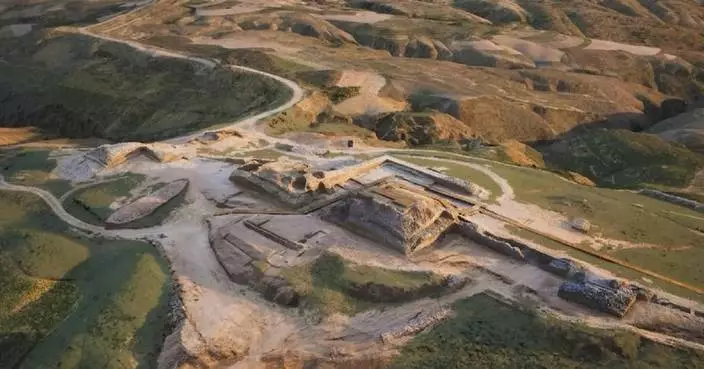
The historical and cultural blocks, located in the east, west, and south corners of Luoyang, are primarily based on the old Luoyang City, which served as the capital for 13 dynasties over 1,500 years. It boasts a wealth of relics, including the ancient city walls of the Jin (1115-1234) and Yuan (1271-1368) Dynasties, the Wenfeng Tower from the Song Dynasty (960-1279), and the residential complex of the Qing Dynasty (1644-1911).

By revitalizing and utilizing historical buildings and traditional dwellings, the area has become a thriving hub for Luoyang's cultural tourism development and urban revitalization. Following the principle of "restoring the old as it was," several historic blocks have been transformed into homestays. The transition from "viewable" to "livable" allows tourists to experience urban life in a historical city.

"Our hotel is actually a century-old house. We retain 70 percent of its original appearance. For example, this pillar is what it was a hundred years ago, and we just redesigned and rearranged it," said Wu Jing, a hotel manager.

The homestays aren't operated in isolation; instead, they're integrated with other cultural elements such as the traditional Hanfu and intangible cultural heritage cuisine, creating a seamless experience of "accommodation, dining, and travel".

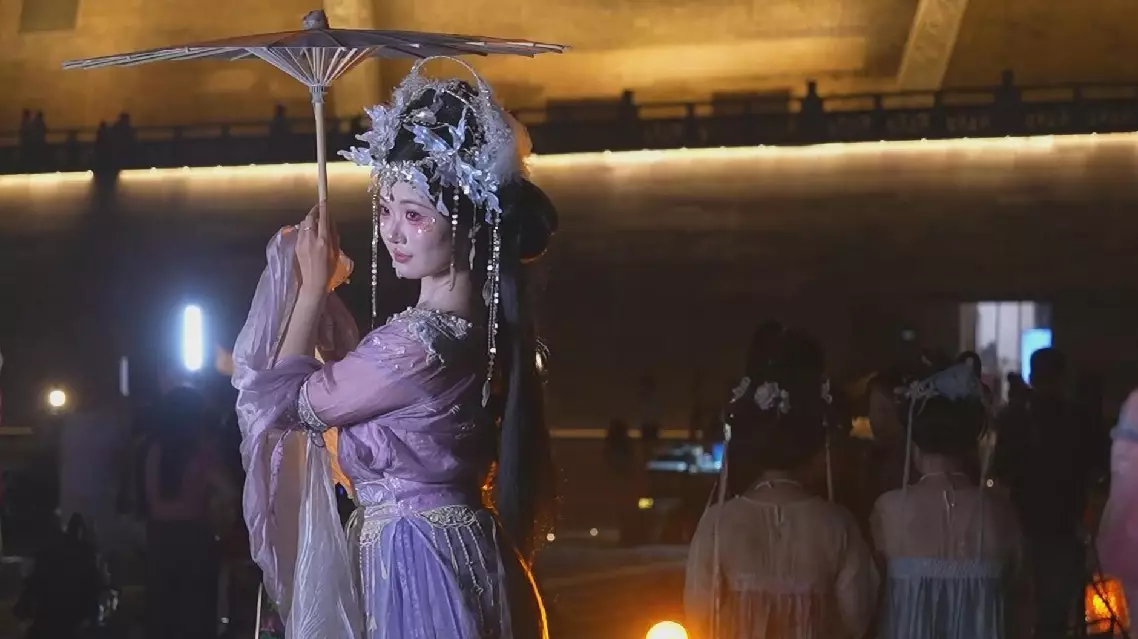
Hanfu is the traditional clothing system of the Han people, China's dominant ethnic group. It has eight distinct characteristics, and its history dates back 4,000 years.

The historical and cultural blocks of Luoyang are creating new scenarios for Hanfu experience and related consumption. Themed activities, such as light shows and immersive garden tours, wearing Hanfu, are making it a top IP of the ancient city.

"Luoyang is an ancient capital, and I'm interested in its history. Plus, it's also famous for its Hanfu. It's quite quaint, and I really like it," said Wang Yixiao, a tourist.

According to statistics, over 11 million visitors have experienced Hanfu in the old blocks of Luoyang since 2023.
China's ancient capital city Luoyang makes historical, cultural blocks livable, profitable
China's ancient capital city Luoyang makes historical, cultural blocks livable, profitable
China's shipbuilding industry is stepping up efforts to move towards greener and higher-end production, as national plans emphasize upgrading manufacturing capabilities to strengthen global competitiveness.

The sector, regarded as a key national strategic industry, is seeing coordinated moves by both state-owned and private enterprises to accelerate technological upgrading, particularly in advanced and environmentally friendly vessels.

Dalian Shipbuilding Industry Co., one of China's oldest state-owned shipbuilders, has made progress in recent years in high-end ship types such as liquefied natural gas (LNG) carriers. Its expanding order book reflects the success of a broader shift toward more sophisticated production.

"We now hold orders for 144 ships, up nearly 60 percent from about 70 ships at the start of the 14th Five-Year Plan (2021–2025)," said Jiang Hongliang, production director of Dalian Shipbuilding Industry.

Under the 15th Five-Year Plan, which covers the period from 2026 to 2030, China is aiming for significant expansion of production for green and advanced vessels, including large LNG carriers, ultra-large container ships, and offshore engineering equipment. Dalian Shipbuilding Industry is advancing these goals through upgrades in technology and production efficiency.

"In the future, our shipbuilding model will be like building blocks; breaking work into smaller, standardized modules, forming specialized production lines and assigning workers to specific tasks, which improves overall efficiency. Through cost reduction and efficiency gains, our broader goal is to shorten production cycles and raise operational efficiency," Jiang said.

Private enterprises are also playing a growing role in the sector's transformation. Hengli Group, a major private shipbuilding player, completed construction of a modern ship production base in Dalian in just 150 days, setting a new benchmark for domestic shipyard development.

The facility is designed to support both high-quality manufacturing and rapid capacity expansion, aligning with national plans that encourage private enterprises to participate in industrial upgrading.

"I knew shipbuilding was hard, but I never realized it was this hard. It is labor-intensive, capital-intensive and technology-intensive," said Chen Jianhua, chairman of Hengli.

Hengli plans to refine its production strategy further by moving toward large-scale, batch manufacturing, a shift aimed at improving efficiency and strengthening competitiveness in the global market.

"So we want to transform the industry and lead it. In the future, it will no longer be about building ships one by one to specific specifications. We will build 10, 20, 30 or even more ships in batches. Our goal is to build ships we can price ourselves," Chen said.

From state-owned enterprises advancing high-end vessel production to private firms rapidly building intelligent manufacturing bases, China's shipbuilding industry continues to move forward under the 15th Five-Year Plan, with a focus on integrating intelligent manufacturing with green production to enhance core competitiveness and sustainability.

China's national plans for shipbuilding industry target green, high-end growth

China's national plans for shipbuilding industry target green, high-end growth

Recommended Articles