Skip to Content Facebook Feature Image

Largest US Lutheran denomination installs Yehiel Curry as its first Black presiding bishop

News

Largest US Lutheran denomination installs Yehiel Curry as its first Black presiding bishop
News

News

Largest US Lutheran denomination installs Yehiel Curry as its first Black presiding bishop

2025-10-05 05:36 Last Updated At:05:40

The Evangelical Lutheran Church in America installed the Rev. Yehiel Curry as its first Black presiding bishop Saturday, a landmark moment for the predominantly white denomination.

“It hasn’t really hit me yet,” Curry told The Associated Press a week before his installation. “The fact that you’re a first.”

Curry succeeds the Rev. Elizabeth Eaton, who served for 12 years and was the first woman to lead the ELCA.

During Eaton’s tenure, Curry watched as the ELCA conference of bishops went from majority men to majority women.

“I think her presence mattered,” he said. “And I’m hopeful that if presence matters that we will start to see more and more leaders of color.”

A formal ceremony at Central Lutheran Church in Minneapolis kicked off Curry’s six-year term, which began Oct. 1. He was elected at the ELCA Churchwide Assembly on July 30 in Phoenix.

American Lutheranism is often stereotyped by its Scandinavian and German roots and concentration in the upper Midwest. By some measures, the ELCA is more than 95% white. But it has invested in local congregations of color and multicultural ministries, while maintaining ties to growing Lutheran churches globally.

“He is representing a very white denomination as a Black man from the United States. I think it’s a daunting, daunting call,” said the Rev. Leila Ortiz, a friend who recently finished a term as ELCA bishop of the Metropolitan Washington, D.C., Synod. “I trust him, and I trust God and I can’t wait to watch.”

As leader of the largest American Lutheran Church body, Curry will face challenges common to other mainline Protestant denominations, which in recent years have weathered theological disputes over LGBTQ+ inclusion and precipitous membership declines. The ELCA has dropped from 5.3 million members in 1988 to 2.7 million members today.

Since 2009, the ELCA has blessed same-sex marriages and welcomed LGBTQ+ clergy, elevating its first openly gay regional bishop in 2013 and its first openly transgender regional bishop in 2021.

Curry, 53, is only the fifth presiding bishop of the ELCA, which formed from a merger of denominations in 1988. Until his election, he was one of 65 synodal, or regional, bishops. He led the Metropolitan Chicago Synod, where the ELCA’s headquarters is also located.

Born the seventh of 11 children on the south side of Chicago, Curry grew up Catholic and attended Catholic schools through college. He was a social worker before becoming a public schoolteacher.

When he and his wife first visited Shekinah Chapel, they were in their mid-twenties, and it was a fledging congregation in Chicago. “I never paid attention that it was in a Lutheran Church.”

The church had a mentoring program for young Black men and boys that he thought could serve some of his middle school students.

“For me, it was the traditional Black worship experience except it was a little bit more contemporary,” he said. “There was poetry, there was liturgical dance, there was a band and praise and worship.”

Shekinah Chapel grew from an ELCA program to an official congregation. Curry went from a lay leader to a more formal leadership role while going to seminary. He was ordained within the ELCA in 2009.

“That’s uncommon where you get to lead in a place where you’ve been raised,” Curry said. “I now recognize how fortunate I am.”

He was part of the Theological Education for Emerging Ministries (TEEM) program, which the ELCA says prepares ministers in “ethnic-specific, multicultural, rural and inner-city settings.”

His path to ministry highlights one way of growing new and diverse congregations within older church structures.

Curry’s forerunners as African American Lutheran leaders include the Rev. Nelson Wesley Trout, the first Black ELCA synod bishop, and the Rev. Will Herzfeld, a Black presiding bishop for a predecessor ELCA denomination.

“Blacks have been around the Lutheran Church since it presented itself in New Amsterdam in the 1600s. We have been present in some small way from the beginning,” said the Rev. James Thomas, a retired ELCA seminary professor and author of “A Rumor of Black Lutherans.”

Around the globe, the largest and fastest-growing Lutheran churches are in Africa.

A benefit of Curry’s leadership is that it can help elevate “the fact that African Americans have been contributing to Lutheranism for a very long time, and not just here in the United States but around the world and in Africa,” said the Rev. Yolanda Denson-Byers, who wrote “See Me, Believe Me,” a book on the challenges leaders of color face in the mainly white ELCA.

Bishop Regina Hassanally of the ELCA Southeastern Minnesota Synod said Curry’s elevation is a dual call — for him and the denomination.

“There can be a temptation to think that calling a leader of color is enough,” she said. “But the reality is that it means creating supports and infrastructure and actually allowing that person to lead out of all of their gifts and their full identity, not just one piece of their identity.”

Curry said his goals include exploring ways for the ELCA to be a more connected church, from local congregations up through the hierarchy. Along with being a welcoming and thriving church, it’s one of the goals the denomination has already set.

“Sometimes you come up with these unique statements and strategies, but then we move on as transition happens,” he said. “I want to take something that we’ve affirmed already and maybe dig a little deeper.”

Associated Press religion coverage receives support through the AP’s collaboration with The Conversation US, with funding from Lilly Endowment Inc. The AP is solely responsible for this content.
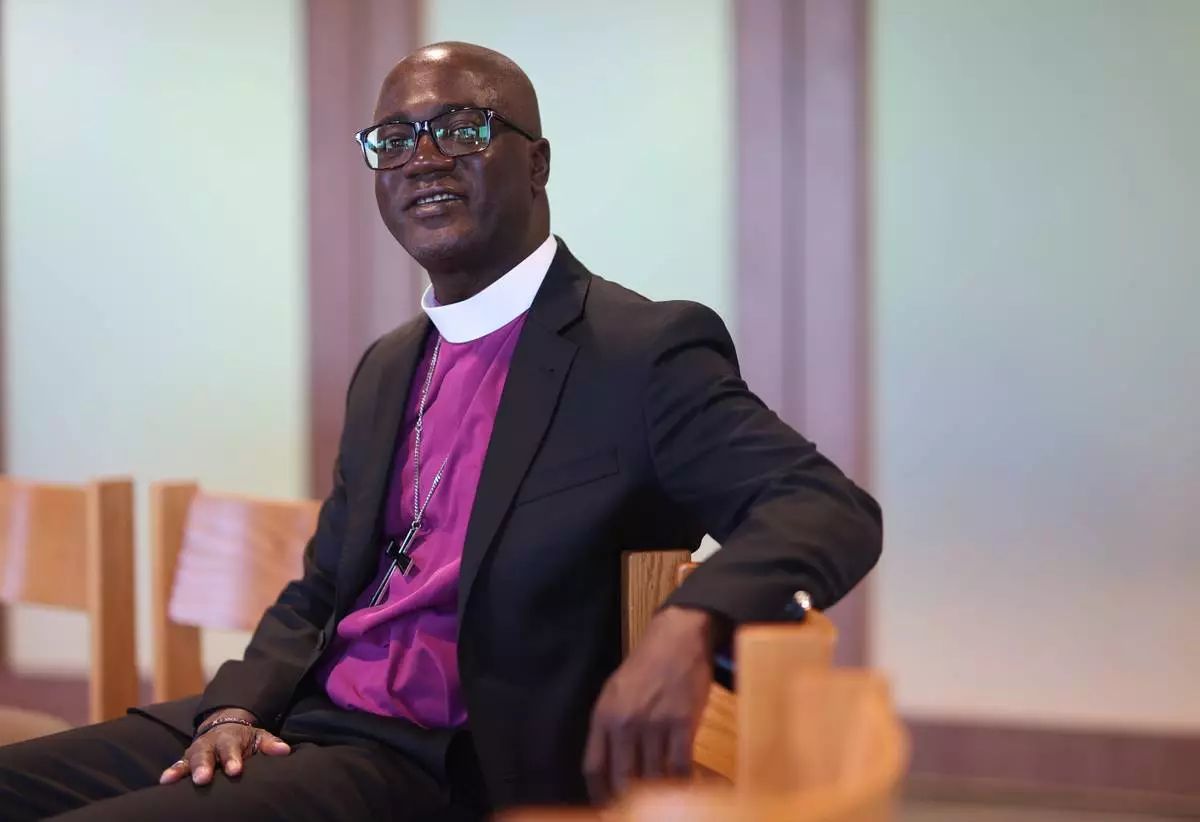
Bishop Yehiel Curry, who was recently elected as the first Black presiding bishop of the Evangelical Lutheran Church in America (ELCA), poses for a photo, Friday, Sept. 26, 2025, in Chicago. (AP Photo/Talia Sprague)
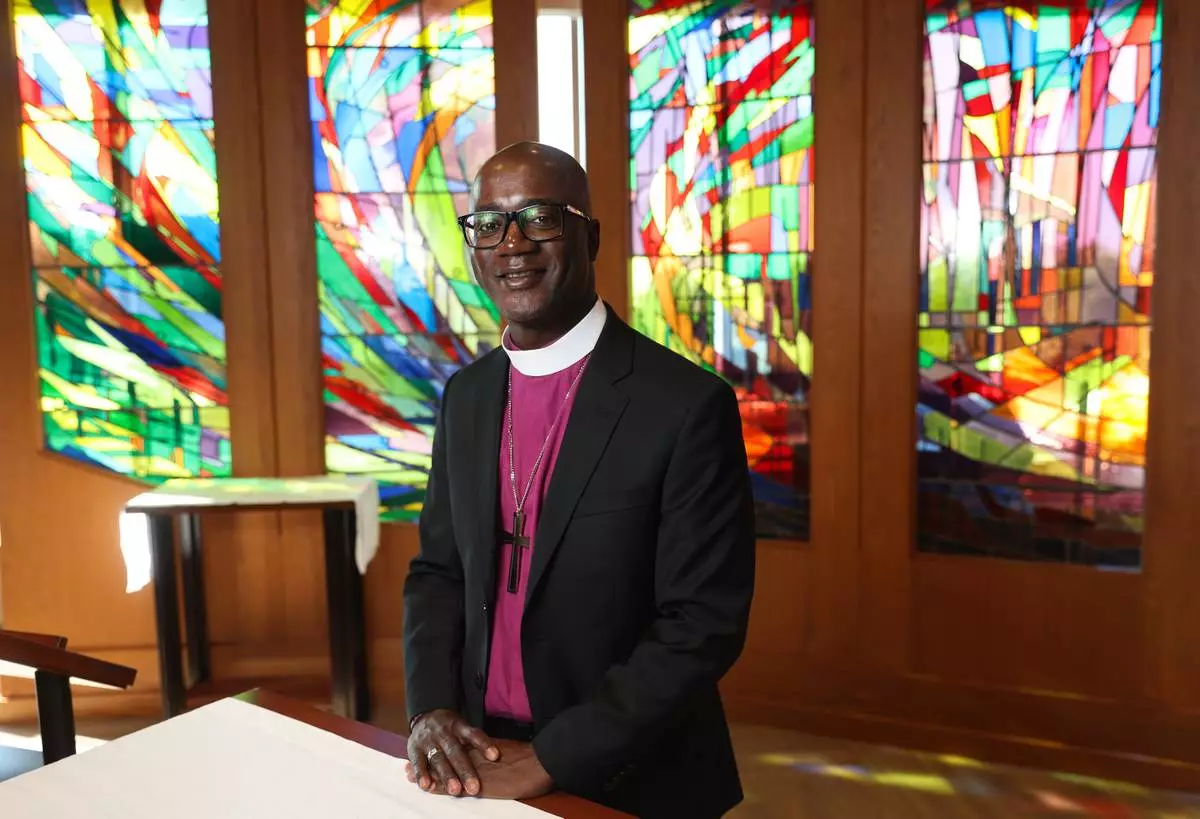
Bishop Yehiel Curry, who was recently elected as the first Black presiding bishop of the Evangelical Lutheran Church in America (ELCA), poses for a photo, Friday, Sept. 26, 2025, in Chicago. (AP Photo/Talia Sprague)

Bishop Yehiel Curry, who was recently elected as the first Black presiding bishop of the Evangelical Lutheran Church in America (ELCA), poses for a photo, Friday, Sept. 26, 2025, in Chicago. (AP Photo/Talia Sprague)
Bishop Yehiel Curry, who was recently elected as the first Black presiding bishop of the Evangelical Lutheran Church in America (ELCA), poses for a photo, Friday, Sept. 26, 2025, in Chicago. (AP Photo/Talia Sprague)
NEW YORK (AP) — Oil prices are down, and stocks are up Monday, though such moves have been quick to reverse since the war in Iran began.

The S&P 500 jumped 1% and was on track for its best day in five weeks. The Dow Jones Industrial Average was up 379 points, or 0.8%, as of 1:11 p.m. Eastern time, and the Nasdaq composite was 1.3% higher.

The driver for markets once again was the price of oil. A barrel of benchmark U.S. crude fell 3.4% to $95.36, easing some pressure off the economy after topping $102 earlier in the morning. Brent crude, the international standard, fell 0.9% to $102.20 per barrel after earlier getting as high as $106.50.

It's a reprieve, for now at least, after oil prices spiked from roughly $70 before the United States and Israel began their attacks on Iran. In response, Iran has nearly halted traffic through the narrow Strait of Hormuz, where a fifth of the world’s oil typically sails from the Persian Gulf to customers worldwide. That has oil producers cutting production because their crude has nowhere to go.

The worry in financial markets is that if the strait remains closed for a long time, it could keep enough oil off the market to drive inflation up to a debilitating level for the global economy.

President Donald Trump over the weekend demanded that other countries hurt by the closure of the Strait of Hormuz “take care of that passage” and said his country “will help - A LOT!”

European countries, meanwhile, want to know more about Trump’s plans for the war on Iran and when the conflict might end as they weighed his demand.

The U.S. stock market has a track record of bouncing back relatively quickly from military conflicts in the Middle East and elsewhere, as long as oil prices don’t stay too high for too long. Many professional investors are still expecting that to be the case again, which has helped keep U.S. stock prices near their record levels.

For all its dramatic swings, including several over the last two weeks that struck hour to hour, the S&P 500 is still only about 4% below its all-time high.

Escalations have been mounting quickly in the war, to be sure, but that could suggest “both sides are facing growing constraints that may prevent a long conflict,” according to Paul Christopher, head of global investment strategy at Wells Fargo Investment Institute.

On Wall Street, stocks of companies with big fuel bills helped lead the market thanks to falling oil prices. Norwegian Cruise Line Holdings steamed 4.6% higher, while United Airlines climbed 3.1% to trim their sharp losses for the year so far.

National Storage Affiliates leaped 29.4% after Public Storage said it would buy its 69 million rentable square feet in an all-stock deal valuing it at $10.5 billion. Public Storage fell 2.2%.

Dollar Tree rose 7.3% after reporting a stronger profit for the latest quarter than analysts expected, even as fewer shoppers visited its stores.

Nebius Group, a Dutch AI cloud company, saw its stock that trades in the United States leap 15.3% after announcing a five-year infrastructure contract with Meta Platforms that could be worth up to $27 billion. Shares in Meta rose 1.9%.

Nvidia, whose AI chips are powering much of the world's move into artificial-intelligence technology rose 2.5% and was the strongest single force lifting the S&P 500. Nvidia's CEO, Jensen Huang, is set to give a speech in the afternoon where he could announce new products.

In stock markets abroad, indexes rose in Europe, including a 0.5% return for Germany's DAX, following a mixed finish in Asia.

Stocks jumped 1.4% in Hong Kong but slipped 0.3% in Shanghai.

In the bond market, Treasury yields eased as falling oil prices took some pressure off inflation worries. A report showing a weakening of manufacturing activity in New York state also weighed on yields.

The yield on the 10-year Treasury fell to 4.24% from 4.28% late Friday.

Yields, though, are still higher than they were before the war, when the 10-year Treasury yield was at just 3.97%. Traders have pushed back their expectations for when the Federal Reserve could resume its cuts to interest rates because of the spike in oil prices caused by the war.

Such cuts would give the economy and job market a boost, and they're something Trump has angrily been calling for, but they would worsen inflation. Traders see virtually no chance the Fed will announce a cut to rates when its next meeting concludes on Wednesday, according to data from CME Group.

AP Business Writers Matt Ott and Elaine Kurtenbach contributed.

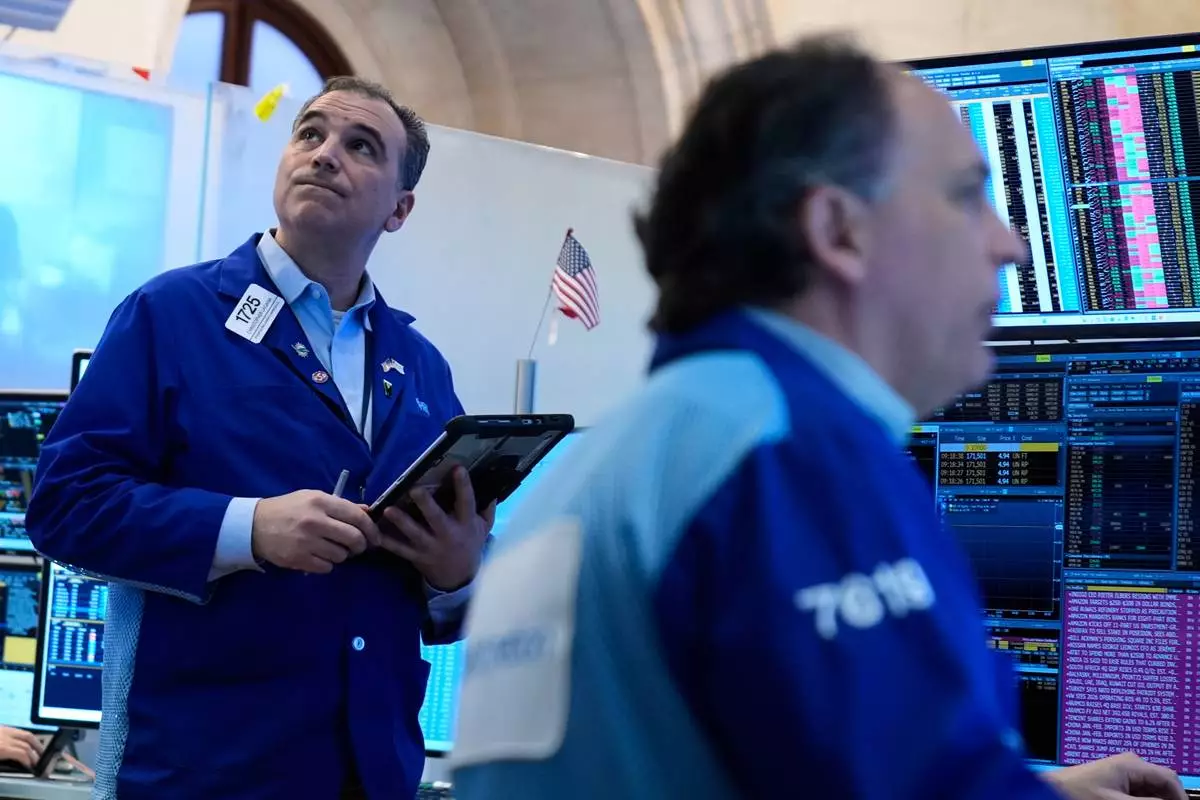
Christopher Lagana works on the floor at the New York Stock Exchange in New York, Tuesday, March 10, 2026. (AP Photo/Seth Wenig)

Christopher Lagana works on the floor at the New York Stock Exchange in New York, Tuesday, March 10, 2026. (AP Photo/Seth Wenig)

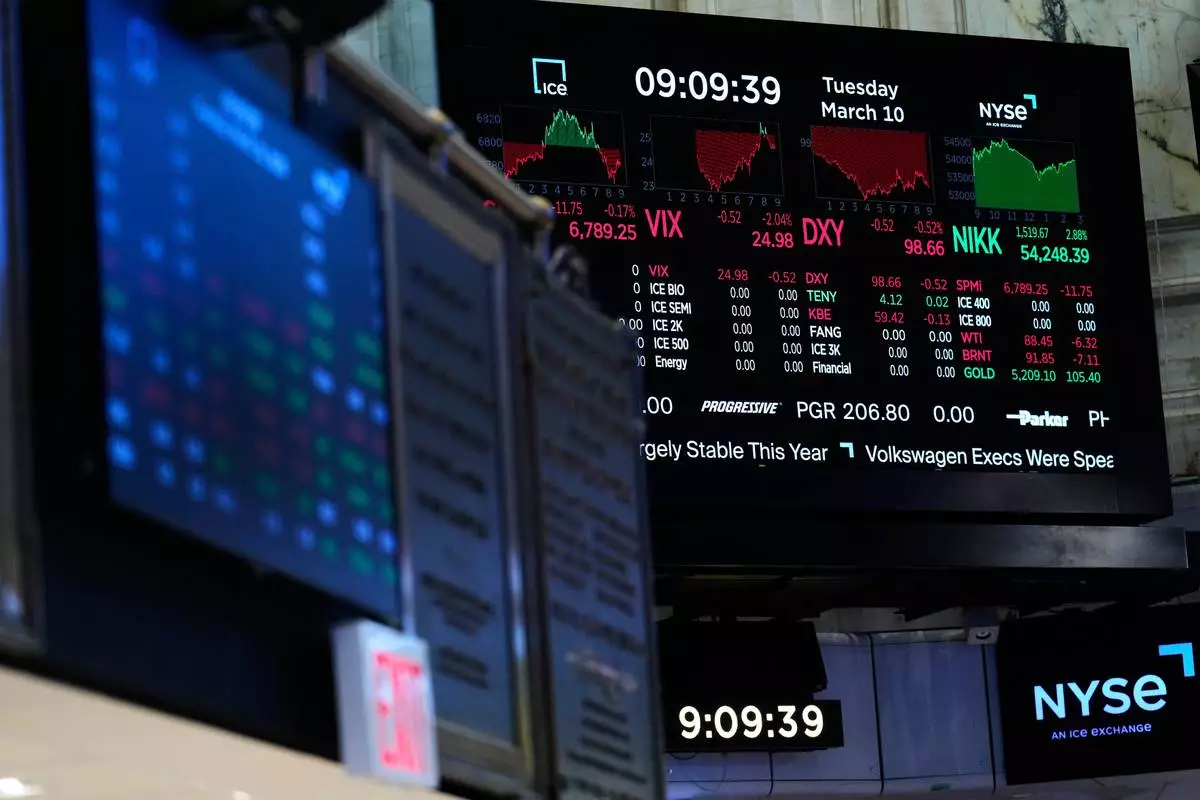
Screens display financial information on the floor at the New York Stock Exchange in New York, Tuesday, March 10, 2026. (AP Photo/Seth Wenig)

Screens display financial information on the floor at the New York Stock Exchange in New York, Tuesday, March 10, 2026. (AP Photo/Seth Wenig)

Screens display financial information on the floor at the New York Stock Exchange in New York, Tuesday, March 10, 2026. (AP Photo/Seth Wenig)

Screens display financial information on the floor at the New York Stock Exchange in New York, Tuesday, March 10, 2026. (AP Photo/Seth Wenig)

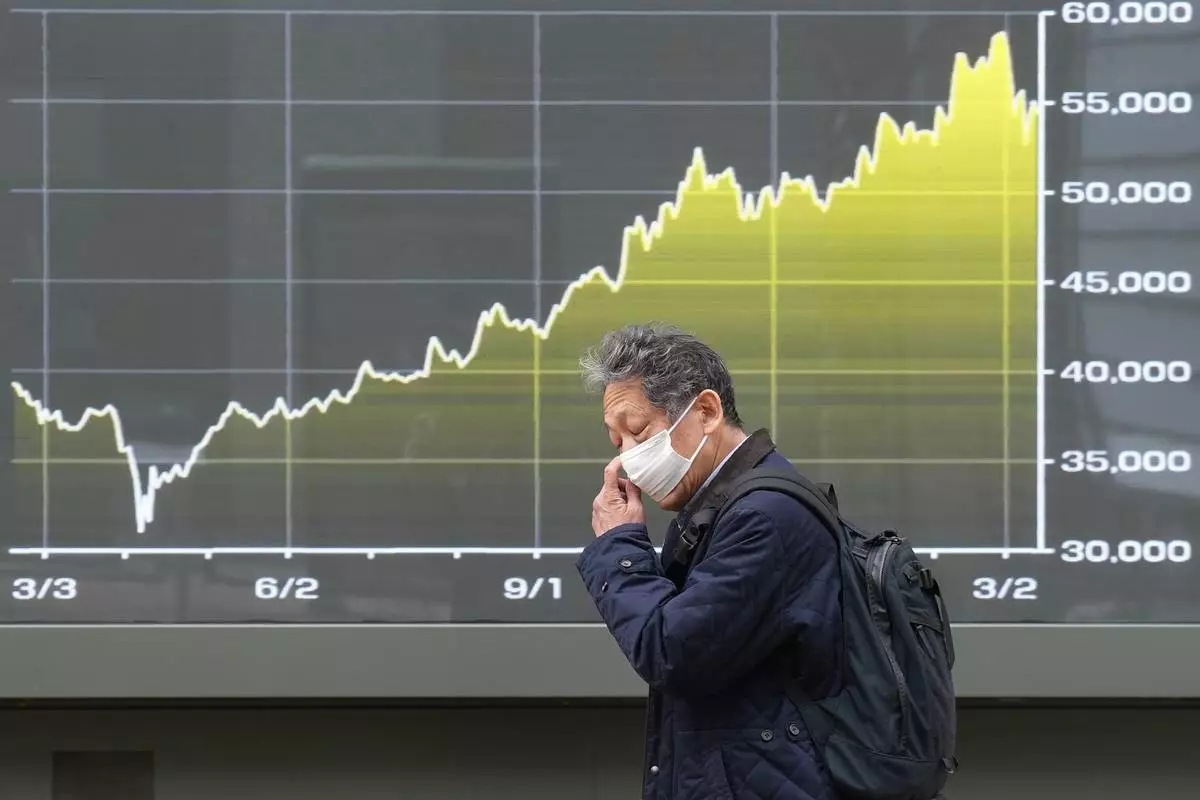
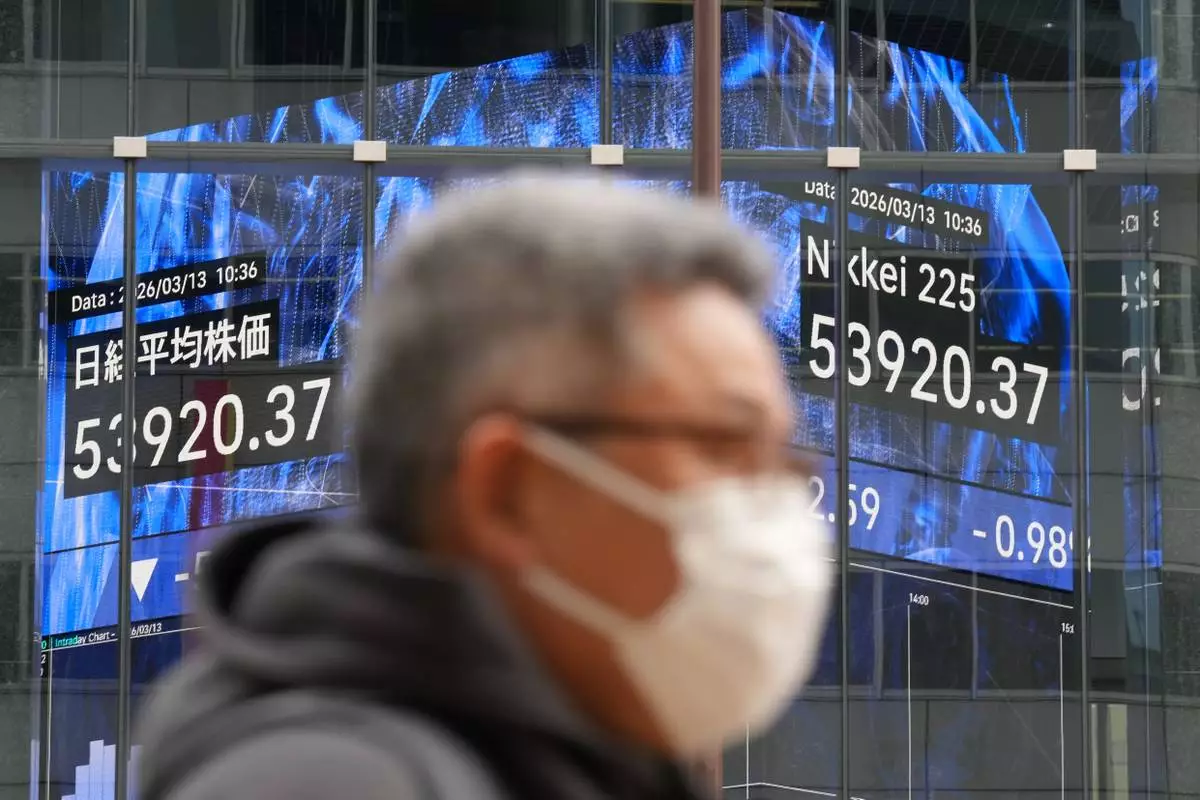
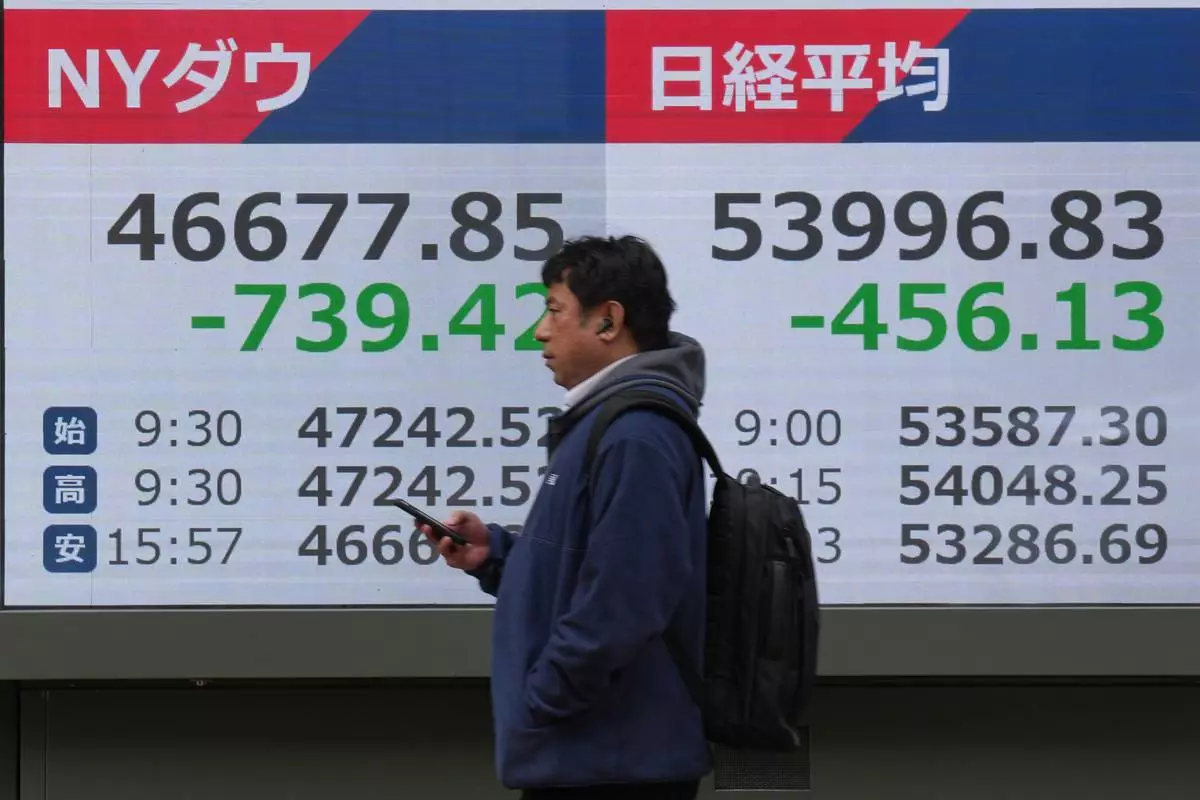
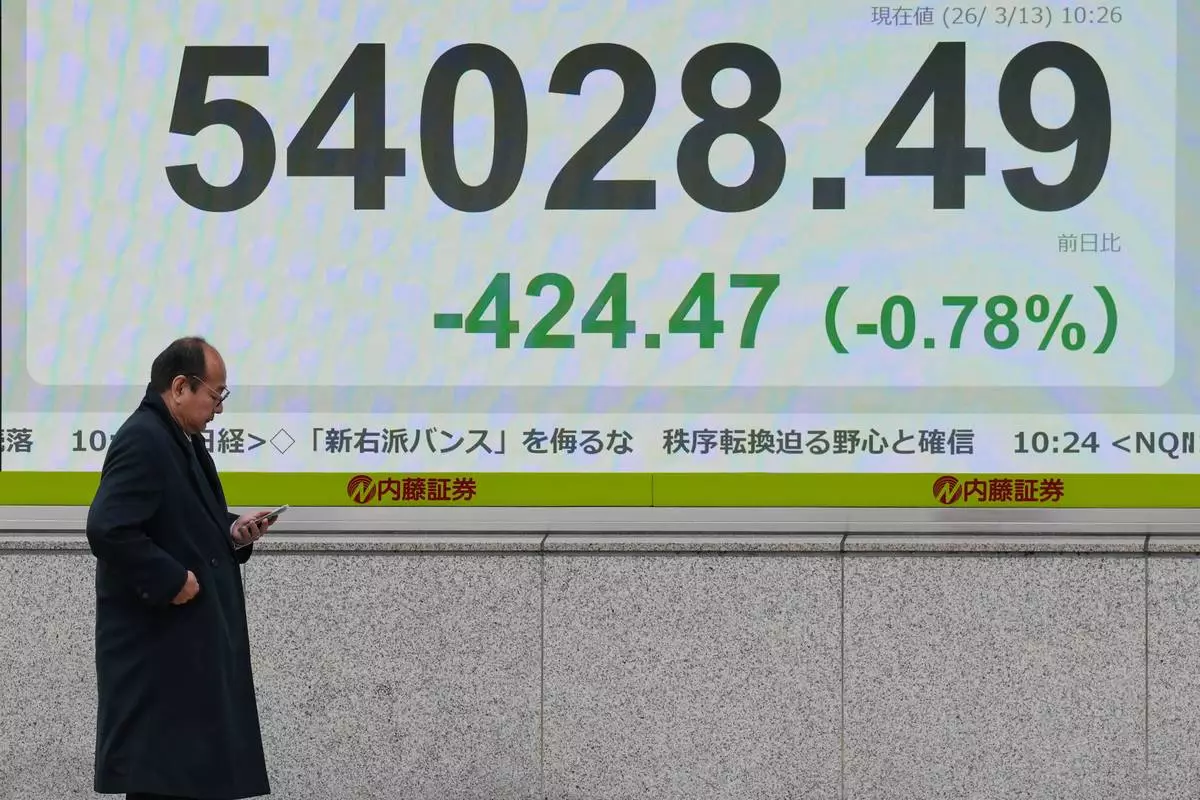
A person walks in front of an electronic stock board showing Japan's Nikkei index at a securities firm Friday, March 13, 2026, in Tokyo. (AP Photo/Eugene Hoshiko)

A person walks in front of an electronic stock board showing Japan's Nikkei index at a securities firm Friday, March 13, 2026, in Tokyo. (AP Photo/Eugene Hoshiko)

A person walks in front of an electronic stock board showing Japan's Nikkei index at a securities firm Friday, March 13, 2026, in Tokyo. (AP Photo/Eugene Hoshiko)

A person walks in front of an electronic stock board showing Japan's Nikkei index at a securities firm Friday, March 13, 2026, in Tokyo. (AP Photo/Eugene Hoshiko)

A person walks in front of an electronic stock board showing Japan's Nikkei index at a securities firm Friday, March 13, 2026, in Tokyo. (AP Photo/Eugene Hoshiko)

A person walks in front of an electronic stock board showing Japan's Nikkei index at a securities firm Friday, March 13, 2026, in Tokyo. (AP Photo/Eugene Hoshiko)

A person walks in front of an electronic stock board showing Japan's Nikkei index at a securities firm Friday, March 13, 2026, in Tokyo. (AP Photo/Eugene Hoshiko)

A person walks in front of an electronic stock board showing Japan's Nikkei index at a securities firm Friday, March 13, 2026, in Tokyo. (AP Photo/Eugene Hoshiko)

Recommended Articles