A Japanese expert said that Sanae Takaichi, who just won Japan's ruling Liberal Democratic Party (LDP) presidential election on Saturday, could face several challenges from politics, economy to livelihood if she takes office as Japan's first female prime minister.
As the country's former Economic Security Minister, Takaichi is the first woman winner of presidency of the long-dominant ruling party in Japan.
Even though the ruling bloc has failed to secure a majority in both chambers of the parliament, the new LDP leader is almost certain to become the country's next prime minister since the LDP remains the largest party in Japan.
In an interview with China Central Television (CCTV) in Tokyo on Saturday, Junichiro Kusumoto, a professor at the Faculty of Law of Toyo University, said Takaichi has to take on multiple challenges if she takes office.
"So far, the Japanese media have been chasing after the LDP's political corruption scandal. But I don't think the people's dissatisfaction is confined to this problem. There are also problems of price hike and lack of transparency in the usage of tax money," said Kusumoto.
The LDP is also challenged with how to boost economy and improve livelihood, he said.
"I think the living burden of people could be relieved to some extent with fiscal policies, especially as the rice price has remained stubbornly high. I hope the Japanese government will take practical measures in this regard," Kusumoto said.
He pointed out that since the LDP has lost the majority in both chambers of the parliament, it is essential for Takaichi to win the prime ministerial designation vote in mid-October.
"Even if she has become the president of LDP, it doesn't mean that she is bound to become the prime minister. If the minority of the LDP forms an alliance with opposition parties, it is possible to see different results in the prime ministerial designation vote," Kusumoto said.

Takaichi faces multiple challenges if taking office as PM: expert

Takaichi faces multiple challenges if taking office as PM: expert

Takaichi faces multiple challenges if taking office as PM: expert
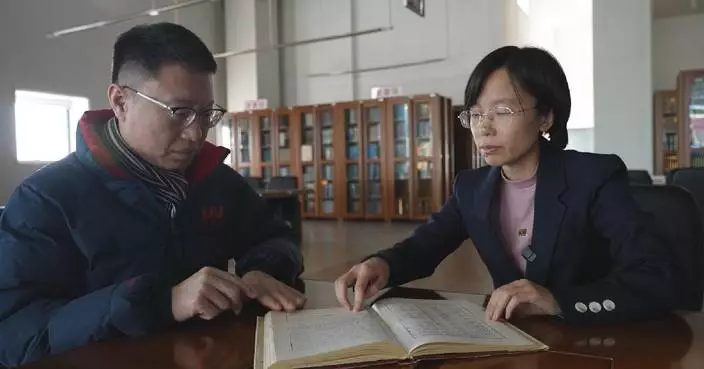
A video featuring a former member of Unit 731, a notorious Japanese germ-warfare unit during World War II (WWII), was released on Thursday in northeast China's Harbin, revealing details of how the unit used meteorological data to conduct horrific bacterial experiments on human beings.
The video was released by the Exhibition Hall of Evidence of Crimes Committed by Unit 731 of the Japanese Imperial Army, in which former Unit 731 member Tsuruo Nishijima detailed how the unit used meteorological data to carry out a bacterial dispersal experiment.
The video was recorded in 1997 by Japanese scholar Fuyuko Nishisato and donated to the exhibition hall in 2019, according to the hall, which was built on the former site of the headquarters of Unit 731 in Harbin, the capital city of Heilongjiang Province.
Jin Shicheng, director of the Department of Publicity, Education and Exhibition of the exhibition hall, said that Nishijima joined Unit 731 in October 1938 and served in the unit's meteorological squad. The squad was not a simple observation section but rather an auxiliary force supporting the unit's field human experiments by measuring wind direction, wind speed, and other conditions to ensure optimal experimental results, according to Jin.
Nishijima confirmed in the footage that "the meteorological squad had to be present at every field experiment." He testified to the "rainfall experiments" conducted by Unit 731, which involved aircraft releasing bacterial agents at extremely low altitudes.
At a field-testing site in Anda City, Heilongjiang, Unit 731 aircraft descended to about 50 meters above the ground. They sprayed bacterial culture liquids onto "maruta" -- human test subjects -- who were tied to wooden stakes. Each experiment involved about 30 people, spaced roughly 5 meters apart. After the experiments, the victims were loaded into sealed trucks and transported back to the unit, where their symptoms and disease progression were recorded over a period of several days.
"Unit 731's bacterial weapons were dropped by aircraft from a height of 50 meters in the open air. Therefore, the meteorological squad needed to observe wind direction and speed, which directly affected the precision and accuracy of the bacterial weapons deployment," said Jin.
Nishijima recounted the harrowing experience of the human test subjects.
"They were fully aware that inhaling the substances would certainly lead to death, so they closed their eyes and held their breath to avoid breathing them in. Their resistance prevented the experiment from proceeding. To compel them to comply, they were forced at gunpoint to open their mouths and lift their heads," said Nishijima.
These experiments, disguised as "scientific research," were in fact systematic tests of biological warfare weapons conducted by the Japanese military. The data generated from these inhumane activities became "research findings" shared among the Japanese army medical school, the medical community, and the military at large.
"At that time, the entire Japanese medical community tacitly approved, encouraged, and even participated in the criminal acts of Unit 731. The unit comprised members from Japan's medical and academic sectors who served the Japanese war of aggression against China. Thus, Unit 731 was not just a military unit but represented an organized and systematic criminal enterprise operating from the top down," said Jin.
Unit 731 was a top-secret biological and chemical warfare research base established in Harbin as the nerve center for Japanese biological warfare in China and Southeast Asia during WWII.
At least 3,000 people were used for human experiments by Unit 731, and Japan's biological weapons killed more than 300,000 people in China.

Video offers details of Japan's germ-warfare crimes in northeast China