The shootout has been a part of the NHL for two decades since it was implemented in 2005.
The percentage of games decided by the shootout has decreased from 15% at its high point in 2009-10 to a new low of 5.9% last season. The advent of 3-on-3 overtime beginning in 2015, a change from 4 on 4, has gone a long way to reducing the frequency of needing to go to a game-ending shootout. Some things to know about this now well-known feature of the NHL:
Carolina and Florida skated to a 6-all tie on April 4, 2004. It was the 5,729th and likely last tie in league history since the shootout is almost certainly here to stay.
All 30 teams played on the first day of the 2005-06 season, marking the NHL's return from a lockout that had wiped out the previous year.
The first shootout was held in Toronto, which hosted Ottawa. The game went to overtime after Daniel Alfredsson tied the score for the Senators with 1:02 left in the third period. Each team put just one shot on net in OT. Alfredsson got credit for the shootout winner when he and Dany Heatley beat Ed Belfour, while Toronto's Jason Allison and Eric Lindros each missed the net to give Dominik Hasek the victory.
A total of 2,486 games have gone to a shootout. The longest went 20 rounds on Dec. 16, 2014, in front of a crowd of just over 10,000 on a Tuesday night in Sunrise, Florida, between the Capitals and Panthers.
None of the first six shooters scored. Washington's Alex Ovechkin led off the fourth round by beating Roberto Luongo, and then Jussi Jokinen kept it going for Florida by scoring on Braden Holtby. It kept going ... and going.
All 18 skaters from each team participating before coaches Barry Trotz and Gerard Gallant were able to use players a second time. Ovechkin, Jokinen, Nicklas Backstrom and Nick Bjugstad got an extra chance. Bjugstad finally put the puck past Holtby to end the game, which lasted 3 hours and 3 minutes.
The previous record was 15 rounds when the New York Rangers defeated the Capitals on Nov. 26, 2005.
Ovechkin has scored the most goals in NHL history after breaking Wayne Gretzky's record, but he's not in the top 10 in the shootout as this season opens.
Patrick Kane leads the way with 53 goals and has also gotten the most attempts with 132. Jonathan Toews, who won the Stanley Cup alongside Kane in Chicago three times, is next with 52 and both players are still active. T.J. Oshie — who famously went 4 for 6 for the U.S. against Russia at the 2014 Olympics — is tied with Frans Nielsen with 49.
Among players who have gotten at least 50 attempts in the shootout, Erik Christensen has the highest shooting percentage, converting 52.7% of the time. Longtime Florida captain Aleksander Barkov is second at 48.5% and Toews third at 47.3%.
Brad Marchand's 21.6% success rate is the lowest among qualifying skaters, with Vinny Lecavalier (22.6%) and Henrik Zetterberg and John Tavares (24.6%) next.
In net, Marc-Andre Fleury leads all goaltenders with 66 shootout victories, followed by Hall of Famer Henrik Lundqvist at 61 and Ryan Miller at 60. Jonathan Quick of the New York Rangers leads active goalies with 51 victories.
Semyon Varlamov's .729 save percentage is the best, decimal points better than Pekka Rinne's, with Antti Niemi's .727 ranking third. Among active netminders with at least 30 shootout games, Andrei Vasilevskiy's .773 save percentage is the best.
AP NHL: https://apnews.com/hub/nhl
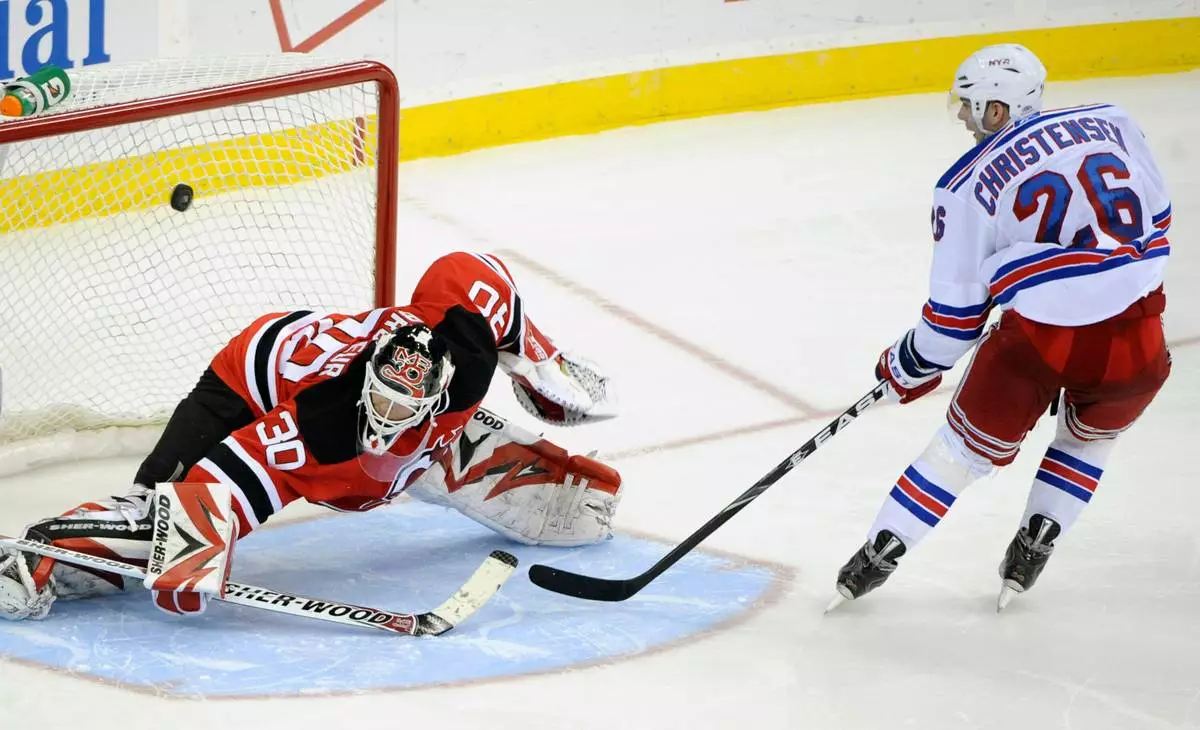
FILE - New York Rangers' Erik Christensen, right, scores a goal against New Jersey Devils goaltender Martin Brodeur during the shootout of an NHL hockey game March 25, 2010 in Newark, N.J. (AP Photo/Bill Kostroun, File)

Pittsburgh Penguins goalie Marc-Andre Fleury acknowledges fans after being named the number one star in a pre-season NHL hockey game against the Columbus Blue Jackets in Pittsburgh, Saturday, Sept. 27, 2025. (AP Photo/Gene J. Puskar)
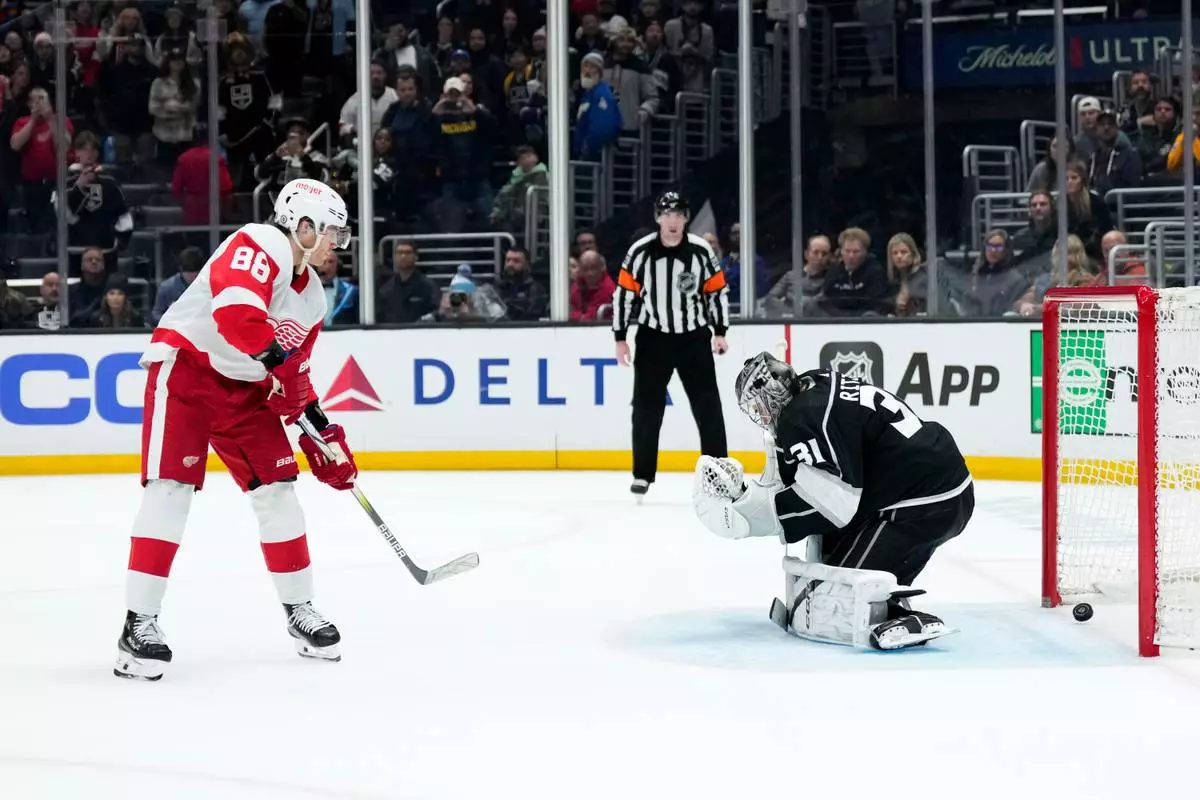
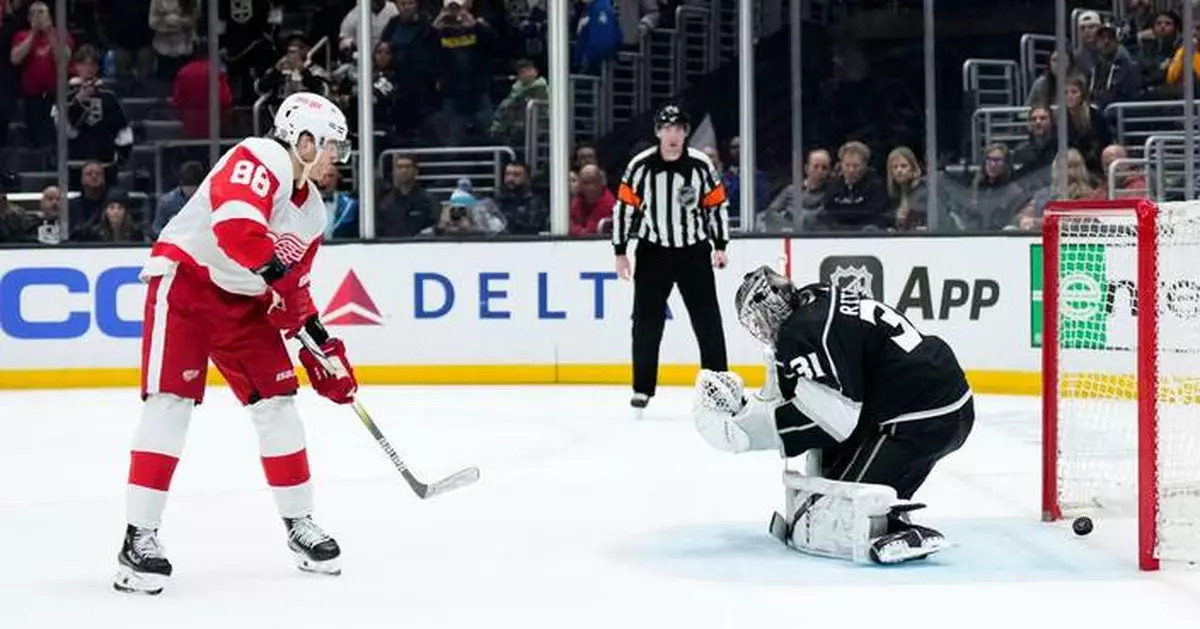
FILE - Detroit Red Wings right wing Patrick Kane (88) scores against Los Angeles Kings goaltender David Rittich during the shootout in an NHL hockey game Jan. 4, 2024, in Los Angeles. The Red Wings won 4-3. (AP Photo/Jae C. Hong, File)
The final of the Eurovision Song Contest was held Saturday with tight security and rainy weather failing to dent the enthusiasm of the fans — or that of the critics who think Israel should not have been invited to the party.
After a week’s buildup, acts from 25 countries took the stage at the Wiener Stadthalle arena in Vienna to battle for the continent’s pop crown. Millions of viewers around the world will cast judgment on a fiery Finnish violinist, a Moldovan folk rapper, a Serbian metal band and many more at Eurovision’s 70th anniversary event.
The contest has been clouded for a third year by calls for Israel to be excluded over its conflicts in Gaza and elsewhere, with five longtime participants — Spain, the Netherlands, Ireland, Iceland and Slovenia — boycotting in protest.
Here is the latest:
Norway’s Jonas Lovv and his entry “Ya Ya Ya” offered simple, repetitive power chords, silky-smooth vocals and a chant-along chorus that spans nation and language as the crowd cheered along, “Ya Ya Ya.”.
Romania’s entry was a Lady Gaga ’s nu-metal sister, Alexandra Căpitănescu, with her “Choke me.” And for the final entry, Austria's Cosmó with “Tanzschein” was a disco, techno-pop romp — and an ideal way to close the night’s performances.
After all 25 Eurovision finalists performed their songs, the audience is treated to a period of interval entertainment while voting lines remain open a bit longer while votes from across Europe and beyond are tallied.
Finland’s entry electrified, an early favorite in the competition with “Liekinheitin,” or “Flamethrower,” an animated mashup of pop singer Pete Parkkonen’s anguished vocals and violinist Linda Lampenius’ fiery fiddling.
Alicja, the entry for Poland, was betting on voters awarding big points to big vocals with her song “Pray” bringing up images of gospel music. Lion Ceccah, a prominent figure in Lithuania’s drag scene,iwas responsible for one of the more interesting entries with his trilingual “Sólo Quiero Más” (“I Just Want More”), an emotive synth-pop that plays out like a film noir.
Sweden’s Felicia wore a facemask as she rendered her “My System,” which wasn’t for the faint of heart. Cyprus’ Antigoni delivered a joyous “Jalla,” a summery pop song that weaves in traditional Cypriot instrumentation, including çifteli and lute, making it the perfect soundtrack to the beach vacation in your brain.
Italy's classist vocalist Sal Da Vinci sand his heart out to a new love with “Per Sempre Sì,” a fun vintage romp for those who miss the Eurovision of yore.
Croatia’s Lelek channeled something ancient and powerful with their goth-y folk “Andromeda.” Their stacked harmonies were only emboldened by their physical appearance: The women wore marks on their face and body meant to look like the same used to repel the Ottoman Empire.
The U.K.’s Look Mum No Computer with its “Eins, Zwei, Drei” was a thoughtful critique of the mundanity of labor but also catchy, synth-pop and goofy. Their stage design was also one of the most fun: soulless rectangular desks became imaginative platforms, like an alternative universe nightclub in space.
From France, Monroe’s “Regarde!” was strong on classism over all and judging by the cheers in the room – an effective one.
After the halfway mark, with just 10 performances remaining, Moldova’s rapper Satoshi performed the cheekily patriotic “Viva, Moldova!” with his full heart, in several languages, in a chorus so addictive it almost recalls the anthemic work of anthemic Irish hip-hop trio Kneecap.
Ukrainian singer Leléka offered the ethereal, beautiful “Ridnym,” and Australian star Delta Goodrem showed what a diva should be like with her slick midtempo ballad “Eclipse” — and a bravura performance that saw her raised into the air above a glittery piano. Id she wins, a European country would likely host for Australia next year.
Serbian metal band Lavina provided a dramatic change of pace with the angst “Kraj Mene.”
Aidan’s big-feelings “Bella,” Malta’s Eurovision entry, was all about romance: strings, big belts, swooning instrumentation. It was also one of few Eurovision entries from Malta to feature the Maltese language.
The Czech Republic put their hopes in Daniel Žižka’s “Crossroads,” a restrained pop ballad that builds to a triumphant chorus. Bulgaria’s Dara, a veteran pop performer at this stage, delivered an up-tempo pop banger “Bangaranga,” easily one of the most animated tracks of the bunch this year. And on stage, it was a mood elevator.
Even before the show’s halfway mark, there was already fire, smoke, animal prints and lots of sunglasses worn inside. Lavina, a metal band from Serbia, performed in a digital rainfall as well as burst of flames in studded leather, “Mad Max”-looking costumes.
Albania’s Alis used a smoke-filled stage with digital wings and a clock, inviting a woman depicting a mother onto the stage in a traditional folk dress for his driving, gloomy track, “Nân.” Sarah Engels of Germany added pyrotechnics to her “Fire,” naturally, and Delta Goodrem of Australia added a shimmering golden piano, fire and enough wind machines to power a small town.
Greece’s Akylas was playful with his pounding house track “Ferto,” dressed in tiger-striped shorts and a knit hat and using a scooter to glide along the stage, adding human statues. Ukraine needed only beams of light, a blowing curtain effect and Leleka’s powerhouse vocals as she delivered “Ridnym.”
Denmark’s all-Danish-language Eurovision entry was first with Søren Torpegaard’s “Før Vi Går Hjem,” which he delivered with the specific skillset of someone who has starred as Tony in “West Side Story,” Angel in “Kinky Boots” and Romeo in “Romeo & Juliet.”
Sarah Engels followed, representing her home country of Germany with “Fire.” As the second performer of the night, she took the opportunity to bring pyrotechnics to the stage.
Then came Noam Bettan’s “Michelle” — Israel’s inclusion in Eurovision, which has drawn criticisms. Spain, Ireland, the Netherlands, Slovenia and Iceland withdrew from the competition this year, choosing not to participate to protest Israel’s inclusion.
Most recently, Bettan’s performance was disrupted by protesters during the first semifinal on Tuesday; chants of “Stop the genocide!” were heard in the crowd. At the final, it wasn’t immediately clear if that continued.
Belgium’s Essyla took the stage with “Dancing on the Ice” — a cool ride with its chilly vocal performance and Billie Eilish-informed production, followed by Albania’s Alis.
Protesters called for Israel to be excluded from Eurovision demonstrated near the contest arena ahead of the final. Several hundred marched, with chants of “all of Vienna hates the ESC,” a reference to the Eurovision Song Contest.
They were kept well away from the venue which lies behind a police security cordon.
Demonstrator Echo Vinasha Lex said it was “important to protest against that idea that the song contest is not political. The song contest is a very political event.”
At the start, a filmed opening montage showcased Austria’s majestic scenery as a paper boat made its way to Vienna — a reference to 2025 Eurovision winner JJ’s storm-tossed performance of “Wasted Love.”
The show opened with a performance by last year’s winner, the operatically trained Austrian singer JJ, and an Olympic-style flag parade of the 25 finalists. Then it was on to performances by the musicians, who have just 3 minutes to win over millions of viewers who, along with national juries of music professionals, pick the winner.
The hosts for the extravaganza on Saturday are Michael Ostrowski, an Austrian actor best known for German-language comedy films, and Victoria Swarovski, a model, singer, TV presenter and heir to the Swarovski crystal and luxury goods business.
The head of the Eurovision Song Contest has urged viewers to put politics aside and enjoy the “brilliant, wonderful, heartfelt show” that is the competition’s grand final.
As the contest turns 70 with calls for Israel to be kicked out over the conduct of its war in Gaza and a five-country boycott, Eurovision director Martin Green said the contest is a chance for a few hours to “close the curtains to the outside world and dream that something else is possible.”
He told a news conference that for 70 years Eurovision has given “voice to the voiceless” and celebrated marginalized communities.
“Here’s to the next 70 years,” he said.
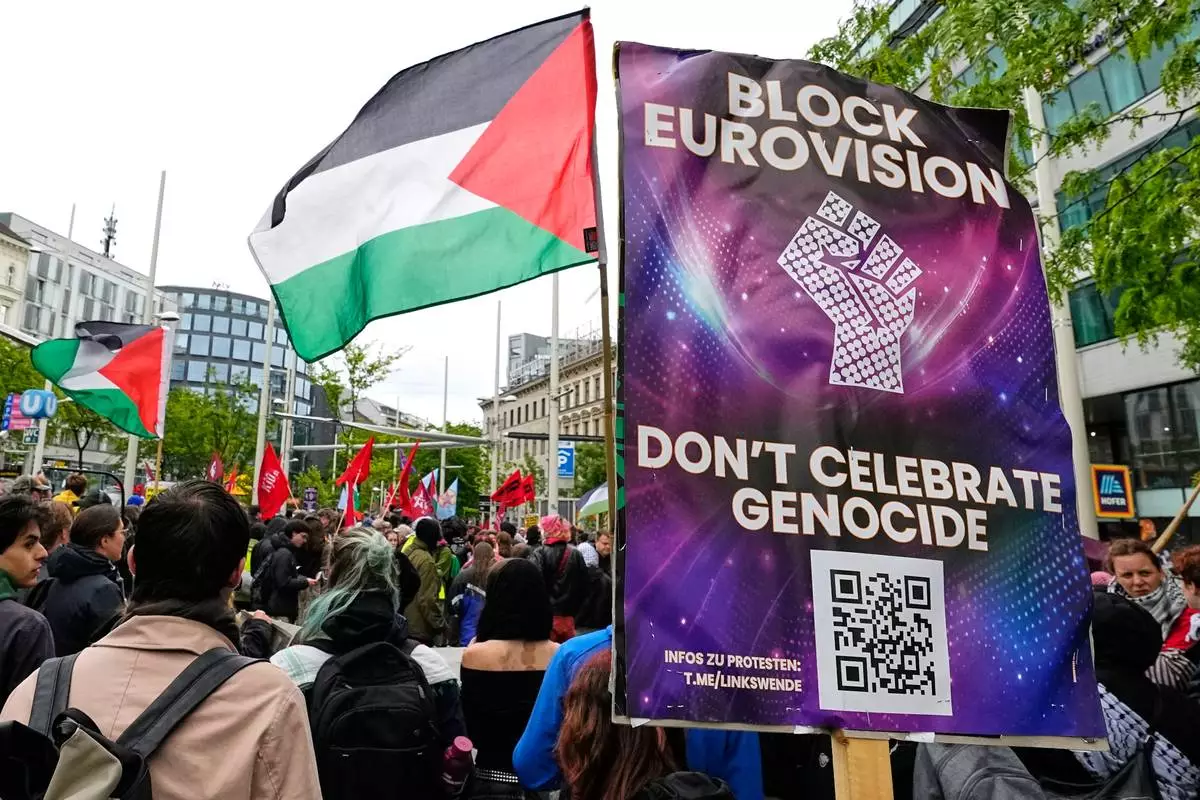
Demonstrators protest against Israel ahead of the Grand Final of the 70th Eurovision Song Contest in Vienna, Austria, Saturday, May 16, 2026. (AP Photo/Martin Meissner)
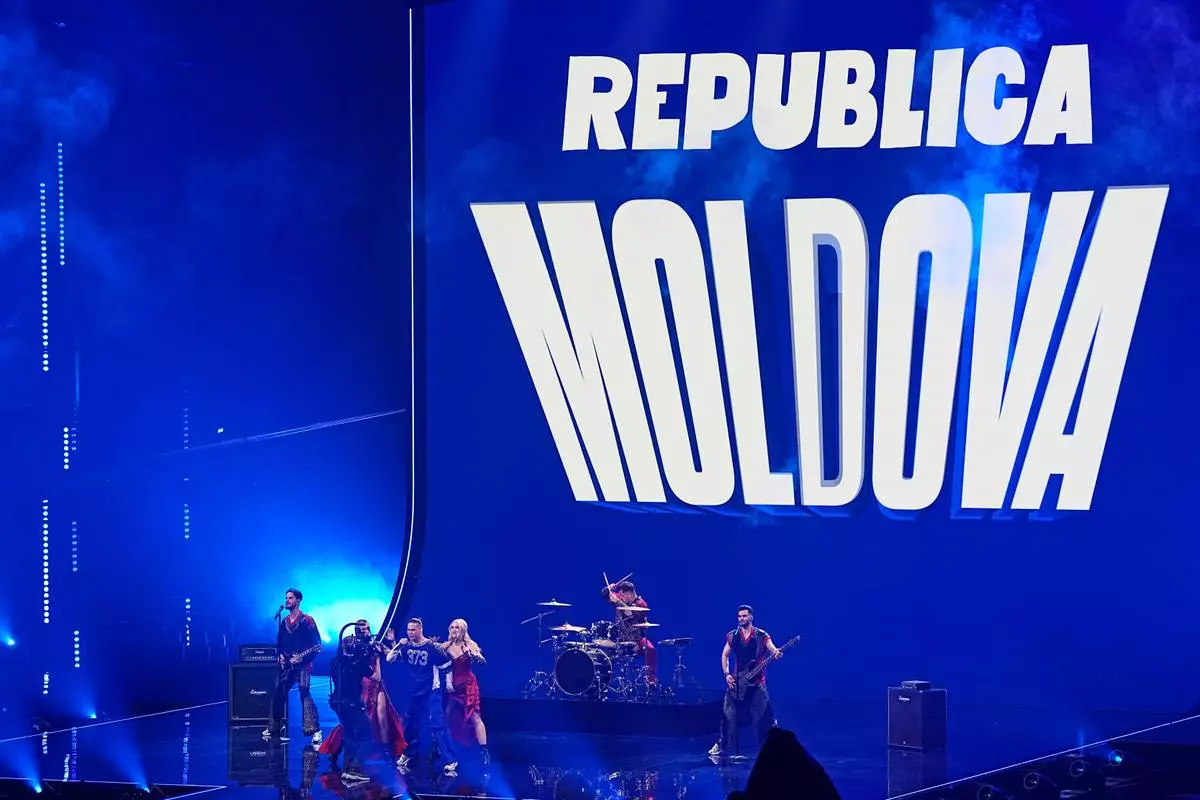
Satoshi from Moldova performs the song "Viva, Moldova!" during the dress rehearsal for the Grand Final of the 70th Eurovision Song Contest in Vienna, Austria, Friday, May 15, 2026. (AP Photo/Martin Meissner)
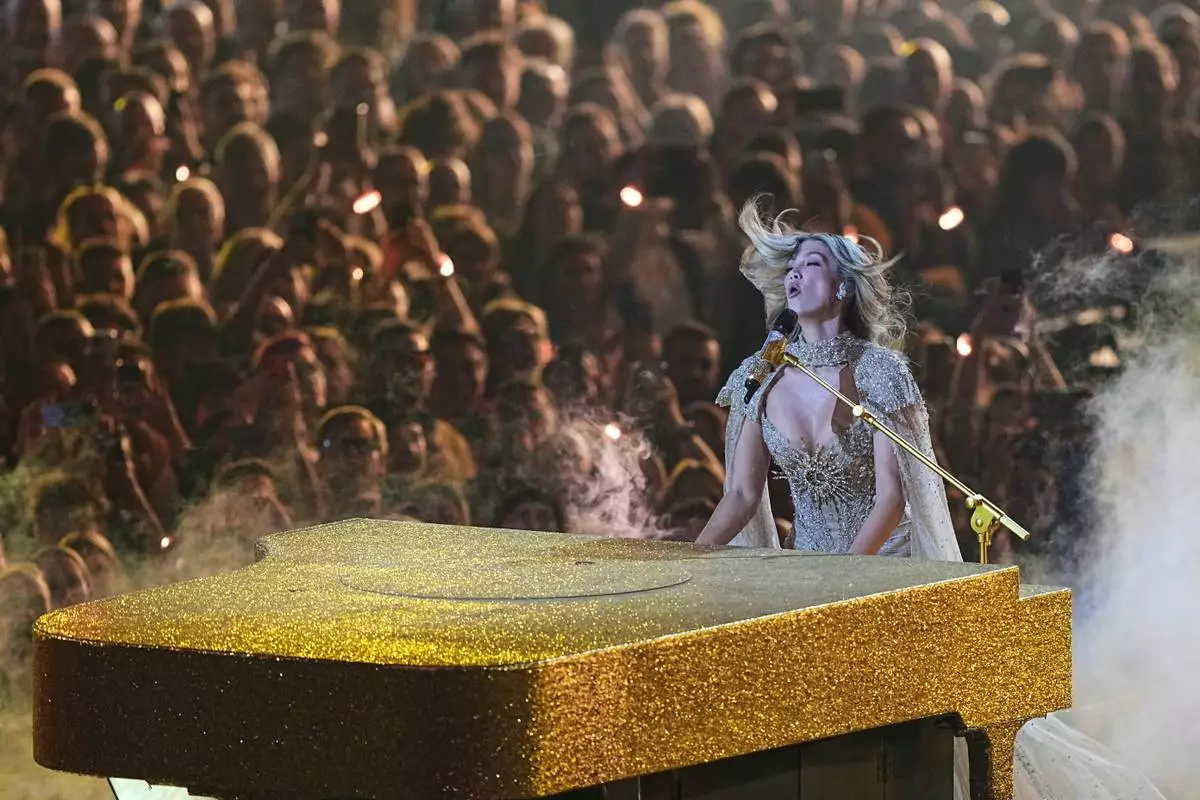
Delta Goodrem from Australia performs the song "Eclipse" during the dress rehearsal for the Grand Final of the 70th Eurovision Song Contest in Vienna, Austria, Friday, May 15, 2026. (AP Photo/Martin Meissner)
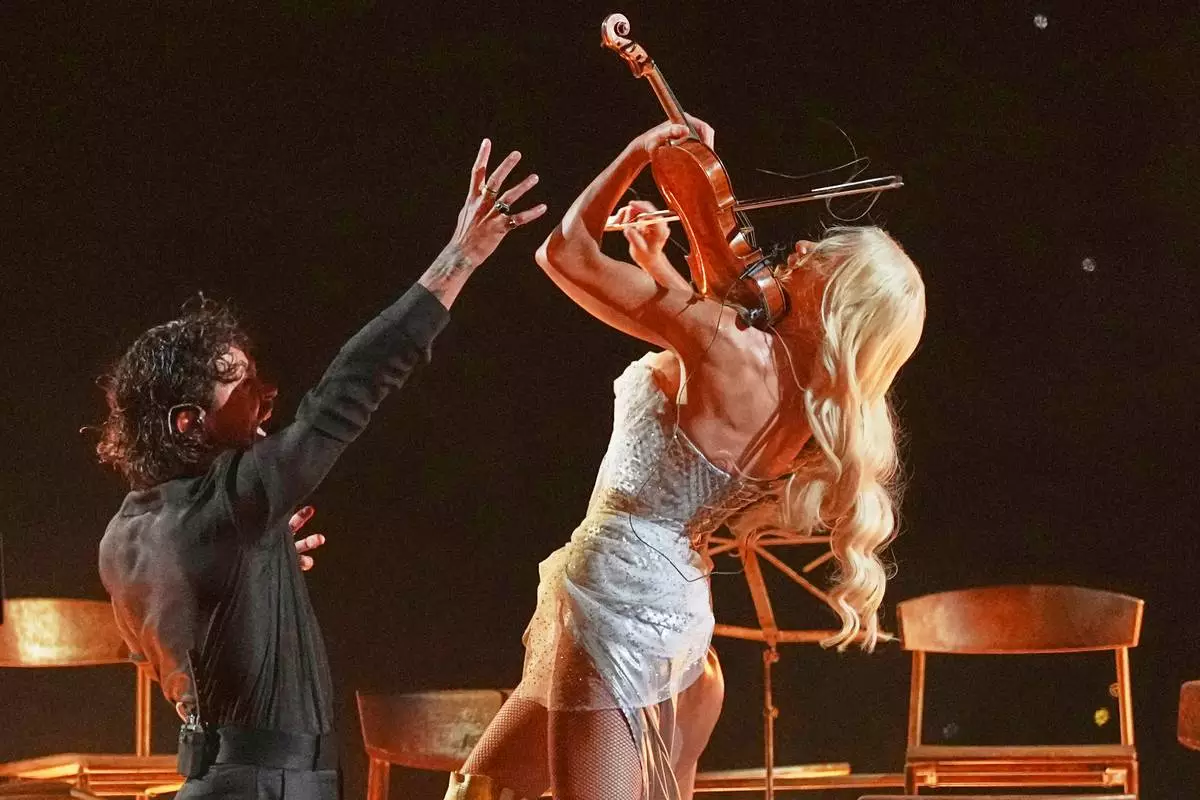
Linda Lampenius and Pete Parkkonen from Finland perform the song "Liekinheitin" during the first semifinal of the 70th Eurovision Song Contest in Vienna, Austria, Tuesday, May 12, 2026. (AP Photo/Martin Meissner)
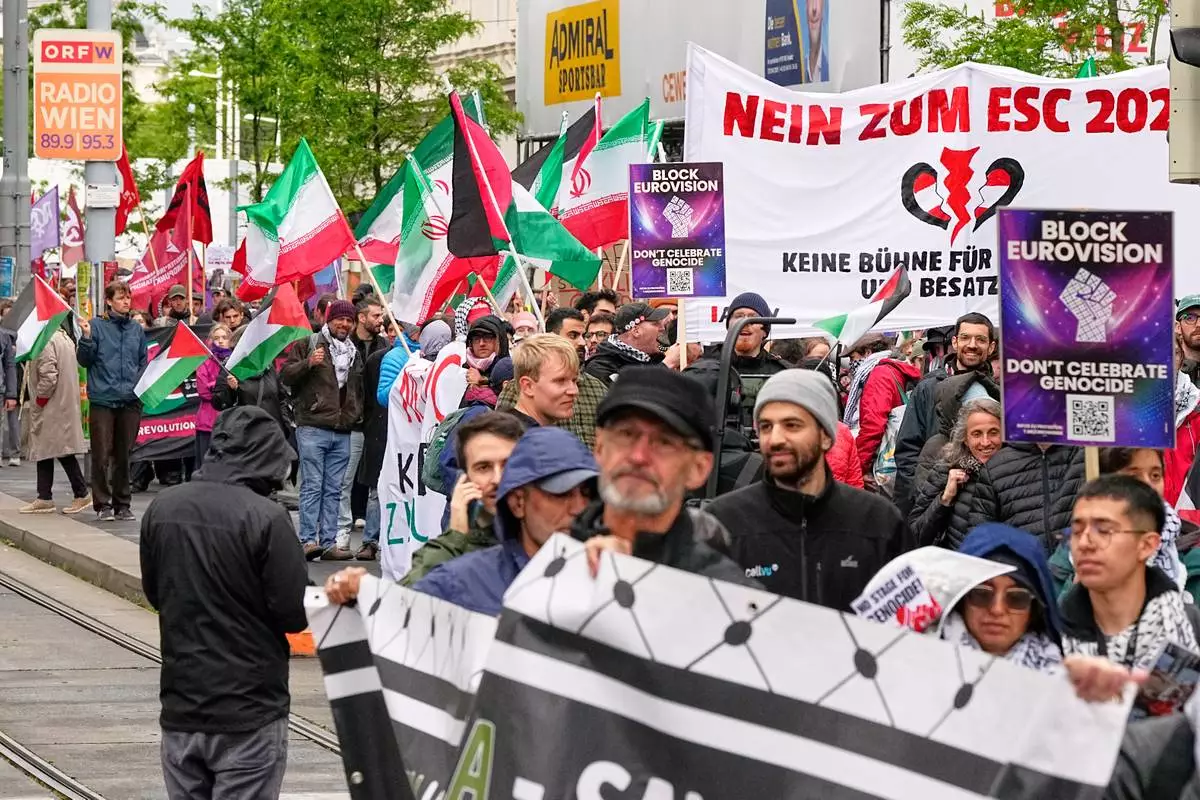
Demonstrators protest against Israel ahead of the Grand Final of the 70th Eurovision Song Contest in Vienna, Austria, Saturday, May 16, 2026. (AP Photo/Martin Meissner)