RAMALLAH, West Bank (AP) — The most popular and potentially unifying Palestinian leader — Marwan Barghouti — is not among the prisoners Israel intends to free in exchange for hostages held by Hamas under the new Gaza ceasefire deal.
Israel has also rejected freeing other high-profile prisoners whose release Hamas has long sought, though it was not immediately clear if a list of around 250 prisoners issued Friday on the Israeli government’s official website was final.
Click to Gallery
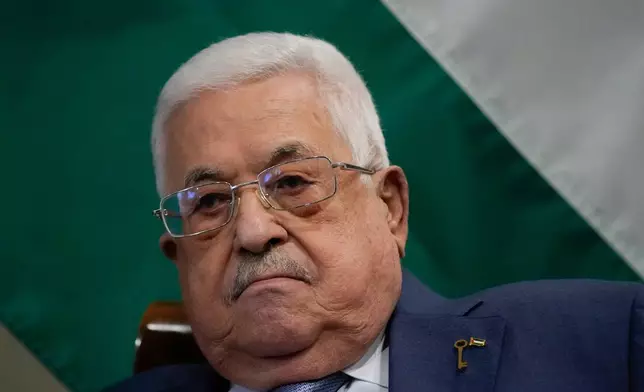
FILE - Palestinian President Mahmoud Abbas is seen in Amman, Jordan, Oct. 17, 2023. (AP Photo/Jacquelyn Martin, Pool, File)
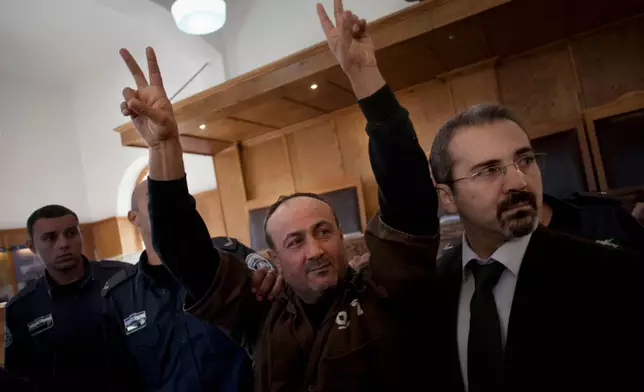
FILE - Senior Fatah leader Marwan Barghouti makes the victory sign in front of the media during his arrival to testify in a trial at a Jerusalem court, Jan. 25, 2012. (AP Photo/Bernat Armangue, File)
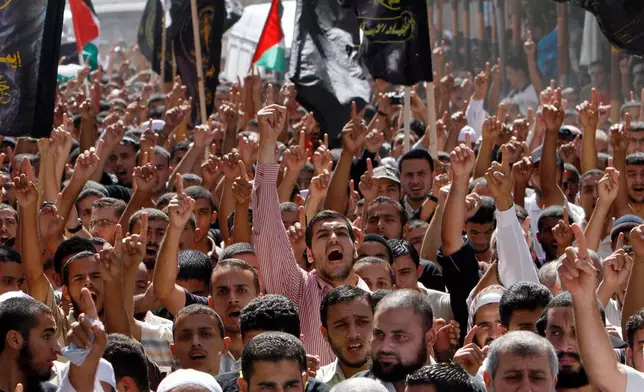
FILE - Palestinian supporters of Islamic Jihad participate in a rally marking 10 years since the starting of the second Intifada, in Khan Younis, southern Gaza Strip, Oct. 1, 2010. (AP Photo/Adel Hana, File)
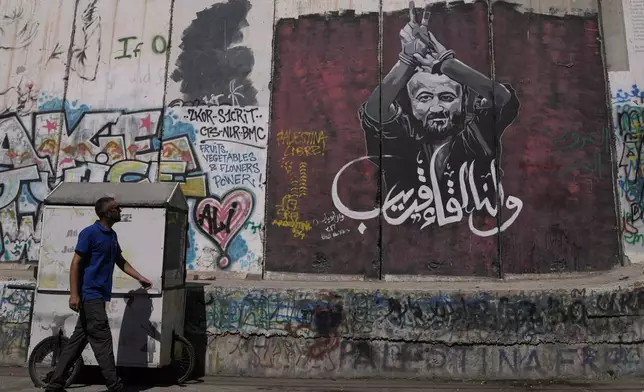
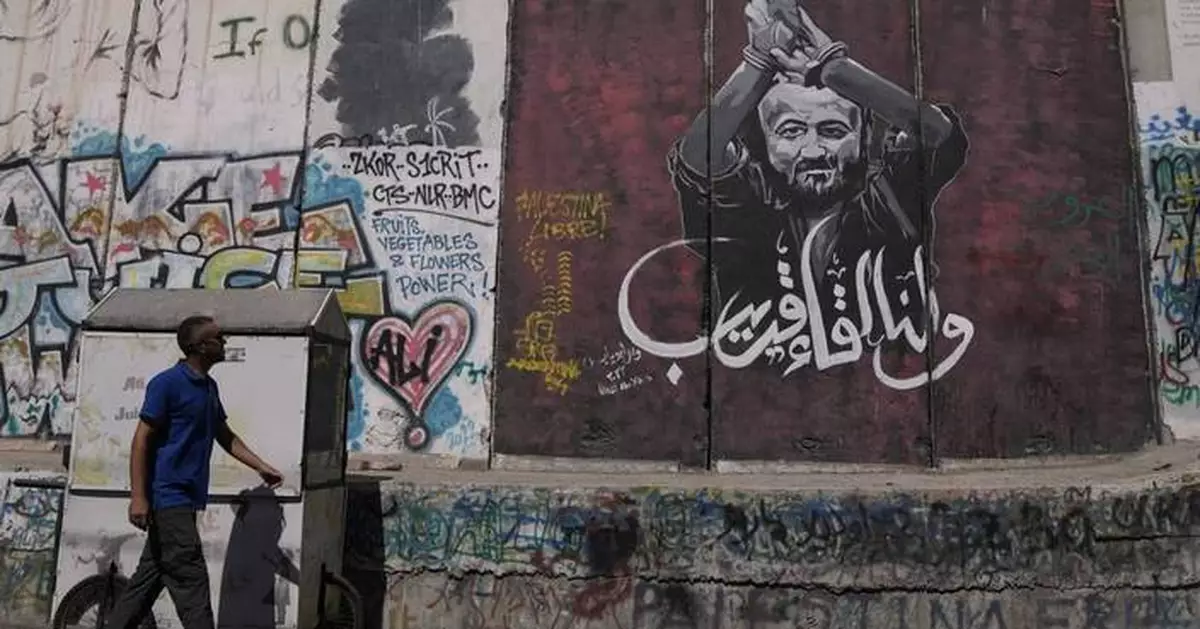
FILE - A man walks past a mural depicting the Palestinian leader Marwan Barghouti, with a message that reads in Arabic, "See you soon,” on Israel's separation barrier in the West Bank city of Bethlehem, Aug. 20, 2025. (AP Photo/Mahmoud Illean, File)
Senior Hamas official Mousa Abu Marzouk told the Al Jazeera TV network that the group insists on the release of Barghouti and other high-profile figures and that it was in discussions with mediators.
Israel views Barghouti as a terrorist leader. He is serving multiple life sentences after being convicted in 2004 in connection with attacks in Israel that killed five people.
But some experts say Israel fears Barghouti for another reason: An advocate of a two-state solution even as he backed armed resistance to occupation, Barghouti could be a powerful rallying figure for Palestinians. Some Palestinians view him as their own Nelson Mandela, the South African anti-apartheid activist who became his country's first Black president.
With the ceasefire and Israeli troop pullback in Gaza that came into effect Friday, Hamas is to release about 20 living Israeli hostages by Monday. Israel is to free some 250 Palestinians serving prison sentences, as well as around 1,700 people seized from Gaza the past two years and held without charge.
The releases have powerful resonance on both sides. Israelis see the prisoners as terrorists, some of them involved in suicide bombings. Many Palestinians view the thousands held by Israel as political prisoners or freedom fighters resisting decades of military occupation.
Most of those on the Israeli prisoner list are members of Hamas and the Fatah faction arrested in the 2000s. Many of them were convicted of involvement in shootings, bombings or other attacks that killed or attempted to kill Israeli civilians, settlers and soldiers. After their release, more than half will be sent to Gaza or into exile outside the Palestinian territories, according to the list.
The 2000s saw the eruption of the Second Intifada, a Palestinian uprising fueled by anger over continued occupation despite years of peace talks. The uprising turned bloody, with Palestinian armed groups carrying out attacks that killed hundreds of Israelis, and the Israeli military killing several thousand Palestinians.
One prisoner who will be freed is Iyad Abu al-Rub, an Islamic Jihad commander convicted of orchestrating suicide bombings in Israel from 2003-2005 that killed 13 people.
The oldest and longest imprisoned to be released is 64-year-old Samir Abu Naama, a Fatah member who was arrested from the West Bank in 1986 and convicted on charges of planting explosives. The youngest is Mohammed Abu Qatish, who was 16 when he was arrested in 2022 and convicted of an attempted stabbing.
Hamas leaders have in the past demanded that Israel release Barghouti, a leader of the militant group’s main political rival, Fatah, as part of any deal to end the fighting in Gaza. But Israel has refused in previous exchanges.
Israel fears history could repeat itself after it released senior Hamas leader Yahya Sinwar in a 2011 exchange. The long-serving prisoner was one of the main architects of the Oct. 7, 2023, attack that ignited the latest war in Gaza, and he went on to lead the militant group before being killed by Israeli forces last year.
One of the few consensus figures in Palestinian politics, Barghouti, 66, is widely seen as a potential successor to President Mahmoud Abbas, the aging and unpopular leader of the internationally recognized Palestinian Authority that runs pockets of the West Bank. Polls consistently show Barghouti is the most popular Palestinian leader.
Barghouti was born in the West Bank village of Kobar in 1959. While studying history and politics at Bir Zeit University, he helped spearhead student protests against the Israeli occupation. He emerged as an organizer in the first Palestinian uprising, which erupted in December 1987.
Israel eventually deported him to Jordan. He returned to the West Bank in the 1990s as part of interim peace agreements that created the Palestinian Authority and were meant to pave the way for a state.
After the Second Intifada broke out, Israel accused Barghouti – then head of Fatah in the West Bank -- of being the leader of the Al-Aqsa Martyrs Brigades, a loose collection of Fatah-linked armed groups that carried out attacks on Israelis.
Barghouti never commented on his links to the Brigades. While he expressed hopes for a Palestinian state and Israel side by side in peace, he said Palestinians had a right to fight back in the face of growing Israeli settlements and the military’s violence against Palestinians.
“I am not a terrorist, but neither am I a pacifist,” he wrote in a 2002 editorial in The Washington Post.
Soon after, he was arrested by Israel. At trial he opted not to defend himself because he didn’t recognize the court’s authority. He was convicted of murder for involvement in several Brigades' attacks and given five life sentences, while acquitted over other attacks.
In 2021, Barghouti registered his own list for parliamentary elections that were later called off. A few years earlier, he led more than 1,500 prisoners in a 40-day hunger strike to call for better treatment in the Israeli prison system.
Barghouti showed he could build bridges across Palestinian divisions even as he reached out to Israelis, said Mouin Rabbani, non-resident fellow at Democracy for the Arab World Now and co-editor of Jadaliyya, an online magazine focusing on the Middle East.
Barghouti is “seen as a credible national leader, someone who can lead the Palestinians in a way Abbas as consistently failed to,” he said.
Israel is “keen to avoid” that, since its policy for years has been to keep Palestinians divided and Abbas’ administration weak, Rabbani said, adding that Abbas also feels threatened by any Barghouti release.
Barghouti is not connected to the corruption that has plagued Abbas’ Palestinian Authority and turned many against it, said Eyal Zisser, the vice rector of Tel Aviv University and an expert in Arab-Israeli relations.
His popularity could strengthen Palestinian institutions, a terrifying thought for Israel’s right-wing government, which opposes any steps toward statehood, Zisser said.
Barghouti was last seen in August, when Israel’s far-right national security minister, Itamar Ben-Gvir, posted a video of himself admonishing Barghouti inside a prison, saying Israel will confront anyone who acts against the country and “wipe them out.”
Keath reported from Cairo, and Frankel from Jerusalem. Associated Press correspondent Bassem Mroue contributed from Beirut.
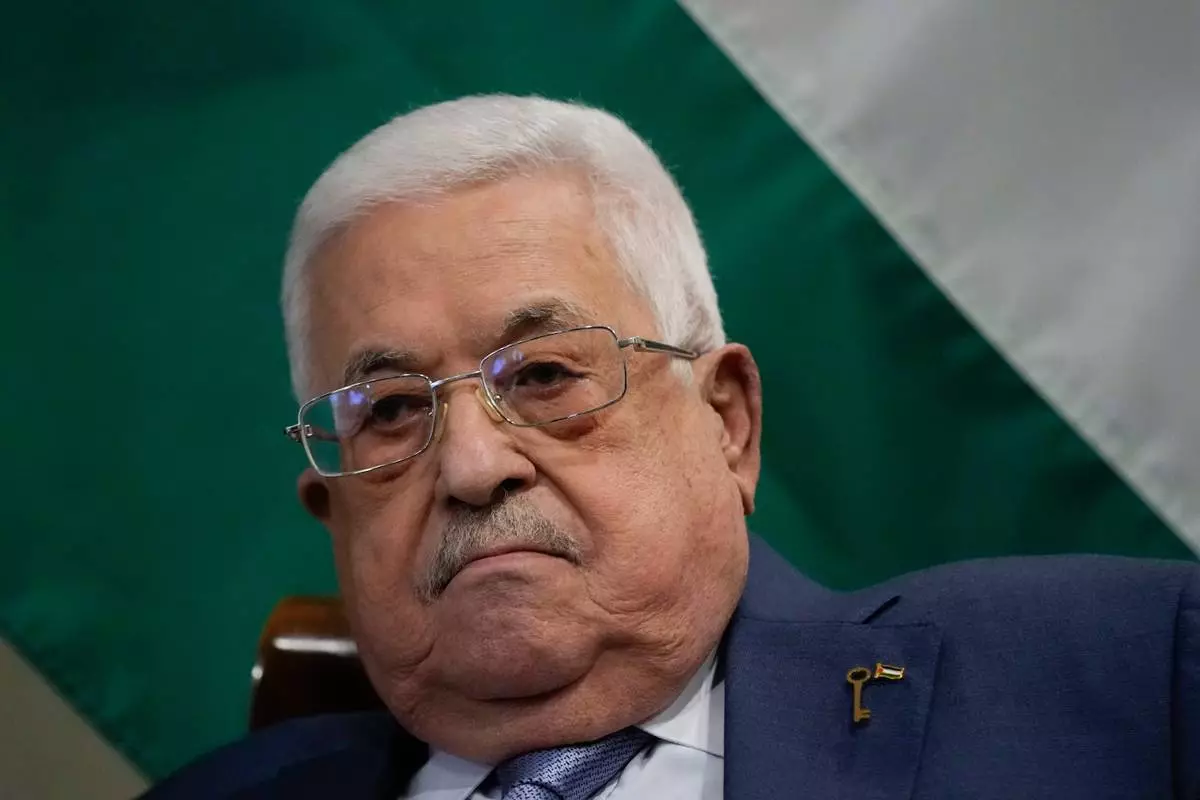
FILE - Palestinian President Mahmoud Abbas is seen in Amman, Jordan, Oct. 17, 2023. (AP Photo/Jacquelyn Martin, Pool, File)
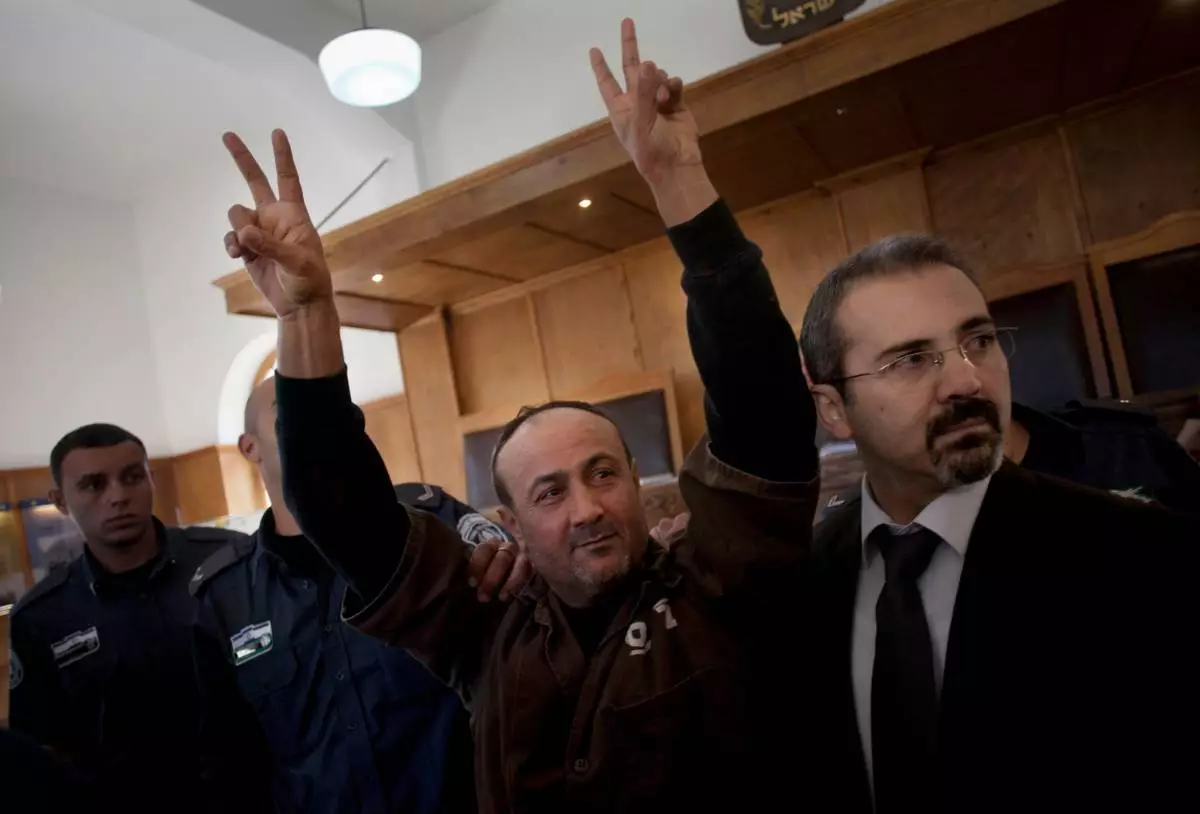
FILE - Senior Fatah leader Marwan Barghouti makes the victory sign in front of the media during his arrival to testify in a trial at a Jerusalem court, Jan. 25, 2012. (AP Photo/Bernat Armangue, File)
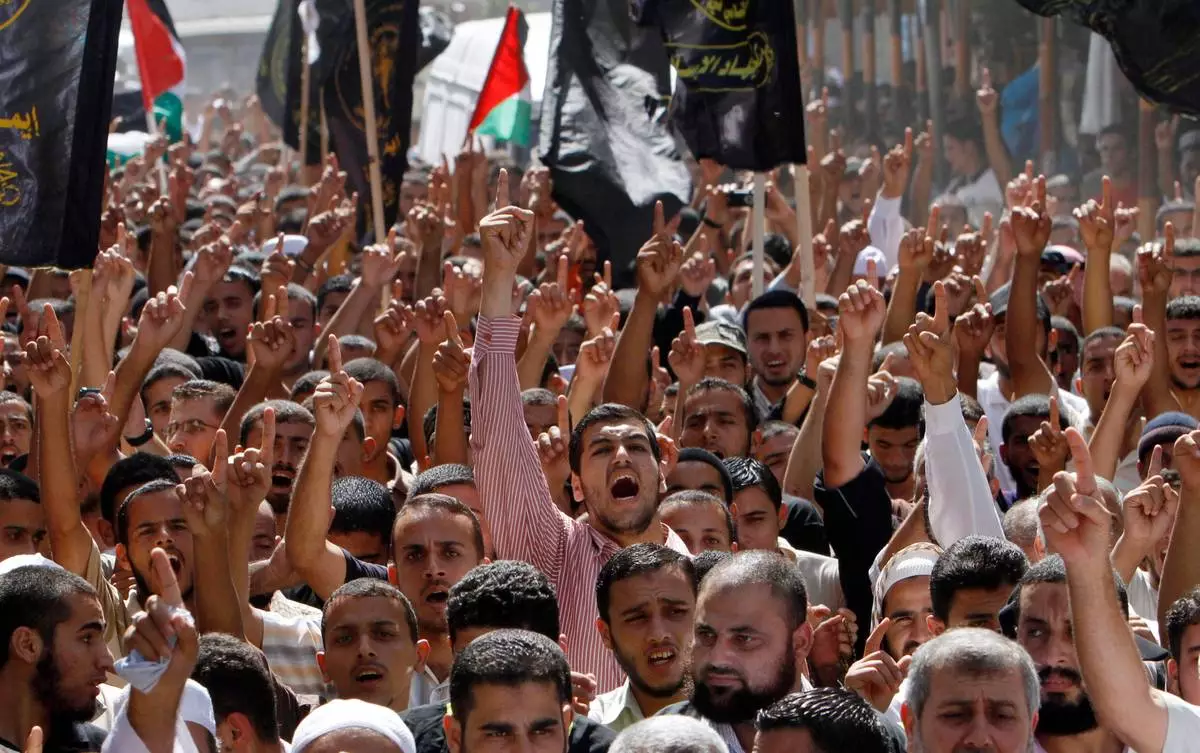
FILE - Palestinian supporters of Islamic Jihad participate in a rally marking 10 years since the starting of the second Intifada, in Khan Younis, southern Gaza Strip, Oct. 1, 2010. (AP Photo/Adel Hana, File)
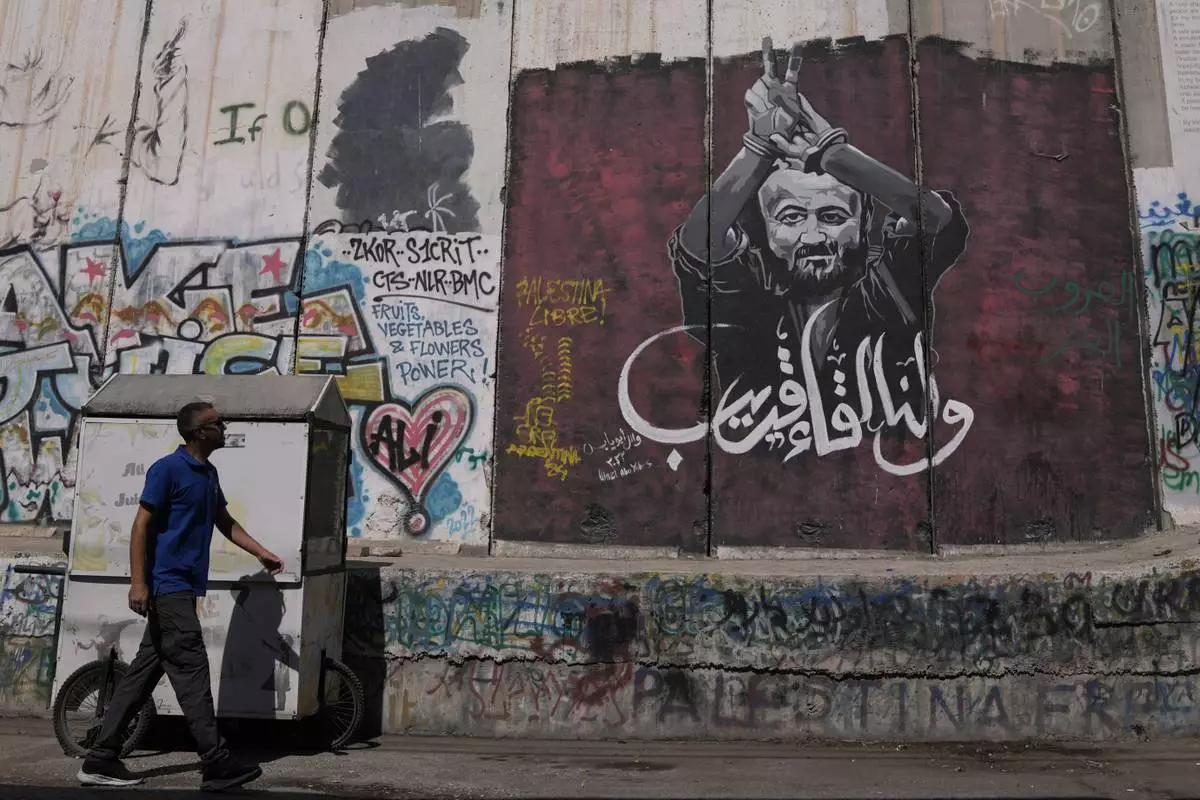
FILE - A man walks past a mural depicting the Palestinian leader Marwan Barghouti, with a message that reads in Arabic, "See you soon,” on Israel's separation barrier in the West Bank city of Bethlehem, Aug. 20, 2025. (AP Photo/Mahmoud Illean, File)