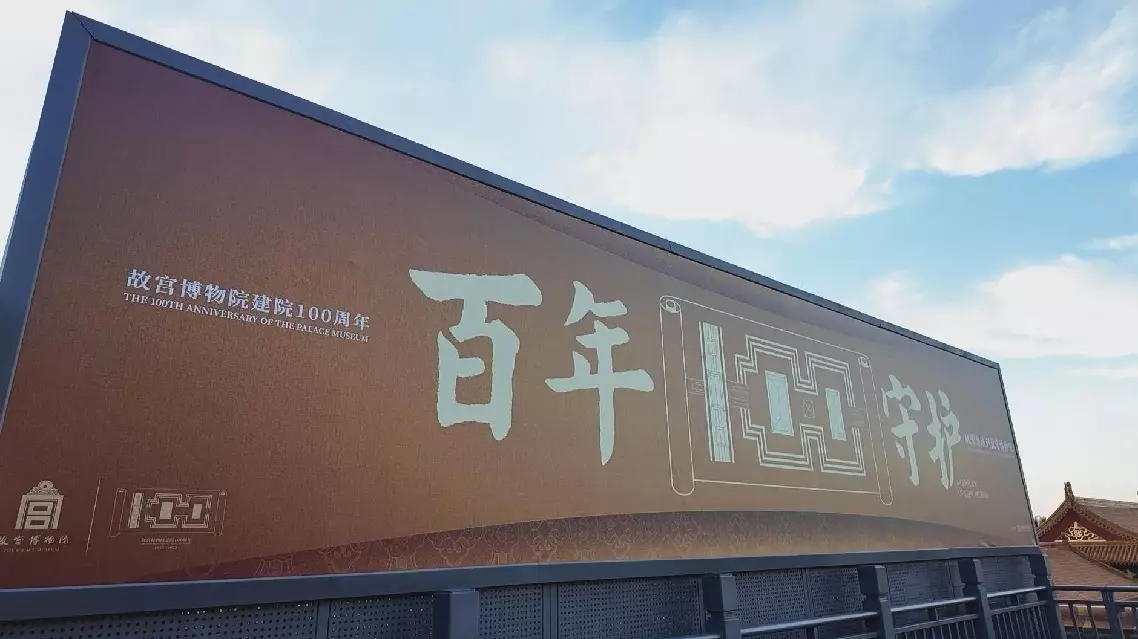
The ongoing special exhibition to mark the centenary of China's Palace Museum is showing the gem of Chinese culture.
The exhibition features 200 precious pieces and sets of cultural relics, offering a multidimensional interpretation of the Chinese civilization and the evolution of the Palace Museum.
Titled "A Century of Stewardship: From the Forbidden City to the Palace Museum," the exhibition has three sections: "A Lineage of Civilization," "A Century of Endeavor" and "Myriad Visions of Splendor."
The 25 treasure seals designated by Emperor Qianlong (1711-1799) of the Qing Dynasty (1644-1911) to represent imperial authority are on display in the first section.
On Oct. 10, 1925, the Palace Museum was established based on the Forbidden City, once the imperial palaces of the Ming (1368-1644) and Qing dynasties, and opened to the public for the first time, along with its priceless imperial art collections.
Treasures once reserved for emperors became shared cultural heritage for the entire Chinese nation. This shift was groundbreaking and epoch-making, according to Shan Jixiang, former curator of the Palace Museum.
At the section "Myriad Visions of Splendor," the exhibition displays rare pieces showing cultural exchanges in the bygone days, including a silver bowl from the Tang Dynasty (618-907) and a jade bowl from Central Asia, evidencing the exchanges along the ancient Silk Road.
A gold ewer and a milk pot showing styles of different ethnic groups are examples of the unity in diversity of Chinese culture.
At a symposium marking the Palace Museum's 100th anniversary, participants called for further efforts in strengthening cultural confidence and making the Palace Museum a model of world heritage protection.
Today, the Palace Museum ranks among the most visited museums in the world. In 2009, its visitor flow surpassed 10 million for the first time, with the figure exceeding 17.6 million in 2024.
The exhibition will run until Dec. 30.
Palace Museum holds centenary exhibition