Horgos Port, a major railway hub in northwest China's Xinjiang Uygur Autonomous Region, has handled over 50,000 China-Europe (Central Asia) freight train trips, according to railway sources on Saturday.
Since launching its first China-Europe freight train in March 2016, the Horgos Railway Port under China Railway Urumqi Group has seen steady growth in train trips. It took 54 months to reach the first 10,000 cumulative trips, and less than 13 months to expand from 40,000 to 50,000 trips.
"Our company has handled over 1,500 freight trains this year, a 20 percent increase compared to last year. The freight volume has reached 4 million tons, an 18 percent year-on-year growth," said Zhang Yunyu, a business manager of Xinjiang Zhonglian Haitong International Freight Forwarders Co., Ltd.
The number of China-Europe (Central Asia) freight trains passing through the Horgos Railway Port continues to grow. An inbound return China-Europe freight train requires reloading at the port within two hours on average, with the daily average volume of such trains maintained at over 27.
In May, the port implemented a reform to expedite customs clearance, reducing the passage time for imported goods from two to three days to under 16 hours, a decrease of 70 percent. The processing time for local export goods was cut from six hours to just one, a decrease of 80 percent.
"We provide all-year twenty-four-hour customs clearance services and have set up a dedicated window for China-Europe freight trains. We offer personalized services based on cargo owners' needs and have established a green channel with priority assembly and swift release procedures. This has efficiently connected all processes including customs review, priority inspection, reloading, and release, continuously improving the transportation efficiency of the freight trains," said Zhang Kun, deputy head of the Third Supervision Section at Horgos Customs.
The port now processes freight train trips along 90 operational routes linking 46 cities and regions across 18 countries.
Cargoes transported via these routes include more than 200 categories, such as auto parts, electrical and electronic products, construction materials, steel, cultural and sports products, and daily necessities.
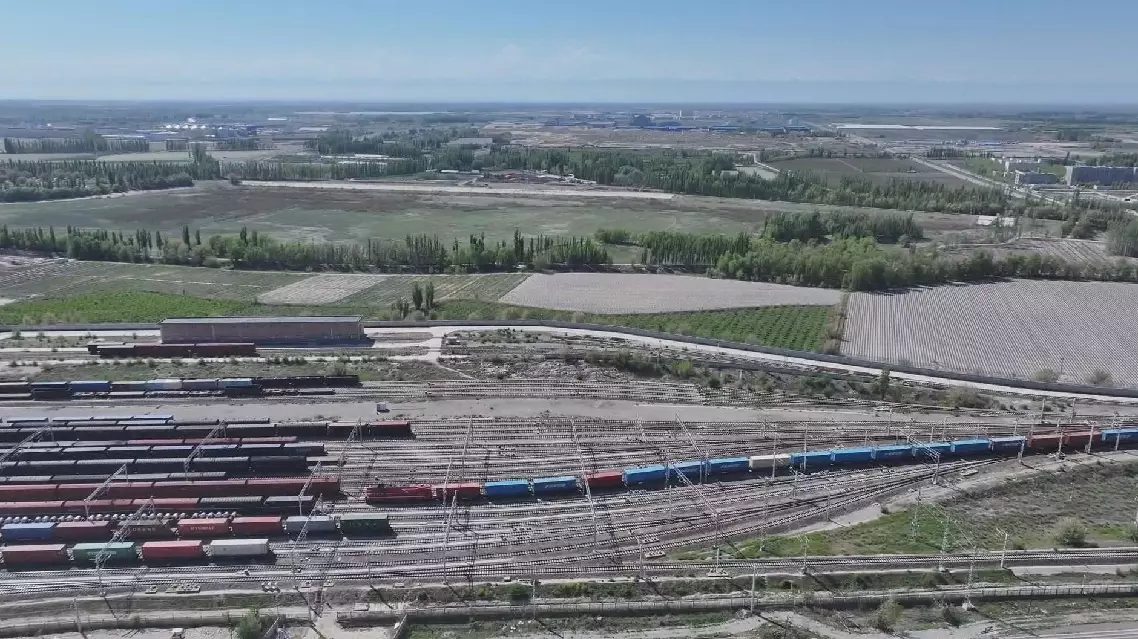
Major Xinjiang port handles over 50,000 China-Europe freight train trips so far