Skip to Content Facebook Feature Image

U.S. port fees typical act of unilateralism: commerce ministry

China

China

China

U.S. port fees typical act of unilateralism: commerce ministry

2025-10-12 11:58 Last Updated At:10-13 00:27

The U.S. imposition of additional port fees on Chinese ships is a typical act of unilateralism, said a spokesperson for the Ministry of Commerce on Sunday, two days after China announced countermeasures targeting ships linked to the U.S.

On April 17, Office of the United States Trade Representative announced the final measures following a Section 301 Investigation targeting China's maritime, logistics, and shipbuilding sectors, imposing additional port fees on Chinese ships, which will take effect on Oct 14, said the spokesperson.

The action of the U.S. severely violates the rules of the World Trade Organization (WTO) and the principles of equality and mutual benefit of the U.S. and China Maritime Agreement. It is a typical act of unilateralism. China has multiple times expressed its strong disapproval of and resolute opposition against that, said the spokesperson.

Since the two countries held economic and trade talks in London, China has been negotiating and communicating with the U.S. on the measures mentioned above, responded in writing to the U.S. concerning its groundless accusations against China in the Section 301 Investigation, and put forward proposals on potential cooperation between the two sides in relevant industries, said the spokesperson.

However, the U.S. has shown a negative attitude, insisted on implementing the measures and issued an announcement on Oct 3, specifying the requirements for imposing fees on Chinese ships, said the spokesperson.

To safeguard its legitimate rights and interests, China has to take countermeasures. According to laws and regulations such as the Regulations of the People's Republic of China on International Ocean Shipping, China decided to charge special port fees on ships linked to the U.S., said the spokesperson.

China's countermeasures are necessary defensive actions, aimed at safeguarding the legitimate rights and interests of Chinese industries and enterprises, as well as maintaining a fair competition environment in the international shipping and shipbuilding markets. China hopes the U.S. will to face up to its own mistakes, move in the same direction with the Chinese side, and return to the right path of dialogue and consultation, said the spokesperson.
U.S. port fees typical act of unilateralism: commerce ministry
U.S. port fees typical act of unilateralism: commerce ministry
U.S. port fees typical act of unilateralism: commerce ministry

U.S. port fees typical act of unilateralism: commerce ministry

U.S. port fees typical act of unilateralism: commerce ministry
U.S. port fees typical act of unilateralism: commerce ministry
A Japanese lawmaker has raised concerns over Japan's push to expand its military and its nuclear policy.

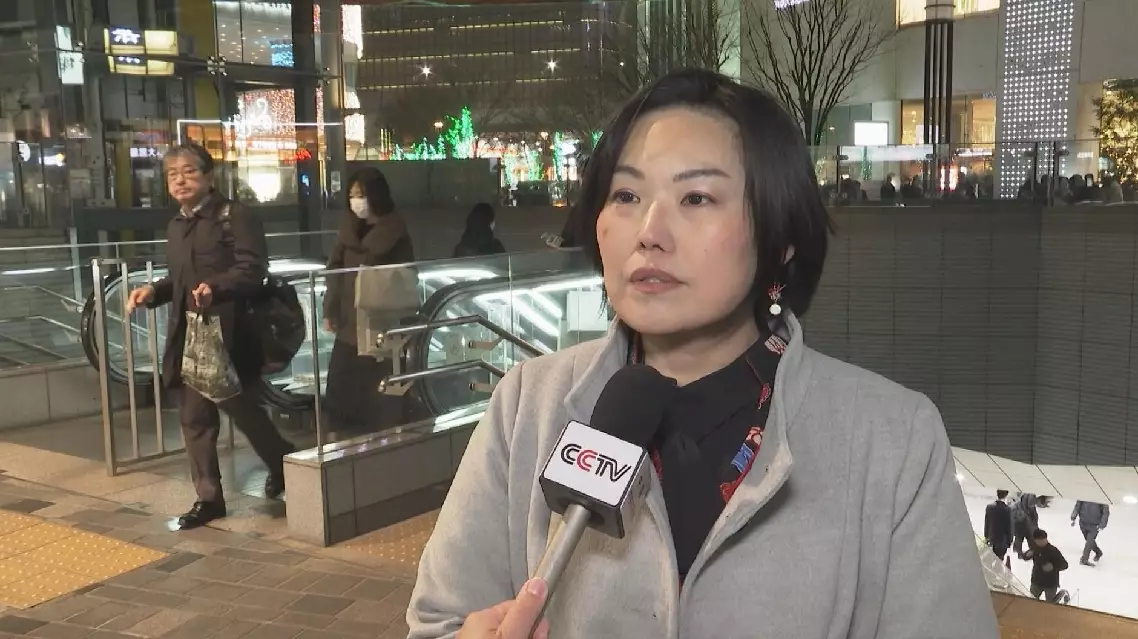
Responding to some politicians' dangerous tendency towards possessing nuclear weapons, Takara Sachika, a member of Japan's House of Councilors, said that Japan's push to strengthen its military, combined with what she called a misguided nuclear policy, not only heightens regional tensions but also directly threatens regional security.

"I think this is completely unacceptable. Japan is a country that has suffered atomic bombings and is one of the nations most aware of the threat posed by nuclear weapons. Yet such a country is openly discussing the issue of possessing nuclear weapons and even attempting to revise the principle of not allowing the introduction of nuclear weapons, one of the Three Non-Nuclear Principles. This is an extremely serious problem," Takara said.

Takara said the Japanese government's tendency to expand its military capabilities is completely contrary to the Constitution.

"From the perspective of Japan's Constitution, Japan should never have adopted a policy of ensuring security by strengthening military capabilities. Yet today, enormous effort is being poured into military expansion, and that in itself is a serious problem," said the lawmaker.

At a Diet meeting in early November 2025, Japanese Prime Minister Sanae Takaichi said that what she described as the Chinese central authorities' "use of force on Taiwan" could constitute a "survival-threatening situation" for Japan, and suggested the possibility of armed intervention in the Taiwan Strait, drawing strong criticism worldwide.

Takara urged Takaichi to retract her erroneous remarks as soon as possible.

"I think there is a very big problem with making such remarks that provoke other countries. It is necessary to thoroughly examine the facts as soon as possible and withdraw the relevant remarks," she said.

Japanese lawmaker criticizes nuclear weapons remarks as threat to regional security

Japanese lawmaker criticizes nuclear weapons remarks as threat to regional security

Recommended Articles