Amid the long-hoped-for calm brought by the recent Israel-Hamas ceasefire deal in the Gaza Strip, displaced Palestinians are finally returning homes, only to find their neighborhoods in indescribable ruins.
The first phase of the Gaza ceasefire deal came into effect at 12:00 local time (0900 GMT) on Friday, offering a tentative path toward ending the two-year conflict that has shattered numerous residential communities and caused an unprecedented humanitarian crisis in the enclave.
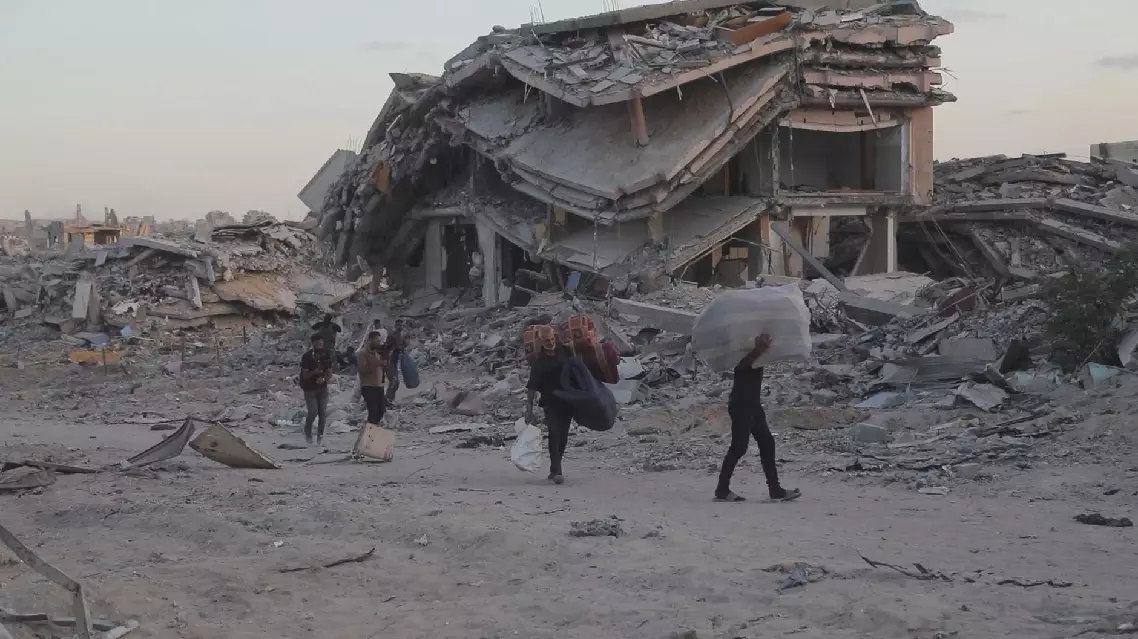
As the Israeli forces began withdrawing from parts of Gaza, many Palestinians trekked back home in the Sheikh Radwan district in Gaza City. What used to be their bustling neighborhoods, however, was left unrecognizable, with buildings razed to the ground and streets strewn with mounds of rubble.
"I returned to Sheikh Radwan and found it completely destroyed. Look! Every house here is shattered beyond description. We came back expecting our homes to be damaged, but not like this. It's indescribable. The houses were wiped out, and so were the people," Suad Al-Alwan, a former Sheikh Radwan resident told China Global Television Network.
Another said the devastation caused by Israeli bombardment was akin to the aftermath of a nuclear bombing.
"When the Israeli army withdrew, we came back, only to be shocked by this catastrophic destruction in Sheikh Radwan and the surrounding areas. When I saw the scene, I said this looks like a nuclear bombing, not missiles. I fainted twice when I saw the devastation -- this is the situation for everyone here," said Mamdouh Hamdan, another refugee.
Gaza, home to more than one million Palestinians, was pounded by airstrikes and artillery shelling as the Israeli army planned to occupy the entire city, before the first phased of the ceasefire deal took hold.
Returning Palestinians shocked by ruined homes in Gaza City
A Japanese lawmaker has raised concerns over Japan's push to expand its military and its nuclear policy.
Responding to some politicians' dangerous tendency towards possessing nuclear weapons, Takara Sachika, a member of Japan's House of Councilors, said that Japan's push to strengthen its military, combined with what she called a misguided nuclear policy, not only heightens regional tensions but also directly threatens regional security.
"I think this is completely unacceptable. Japan is a country that has suffered atomic bombings and is one of the nations most aware of the threat posed by nuclear weapons. Yet such a country is openly discussing the issue of possessing nuclear weapons and even attempting to revise the principle of not allowing the introduction of nuclear weapons, one of the Three Non-Nuclear Principles. This is an extremely serious problem," Takara said.
Takara said the Japanese government's tendency to expand its military capabilities is completely contrary to the Constitution.
"From the perspective of Japan's Constitution, Japan should never have adopted a policy of ensuring security by strengthening military capabilities. Yet today, enormous effort is being poured into military expansion, and that in itself is a serious problem," said the lawmaker.
At a Diet meeting in early November 2025, Japanese Prime Minister Sanae Takaichi said that what she described as the Chinese central authorities' "use of force on Taiwan" could constitute a "survival-threatening situation" for Japan, and suggested the possibility of armed intervention in the Taiwan Strait, drawing strong criticism worldwide.
Takara urged Takaichi to retract her erroneous remarks as soon as possible.
"I think there is a very big problem with making such remarks that provoke other countries. It is necessary to thoroughly examine the facts as soon as possible and withdraw the relevant remarks," she said.
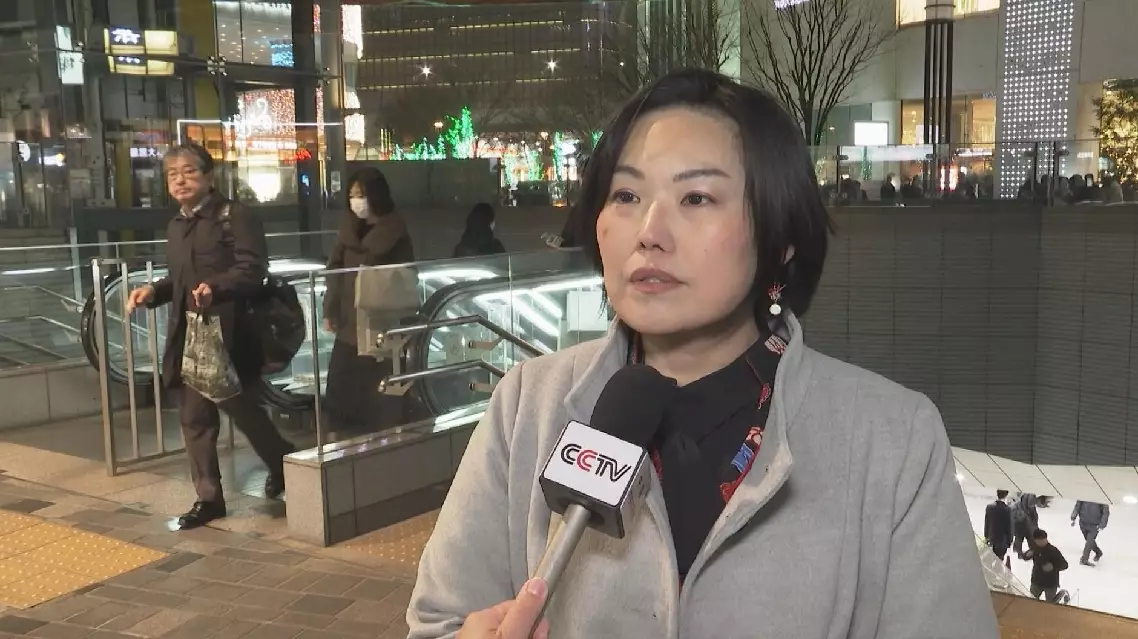
Japanese lawmaker criticizes nuclear weapons remarks as threat to regional security