Skip to Content Facebook Feature Image

Trump says inflation is 'defeated' and the Fed has cut rates, yet prices remain too high for many

News

Trump says inflation is 'defeated' and the Fed has cut rates, yet prices remain too high for many
News

News

Trump says inflation is 'defeated' and the Fed has cut rates, yet prices remain too high for many

2025-10-12 19:03 Last Updated At:19:11

WASHINGTON (AP) — Inflation has risen in three of the last four months and is slightly higher than it was a year ago, when it helped sink then-Vice President Kamala Harris' presidential campaign. Yet you wouldn't know it from listening to President Donald Trump or even some of the inflation fighters at the Federal Reserve.

Trump told the United Nations General Assembly late last month: “Grocery prices are down, mortgage rates are down, and inflation has been defeated.”

More Images
A worker stocks a display of clothing at a Sam's Club, Wednesday, Sept. 24, 2025, in Bentonville, Ark. (AP Photo/Charlie Riedel)
A worker stocks a display of clothing at a Sam's Club, Wednesday, Sept. 24, 2025, in Bentonville, Ark. (AP Photo/Charlie Riedel)

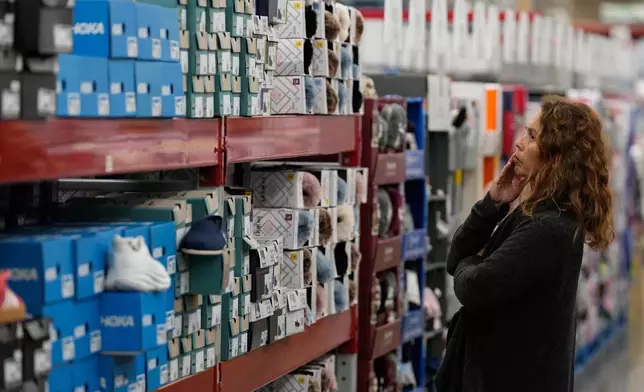
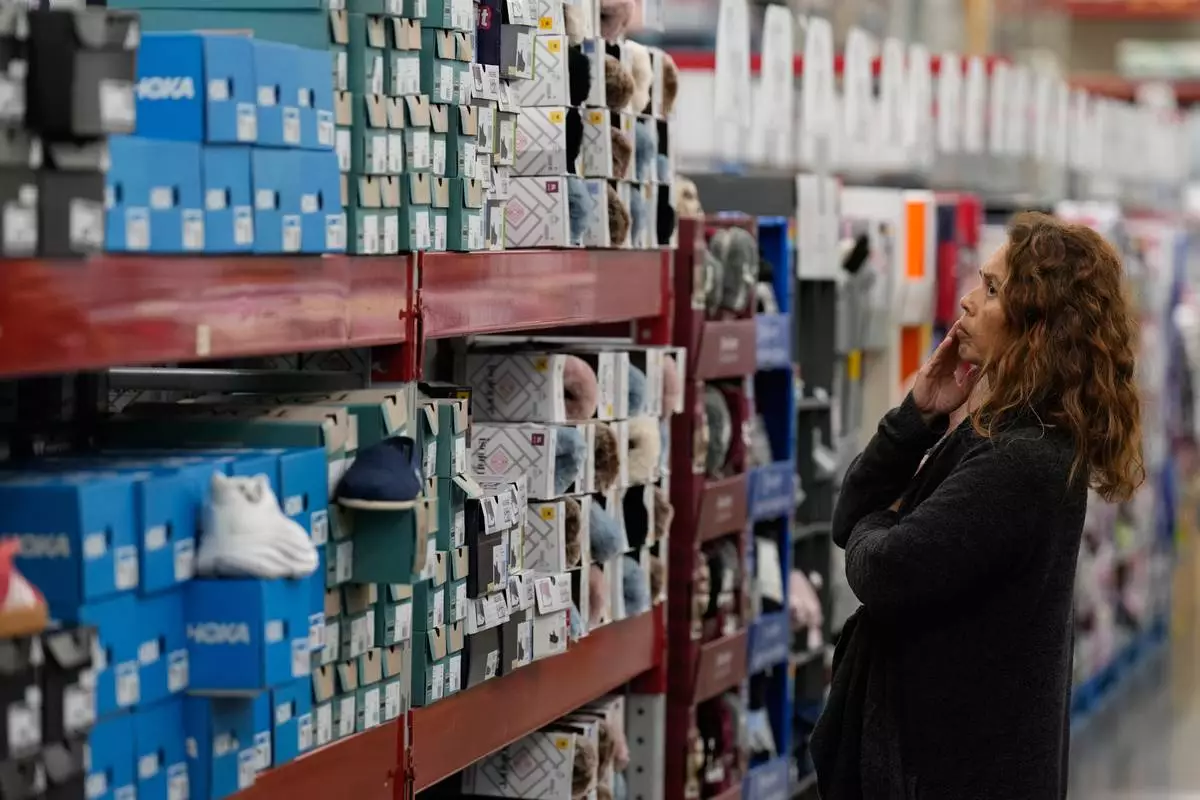
A woman looks at shoes at a Sam's Club, Wednesday, Sept. 24, 2025, in Bentonville, Ark. (AP Photo/Charlie Riedel)
A woman looks at shoes at a Sam's Club, Wednesday, Sept. 24, 2025, in Bentonville, Ark. (AP Photo/Charlie Riedel)

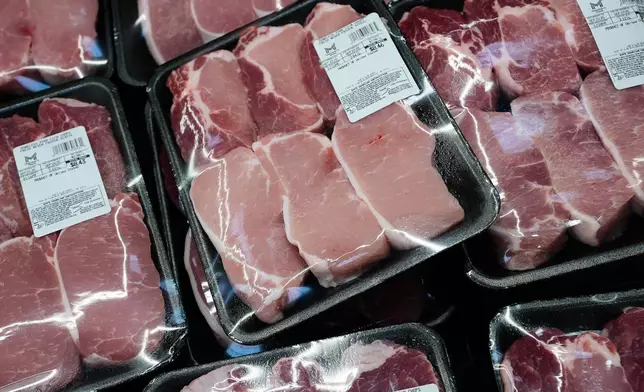
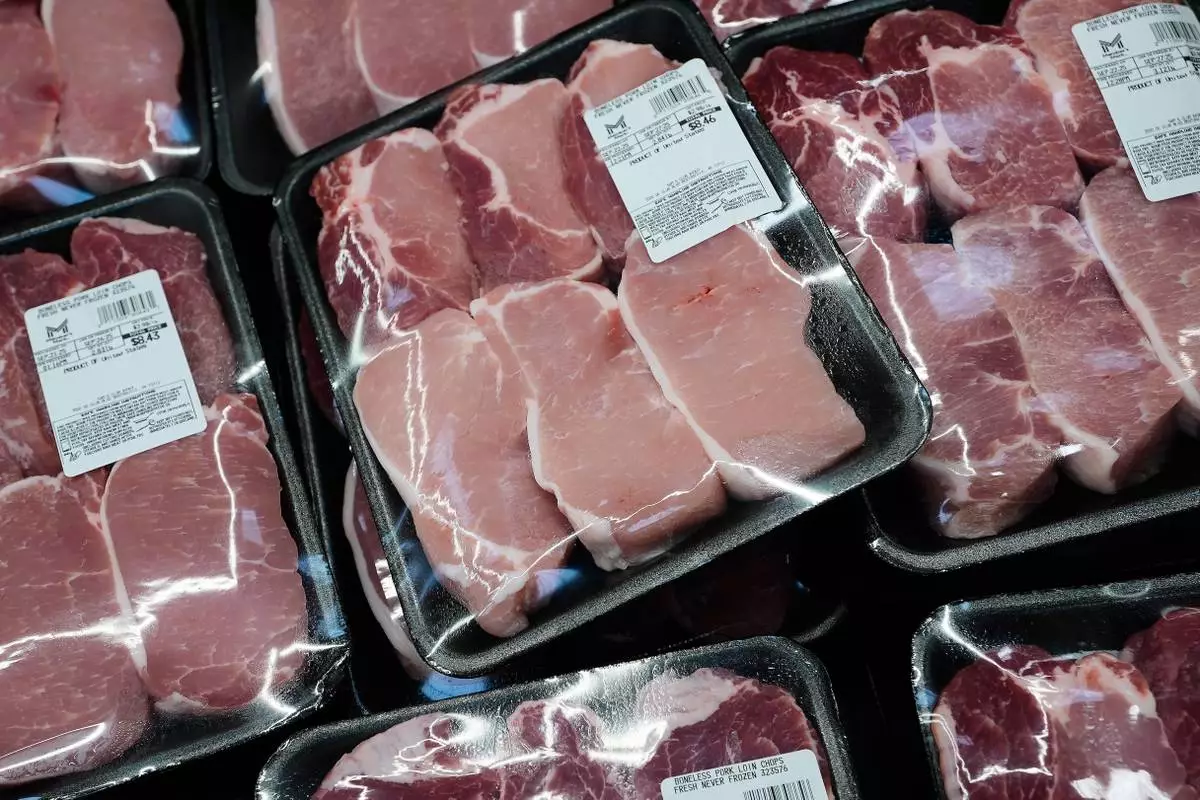
Pork chops are on display at a Sam's Club, Wednesday, Sept. 24, 2025, in Bentonville, Ark. (AP Photo/Charlie Riedel)
Pork chops are on display at a Sam's Club, Wednesday, Sept. 24, 2025, in Bentonville, Ark. (AP Photo/Charlie Riedel)

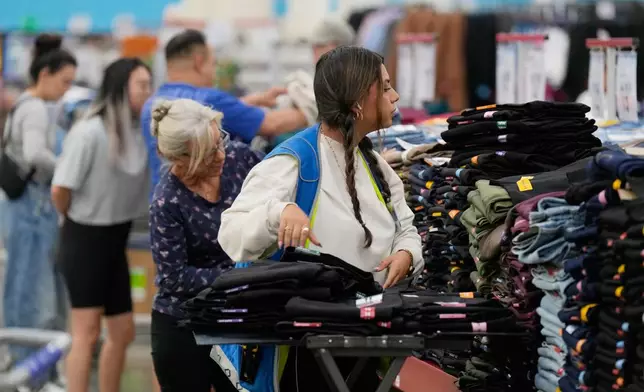
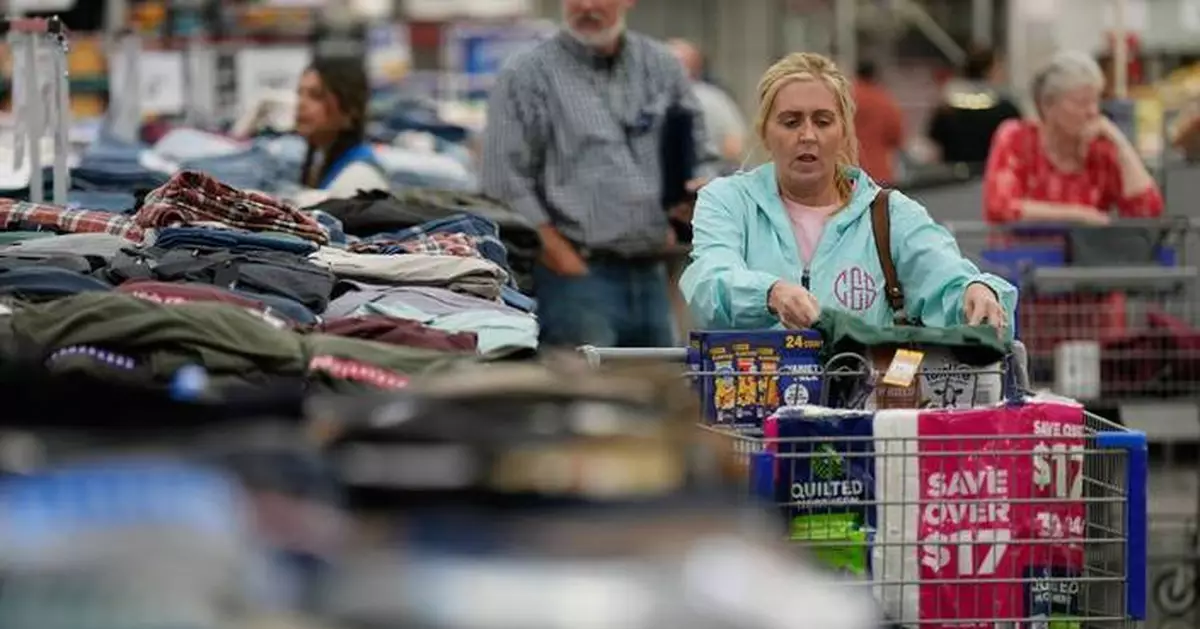
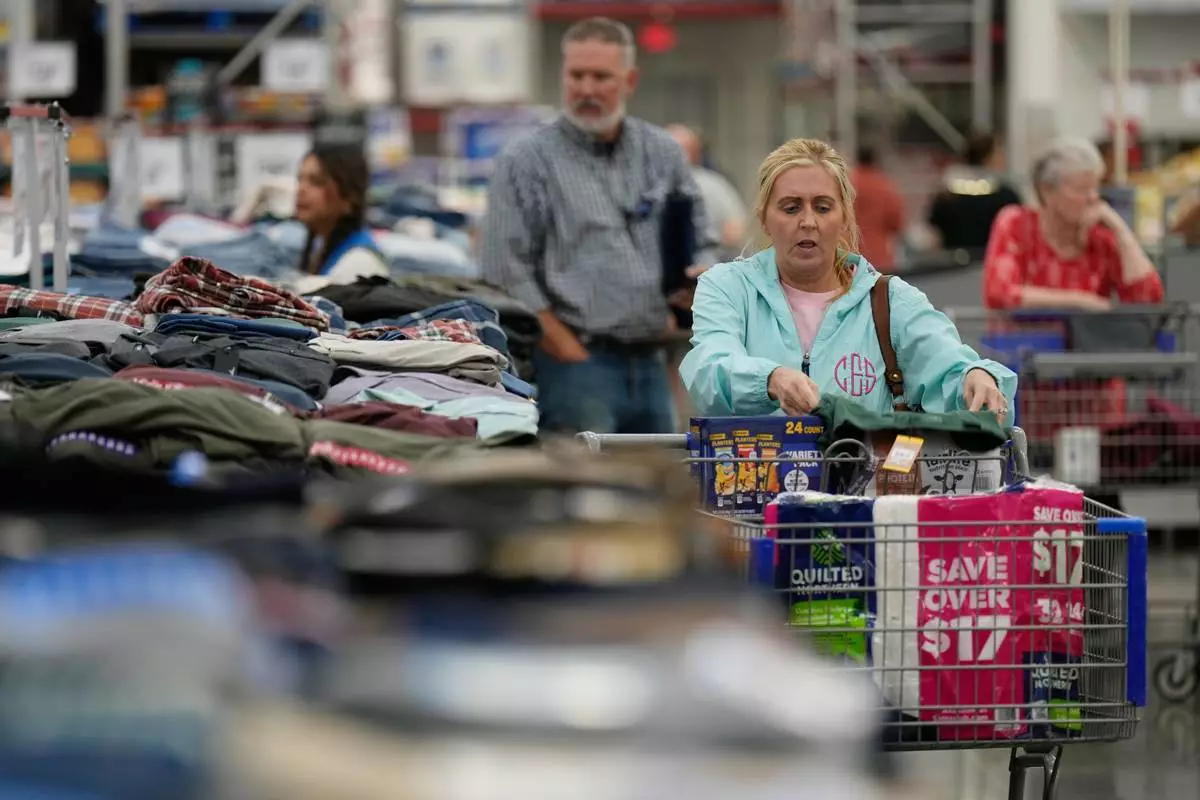
People shop for clothing at a Sam's Club, Wednesday, Sept. 24, 2025, in Bentonville, Ark. (AP Photo/Charlie Riedel)

People shop for clothing at a Sam's Club, Wednesday, Sept. 24, 2025, in Bentonville, Ark. (AP Photo/Charlie Riedel)

And at a high-profile speech in August, just before the Fed cut its key interest rate for the first time this year, Federal Reserve Chair Jerome Powell said: “Inflation, though still somewhat elevated, has come down a great deal from its post-pandemic highs. Upside risks to inflation have diminished.”

Yet dismissing or even downplaying inflation while it is still above the Fed's target of 2% poses big risks for the White House and the Federal Reserve. For the Trump administration, it could find itself on the wrong side of a potent issue: Surveys show that many Americans still see high prices as a major burden on their finances.

The Fed may be taking an even bigger gamble: It has cut its key interest rate on the assumption that the Trump administration's tariffs will only cause a temporary bump up in inflation. If that turns out to be wrong — if inflation gets worse or remains elevated for longer than expected — the Fed's inflation-fighting credibility could take a hit.

That credibility plays a crucial role in the Fed's ability to keep prices stable. If Americans are confident that the central bank can keep inflation in check, they won't take steps — such as demanding sharply higher pay when prices rise — that can launch an inflationary spiral. Companies often increase prices further to offset higher labor costs.

But Karen Dynan, a senior fellow at the Peterson Institute for International Economics, said this week that with memories of pandemic-era inflation still fresh and tariffs pushing up the cost of imported goods, consumers and businesses could start to lose confidence that inflation will stay low.

“If that proves to be the case, in hindsight it will be that the Fed cuts -- and I do expect several more -- are going to be seen as a mistake,” Dynan said.

So far, the Trump administration's tariffs haven't lifted inflation as much as as many economists expected earlier this year. And it remains far below its 9.1% peak three years ago. Still, consumer prices increased 2.9% in August from a year earlier, up from 2.6% at the same time last year and above the Fed’s 2% target.

The government is scheduled to release the September inflation report on Wednesday, but the data will probably be delayed by the government shutdown.

Tariffs have pushed up the cost of many imported items, including furniture, appliances, and toys. Overall, the cost of long-lasting manufactured goods rose nearly 2% in August from a year earlier. It was a modest gain, but comes after nearly three decades when the cost of such items mostly fell.

The cost of some everyday goods are still rising more quickly than before the pandemic: Grocery prices moved up 2.7% in August from a year ago, the largest gain, outside the pandemic, since 2015. Coffee prices have soared nearly 21% in the past year, partly because Trump has slapped 50% import taxes on Brazil, a leading coffee exporter, and also because climate change-induced droughts have cut into coffee bean harvests.

Most Fed officials are still concerned that inflation is too high, according the minutes of its Sept. 16-17 meeting. Yet they still chose to cut their key interest rate, because they were more worried about the risk of worsening unemployment than about higher inflation.

But the concern for some economists is that the ongoing rollout of tariffs and the fact that many companies are still implementing price hikes in response could result in more than just a temporary boost to inflation.

“It is a big gamble after what we’ve been going through ... to count on it being transitory,” said Jason Furman, an economist at Harvard University and a former top adviser to President Barack Obama. “Once upon a time, (3% inflation) would have been considered really high.”

Just two weeks ago, Trump slapped new tariffs on a range of products, including 100% on pharmaceuticals, 50% on kitchen cabinets and bathroom vanities, and 25% on heavy trucks. On Friday, he threatened “a massive increase of tariffs” on imports from China in response to that country's restrictions on rare earth exports.

Some companies are still raising prices to offset the tariff costs. Duties on steel and aluminum imports have pushed up the cost of the cans used by Campbell Soups, leading the company’s CEO to say in September that it will implement “surgical pricing initiatives."

Chris Butler, CEO of National Tree Company, the nation’s largest artificial Christmas tree seller, says his company will raise prices by about 10% this holiday season on its trees, wreaths, and garlands to offset tariff costs. About 45% of its trees are made in China, with the rest from Southeast Asia, Mexico, and other countries. The cost of labor and real estate is too high to make them in the United States, he said.

Butler also expects there will be a reduced supply of artificial trees and decorations this year, which could lift industry-wide prices further, because most production in China shut down when tariffs on that country hit 145% earlier this year. Production resumed after Trump reduced the duties to 30% but at a slower pace.

Butler has pushed his suppliers to absorb some of the cost of the tariffs, but they won’t pay all of it.

“At the end of the day, we can’t absorb the entirety of it and our factories can’t absorb the entirety of it,” he said. “So we’ve had to pass along some of the increases to consumers.”

Many Fed policymakers are aware of the risks. Jeffrey Schmid, president of the Federal Reserve Bank of Kansas City, who votes on interest rate decisions, said Monday that high inflation that results from a loss of confidence in the central bank is harder to fight than other price spikes, such as those that result from supply disruptions.

“The Fed must maintain its credibility on inflation,” Schmid said. “History has shown that while all inflations are universally disliked, not all inflations are equally costly to fight.”

Yet some Fed officials say that other trends are offsetting the impact of tariffs. Fed governor Stephen Miran, whom Trump appointed just before the central bank’s September meeting, said Tuesday that a steady slowdown in rental costs should reduce underlying inflation in the coming months. And the sharp drop in immigration as a result of the administration’s clampdown will reduce demand, he said, cooling inflation pressures.

“I’m more sanguine about the inflation outlook than a lot of other people are,” he said.
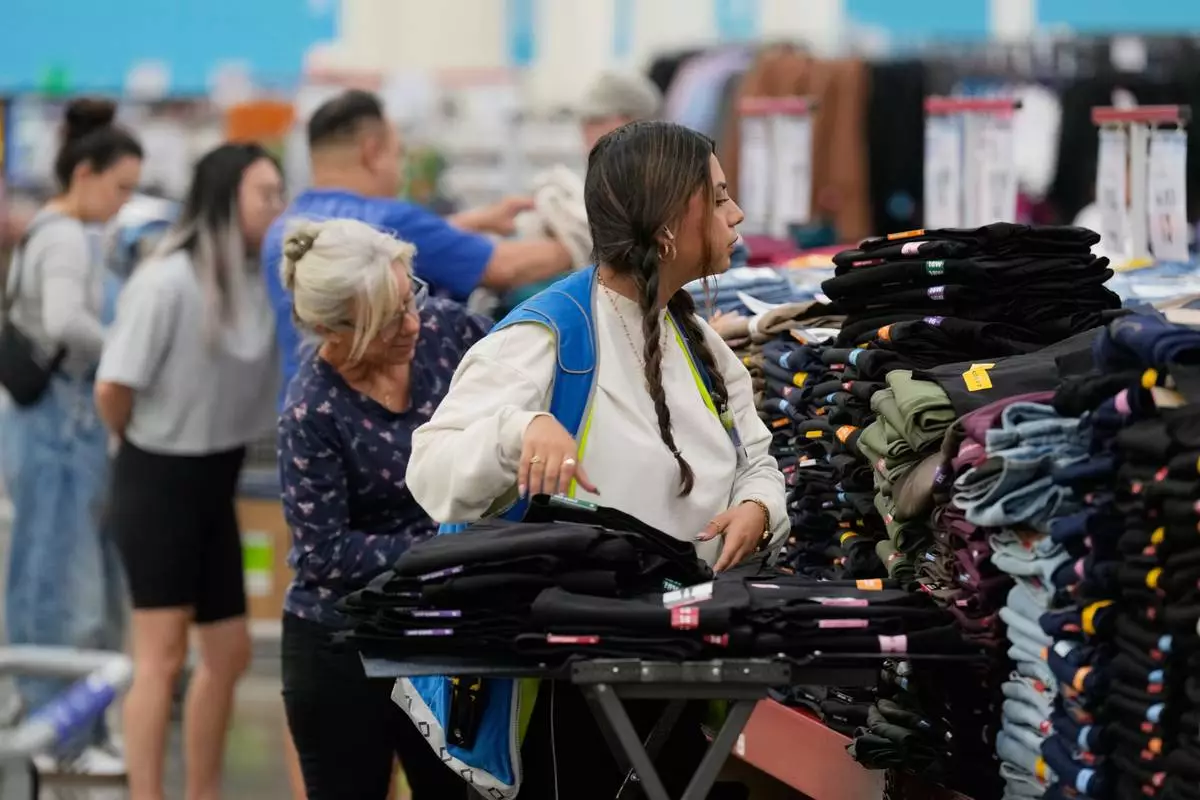
A worker stocks a display of clothing at a Sam's Club, Wednesday, Sept. 24, 2025, in Bentonville, Ark. (AP Photo/Charlie Riedel)
A worker stocks a display of clothing at a Sam's Club, Wednesday, Sept. 24, 2025, in Bentonville, Ark. (AP Photo/Charlie Riedel)

A woman looks at shoes at a Sam's Club, Wednesday, Sept. 24, 2025, in Bentonville, Ark. (AP Photo/Charlie Riedel)
A woman looks at shoes at a Sam's Club, Wednesday, Sept. 24, 2025, in Bentonville, Ark. (AP Photo/Charlie Riedel)

Pork chops are on display at a Sam's Club, Wednesday, Sept. 24, 2025, in Bentonville, Ark. (AP Photo/Charlie Riedel)
Pork chops are on display at a Sam's Club, Wednesday, Sept. 24, 2025, in Bentonville, Ark. (AP Photo/Charlie Riedel)

People shop for clothing at a Sam's Club, Wednesday, Sept. 24, 2025, in Bentonville, Ark. (AP Photo/Charlie Riedel)
People shop for clothing at a Sam's Club, Wednesday, Sept. 24, 2025, in Bentonville, Ark. (AP Photo/Charlie Riedel)
BEIJING (AP) — In China, the names of things are often either ornately poetic or jarringly direct. A new, wildly popular app among young Chinese people is definitively the latter.

It's called, simply, “Are You Dead?"

In a vast country whose young people are increasingly on the move, the new, one-button app — which has taken the country by digital storm this month — is essentially exactly what it says it is. People who live alone in far-off cities and may be at risk — or just perceived as such by friends or relatives — can push an outsized green circle on their phone screens and send proof of life over the network to a friend or loved one. The cost: 8 yuan (about $1.10).

It's simple and straightforward — essentially a 21st-century Chinese digital version of those American pendants with an alert button on them for senior citizens that gave birth to the famed TV commercial: “I've fallen, and I can't get up!”

Developed by three young people in their 20s, “Are You Dead?” became the most downloaded paid app on the Apple App Store in China last week, according to local media reports. It is also becoming a top download in places as diverse as Singapore and the Netherlands, Britain and India and the United States — in line with the developers' attitude that loneliness and safety aren't just Chinese issues.

“Every country has young people who move to big cities to chase their dreams,” Ian Lü, 29, one of the app's developers, said Thursday.

Lü, who worked and lived alone in the southern city of Shenzhen for five years, experienced such loneliness himself. He said the need for a frictionless check-in is especially strong among introverts. “It's unrealistic,” he said, “to message people every day just to tell them you're still alive.”

Against the backdrop of modern and increasingly frenetic Chinese life, the market for the app is understandable.

Traditionally, Chinese families have tended to live together or at least in close proximity across generations — something embedded deep in the nation's culture until recent years. That has changed in the last few decades with urbanization and rapid economic growth that have sent many Chinese to join what is effectively a diaspora within their own nation — and taken hundreds of millions far from parents, grandparents, aunts and uncles.

Today, the country has more than 100 million households with only one person, according to an annual report from the National Bureau of Statistics of China in 2024.

Consider Chen Xingyu, 32, who has lived on her own for years in Kunming, the capital of southern China’s Yunnan province. “It is new and funny. The name ’Are You Dead?' is very interesting,” Chen said.

Chen, a “lying flat” practitioner who has rejected the grueling, fast-paced career of many in her age group, would try the app but worries about data security. “Assuming many who want to try are women users, if information of such detail about users gets leaked, that’d be terrible,” she said.

Yuan Sangsang, a Shanghai designer, has been living on her own for a decade and describes herself as a “single cow and horse.” She's not hoping the app will save her life — only help her relatives in the event that she does, in fact, expire alone.

"I just don’t want to die with no dignity, like the body gets rotten and smelly before it is found," said Yuan, 38. “That would be unfair for the ones who have to deal with it.”

While such an app might at first seem best suited to elderly people — regardless of their smartphone literacy — all reports indicate that “Are You Dead?” is being snapped up by younger people as the wry equivalent of a social media check-in.

“Some netizens say that the 'Are you dead?' greeting feels like a carefree joke between close friends — both heartfelt and gives a sense of unguarded ease,” the business website Yicai, the Chinese Business Network, said in a commentary. ""It likely explains why so many young people unanimously like this app."

The commentary, by writer He Tao, went further in analyzing the cultural landscape. He wrote that the app's immediate success “serves as a darkly humorous social metaphor, reminding us to pay attention to the living conditions and inner world of contemporary young people. Those who downloaded it clearly need more than just a functional security measure; they crave a signal of being seen and understood.”

Death is a taboo subject in Chinese culture, and the word itself is shunned to the point where many buildings in China have no fourth floor because the word for “four” and the word for “death” sound the same — “si.” Lü acknowledged that the app's name sparked public pressure.

“Death is an issue every one of us has to face,” he said. “Only when you truly understand death do you start thinking about how long you can exist in this world, and how you want to realize the value of your life.”

A few days ago, though, the developers said on their official account on China’s Weibo social platform that they’d pivot to a new name. Their choice: the more cryptic “Demumu,” which they said they hoped could "serve more solo dwellers globally.”

Then, a twist: Late Wednesday, the app team posted on its Weibo account that workshopping the name Demumu didn’t turn out “as well as expected.” The app team is offering a reward for whoever offers a new name that will be picked this weekend. Lü said more than 10,000 people have weighed in.

The reward for the new moniker: $96 — or, in China, 666 yuan.

Fu Ting reported from Washington. AP researcher Shihuan Chen in Beijing contributed.

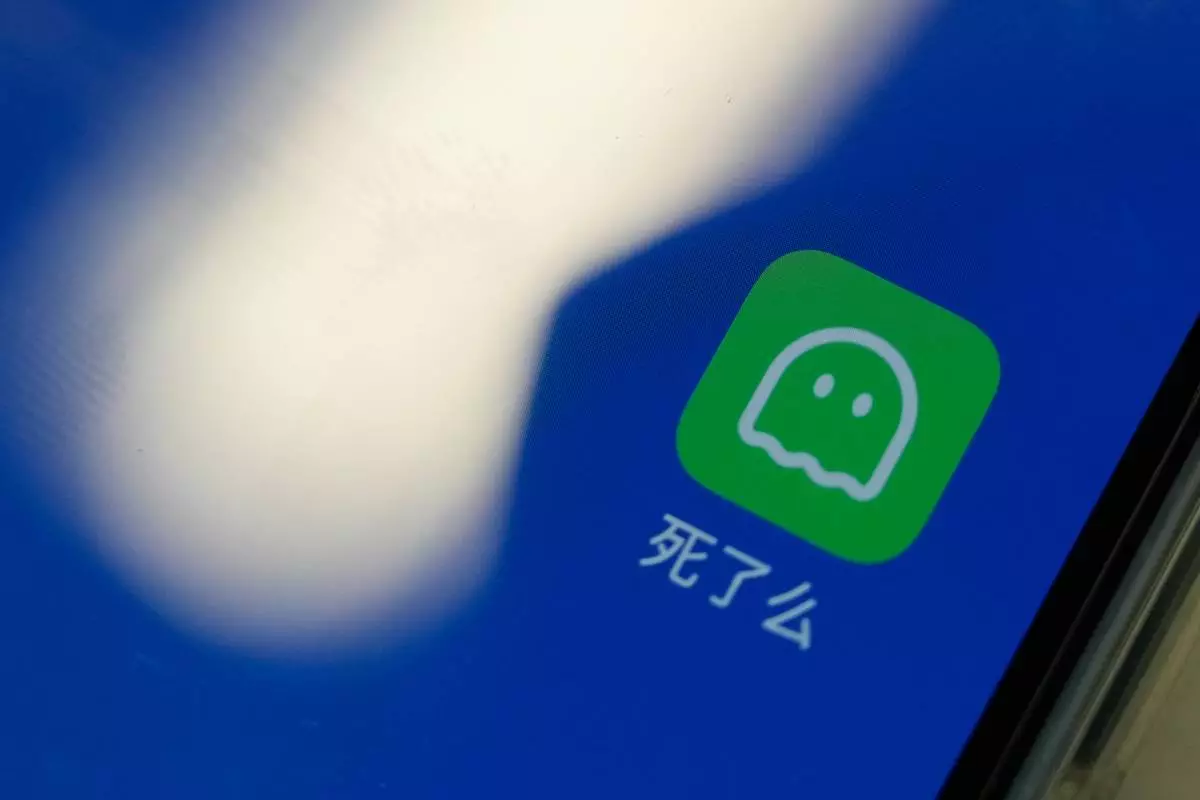
The app Are You Dead? is seen on a smartphone in Beijing, China, Thursday, Jan. 15, 2026. (AP Photo/Ng Han Guan)

The app Are You Dead? is seen on a smartphone in Beijing, China, Thursday, Jan. 15, 2026. (AP Photo/Ng Han Guan)

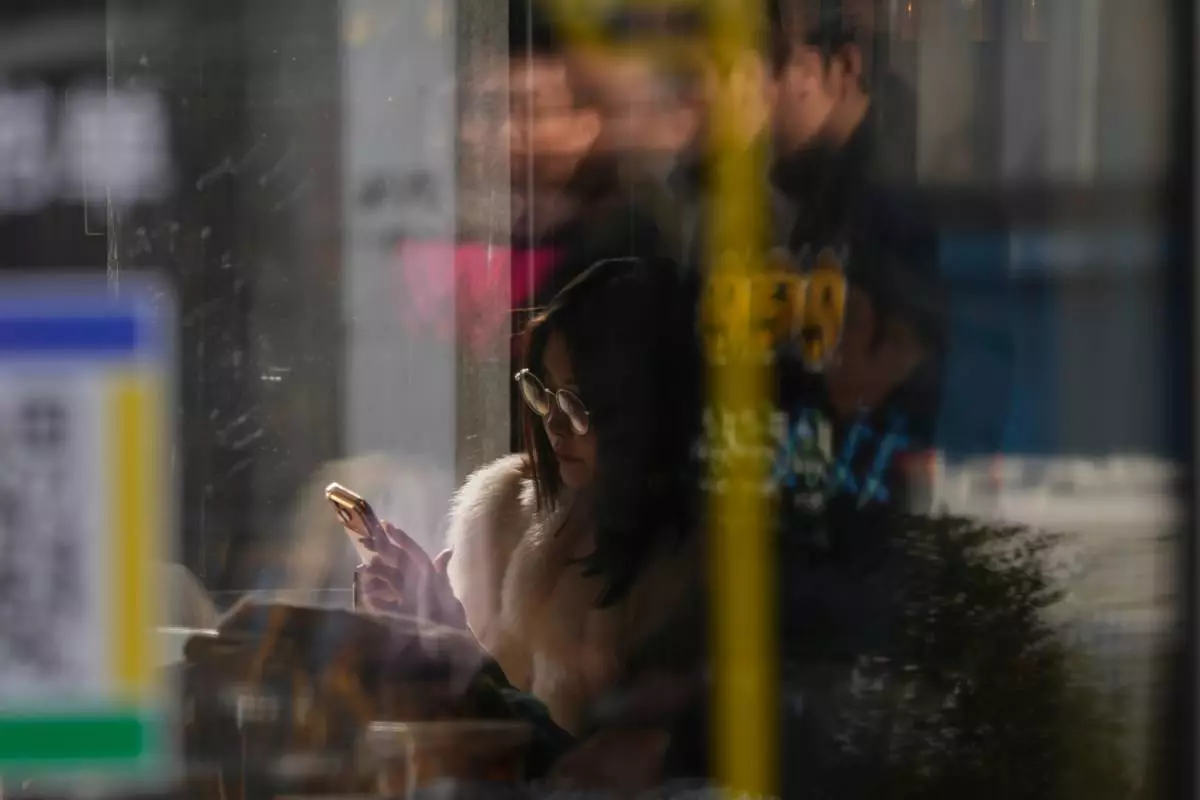
A woman looks at her smartphone in a cafe in Beijing, China, Thursday, Jan. 15, 2026. (AP Photo/Ng Han Guan)

A woman looks at her smartphone in a cafe in Beijing, China, Thursday, Jan. 15, 2026. (AP Photo/Ng Han Guan)

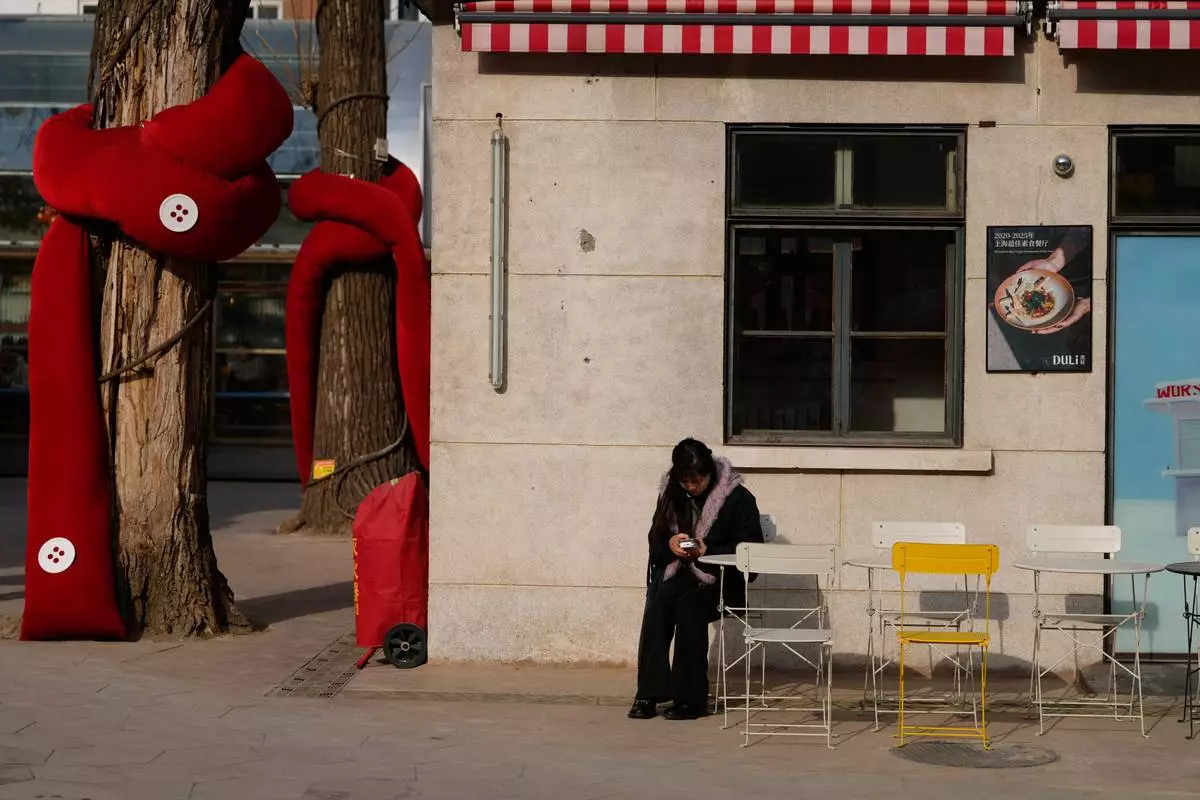
A woman looks at her smartphone outside a restaurant in Beijing, China, Thursday, Jan. 15, 2026. (AP Photo/Ng Han Guan)

A woman looks at her smartphone outside a restaurant in Beijing, China, Thursday, Jan. 15, 2026. (AP Photo/Ng Han Guan)

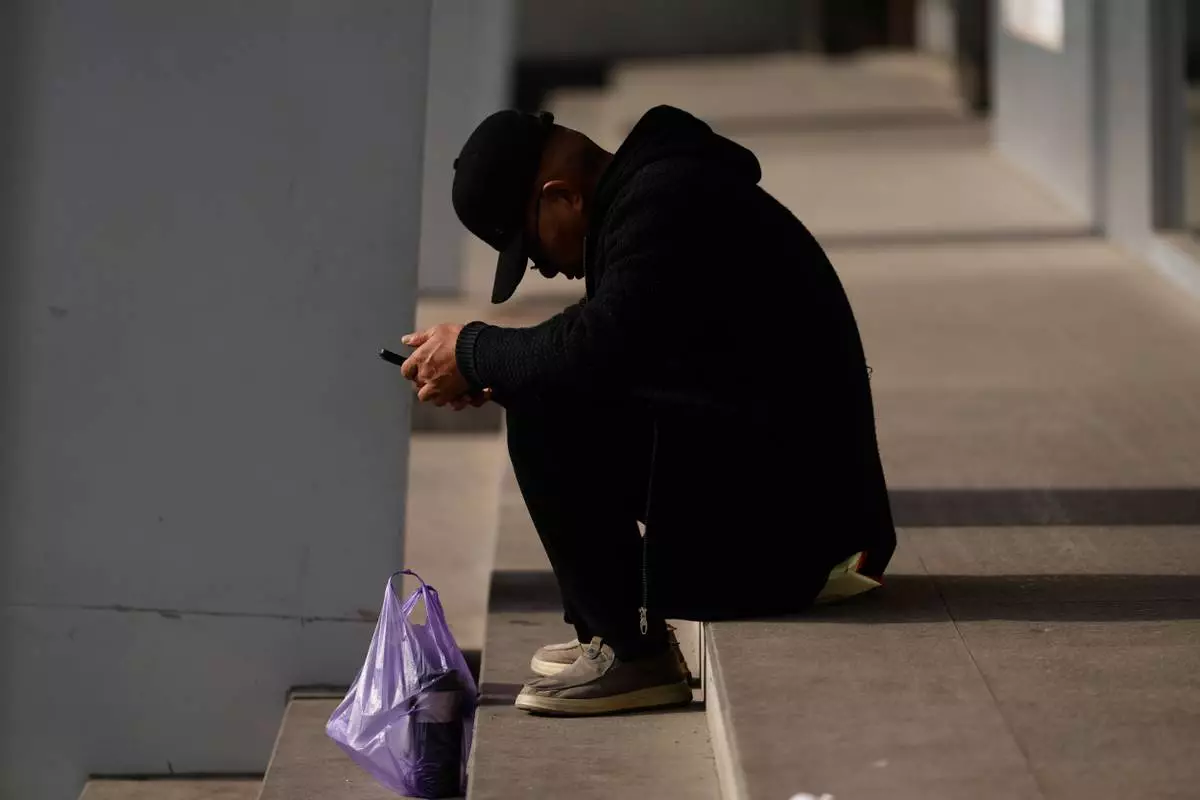
A man looks down near his smartphone in Beijing, China, Thursday, Jan. 15, 2026. (AP Photo/Ng Han Guan)

A man looks down near his smartphone in Beijing, China, Thursday, Jan. 15, 2026. (AP Photo/Ng Han Guan)

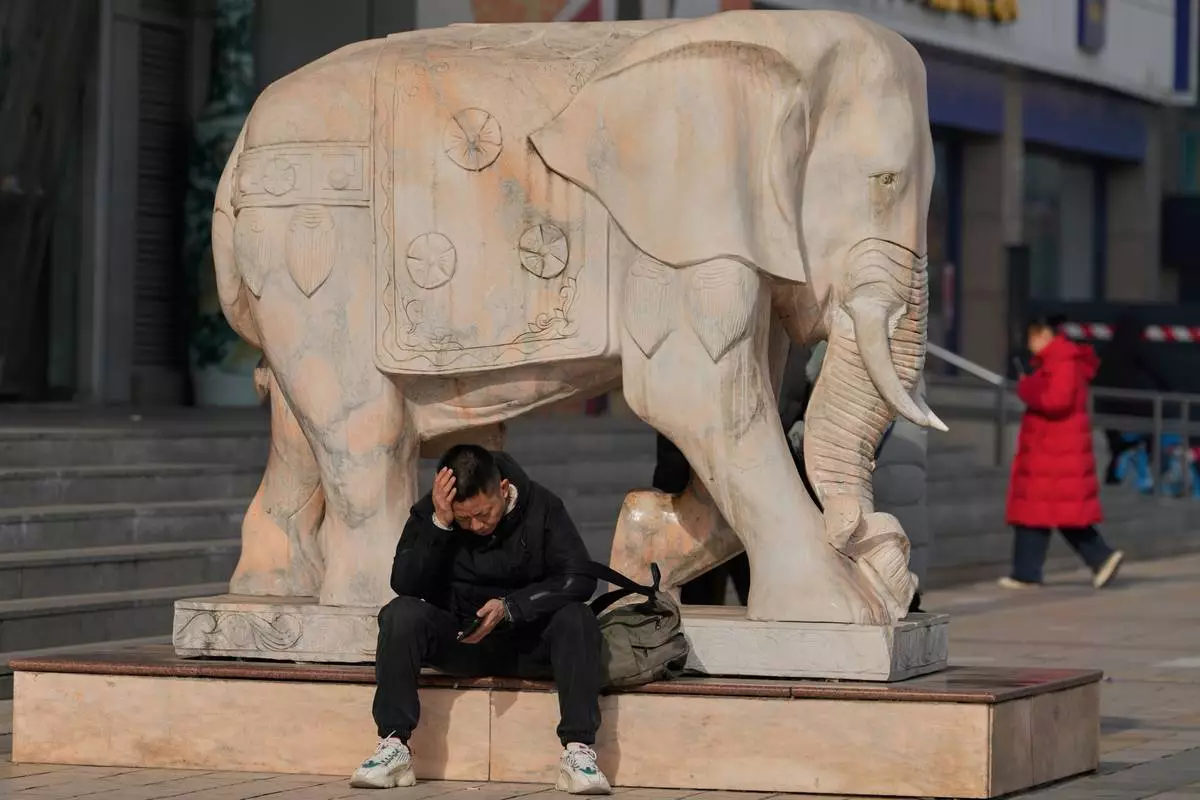
A man reacts while holding his smartphone in Beijing, China, Thursday, Jan. 15, 2026. (AP Photo/Ng Han Guan)

A man reacts while holding his smartphone in Beijing, China, Thursday, Jan. 15, 2026. (AP Photo/Ng Han Guan)

Recommended Articles