Scholars from across the world attending the ongoing second edition of the World Conference on China Studies made an in-depth field trip in the host city Shanghai, and were amazed by the country's rich cultural heritage, rapid technological development and robust innovation strength.
Themed "Historical and Contemporary China: A Global Perspective", the conference gathers approximately 500 renowned experts and scholars from around the world and held various forums, activities and an exhibition focused on urban civilization.
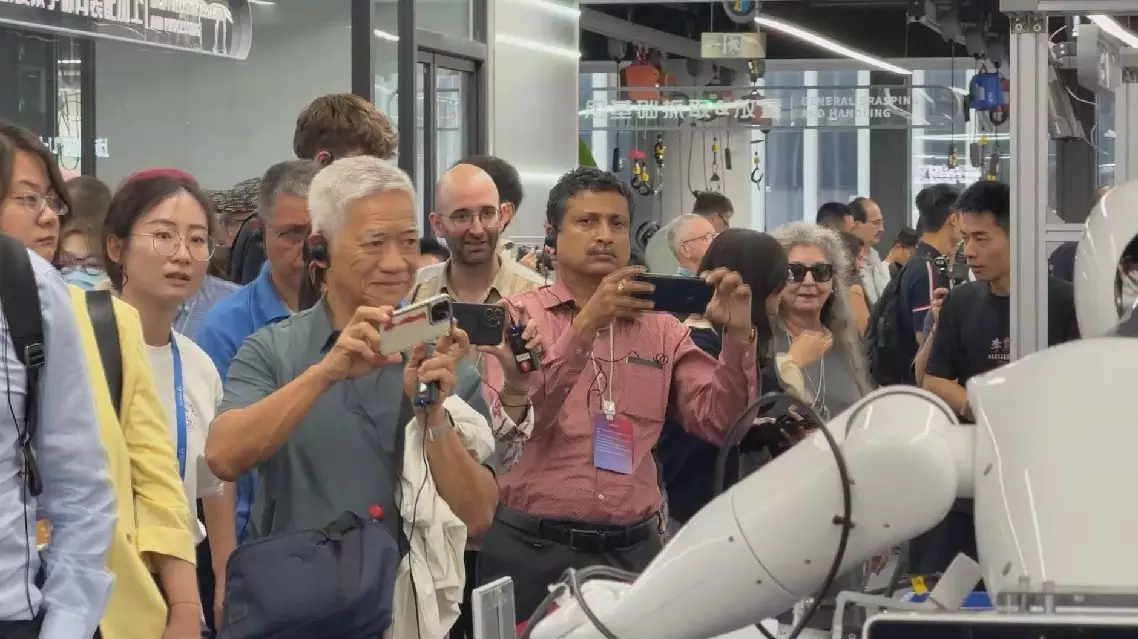
The invited foreign scholars visited a robot innovation center in Shanghai on Monday, observing at close range every movement of the robots with some of them taking photos of the robots and the training venue.
"I follow the development of the Chinese robotics since many years and it is amazing the result. But you see every time I come here, this is something new. Next steps would be amazing," said Giorgio Prodi, an Italian scholar.
The over 500 bronze artifacts on display at the Shanghai Museum East also draw admiration from the scholars with its cultural significance.
"I've studied China for quite a few years, so I think what I learned today from this collection was the diversity of all the bronzes. I always do [China studies]. This has been a lifelong project for me," Louise Edwards, an emeritus professor at the University of New South Wales.
Sam Daws, a scholar from the United Kingdom, said the visit opens more doors for him to have more in-depth engagement with Chinese people and thinkers in the future.
"I think the Shanghai Museum showcases the contribution that Chinese culture, history and civilization can make to the understanding of what it means to be human, whatever country we're from. I'm from England, but I found the visit very beautiful. I want to see more of China. I want to see more museums, more art galleries, and most of all, to meet and talk to more Chinese people, Chinese thinkers and understand the world from their shoes, from their eyes," he said.
Global China experts impressed by Chinese cultural heritage, tech innovation