Skip to Content Facebook Feature Image

China's PPI down 2.3 pct in September, narrows its fall

China

China

China

China's PPI down 2.3 pct in September, narrows its fall

2025-10-15 10:36 Last Updated At:13:27

China's producer price index (PPI), which measures costs for goods at the factory gate, went down 2.3 percent year on year in September, the National Bureau of Statistics (NBS) said Wednesday.

The decline narrowed by 0.6 percentage points from the previous month, suggesting an improvement in industrial demand amid government efforts to bolster economic growth.

On a monthly basis, the PPI held steady in September after a 2.9 percent year-on-year decrease in August, the NBS data showed.

The PPI for purchased materials by industrial producers decreased by 3.1 percent year on year, with the rate of decline narrowing by 0.9 percentage points compared to the previous month, while the month-on-month figure increased by 0.1 percent.

For the first nine months of the year, the PPI was down 2.8 percent compared to the same period in 2024 while the average purchasing prices for industrial producers fell by 3.2 percent.

Wednesday's data also showed that China's consumer price index, a main gauge of inflation, was down 0.3 percent year on year in September.
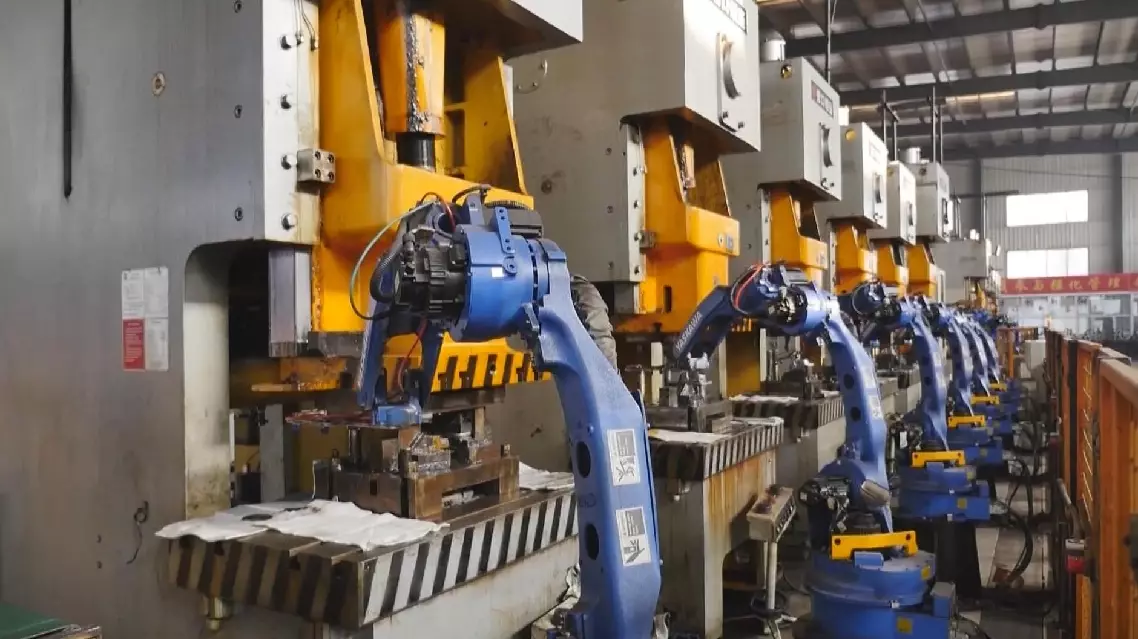
China's PPI down 2.3 pct in September, narrows its fall

China's PPI down 2.3 pct in September, narrows its fall
Highlighting the "Future Energy" as a key direction for China's strategic emerging industries, the country's nuclear energy development, guided by its three-step strategy, has seen major strides in the past year, said a member of the 14th National Committee of the Chinese People's Political Consultative Conference (CPPCC).

In a recent press briefing, Xin Feng, also deputy general manager of China National Nuclear Corporation (CNNC), updated the media on the progresses China has achieved under the strategy.

"China's three-step strategy for nuclear energy development -- from the thermal reactor to the fast reactor and the fusion reactor -- was formulated in 1983 as a medium- and long-term plan. For the thermal reactor, over the past year, our 2.0 version of the Hualong One technology has been approved. This is a unified and fully self-owned intellectual property based third-generation nuclear power technology solution. And the Linglong One small modular reactor also successfully completed its cold-state functional test last year and is expected to be put into commercial operation this year," he said.

For the second and third steps, Chinese researchers and engineers have achieved milestones in the past year with the government support, Xin noted.

"Then for the fast reactor, last year, a closed-cycle system for an integral fast reactor successfully achieved preliminary standard design. We will continue to solve its engineering technology challenges. As for the fusion reactor, in 2025, with national support, we established the China Fusion Energy Company in Shanghai. And our Huanliu-3, a platform for conducting research and development of fusion technology, made a big stride, with an iron temperature in it achieving 117 million Celsius and an electron temperature reaching 160 million Celsius. We will continue to adhere to the development strategy and focus on technological research and engineering technology development," Xin said.

The fourth session of the 14th NPC and the fourth session of the 14th National Committee of the CPPCC kicked off in Beijing on March 5 and March 4, respectively.

The "two sessions" -- which refer to the annual meetings of China's supreme organ of state power, the National People's Congress (NPC), and its top political advisory body, the National Committee of the CPPCC -- are a key event on the country's political calendar and offer a window into the country's development direction.

China's nuclear energy development makes great strides with three-step strategy: CPPCC member

China's nuclear energy development makes great strides with three-step strategy: CPPCC member

Recommended Articles