Skip to Content Facebook Feature Image

Gaza's post-war governance must be led by Palestinians without external interference: Hamas spokesman

China

Gaza's post-war governance must be led by Palestinians without external interference: Hamas spokesman
China

China

Gaza's post-war governance must be led by Palestinians without external interference: Hamas spokesman

2025-10-16 17:08 Last Updated At:20:27

A Hamas spokesperson says the post-war governance of Gaza Strip must be led by Palestinians without the interference of external forces in a latest interview with China Global Television Network (CGTN).

Since the Gaza war erupted on October 7, 2023, Israeli strikes have devastated the Gaza Strip, causing widespread famine and displacement, and killing at least 67,938 people and injuring 170,169 others.

On October 9, Hamas and Israel agreed on the "first phase" of a 20-point peace plan, which includes a ceasefire and the release of some hostages and prisoners, marking a major breakthrough in the two-year conflict.

The ceasefire plan was proposed by U.S. President Donald Trump and was under the auspices of Egypt, Qatar, and the United States.

In the interview, Hamas spokesperson Hazem Qasim shared his views on the plan, emphasizing that the governance of Gaza must be led by Palestinians and brooks no interference.

"Many of the issues in Trump's plan require further discussion. Palestine needs to strengthen internal consultation and mutual understanding to prevent external interference. The current proposals contain many contentious points; as the people of Gaza have said, post-war governance of the Gaza Strip must be led by Palestinians. We will not allow any external forces to intervene. We Palestinians are capable of self-governance, of establishing internal political consultation mechanisms, and of excluding external interference," said Qasim.

In order to make sure the peace plan can be followed as agreed, Qasim believed mediators ought to provide strict security protections to the enclave.

"Past experiences dealing with Israel show that they do not honor agreements. We have witnessed similar situations in Syria, Lebanon, and the West Bank. Therefore, we insist that mediators provide strict security guarantees," Qasim said.

He then stressed that Hamas will continue its resistance against Israel.

"Our struggle with Israel has never stopped. We will adapt our methods of struggle according to changing circumstances, especially after the massive destruction Gaza has suffered, but this does not mean resistance has ended. The Palestinian people contain great strength and are capable of sustaining the struggle by means other than holding hostages," said Qasim.

Gaza's post-war governance must be led by Palestinians without external interference: Hamas spokesman

Gaza's post-war governance must be led by Palestinians without external interference: Hamas spokesman

Gaza's post-war governance must be led by Palestinians without external interference: Hamas spokesman

Gaza's post-war governance must be led by Palestinians without external interference: Hamas spokesman
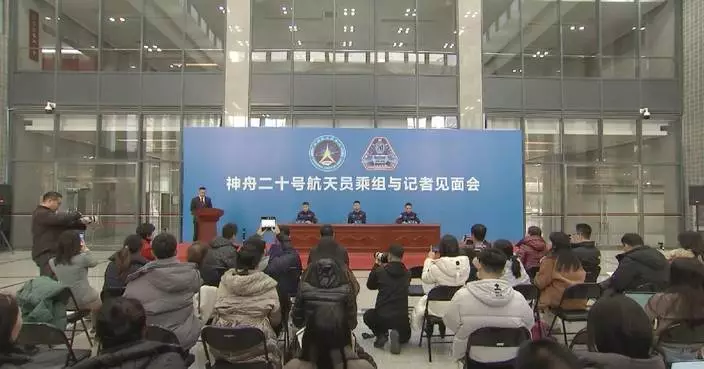
A Japanese lawmaker has raised concerns over Japan's push to expand its military and its nuclear policy.

Responding to some politicians' dangerous tendency towards possessing nuclear weapons, Takara Sachika, a member of Japan's House of Councilors, said that Japan's push to strengthen its military, combined with what she called a misguided nuclear policy, not only heightens regional tensions but also directly threatens regional security.

"I think this is completely unacceptable. Japan is a country that has suffered atomic bombings and is one of the nations most aware of the threat posed by nuclear weapons. Yet such a country is openly discussing the issue of possessing nuclear weapons and even attempting to revise the principle of not allowing the introduction of nuclear weapons, one of the Three Non-Nuclear Principles. This is an extremely serious problem," Takara said.

Takara said the Japanese government's tendency to expand its military capabilities is completely contrary to the Constitution.

"From the perspective of Japan's Constitution, Japan should never have adopted a policy of ensuring security by strengthening military capabilities. Yet today, enormous effort is being poured into military expansion, and that in itself is a serious problem," said the lawmaker.

At a Diet meeting in early November 2025, Japanese Prime Minister Sanae Takaichi said that what she described as the Chinese central authorities' "use of force on Taiwan" could constitute a "survival-threatening situation" for Japan, and suggested the possibility of armed intervention in the Taiwan Strait, drawing strong criticism worldwide.

Takara urged Takaichi to retract her erroneous remarks as soon as possible.

"I think there is a very big problem with making such remarks that provoke other countries. It is necessary to thoroughly examine the facts as soon as possible and withdraw the relevant remarks," she said.

Japanese lawmaker criticizes nuclear weapons remarks as threat to regional security

Japanese lawmaker criticizes nuclear weapons remarks as threat to regional security

Recommended Articles