Chinese scientists have recently made a series of significant breakthroughs in unlocking all-solid-state lithium metal batteries, which are expected to prompt the range of electric vehicles powered by 100-kilogram battery from the original 500 kilometers to over 1,000 kilometers.
The breakthroughs mark a milestone in enhancing the quality of solid-state batteries, which hold vast application potential in fields such as new energy vehicles and the low-altitude economy.
Currently, charging and discharging batteries entirely rely on lithium ions shuttling between the positive and negative electrodes and solid-state electrolyte serves as the 'expressway' for their deliveries.
Commonly used sulfide solid electrolytes are hard and brittle, like ceramics, but lithium metal electrodes are as soft as modeling clay.
When these two materials come into contact, it's like pressing clay onto a ceramic plate -- there are always gaps at the interface.
The breakthroughs help settle the issue, thus significantly enhancing the charging and discharging efficiency of batteries.
The special glue co-developed by the Institute of Physics under the Chinese Academy of Sciences and other scientific research institutes uses iodide ions to attract lithium at the interface between electrode and electrolyte.
Once the lithium fulfills all the gaps, the electrode and electrolyte are seamless connected.
The scientists at the Institute of Metal Research, also under the Chinese Academy of Sciences, made a 'skeleton' with polymer materials for electrolyte, enabling the battery to withstand stretching and deformation like plastic wrap.
Meanwhile, the chemical components added into the 'skeleton' help lithium run faster, with some of the additives being able to catch more lithium, thus improving the energy storage capacity of batteries by 86 percent.
The research team at the Tsinghua University modified the electrolyte with fluorine-containing polyether materials.
By leveraging fluorine's exceptional high-voltage resistance, the 'protective fluoride shell' on the electrode surface prevents high-voltage from breaking down the electrolyte, thus ensuring both safety and endurance.
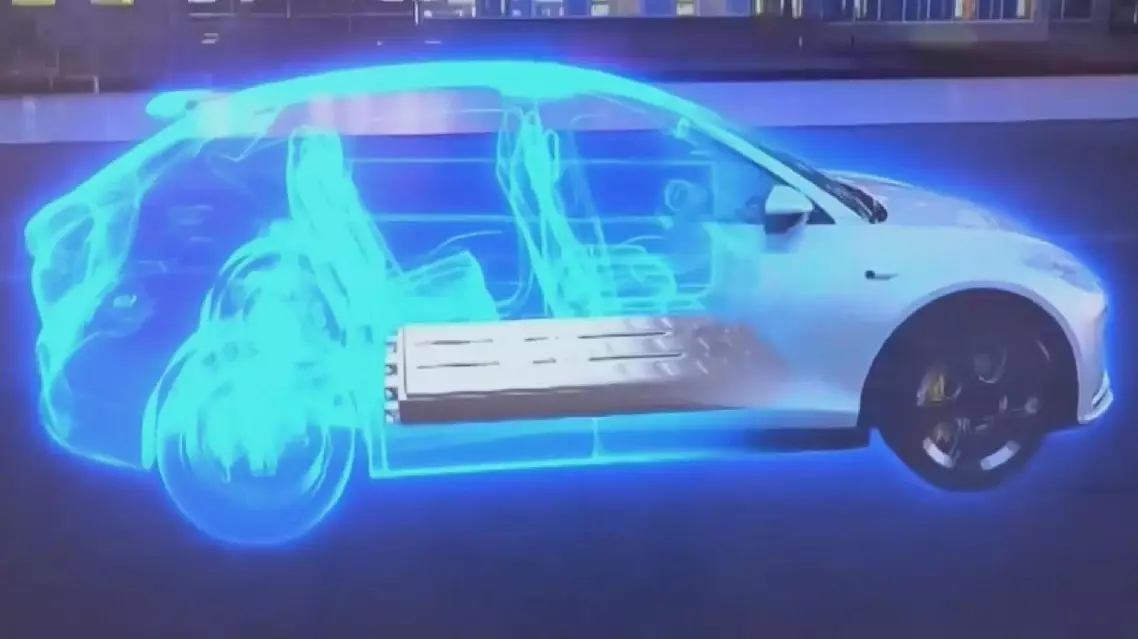
China overcomes key barriers to unlocking all-solid-state EV batteries with 1,000 km range