China’s 138th Canton Fair opened its doors Wednesday in south China's Guangzhou, launching the "Advanced Manufacturing" phase with a record number of global buyers eager to explore cutting-edge robotics, electronics, and industrial tech.
Spanning five key sectors, including electronics, home appliances, and industrial machinery, the phase offers early access to China’s latest manufacturing breakthroughs.
According to organizers, more than 240,000 buyers from 218 countries and regions have preregistered for the fair, marking a 10 percent increase from the previous session.
Notable growth has been seen in attendance from the European Union, the U.S., and emerging markets, particularly those involved in the Belt and Road Initiative.
On opening day alone, over 69,000 overseas buyers were recorded, up 6.9 percent year on year, highlighting the fair’s expanding global reach.
In the service robot zone, where 46 leading industry players are showcasing humanoid robots, robotic dogs, and other advanced technologies, a young U.S. buyer was captivated by a dexterous robotic hand.
"I look for kind of three qualities when looking for robots. So I look for dexterous hands, I look for a wheel-based structure and I look for a friendly, semi-humanoid type of robot that is able to go to a charging station and recharge by itself. Those are the three things that I would say really attract me," he said.
The young entrepreneur, who runs an automation software company in the United States, is developing a robot to replace manual transportation in supermarkets, where labor costs run high. He came to the Canton Fair this time around to find suitable hardware products.
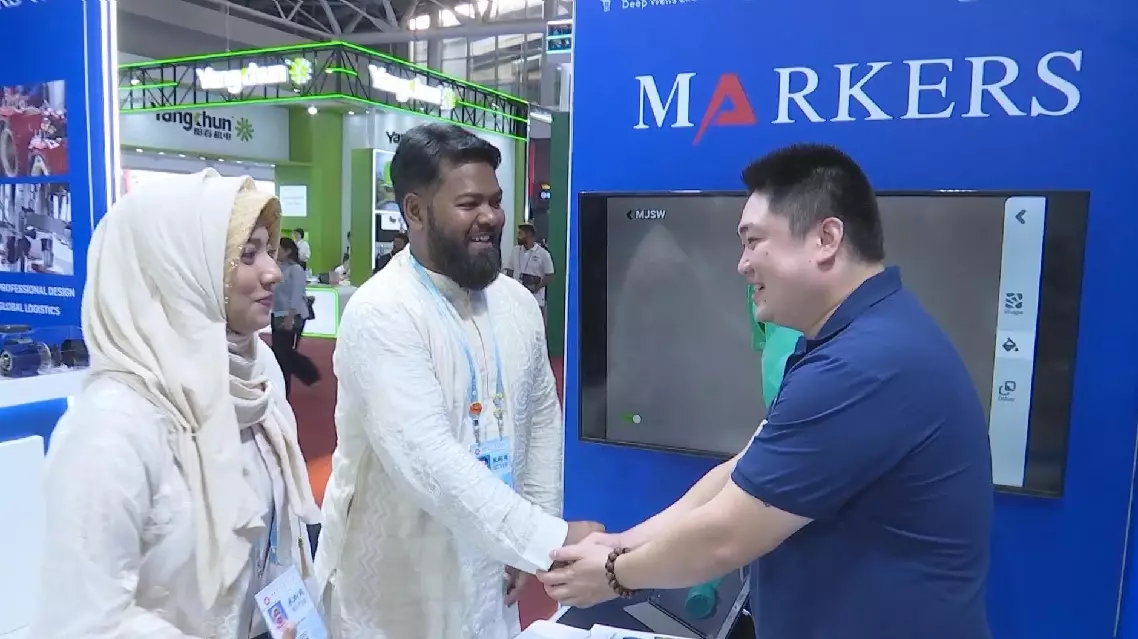
"We're looking to spend around 20,000 to 60,000 US dollars for our first pilot store in robotics. And then once we have a proven concept in retail stores, we are looking to scale there and potentially expand that number from 10 to 50 stores a year, and hopefully growing exponentially from there," he said. Another buyer from Bangladesh, where urban infrastructure struggles to cope with heavy rainfall, sees strong demand for water pumps suited for sewage and flood control.
"I placed some orders here. My main business is induction motor and water pumps, so it's around 100,000 U.S. dollars, the value," he said.
In the new energy exhibition zone, a buyer from Egypt signed a contract and placed a 20,000-U.S.-dollar deposit after selecting photovoltaic bracket products from a Chinese company.
"China now becomes one of the best quality in the world. As this time around 200,000 U.S. dollar and now almost 70 percent," he said.
"This is the first order where we receive a deposit at this 138th fair, but it is probably the tenth letter of intent," said an exhibitor.
Running until Nov 4 in three phases, this edition has set new historical records with a total exhibition area of 1.55 million square meters, featuring 74,600 booths and more than 32,000 participating enterprises, according to its organizers.
Established in 1957, the Canton Fair is held twice a year in spring and autumn. It is the longest-running of several comprehensive international trade events in China, and has been hailed as the barometer of China's foreign trade.
Global buyers flock to Canton Fair as China showcases advanced manufacturing, robotics
South China's Guangdong Province is accelerating its transformation into an international medical tourism hub, positioning itself as a destination for patients worldwide seeking affordable, high-quality care.
The push follows a joint initiative announced in late March by nine Chinese government departments, including the Ministry of Commerce, aimed at boosting spending by foreign tourists and enhancing exports of tourism services as part of broader efforts to expand the country's service sector.
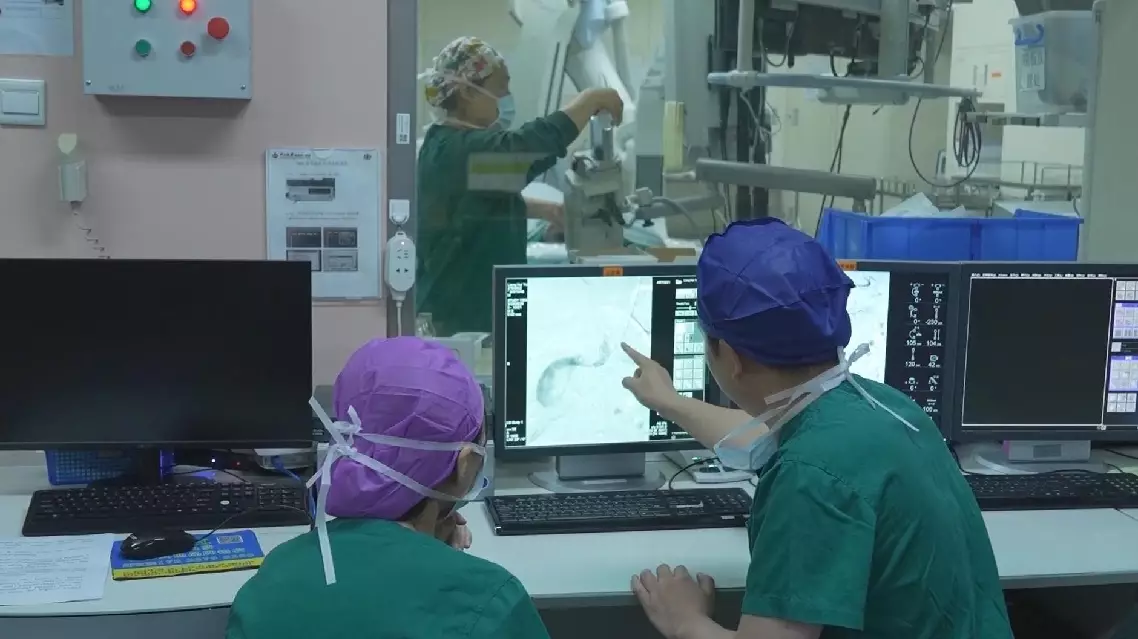
Every day, some of the most complex surgeries are performed here. Li Zilun, deputy director of the division of vascular surgery at the First Affiliated Hospital of Sun Yat‑sen University, is among the doctors capable of carrying out these intricate procedures.
He recently completed surgery on a patient with an aortic aneurysm, a condition often described as a "time bomb" in the body’s main artery, increasingly common in aging societies around the globe. Li also specializes in highly difficult and pioneering procedures, including repairing leaks caused by failed grafts.
"This was a very challenging case. And then, we implanted the covered stent to eliminate the endoleak. Actually, the outcome was pretty good. The patient will be discharged today," said Li Zilun.
The ability to handle such complex cases -- combining international techniques with domestically produced devices -- is drawing patients from around the world to seek treatment. In addition, high safety standards and low costs are also major draws.
"Our government is encouraging innovation. So, lots of physicians -- including our vascular surgeons -- we are actively involved in the innovation that helps to increase the effectiveness and safety, and also bring down the cost," said Li.
This hospital is one of the first in Guangdong to be designated by the provincial health commission as a pilot site for building an international medical service hub.
The growing number of patients has pushed the hospital to explore new ways to transform every step -- from treatment to payment and everything in between -- into a seamless experience, reducing waiting times and delivering better care for patients.
"I think it's fast. When the patient come here for just about, I think, one week, you can solve the problem," said Xiao Haipeng, president of the First Affiliated Hospital of Sun Yat-sen University.
The hospital is also deepening its international cooperation with top-tier medical institutions, including those at Harvard University.
"Not just for China, for the whole globe, we are facing health care challenges -- emerging infectious disease and chronic, lung infectious diseases, and also the aging population, also the shortage of healthcare workforce," said Xiao.
In response to these challenges, China is promoting its own solutions, including aggressive innovation in artificial intelligence (AI)-driven workflows, while stepping up research and development investment and global engagement along the way.
"In recent years, the innovation in Western medicine is dramatically growing. An example of my hospital -- in the past few years, we have 140 innovations and seven of them are international leading innovations," said Xiao.
As global demand for medical tourism grows, China is positioning itself as a new destination. Official data shows that the number of foreign patients in Guangdong increased by 20 percent last year. Among them, the growth in inpatient admissions was even faster, rising by 76 percent.
Guangdong fast-tracks pilot for int'l medical service hub