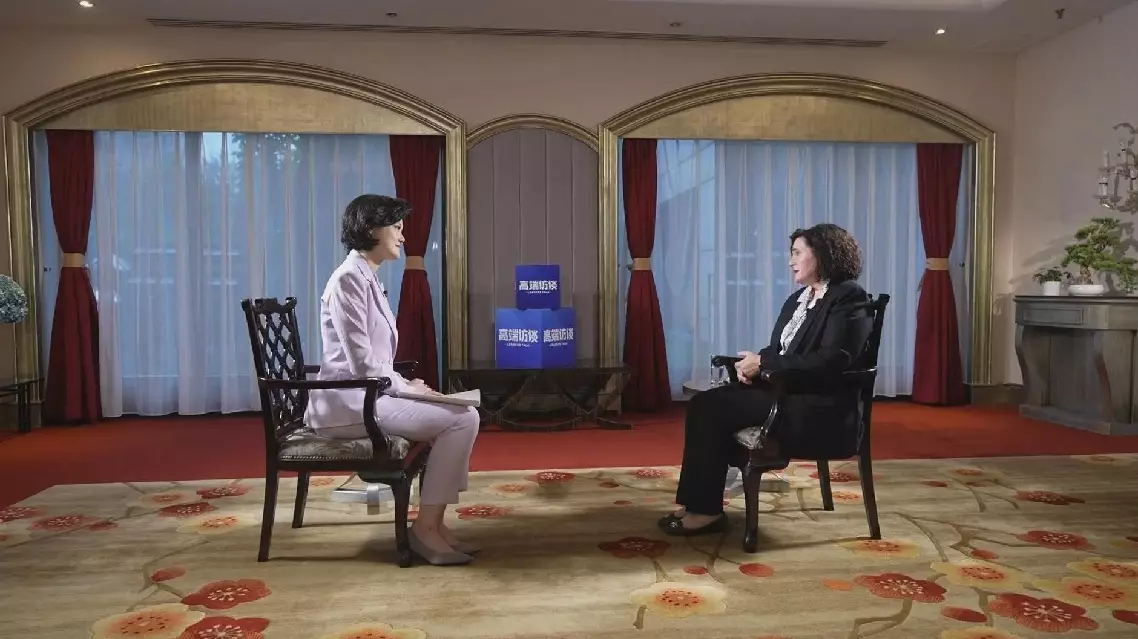
Global progress on gender equality targets is falling behind expectations, primarily facing challenges including rights regression, systemic discrimination and implementation gaps, said Christine Arab, the regional director of UN Women Asia and the Pacific.
Arab made the remarks in an interview with China Media Group (CMG) in Beijing ahead of the Global Leaders' Meeting on Women, which took place in the Chinese capital from October 13 to 14.
Despite significant global progress in legislation and educational parity, over 24 percent of countries reported setbacks for women's rights, she noted.
"There's still achievements and there's still gains, but over 24 percent of the governments who submitted reports reported facing backlash to the agenda. So if you look at where we've progressed, as I said, we have improved legislation on preventing legal discrimination against women. We have significantly improved legislation in many countries on tackling violence against women and girls. In the provision of services, we have really improved parity of education at all levels," said the director.
She particularly emphasized China's achievements in gender equity, but warned that deep-rooted systemic discrimination and stereotypes remain major obstacles.
"China of course, has done this better than most, including within STEM (science, technology, engineering and mathematics), which is crucial [to advancing gender equity]. But the systems that we live through, the systems we all experience, be it at the community level, in school or once we get into jobs, they discriminate, default discriminate. They will embed assumptions, they will embed stereotypes when it comes to mobilizing more women in the workforce in any region of the world," Arab said.
If governments take gender issues seriously, it will strongly promote poverty reduction and equality in education and employment, she said.
"The systems make assumptions about the types of jobs that are appropriate for women or that women would like. As opposed to what the market is offering in my community and therefore ensuring that myself and my brother have equal access to those education opportunities and job opportunities. And where you see a serious game changer in poverty reduction is when governments have taken that gender lens very seriously," she added.
Global gender equality progress lags behind targets amid multiple challenges: UN official
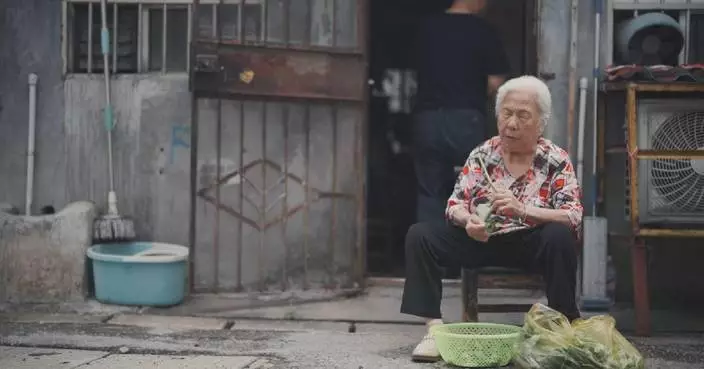
The heartbreaking story of 96-year-old Peng Zhuying, one of the last living survivors from the Japanese military's "comfort women" system in the Chinese mainland, has been shared in a moving documentary produced by the China Global Television Network (CGTN).
Peng remains one of only seven registered survivors in the Chinese mainland of the Japanese military's "comfort women" system, a brutal a state-enforced regime of sexual slavery during World War II, victimizing over 400,000 women across Asia.
She is also the only living survivor who is officially documented as a victim of both sexual slavery and of Japan's chemical warfare during the Japanese militarists' war of aggression against China.
Eight decades on, Peng has bravely shared the story of her horrifying experiences in the CGTN original documentary "Last Daughters," which reveals the deep scars left by war and captures the quiet strength and warmth that endured, even in the darkest depths of human suffering.
Blinded by mustard gas at age nine and mutilated at 14 before being forced into a military brothel during the war, Peng was able to survive despite facing these unimaginable hardships in her young life.
Peng shared some of the artifacts and the stories behind them from those difficult days.
"This is a fortune slip, a divination note, meaning you need to be cautious in what you do. When I was 16, my father forced me to study fortune-telling. He told me if I didn't learn, I would not get any food. At that time, I wanted to care for children instead, but I could make the call myself. I had to listen to him to make a living," she said.
She memorized every incantation as part of the fortune-telling custom. For 80 years, it was her livelihood, and she has continued to show strength to overcome any challenges in her life.
"I've gone through so much hardship, and yet I'm still alive. Now, I'm only afraid of getting sick and dying from it. I was sick for most of last year, and have yet to recover until now," said Peng.
Though she survived all the tortures and survived from the atrocities conducted by the Japanese aggressors, Peng's health is never been too strong, as she suffered from severe gynecological injuries and became infertile, while also losing her sight as she fell victim to a chemical warfare attack.
"These are gallstones. She had them for several decades. But she lost her eyesight early on and never had toxic exposure. The only explanation is the mustard gas she inhaled. Life for her has been harsh, far harsher than it appears on the surface," said her nephew Peng Zifang.
Japan's "comfort women" system, a state-sponsored sexual slavery scheme by the military, was unprecedented in modern history. It enslaved at least 400,000 women across Asia and the Pacific, including Chinese, Korean, Filipino and many other victims.
Half of those who suffered were Chinese. The Japanese opened its first "comfort women station" in Shanghai and over 2,100 followed in other places they invaded. Girls, deemed "military supplies," were trafficked like weapons.
Later in life, aged 43, Peng married a fisherman 20 years older than her. Only after his death did she speak openly about what she faced.
"Before my father passed away, he told me the stories of my two aunts. I was deeply shaken. Both of my aunts revealed the truth about the 'comfort stations' only after their husbands died. The often-cited figure [of 400,000] known victims barely scratches the surface of the true scale. Many more endured in silence because of the conservative traditions of that era. To speak up meant risking scorn, oppression and even violence. So they bore it quietly," said Peng Zifang.

Documentary reveals life of Chinese survivor of Japan's sexual slavery during WWII