NEW YORK (AP) — The union representing thousands of Broadway actors reached a tentative new labor agreement over the weekend with commercial producers, leaving just the musicians' union still negotiating.
Actors’ Equity Association — which represents over 51,000 members, including singers, actors, dancers and stage managers — announced a new three-year agreement on such issues as health care, scheduling and physical therapy. The tentative agreement next goes to members for ratification.
“We’re pleased to have a reached a tentative agreement on terms both parties are comfortable with,” said Jason Laks, president of The Broadway League, which represents producers. “Our focus has been negotiating in good faith at the bargaining table to reach a fair contract and we thank our mediators for their diligent work bringing us together.”
The League and American Federation of Musicians Local 802 — which represents 1,200 musicians — haven't reached a deal yet. They have voted in favor of a strike authorization as they bargain.
Members of both unions have been working under expired contracts. The musicians’ contract expired on Aug. 31, and the Equity contract expired Sept. 28.
The tentative breakthrough between the producers and Actors’ Equity Association came as a relief since a strike could have crippled Broadway just as it seems to have recovered from the pandemic shutdown.
Now the focus is on the musicians. Al Vincent Jr., Actors' Equity's executive director and lead negotiator, said in a statement that “we are putting our full support behind AFM Local 802 as they work with the League to reach a deal that averts a strike.”
In a statement, the Musicians' union said, “We look forward to returning to the table to reach a deal that will allow us to avoid a strike. Until that happens, we will continue our strike preparations in earnest, and we thank Actors’ Equity for their continued support and solidarity.
The most recent major strike on Broadway was in late 2007, when a 19-day walkout dimmed the lights on more than two dozen shows and cost producers and the city millions of dollars in lost revenue.
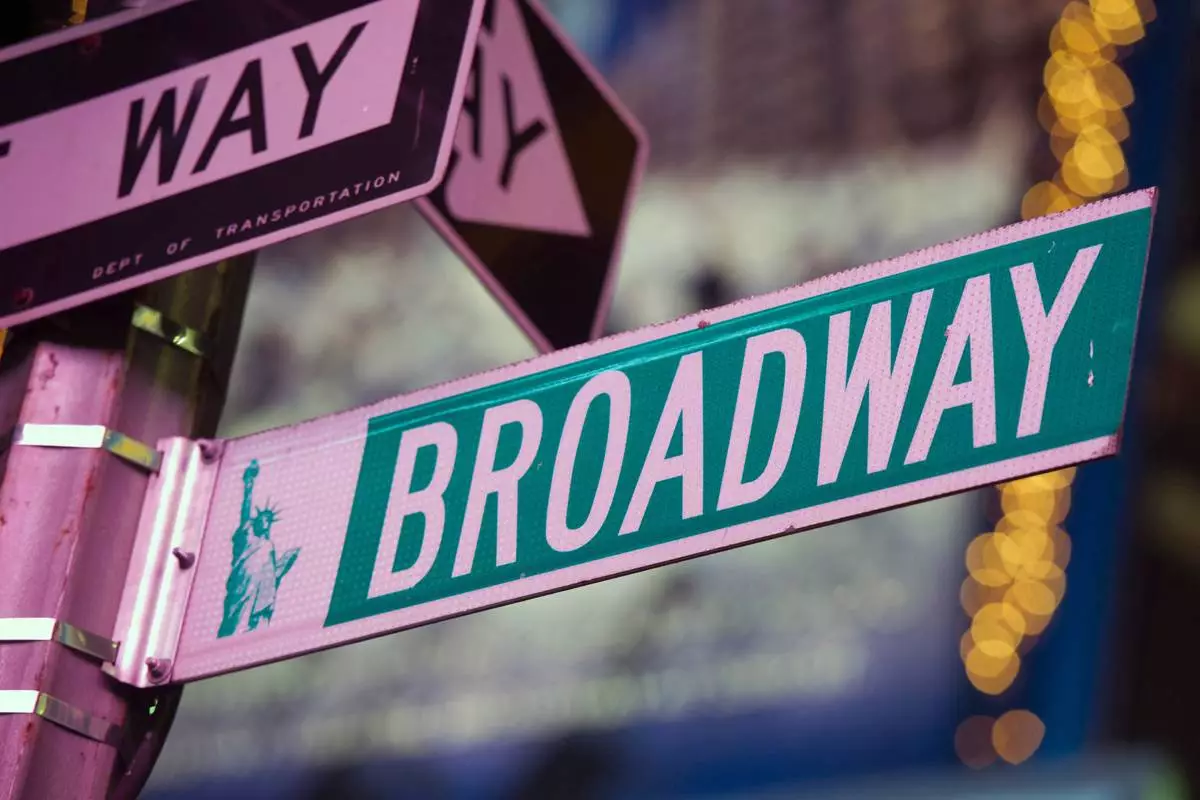
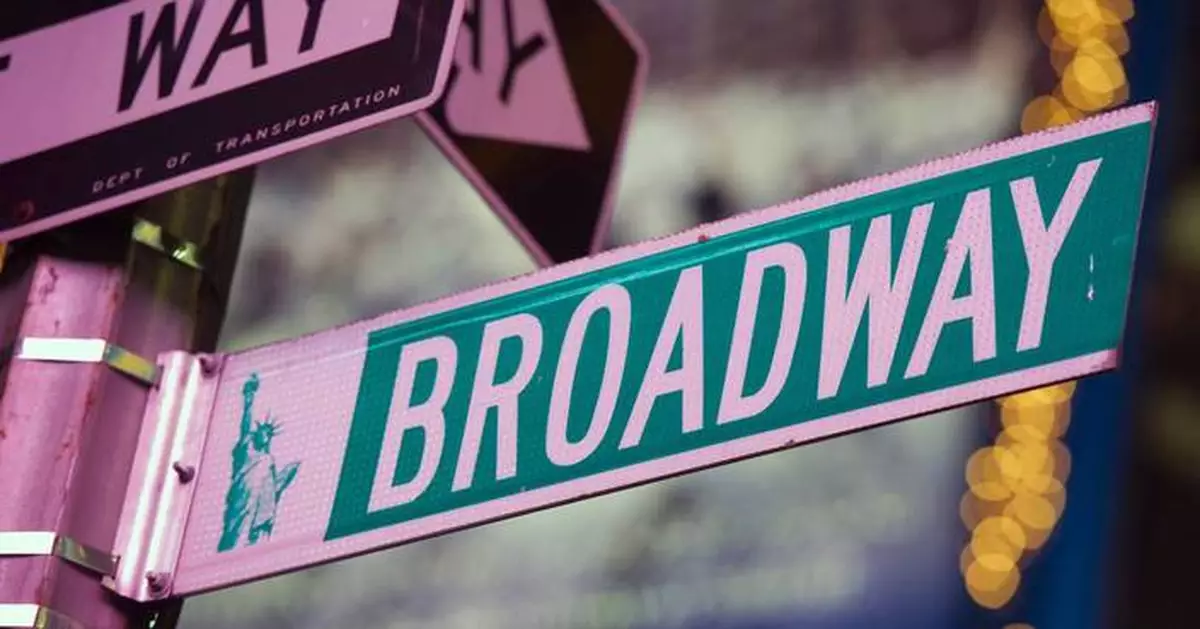
FILE - A Broadway street sign appears in Times Square, in New York on Jan. 19, 2012. (AP Photo/Charles Sykes, File)
WASHINGTON (AP) — Inflation declined a bit last month as prices for gas and used cars fell, a sign that cost pressures are slowly easing.
Consumer prices rose 0.3% in December from the prior month, the Labor Department said Tuesday, the same as in November. Excluding the volatile food and energy categories, core prices rose 0.2%, also matching November's figure.
Even as inflation has eased, the large price increases for necessities such as groceries, rent, and health care have left many American households feeling squeezed, turning “affordability” issues into high-profile political concerns.
THIS IS A BREAKING NEWS UPDATE. AP’s earlier story follows below.
WASHINGTON (AP) — Inflation likely remained elevated last month as the cost of electricity, groceries, and clothing may have jumped and continued to pressure consumers' wallets.
The Labor Department is expected to report that consumer prices rose 2.6% in December compared with a year earlier, according to economists' estimates compiled by data provider FactSet. The yearly rate would be down from 2.7% in November. Monthly prices, however, are expected to rise 0.3% in December, faster than is consistent with the Federal Reserve's 2% inflation goal.
The figures are harder to predict this month, however, because the six-week government shutdown last fall suspended the collection of price data used to compile the inflation rate. Some economists expect the December figures will show a bigger jump in inflation as the data collection process gets back to normal.
Core prices, which exclude the volatile food and energy categories, are also expected to rise 0.3% in December from the previous month, and 2.7% from a year earlier. The yearly core figure would be an increase from 2.6% in November.
In November, annual inflation fell from 3% in September to 2.7%, in part because of quirks in November's data. (The government never calculated a yearly figure for October). Most prices were collected in the second half of November, after the government reopened, when holiday discounts kicked in, which may have biased November inflation lower.
And since rental prices weren't fully collected in October, the agency that prepares the inflation reports used placeholder estimates that may have biased prices lower, economists said.
Inflation has come down significantly from the four-decade peak of 9.1% that it reached in June 2022, but it has been stubbornly close to 3% since late 2023. The cost of necessities such as groceries is about 25% higher than it was before the pandemic, and other necessities such as rent and clothing have also gotten more expensive, fueling dissatisfaction with the economy that both President Donald Trump and former President Joe Biden have sought to address, though with limited success.
The Federal Reserve has struggled to balance its goal of fighting inflation by keeping borrowing costs high, while also supporting hiring by cutting interest rates when unemployment worsens. As long as inflation remains above its target of 2%, the Fed will likely be reluctant to cut rates much more.
The Fed reduced its key rate by a quarter-point in December, but Chair Jerome Powell, at a press conference explaining its decision, said the Fed would probably hold off on further cuts to see how the economy evolves.
The 19 members of the Fed’s interest-rate setting committee have been sharply divided for months over whether to cut its rate further, or keep it at its curent level of about 3.6% to combat inflation.
Trump, meanwhile, has harshly criticized the Fed for not cutting its key short-term rate more sharply, a move he has said would reduce mortgage rates and the government's borrowing costs for its huge debt pile. Yet the Fed doesn't directly control mortgage rates, which are set by financial markets.
In a move that cast a shadow over the ability of the Fed to fight inflation in the future, the Department of Justice served the central bank last Friday with subpoenas related to Powell's congressional testimony in June about a $2.5 billion renovation of two Fed office buildings. Trump administration officials have suggested that Powell either lied about changes to the building or altered plans in ways that are inconsistent with those approved by planning commissions.
In a blunt response, Powell said Sunday those claims were “pretexts” for an effort by the White House to assert more control over the Fed.
“The threat of criminal charges is a consequence of the Federal Reserve setting interest rates based on our best assessment of what will serve the public, rather than following the preferences of the President,” Powell said. “This is about whether the Fed will be able to continue to set interest rates based on evidence and economic conditions—or whether instead monetary policy will be directed by political pressure or intimidation.”

FILE -American Giant clothing is displayed at the company's showroom in San Francisco, April 17, 2025. (AP Photo/Jeff Chiu, File)

FILE -A cashier rings up groceries in Dallas, Aug. 28, 2025. (AP Photo/LM Otero, File)