MELBOURNE, Australia (AP) — Tens of millions of red crabs are making their way to the ocean as part of their annual migration on Christmas Island, where a much smaller human population uses leaf blowers and garden rakes to help them on their way.
Christmas Island National Park acting manager Alexia Jankowski said Thursday there were up to 200 million of the endemic crabs, also known as Gecarcoidea natalis, on the tiny Australian island territory in the Indian Ocean. Up to 100 million were expected to make their way from their forest burrows to the shoreline where they breed.
Click to Gallery
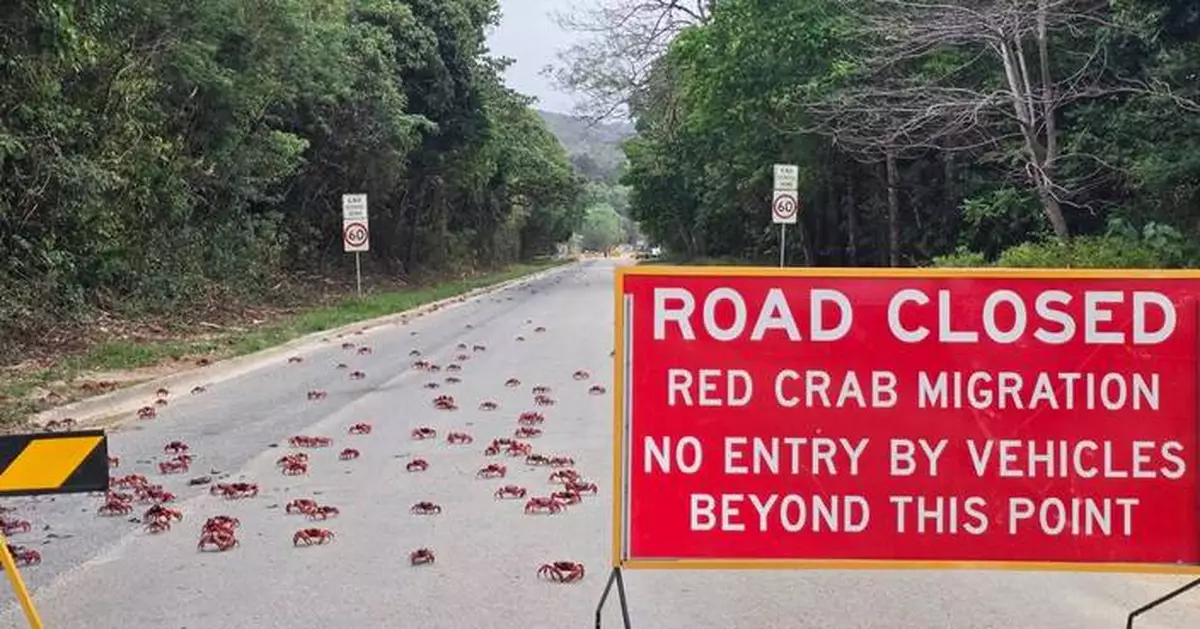
In this image supplied by Parks Australia, red crabs during their annual migration on Christmas Island, Australia in October 2025. (Parks Australia via AP)
In this image supplied by Parks Australia, a young boy walks amongst red crabs during their annual migration, Oct. 19, 2025 on Christmas Island, Australia. (Parks Australia via AP)
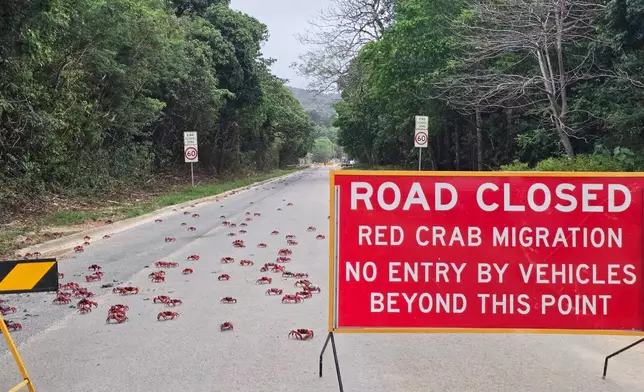
In this image supplied by Parks Australia, red crabs cross a road during their annual migration on Christmas Island, Australia in October 2025. (Parks Australia via AP)
In this image supplied by Parks Australia, red crabs cross a road during their annual migration on Christmas Island, Australia in October 2025. (Parks Australia via AP)
The start of the Southern Hemisphere summer rains last weekend triggered the annual odyssey.
The crabs seek shade in the middle of the day, Jankowski said, but early mornings and late afternoons bring about a vast, slow march that sees them move to the coast over roads and gardens.
Their 1,200 human neighbors on the island generally do what they can to clear the red carpet of crustaceans off the roads.
“Some people might think they’re a nuisance, but most of us think they’re a bit of a privilege to experience. They’re indiscriminate. So whatever they need to get over to get to the shore they will go over it. So if you leave your front door open, you’re going to come home and have a whole bunch of red crabs in your living room. Some people if they need to drive their car out of the driveway in the morning, they’ve got to rake themselves out or they’re not going to be able to leave the house without injuring crabs,” she added.
On the shores, the male crabs excavate burrows where the females spend two weeks laying and incubating eggs. The females are all expected to release their spawn into the ocean at high tide on Nov. 14 or Nov. 15, during the last quarter of the moon.
The young spend a month riding the ocean currents as tiny larvae before returning to Christmas Island as small crabs.
“When they’re little babies only about half the size of your fingernail, we can’ rake them, because you’d crush them. So instead we use leaf blowers,” Jankowski said.
“So about a month after the spawning occurs, we’re down on the coast looking pretty hilarious actually wearing these backpack leaf blowers and blowing all these tiny little crabs off the road to try to reduce the impact of cars,” she added.

In this image supplied by Parks Australia, red crabs during their annual migration on Christmas Island, Australia in October 2025. (Parks Australia via AP)

In this image supplied by Parks Australia, a young boy walks amongst red crabs during their annual migration, Oct. 19, 2025 on Christmas Island, Australia. (Parks Australia via AP)

In this image supplied by Parks Australia, red crabs cross a road during their annual migration on Christmas Island, Australia in October 2025. (Parks Australia via AP)
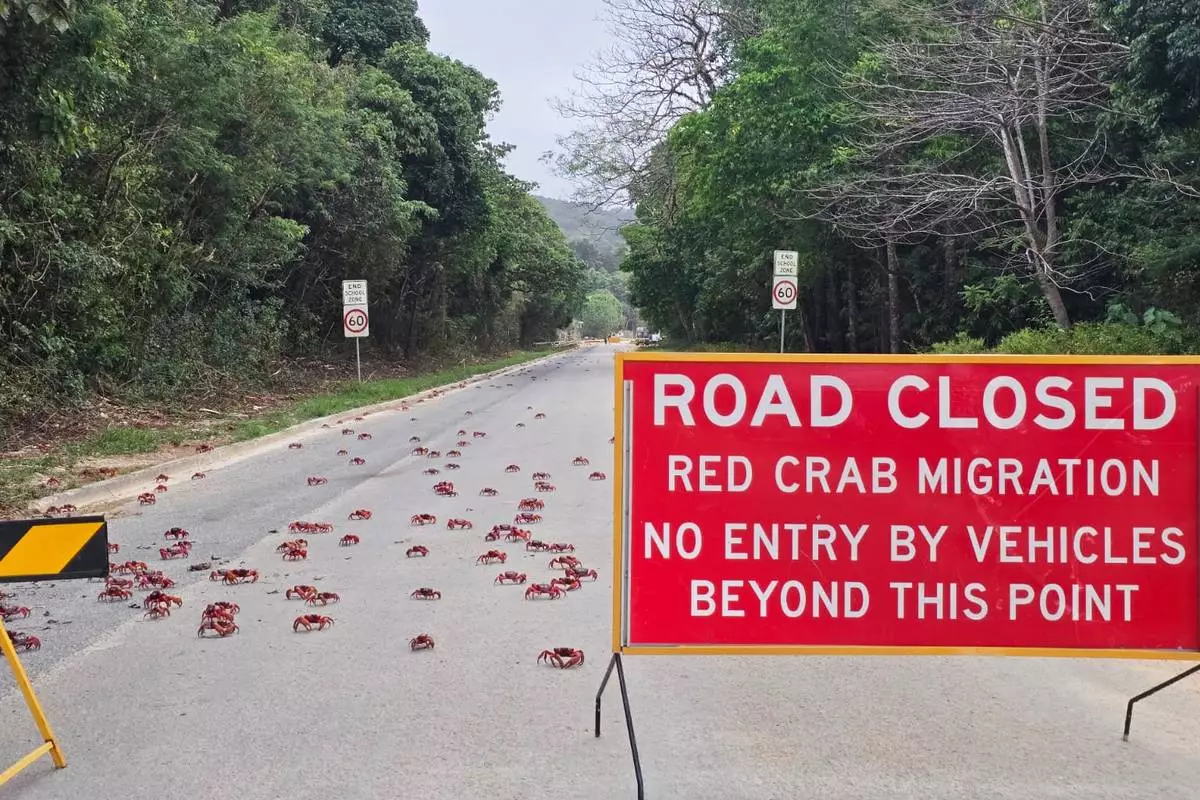
In this image supplied by Parks Australia, red crabs cross a road during their annual migration on Christmas Island, Australia in October 2025. (Parks Australia via AP)
BISMARCK, N.D. (AP) — Federal officials on Thursday gave final approval for the Dakota Access oil pipeline to continue operating its contentious Missouri River crossing, an outcome that comes nearly a decade after boisterous protests against the project on the North Dakota prairie.
The U.S. Army Corps of Engineers’ decision to grant the key easement means the pipeline will keep operating but with added conditions for detecting leaks and monitoring groundwater, among others. The announcement brings an end to a drawn-out legal and regulatory saga stemming from the protests in 2016 and 2017, though further litigation over the pipeline is likely.
The $3.8 billion, multistate pipeline has been transporting oil since June 2017 from North Dakota’s Bakken oil field to a terminal in Illinois. The line carries about 4% of U.S. daily oil production, or roughly 540,000 barrels per day,
The Corps is “decisively putting years of delays to rest and moving out to safely execute this crossing beneath Lake Oahe," Assistant Secretary of the Army for Civil Works Adam Telle said in a statement.
The pipeline crosses the river upstream from the Standing Rock Sioux Tribe’s reservation, which straddles the Dakotas. The tribe has long opposed the pipeline, fearing a spill and contamination of its water supply. In 2016 and 2017, thousands of people camped and protested for months near the river crossing.
The protests resulted in hundreds of arrests and related criminal cases and lawsuits, some of them still ongoing, including litigation that threatens the future of the environmental group Greenpeace.
In December, the Corps released its final environmental impact statement nearly six years after a federal judge ordered a more rigorous review of the pipeline's crossing. In that document, the Corps endorsed the option to grant the easement for the crossing and keep the pipeline operating with modifications.
Those measures include enhanced leak detection and monitoring systems, expanded groundwater and surface water monitoring and third-party expert evaluation of the leak and detection systems, among others, the Corps said. The conditions also include water supply contingency planning and other studies coordinated with affected tribes.
The Corps had weighed several options, including removing or abandoning the pipeline's river crossing or even rerouting it north. The agency said its decision “best balances public safety, protection of environmental resources, and leak detection and response considerations while meeting the project’s purpose and need.”
Pipeline developer Energy Transfer hailed the decision, saying the pipeline has been safely operating for nearly 10 years and is critical to the country’s energy infrastructure.
“We want to thank the Corps for the tremendous amount of time and effort put in by so many to bring this matter to a thoughtful close,” said Vicki Granado, a company spokesperson.
The Associated Press sent text messages and emails to media representatives for the tribe and left a voicemail at the tribe's headquarters. They didn't immediately respond Thursday.
North Dakota Republican Gov. Kelly Armstrong, Interior Secretary and former North Dakota governor Doug Burgum and U.S. Senators John Hoeven and Kevin Cramer each welcomed the decision to ensure the pipeline continues operating.
The Corps' announcement came as officials and oil industry leaders were gathered for a trade conference in Bismarck.
Energy Transfer and Enbridge are in early stages of a project to move about 250,000 daily barrels of light Canadian crude oil through the Dakota Access Pipeline by using another pipeline and building a 56-mile connecting line, spokespersons for the companies said. Enbridge will decide sometime in mid-2026 whether to move ahead.
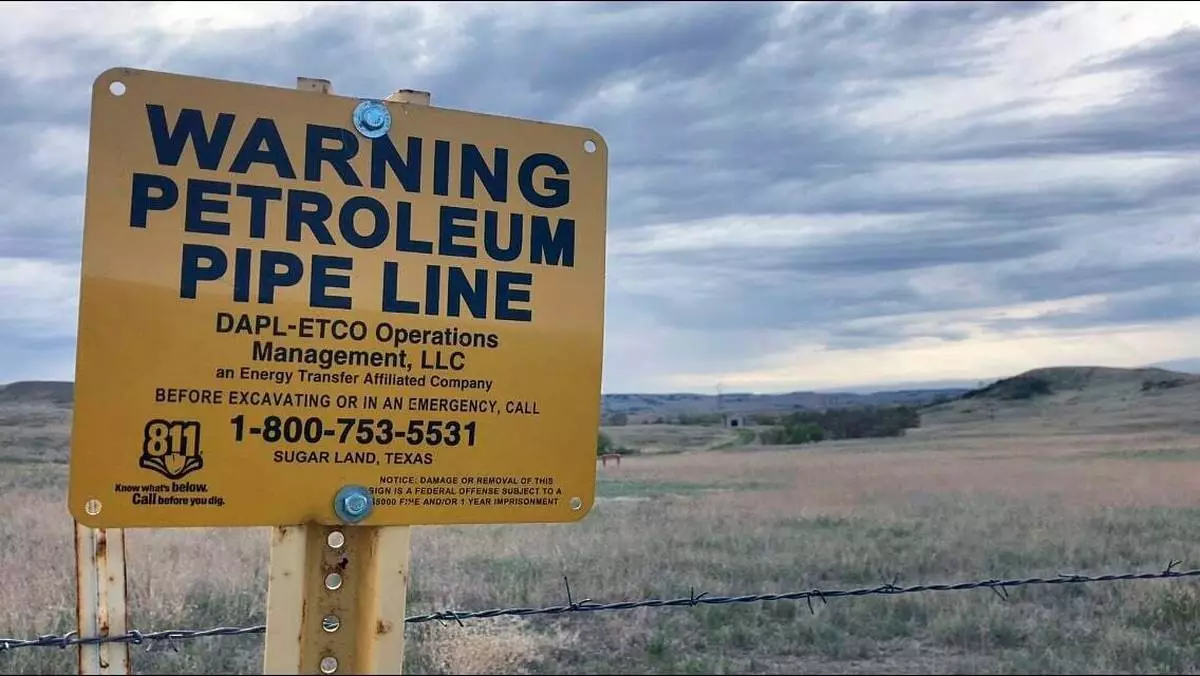
FILE - A sign for the Dakota Access Pipeline is seen north of Cannonball, N.D. and the Standing Rock Reservation on May 20, 2021. (AP Photo/Matthew Brown, File)