Peru’s small agricultural businesses are seeing tangible benefits from last year’s signing of the upgraded Peru–China Free Trade Agreement, with the vast Chinese markets bringing high demand for their products.
In 2009, China and Peru signed a free trade agreement (FTA), which officially came into effect in 2010 and serves as a catalyst for bilateral trade growth. The agreement was upgraded last November.
Percy Luna, a farmer in the Huaral agricultural valley just north of Lima, invests the profits from exporting pitahaya, or dragon fruit, into growing raspberries and blackberries for the Chinese market.
"In recent years, exports have grown a lot to China. They are growing more and more because now we don’t just have the new free trade agreement conditions, now we have a mega port that's 10 to 15 minutes away that facilitates the logistical operations," he said, referring to Chancay, a 1.3 billion-dollar mega port project majority owned by the Chinese shipping giant COSCO.
Inaugurated at the end of 2024, the fully automated port offers a direct shipping route to Shanghai, cutting transit time by up to two-thirds.
Chancay port offers a shorter freight time across the Pacific Ocean to Asia and caters specifically to what Peru calls non-traditional exports, including avocados, grapes and blueberries that are increasingly popular with the Chinese public.
"What we do is offer competitive port rates, which must be complemented by land transport, shipping lines, and port services, but I believe we contribute to making the chain increasingly cost-efficient," said Gonzalo Rios Polastri, deputy general manager of COSCO Shipping Ports Chancay Peru.
As part of the upgraded trade agreement, Peru implemented rigorous phytosanitary agreements with China that guaranteed a clean bill of health for a raft of Peruvian agricultural products.
"All these conditions make China a market that we can get much more out of. The gap is not very big. We have high-quality products, we are opening up new markets, for example for pecan nuts. And a health protocol has recently been signed for our high-quality frozen fruits," said Gabriel Arrieta, head of economic studies and business intelligence at the CIEN-ADEX, a business service provider.
Along with pecans, frozen blueberries, mangoes and avocados can also now be exported easily to the Asian market.
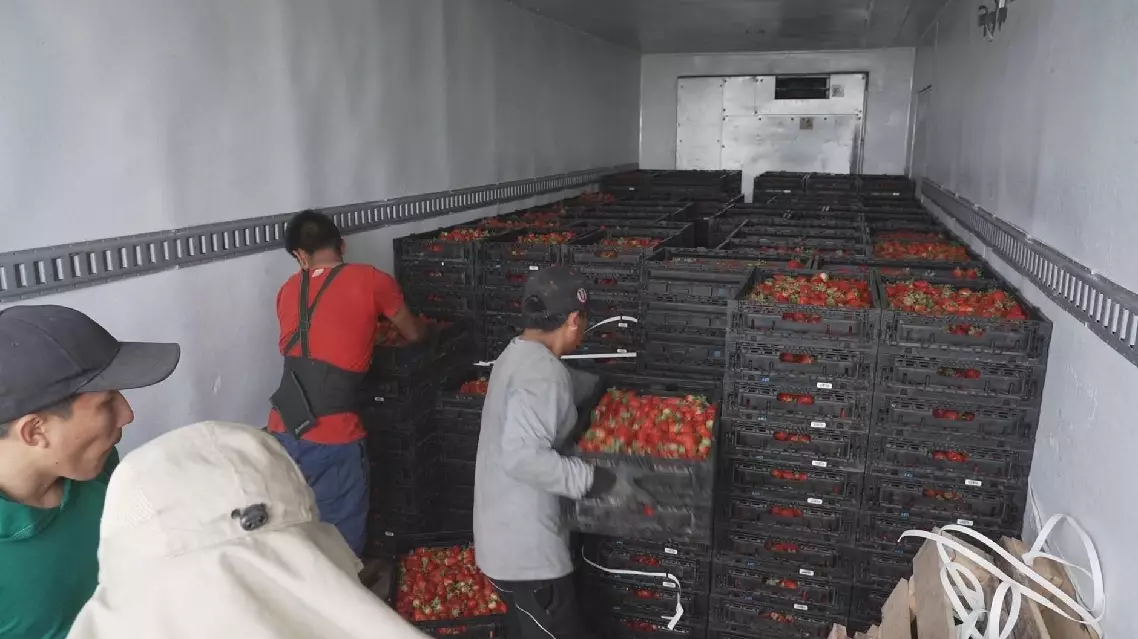
Peru's agriculture sector benefits from free trade agreement with China