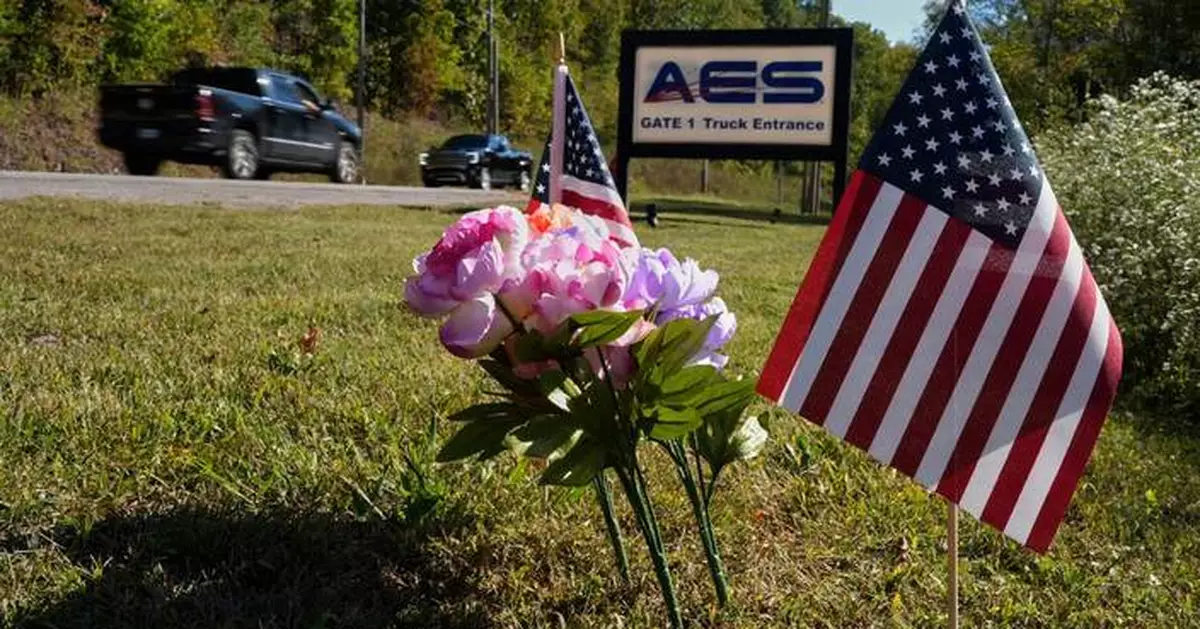
McEWEN, Tenn. (AP) — A massive blast at a Tennessee explosives plant that killed 16 people, leveled the building and was felt more than 20 miles away began in an area where workers used kettles to produce a mixture of explosives and set off other explosives stored nearby, authorities said Friday.
Investigators still haven't been able to identify the remains of two of the people killed in the Oct. 10 explosion at the Accurate Energetic Systems factory in Bucksnort, an unincorporated community about 60 miles (97 kilometers) southwest of Nashville, officials said at a news conference.
Click to Gallery
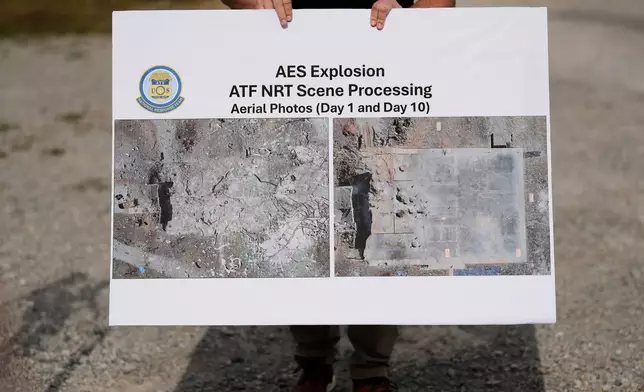
ATF agent Brice McCracken holds a photo of the blast site at Accurate Energetic Systems during a news conference Friday, Oct. 24, 2025, in McEwen, Tenn. (AP Photo/George Walker IV)
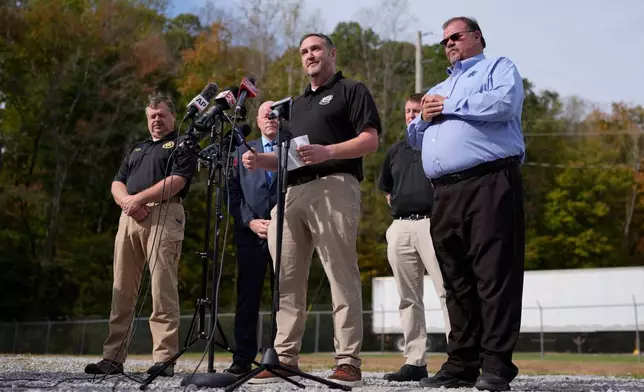
ATF agent Brice McCracken, second from right, speaks about the blast at Accurate Energetic Systems during a news conference Friday, Oct. 24, 2025, in McEwen, Tenn. (AP Photo/George Walker IV)
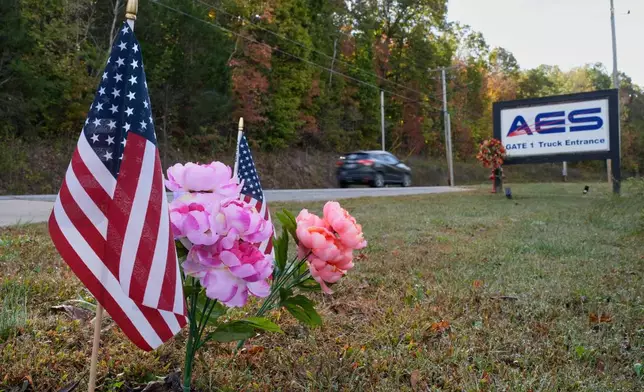
Flags and flowers are seen at the entrance to Accurate Energetic Systems Friday, Oct. 24, 2025, after an explosion killed 16 people on Oct. 10, in McEwen, Tenn. (AP Photo/George Walker IV)
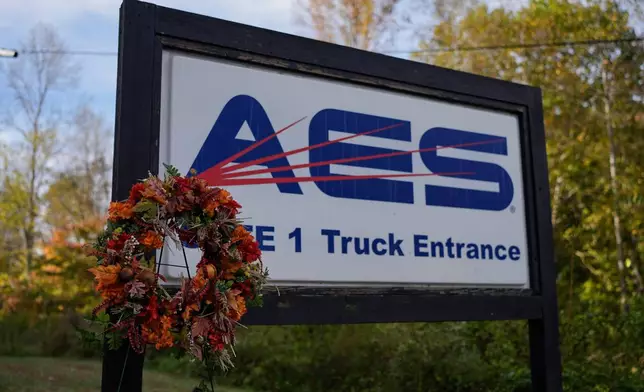
A wreath is seen at the entrance to Accurate Energetic Systems Friday, Oct. 24, 2025, after an explosion killed 16 people on Oct. 10, in McEwen, Tenn. (AP Photo/George Walker IV)

People console each other during a candlelight vigil honoring the victims of a blast at an explosives plant, Accurate Energetic Systems, Sunday, Oct. 12, 2025, in Waverly, Tenn. (AP Photo/George Walker IV)
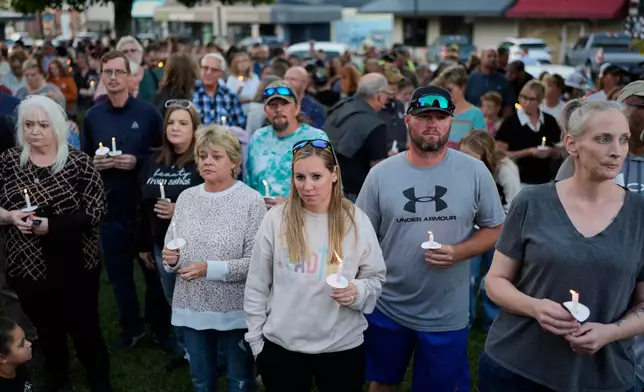
People attend a candlelight vigil at the Humphreys County Courthouse honoring the victims of a blast at an explosives plant, Accurate Energetic Systems, Sunday, Oct. 12, 2025, in Waverly, Tenn. (AP Photo/George Walker IV)
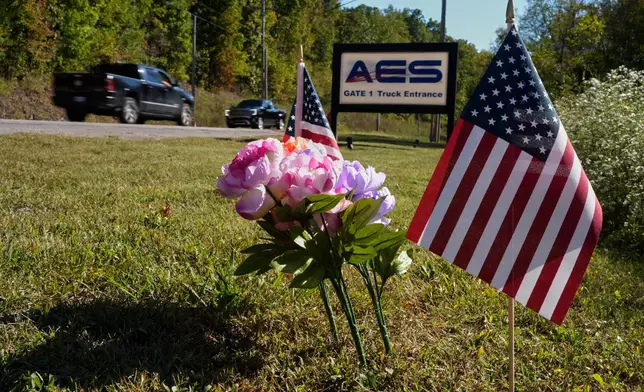
Flowers and flags rest at the entrance to Accurate Energetic Systems after an explosion on Friday, killed 16 people in McEwen, Tenn. Sunday, Oct. 12, 2025. (AP Photo/George Walker IV)
The delicate investigation at the site of the plant has concluded, but determining a cause could take months more, said Brice McCracken, the Bureau of Alcohol, Tobacco, Firearms and Explosives’ special agent in charge at the National Center for Explosives Training and Research. In addition to locating victims' remains, the on-site work involved removing and disposing of explosives that didn't detonate in the blast.
The next phase centers on ATF labs and testing facilities, where investigators will try to determine what triggered the explosion, said Jamey VanVliet, ATF special agent in charge in the Nashville division.
“Those results don’t come quickly,” VanVliet said. "They come through time, care, and precision. And that’s what this community deserves: answers that are proven, not guessed."
From 24,000 to 28,000 pounds of explosives detonated that day, authorities said. The blast originated on the 15,000-square-foot plant's first floor, near kettles used in the production of an explosive mixture for the commercial mining industry, McCracken said.
The building was primarily used to make explosives known as cast boosters — typically a mixture of TNT and RDX, or cyclonite, that is poured by hand into a cardboard tube, he said.
Explosives were mixed in kettles on the mezzanine level before being pumped into heating kettles on the main floor, McCracken said.
“Everything is mixed up top and then it pumps down into the lower floor, where it stays heated," McCracken said. "And then they’re able to pull it out in a pitcher and then each cast is hand-poured into the cardboard tube.”
The main floor also stored explosives near a loading dock, and cast boosters were cooled on that floor before being packaged, he said.
After the initial explosion happened in those production kettles, investigators believe other explosive materials stored on the main floor also detonated, McCracken said.
During the investigation, authorities searched an area of about 500 acres (200 hectares), much of it dense with woods, looking for evidence.
The scene was turned back over to the company Thursday, McCracken said.
The blast, which was felt more than 20 miles (32 kilometers) away, left a smoldering wreck of twisted metal and burned-out vehicles at the factory. Authorities said there were no survivors from the site of the blast. Items of interest for the investigation were found more than a half-mile away, Humphreys County Sheriff Chris Davis said.
The company, which employs about 150 people, has a sprawling complex in rural central Tennessee with eight specialized production buildings and a lab. It straddles the Hickman and Humphreys county line in unincorporated Bucksnort, about 60 miles (97 kilometers) southwest of Nashville.
The company, headquartered in nearby McEwen, has customers in the aerospace, defense, demolition and mining industries.
It has been awarded numerous military contracts, largely by the U.S. Army and Navy, to supply different types of munitions and explosives, according to public records. The products range from bulk explosives to landmines and small breaching charges, including C-4.
In a statement Friday, Accurate Energetic Systems CEO Wendell Stinson said the company is “continuing to support investigators and is under obligation to preserve the site for a to-be-determined period of time” — anticipating it may be "many months" — in case more on-site review is needed.
The company started a fund with a local community foundation to help solicit donations for affected families.
The explosion killed people ages 21 to 60. The Tennessee Bureau of Investigation has positively identified 14 of the 16 victims using rapid DNA testing.
Given the state of the scene, TBI Director David Rausch said the expectation had been they would be able to identify 40% to 50% of the victims. Still, he said it has fallen short so far of their hopes to identify every victim. Authorities have named all 16 victims.
Officials are still conducting tests to try to identify the final two victims, Davis said. The sheriff said he could “hear it in their voice” when he spoke with their families.
“There’s not enough words in the dictionary that we could use to describe those feelings or emotions," Davis said.
Last week, a lawsuit was filed in state court on behalf of the 9-year-old daughter of Jeremy Moore. The father was killed in the blast.
The lawsuit was filed against AAC Investments LLC, which is a company closely tied to Accurate Energetic Systems. The lawsuit claims AAC was the owner, operator and manager of the factory and that the explosion happened because AAC did not maintain a “reasonably safe factory” for the explosives work.
Moore, 37, cherished spending time with and supporting his daughter at cheerleading, softball or any adventure she wanted to do, according to his obituary.
Lee Coleman, an attorney for Moore's family, said the complaint could be amended once further details become available, and that defendants could be added.
A company spokesperson declined to comment on the lawsuit.
Mattise reported from Nashville, Tennessee. Associated Press staff writer Adrian Sainz in Memphis, Tennessee, contributed to this report.
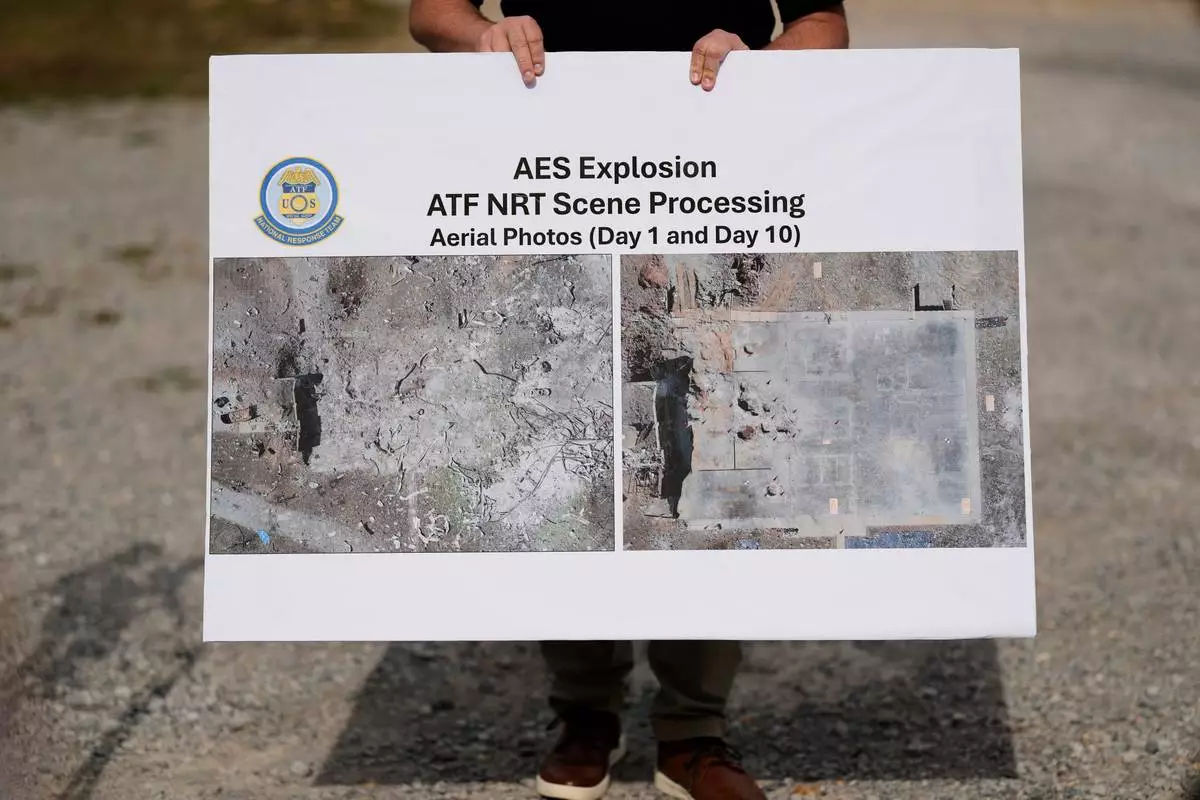
ATF agent Brice McCracken holds a photo of the blast site at Accurate Energetic Systems during a news conference Friday, Oct. 24, 2025, in McEwen, Tenn. (AP Photo/George Walker IV)
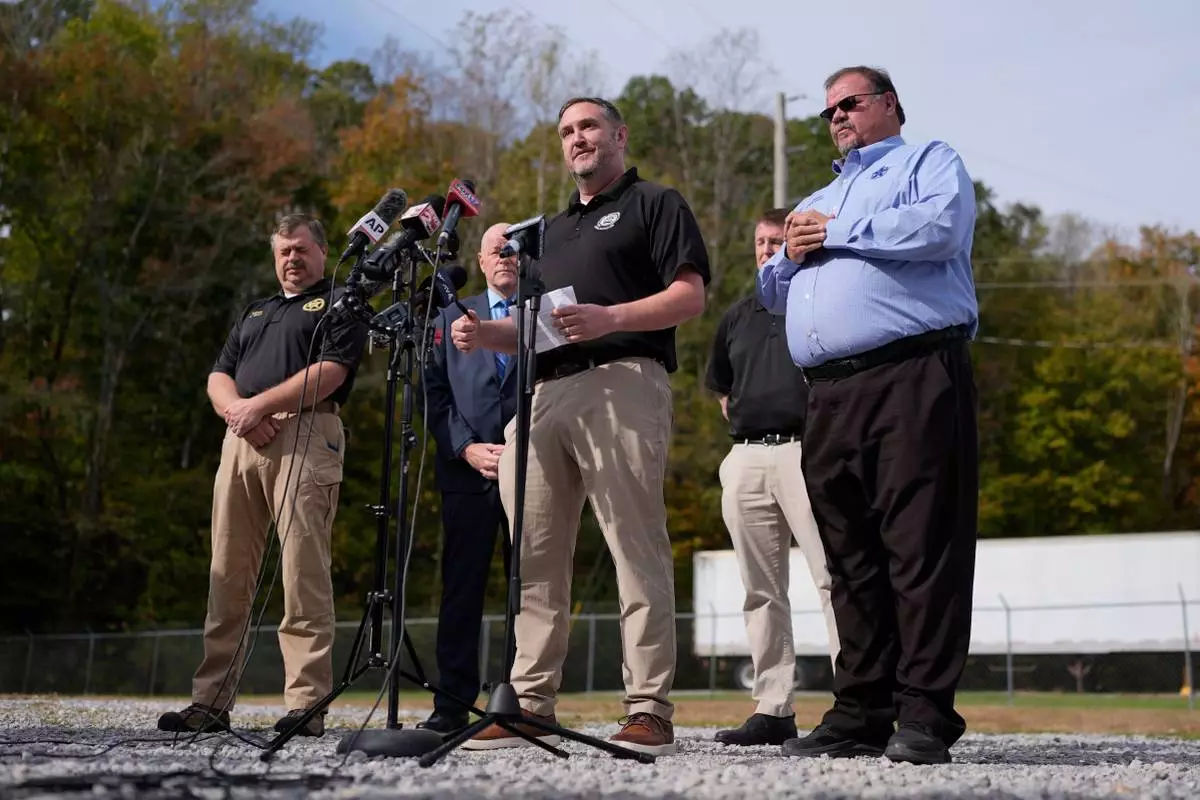
ATF agent Brice McCracken, second from right, speaks about the blast at Accurate Energetic Systems during a news conference Friday, Oct. 24, 2025, in McEwen, Tenn. (AP Photo/George Walker IV)

Flags and flowers are seen at the entrance to Accurate Energetic Systems Friday, Oct. 24, 2025, after an explosion killed 16 people on Oct. 10, in McEwen, Tenn. (AP Photo/George Walker IV)
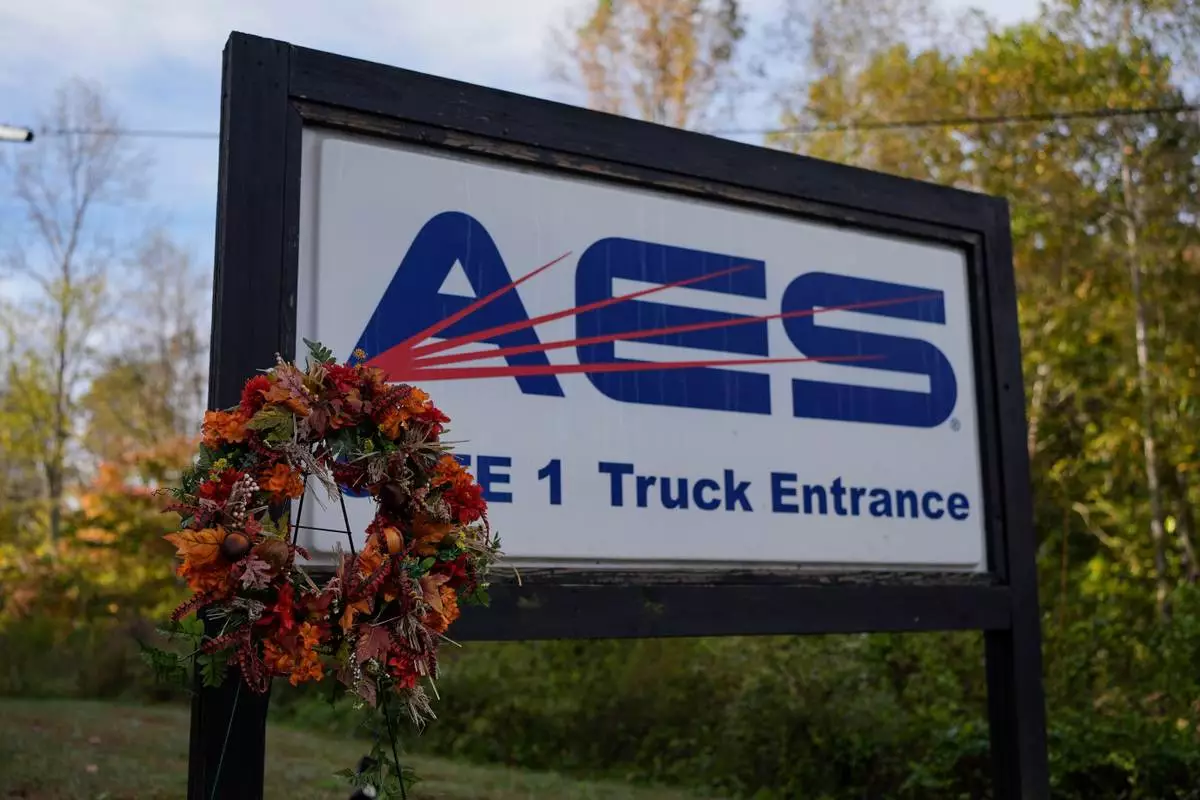
A wreath is seen at the entrance to Accurate Energetic Systems Friday, Oct. 24, 2025, after an explosion killed 16 people on Oct. 10, in McEwen, Tenn. (AP Photo/George Walker IV)

People console each other during a candlelight vigil honoring the victims of a blast at an explosives plant, Accurate Energetic Systems, Sunday, Oct. 12, 2025, in Waverly, Tenn. (AP Photo/George Walker IV)
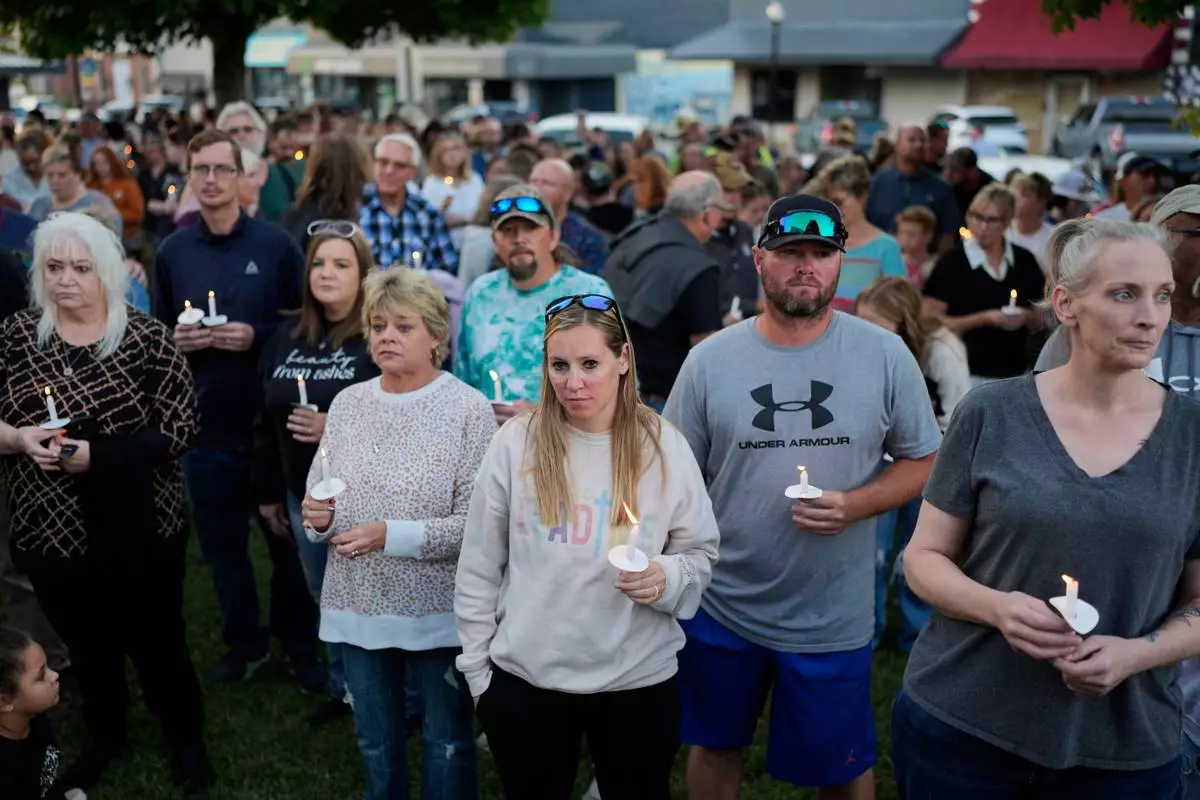
People attend a candlelight vigil at the Humphreys County Courthouse honoring the victims of a blast at an explosives plant, Accurate Energetic Systems, Sunday, Oct. 12, 2025, in Waverly, Tenn. (AP Photo/George Walker IV)
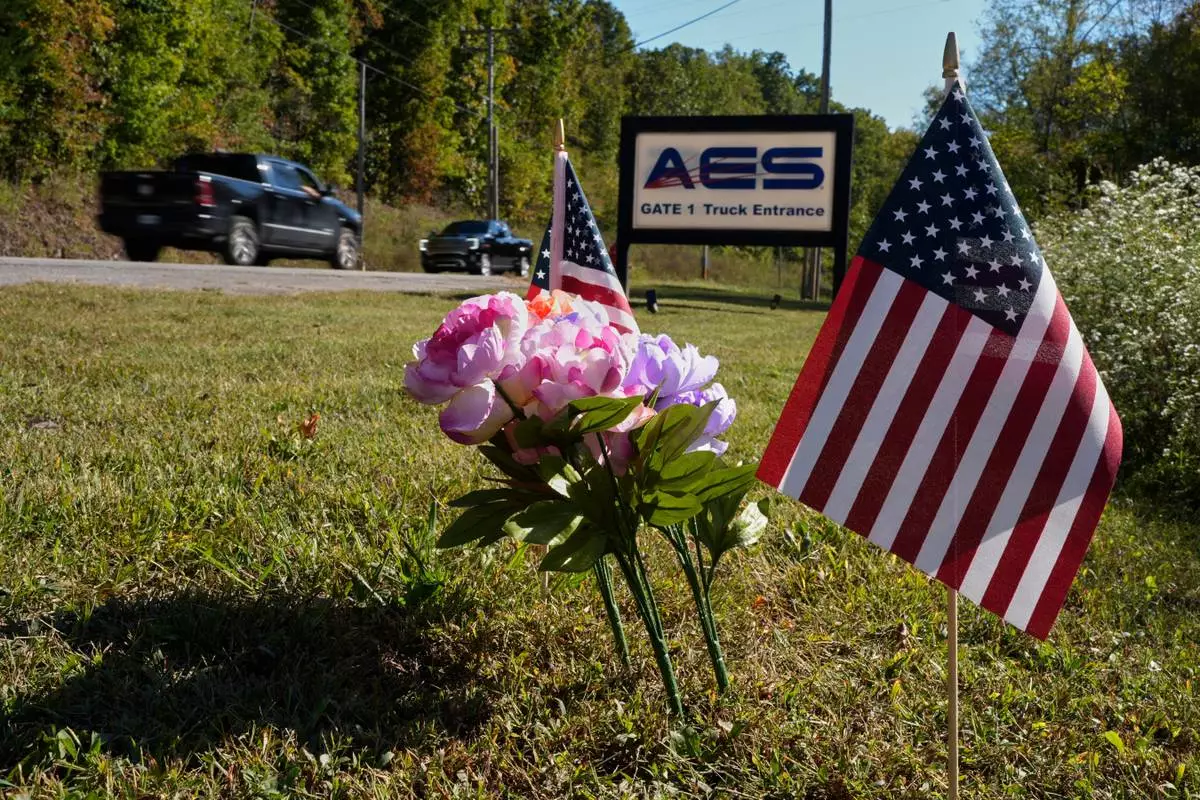
Flowers and flags rest at the entrance to Accurate Energetic Systems after an explosion on Friday, killed 16 people in McEwen, Tenn. Sunday, Oct. 12, 2025. (AP Photo/George Walker IV)