BASEL, Switzerland--(BUSINESS WIRE)--Oct 24, 2025--
Syngenta Group has once again been named the world’s leading agricultural employer in Science magazine’s 2025 Science Careers Top Employers Survey — the ninth consecutive year it has claimed the top spot. The company also secured sixth place across all industries globally, underscoring its position as one of the most sought-after employers in science and innovation.
This press release features multimedia. View the full release here: https://www.businesswire.com/news/home/20251024986868/en/
"We are delighted to be named the world's number one agricultural employer," said Trevor Hohls, Head of Seeds Research & Development. "At Syngenta, our culture thrives on collaboration and diverse perspectives, creating an environment where curiosity drives innovation and employees are empowered to challenge conventions while supporting each other's growth. We unite across regions and functions with a people-first approach that balances accountability with flexibility, all guided by our shared commitment to helping farmers succeed."
Camilla Corsi, Head of Crop Protection R&D, added: "It is an honor to be recognized again by our employees as a top employer worldwide. At Syngenta, we drive agricultural innovation, developing sustainable solutions that address farmers' most pressing challenges. Employing cutting-edge science, digital technologies, and deep agronomic expertise, we are delivering breakthrough products and services that enhance crop productivity, protect biodiversity, and help ensure global food security in the face of climate change."
Guided by sustainability priorities and driven by curiosity for innovation, Syngenta is bringing farmers the innovations they need to feed growing populations while preserving the planet.
“We continue to push the boundaries of science and technology to catalyze agricultural innovation, using sophisticated data analytics to develop solutions for the complex challenges in global food production," said Hohls.
Corsi concluded: “Science Magazine's recognition confirms our leadership in agricultural science. Through the combination of exceptional talent, the latest technologies, and collaborative partnerships, we continue to deliver innovations that empower farmers everywhere.”
About Syngenta Group
Syngenta Group is one of the world’s biggest agricultural innovation companies, employing over 56,000 people in more than 90 countries. Syngenta Group is focused on developing technologies and farming practices that empower farmers, so they can make the transformation required to feed the world’s population while preserving our planet. Syngenta Group’s bold scientific discoveries deliver better benefits for farmers and society on a bigger scale than ever before. Guided by its Sustainability Priorities, Syngenta Group supports farmers to grow healthier plants in healthier soil with a higher yield.
Syngenta Group, which is registered in Shanghai, China, and has its management headquarters in Switzerland, draws strength from its four business units: Syngenta Crop Protection, headquartered in Switzerland; Syngenta Seeds, headquartered in the United States; ADAMA ®, headquartered in Israel; and Syngenta Group China.
To find out more about how our innovation is empowering farmers around the world, read our articles on the Stories section of our Syngenta Group website.
For Syngenta Group photos and videos, please visit the Syngenta Group Media Library.
Data protection is important to us. You are receiving this publication on the legal basis of Article 6 para 1 lit. f GDPR (“legitimate interest”). However, if you do not wish to receive further information about Syngenta Group, just send us a brief informal message and we will no longer process your details for this purpose. You can also find further details in our privacy statement.
Cautionary Statement Regarding Forward-Looking Statements
This document may contain forward-looking statements, which can be identified by terminology such as “expect,” “would,” “will,” “potential,” “plans,” “prospects,” “estimated,” “aiming,” “on track” and similar expressions. Such statements may be subject to risks and uncertainties that could cause the actual results to differ materially from these statements. For Syngenta Group, such risks and uncertainties include risks relating to legal proceedings, regulatory approvals, new product development, increasing competition, customer credit risk, general economic and market conditions, compliance and remediation, intellectual property rights, implementation of organizational changes, impairment of intangible assets, consumer perceptions of genetically modified crops and organisms or crop protection chemicals, climatic variations, fluctuations in exchange rates and/or grain prices, single source supply arrangements, political uncertainty, natural disasters, and breaches of data security or other disruptions of information technology. Syngenta Group assumes no obligation to update forward-looking statements to reflect actual results, changed assumptions or other factors.
© 2025 Syngenta. All rights reserved.
®/™ are Trademarks of companies belonging to the Syngenta Group.

Syngenta Group once again named as the world’s leading agricultural employer in Science magazine’s 2025 Science Careers Top Employers Survey.
NAKHON RATCHASIMA, Thailand (AP) — A construction crane crashed onto a moving passenger train in northeastern Thailand on Wednesday, triggering a fiery derailment that killed at least 32 people and injured dozens more.
The crash occurred in Nakhon Ratchasima, some 200 kilometers (135 miles) northeast of Bangkok, on a section of a planned high-speed rail project that is intended to eventually connect China with much of Southeast Asia.
The province's Public Health Provincial Office said there were 32 fatalities and 64 injured victims, including seven with severe injuries. There were still three passengers missing among the 171 believed to have been on board the train, it said in a statement issued as night fell.
Authorities said the crane was being used to build an elevated part of the railway when it fell as the train was traveling from the capital, Bangkok, to Ubon Ratchathani province. Thailand's Rail Transport Department said the crane was what is called a launching gantry crane, a self-supporting structure with vertical legs that usually runs on rails or wheels for mobility, allowing it to progress along with the construction project that it straddles. Such cranes are often used to help build elevated roads.
Images published in Thai media showed plumes of white, then dark, smoke rising from the crash site, with construction equipment dangling from girders between two concrete support pillars.
Rescue workers stood on top of overturned railway carriages, some of them with gaping holes torn on their sides, video from public broadcaster ThaiPBS showed. What appeared to be sections of the crane were scattered along the track.
Sixty-two year-old Samai Teechantuek, whose house is about 100 meters (yards) from the site of the accident, told The Associated Press of the horror of witnessing the accident, and hearing “the noises screeching, and then bam, bam, bam, all the way over there.”
“When the dust settled, I saw the top of the train carriage. I heard people shouting ‘save the children first!’” she said. "A conductor pulled people out. I saw them pulling many people out. People from the shop over there also ran out to help.”
“My legs were shaking. I was standing there shaking. I didn’t dare going any closer,” she said.
Transport Minister Phiphat Ratchakitprakarn said he ordered an investigation.
In August 2024, a railway tunnel on the planned route, also in Nakhon Ratchasima, collapsed, killing three workers. Days of heavy rainfall were believed to have been a factor in the collapse.
The elevated segment that collapsed is a part of a Thai-Chinese high-speed railway project linking the capital to the northeastern province of Nong Khai, bordering Laos. The two-stage rail project has a total investment cost of more than 520 billion baht ($16.8 billion) and is associated with an ambitious plan to connect China with Southeast Asia under Beijing's Belt and Road Initiative. The section where the accident took place had a budget of more than 179 billion baht ($5.7 billion) and according to its original plans was expected to start operating in 2027.
Anan Phonimdaeng, acting governor of the State Railway of Thailand, said the project's contractor is Italian-Thai Development, with a Chinese company responsible for design and construction supervision.
He said authorities will examine the responsibilities of both parties, and the Railway Department plans to take legal action against the contractor as a first step. Damage to the train was estimated to be more than 100 million baht ($3.2 million), while construction equipment suffered limited damage, said Anan.
A statement posted on the company's website expressed condolences to the victims and said the company would take responsibility for paying compensation to the families of the dead and hospitalization expenses for the injured.
The main contractor for the route's first stage between Bangkok and Nakhon Ratchasima, Italian-Thai Development, was also the directly responsible for construction of the segment where Wednesday's accident occurred.
The rail accident sparked outrage because the company, also known as Italthai, was also the co-lead contractor for the State Audit Building in the Thai capital Bangkok, which collapsed during construction in March during a major earthquake.
About 100 people were killed in the collapse, which was the only major structure in Thailand to suffer such serious damage. Dozens of executives were indicted in connection with the disaster but none have yet been tried.
The involvement of Chinese companies in both projects has also drawn attention, as has Italthai's and Chinese companies' involvement in the construction of several expressway extensions in and around Bangkok where several accidents, some fatal, had occurred.
Prime Minister Anutin Charnvirakul, who was interior minister when the State Audit Building collapsed, said that the Comptroller General’s Department and Transport Ministry are responsible for blacklisting contractors, and the laws could not be amended in the brief time he was interior minister to expedite the matter.
In Beijing, Chinese Foreign Ministry spokesperson Mao Ning said the government was aware of the reports about the accident and had expressed condolences.
“The Chinese government attaches great importance to the safety of projects and personnel, and we are also learning about the situation,” he said. “At present, it appears that the relevant section is being constructed by a Thai company, and the cause of the accident is still under investigation.”
Wasamon reported from Bangkok.
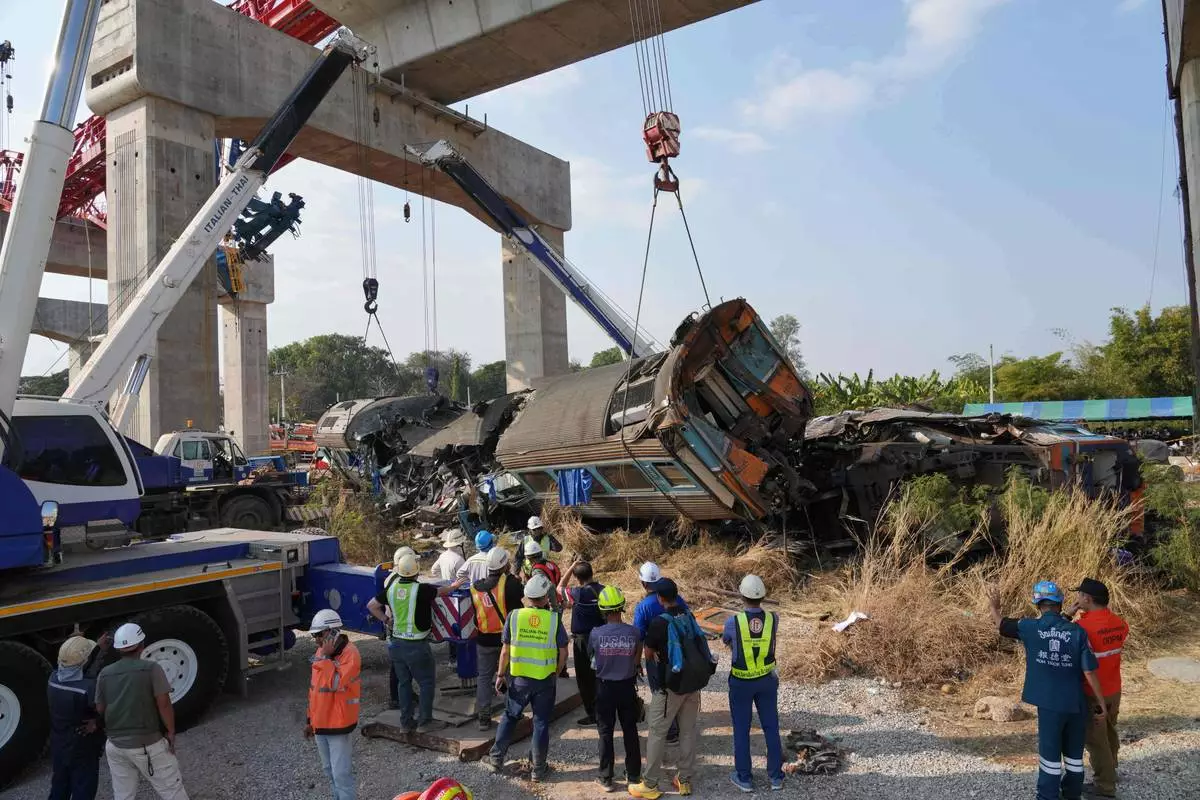
Rescuers try to lift the wreckage after a construction crane fell into a passenger train in Nakhon Ratchasima province, Thailand, Wednesday, Jan.14, 2026. (AP Photo/Sakchai Lalit))
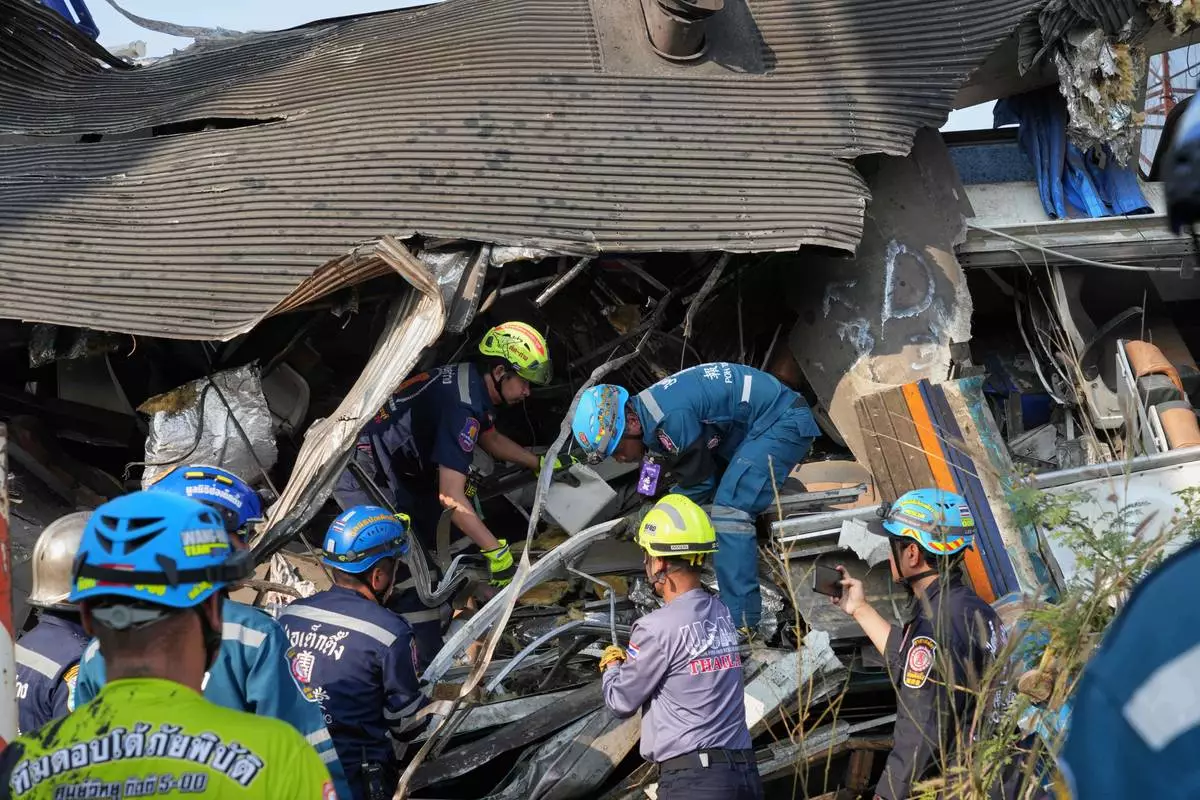
Rescuers work amid the wreckage after a construction crane fell into a passenger train in Nakhon Ratchasima province, Thailand, Wednesday, Jan.14, 2026. (AP Photo/Sakchai Lalit))
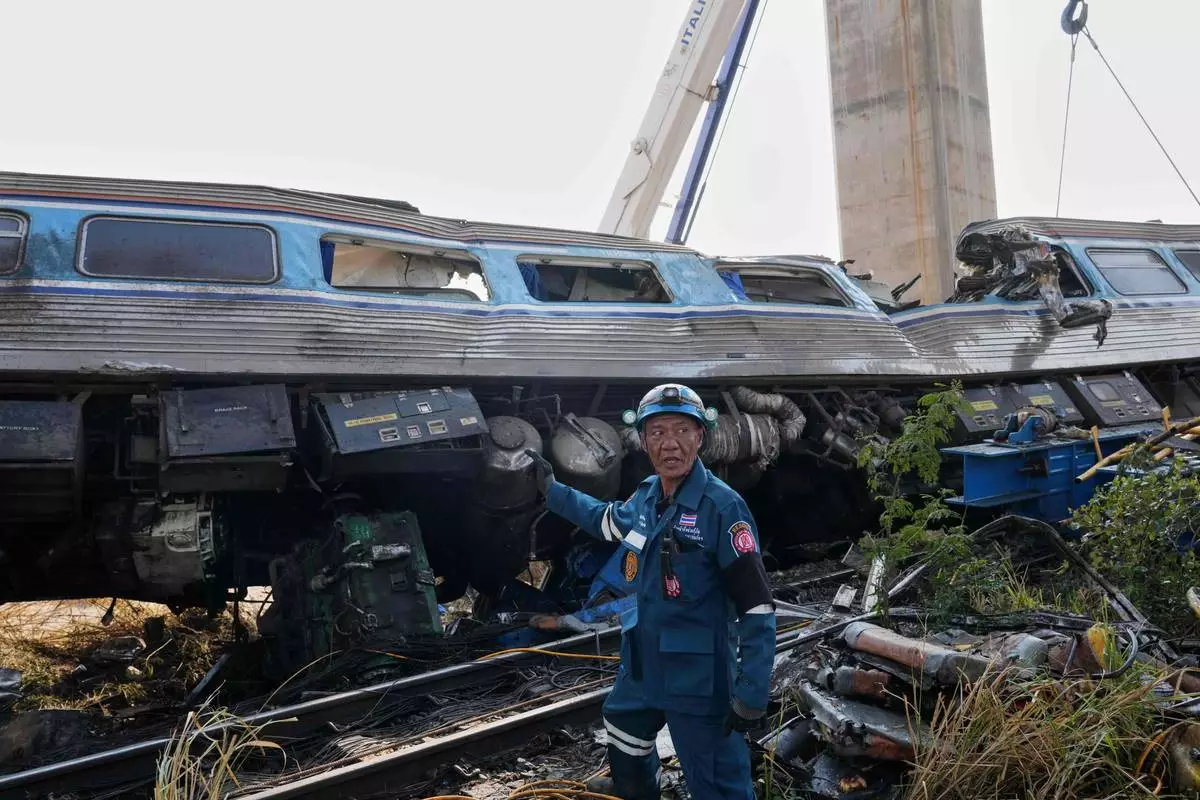
A rescuer stands near the wreckage after a construction crane fell into a passenger train in Nakhon Ratchasima province, Thailand, Wednesday, Jan.14, 2026. (AP Photo/Sakchai Lalit))
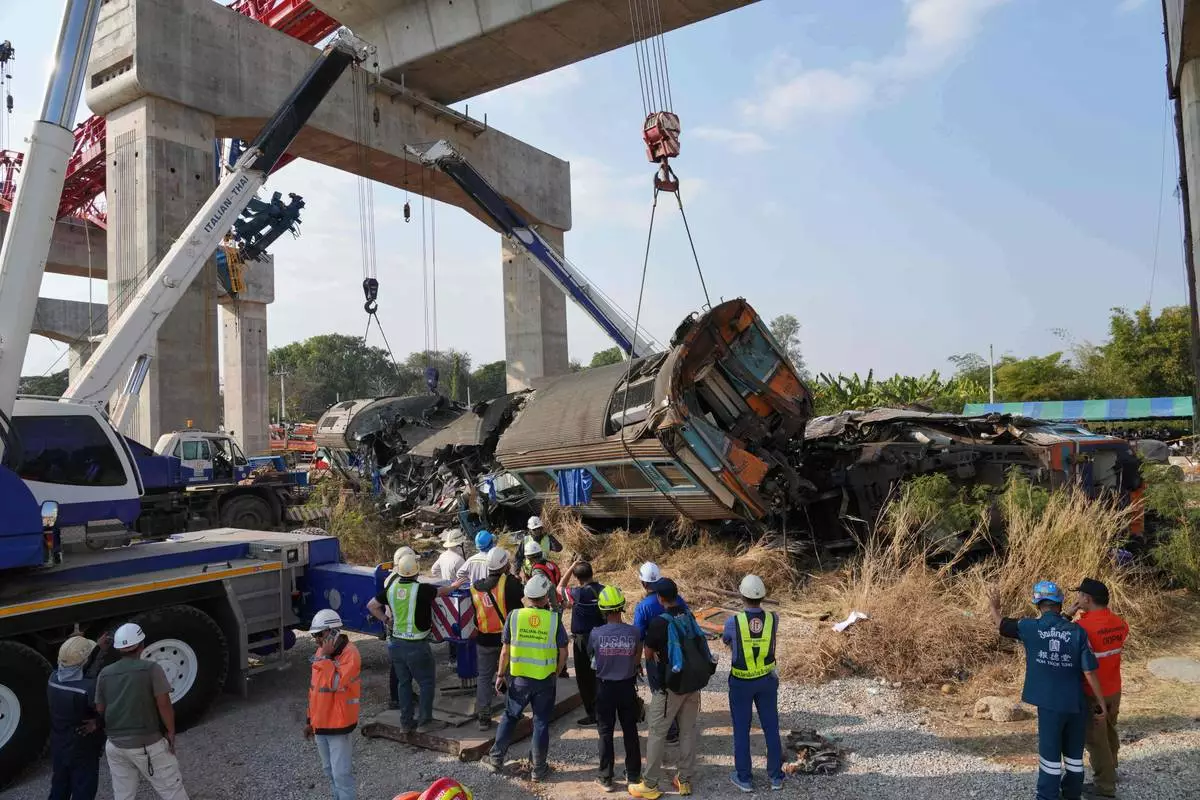
Rescuers try to lift the wreckage after a construction crane fell into a passenger train in Nakhon Ratchasima province, Thailand, Wednesday, Jan.14, 2026. (AP Photo/Sakchai Lalit))
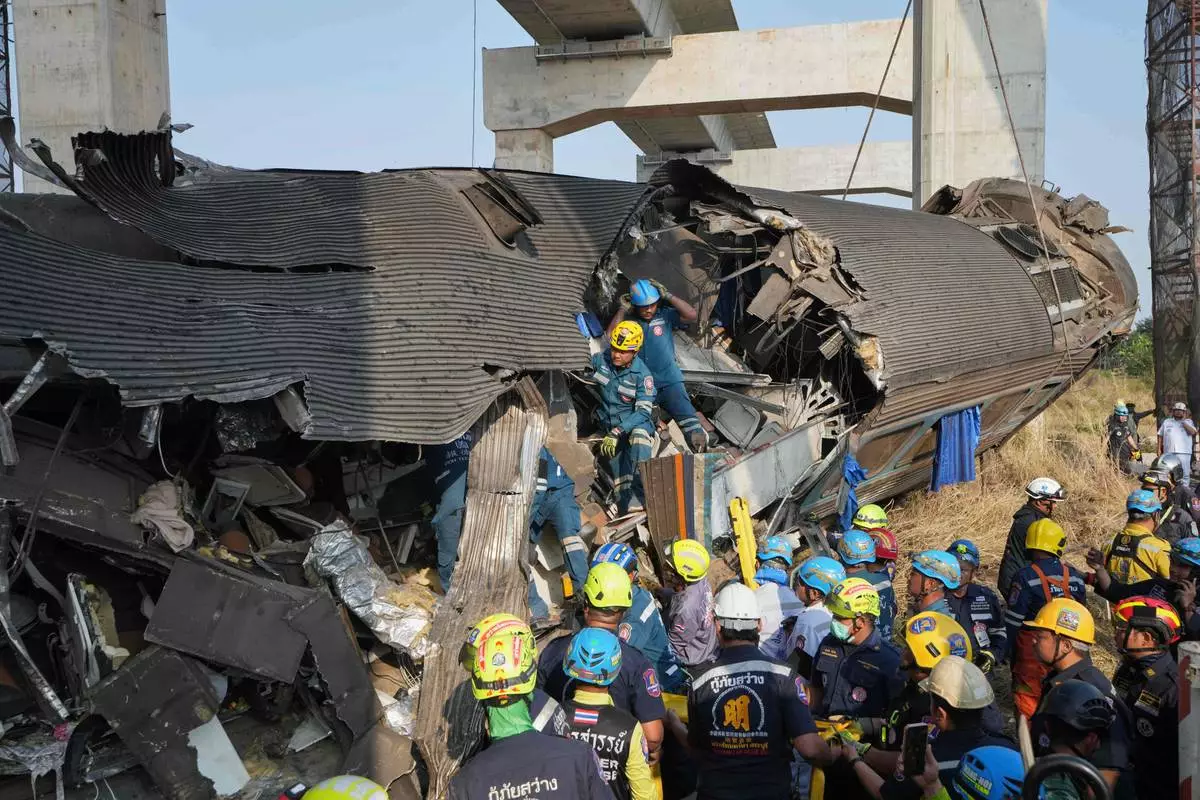
Rescuers work amidst the wreckage after a construction crane fell into a passenger train in Nakhon Ratchasima province, Thailand, Wednesday, Jan.14, 2026. (AP Photo/Sakchai Lalit))
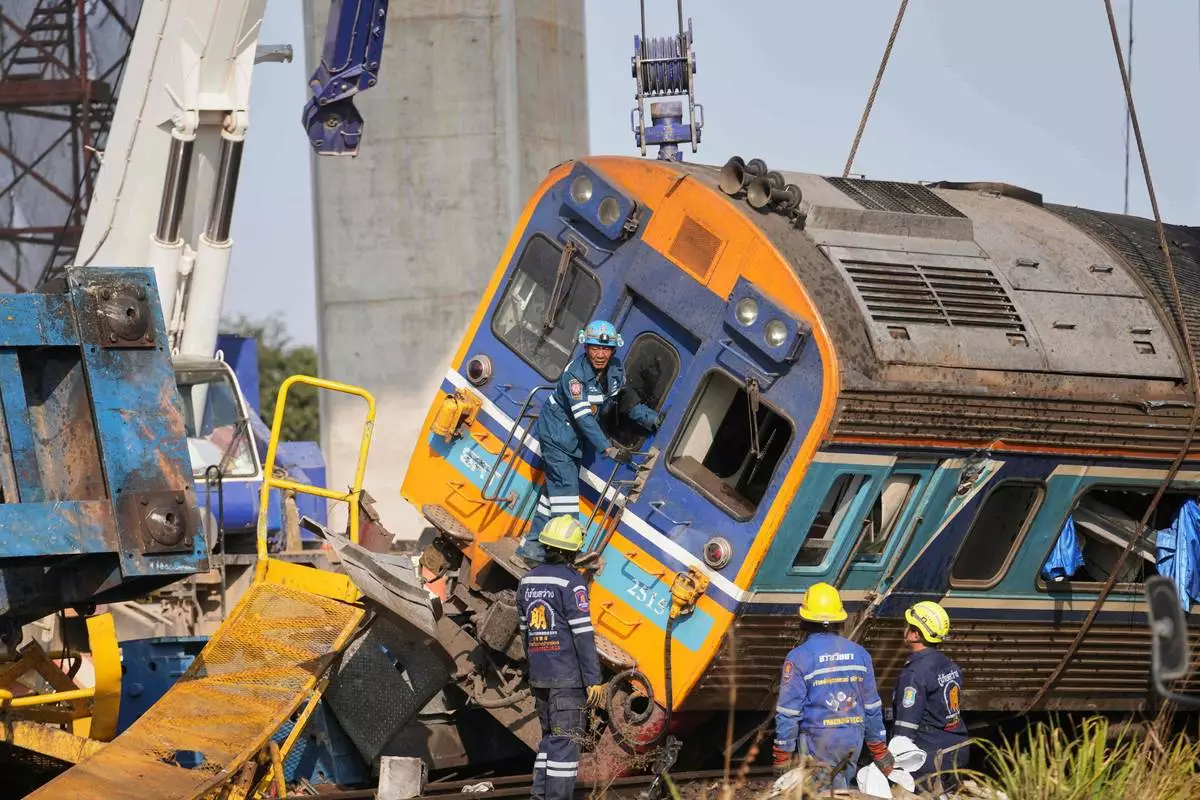
Rescuers work amidst the wreckage after a construction crane fell into a passenger train in Nakhon Ratchasima province, Thailand, Wednesday, Jan.14, 2026. (AP Photo/Sakchai Lalit))
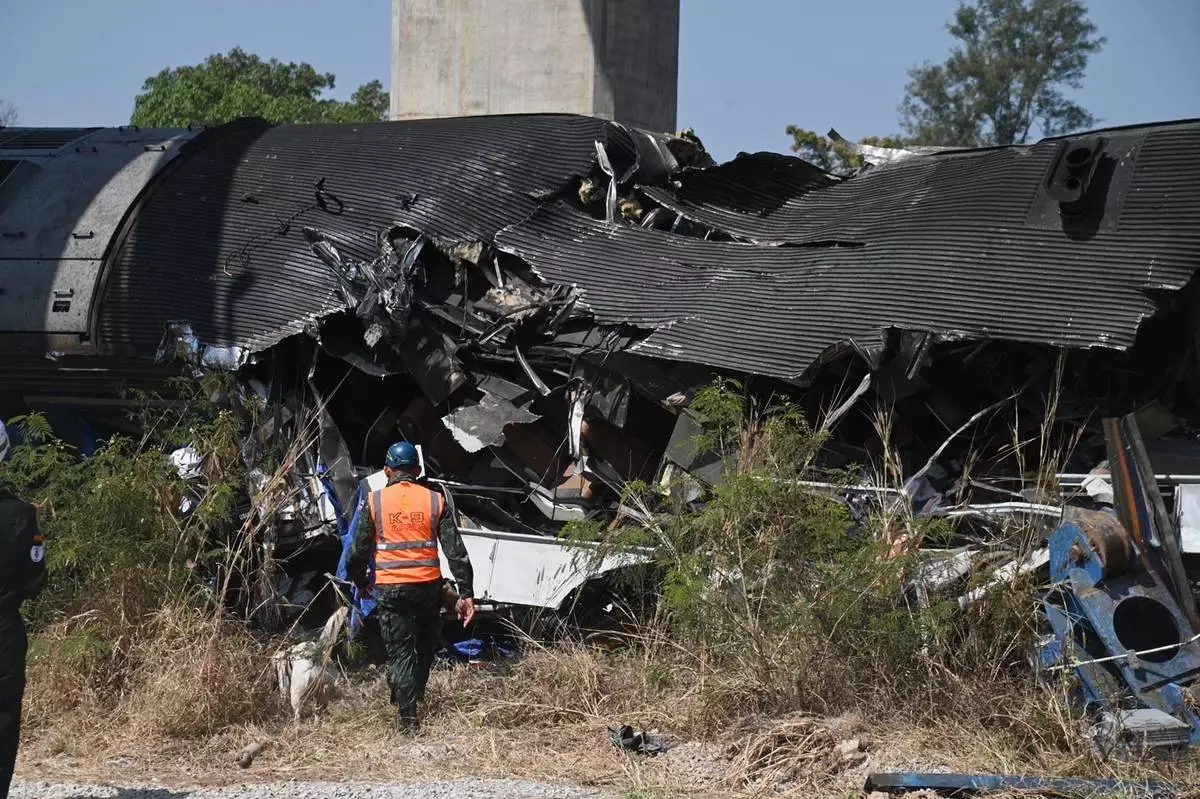
An aid workers at the scene after a construction crane fell into a passenger train in Nakhon Ratchasima province, Thailand, Wednesday, Jan. 14, 2026. (AP Photo/Nathathida Adireksarn)
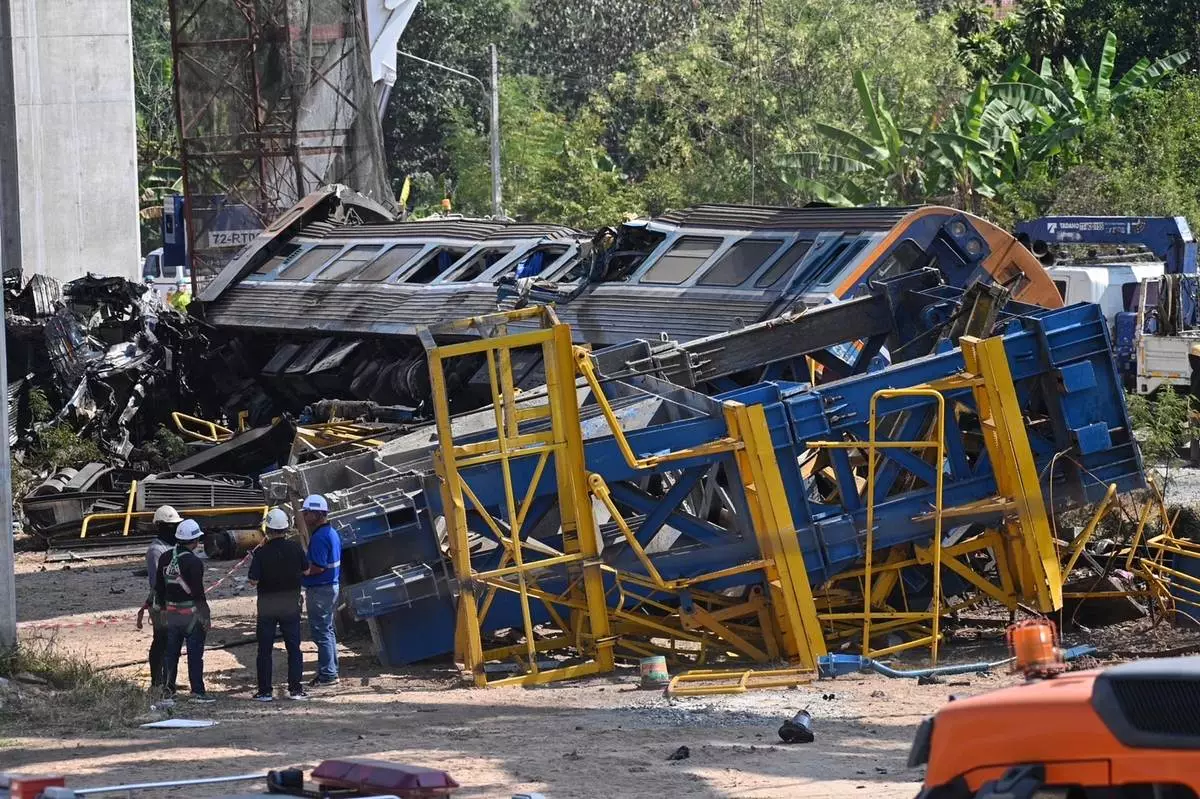
The wreckage after a construction crane fell into a passenger train in Nakhon Ratchasima province, Thailand, Wednesday, Jan. 14, 2026. (AP Photo/Nathathida Adireksarn)
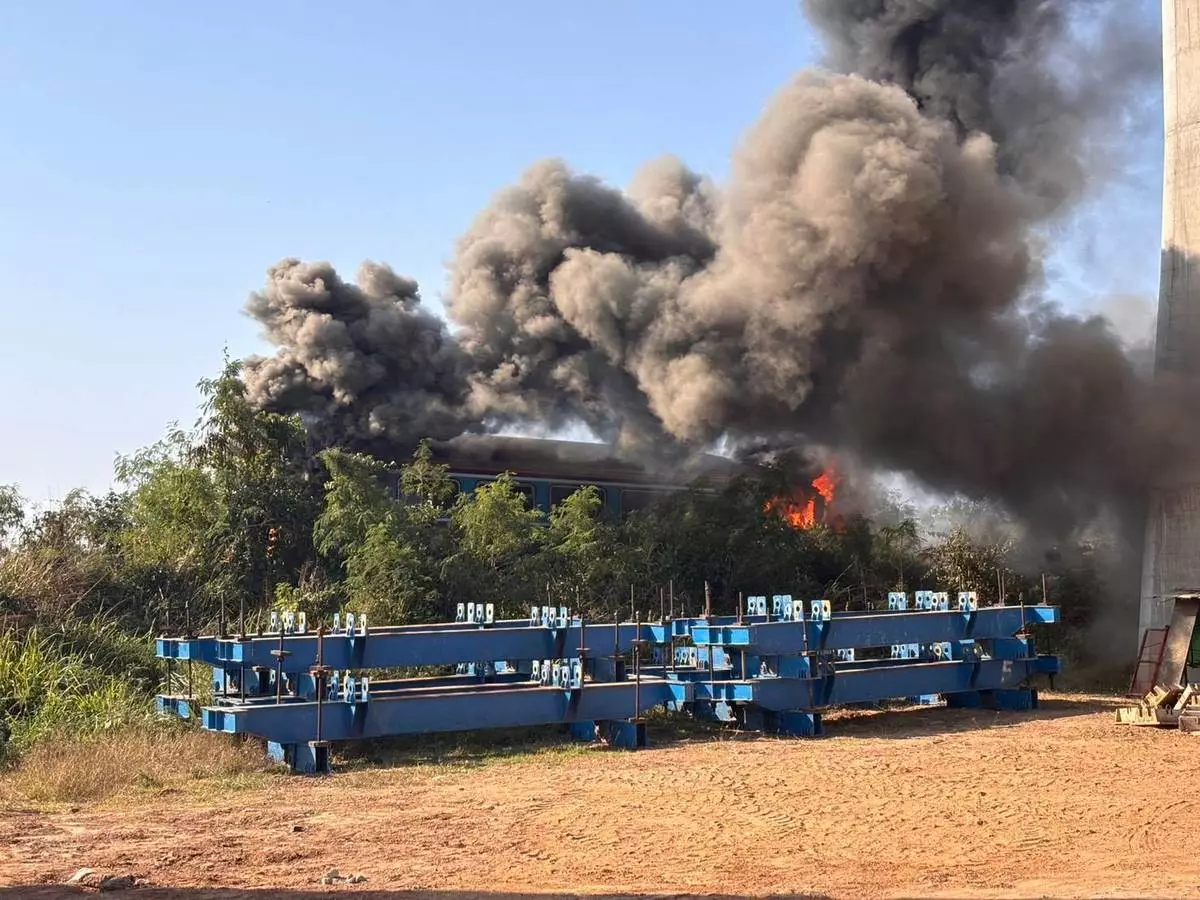
This photo released from Thailand's Ministry of Transport, shows a scene after a construction crane fell into a passenger train in Nakhon Ratchasima province, Thailand Wednesday, Jan. 14, 2026. (Ministry of Transport via AP)

This photo released from State Railway of Thailand, shows aid workers after a construction crane fell into a passenger train in Nakhon Ratchasima province, Thailand Wednesday, Jan. 14, 2026. (State Railway of Thailand via AP)
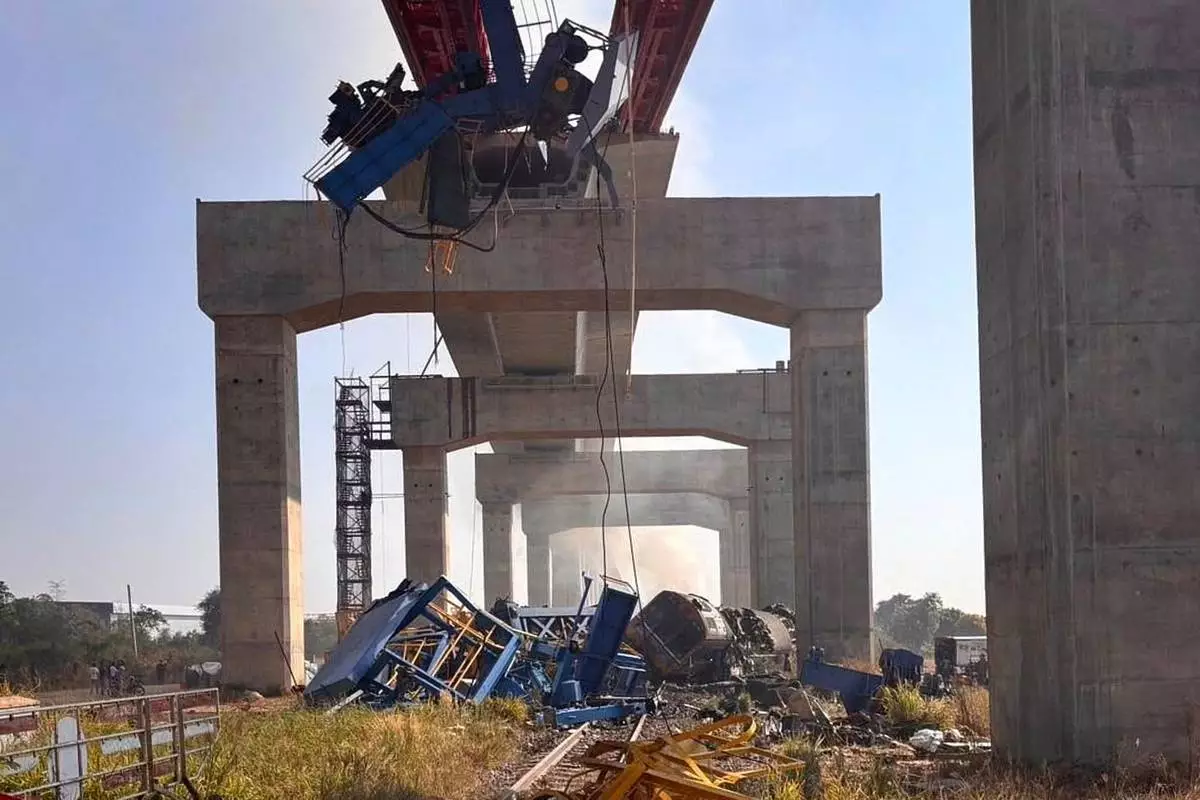
This photo released from State Railway of Thailand, shows a scene after a construction crane fell into a passenger train in Nakhon Ratchasima province, Thailand Wednesday, Jan. 14, 2026. (State Railway of Thailand via AP)
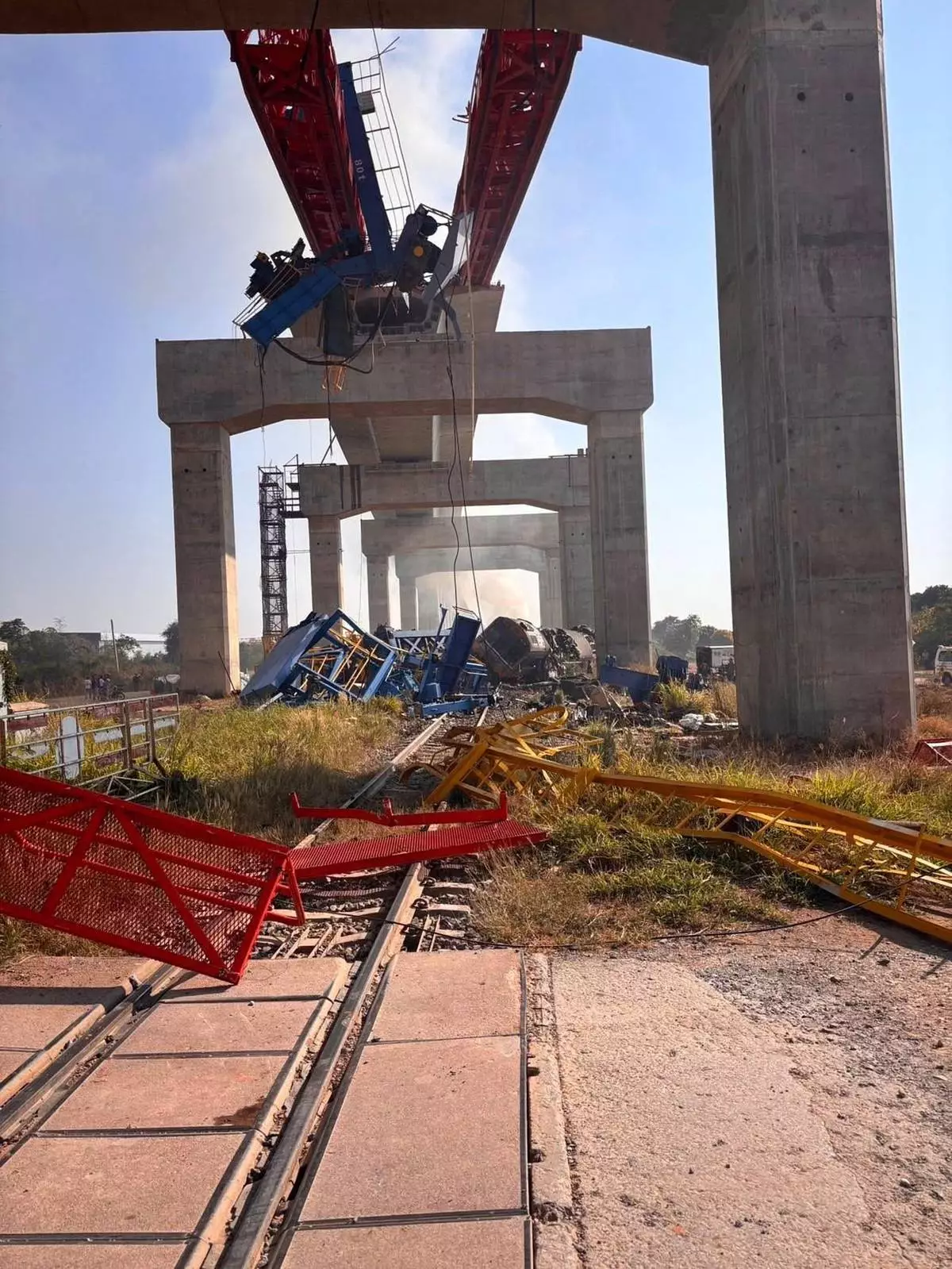
This photo released from State Railway of Thailand, shows a scene after a construction crane fell into a passenger train in Nakhon Ratchasima province, Thailand Wednesday, Jan. 14, 2026. (State Railway of Thailand via AP)
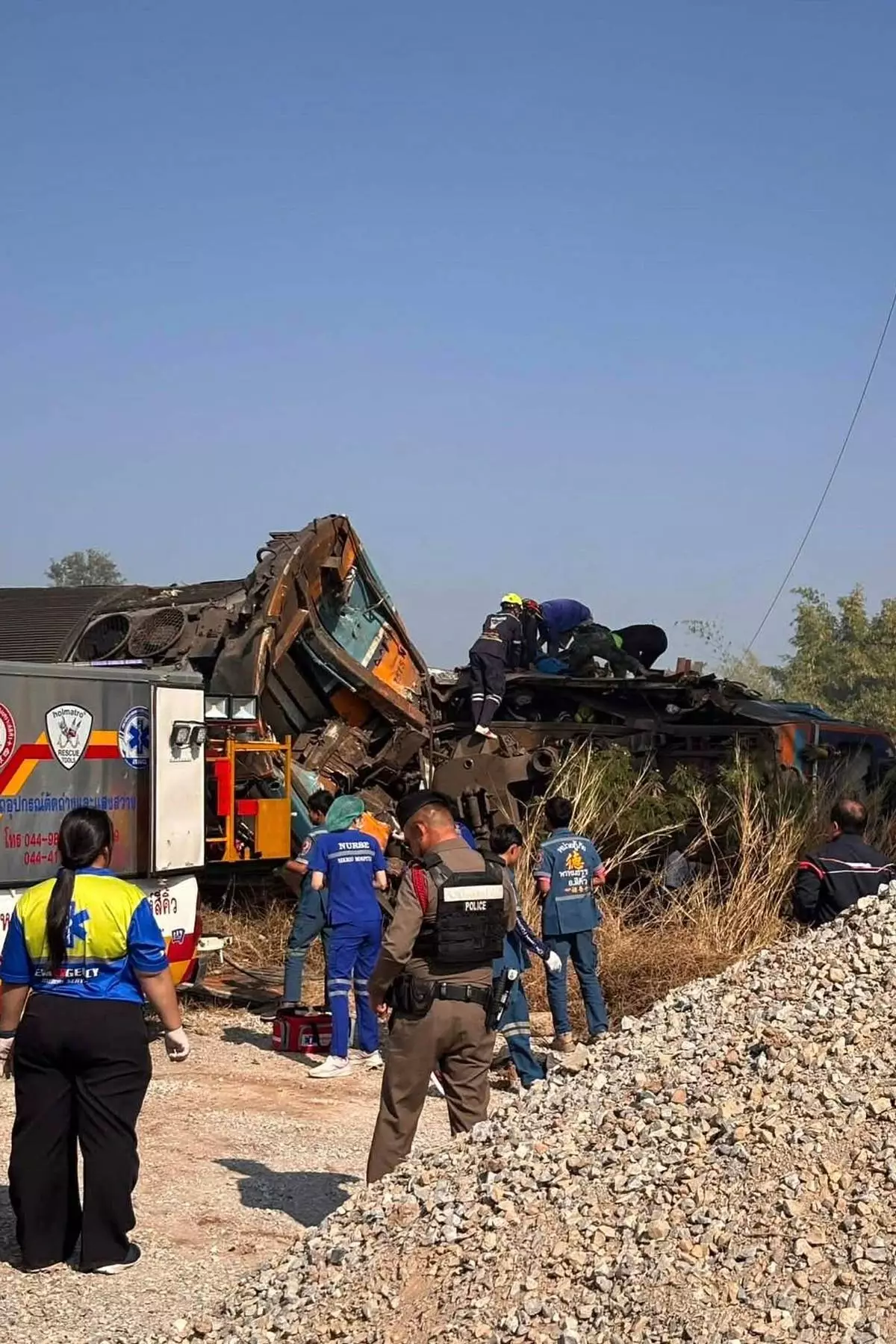
This photo released from State Railway of Thailand, shows aid workers after a construction crane fell into a passenger train in Nakhon Ratchasima province, Thailand Wednesday, Jan. 14, 2026. (State Railway of Thailand via AP)
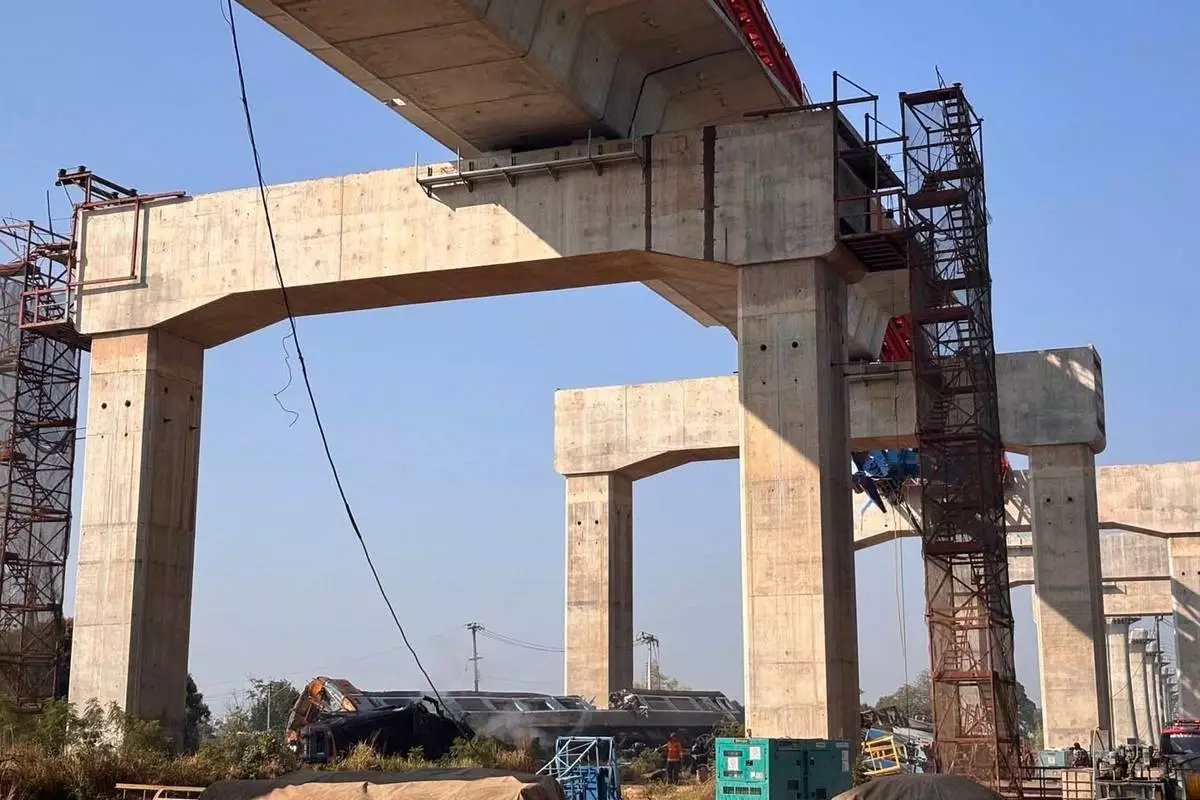
This photo provided by State Railway of Thailand shows a scene after a construction crane fell into a passenger train in Nakhon Ratchasima province, Thailand Wednesday, Jan. 14, 2026. (State Railway of Thailand via AP)