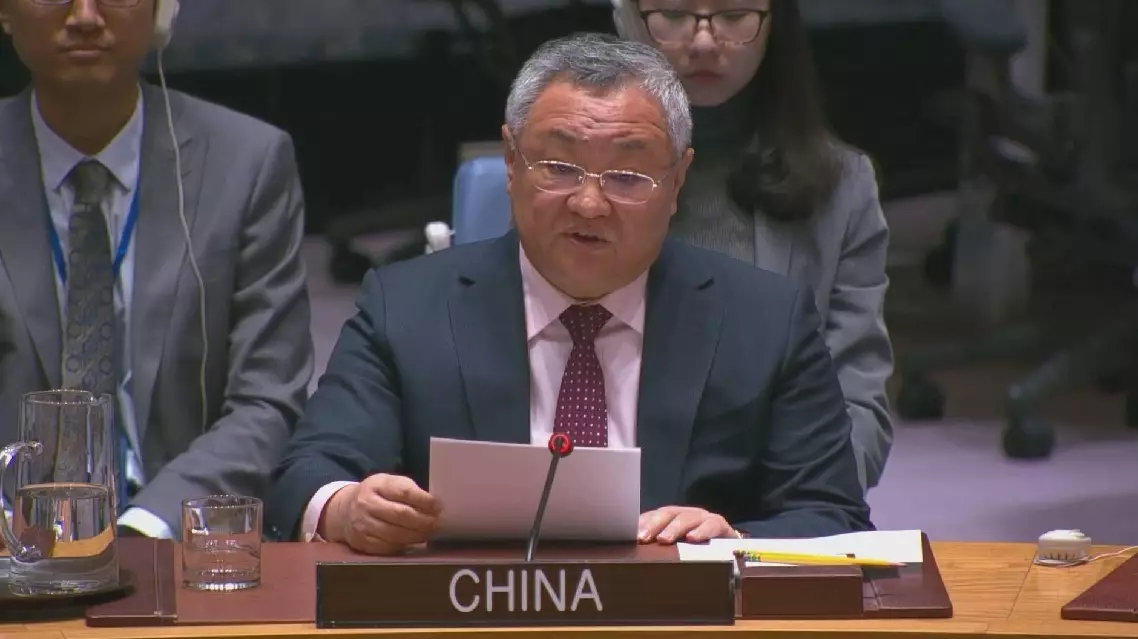
China will, as always, steadfastly uphold the international system with the United Nations at its core, China's Permanent Representative to the United Nations Fu Cong said on Friday.
Speaking at an open debate of the UN Security Council on the United Nations Organization, Fu said 80 years ago, humanity emerged from the ruins of World War II, and established the United Nations to save succeeding generations from the scourge of war. This was a significant collective decision by the international community, marking the beginning of a new chapter in human history.
Over the past eight decades, the UN membership has expanded from 51 to 193, making it the most universal, representative, and authoritative intergovernmental organization. Multilateralism has enjoyed broad consensus, and the purposes and principles of the UN Charter have been widely embraced. The United Nations has made indelible contributions to world peace and development, the Chinese envoy said.
Eighty years later, the ideals envisioned in the UN Charter remain unfulfilled. The world has found itself in a new period of turbulence and transformation. A multitude of global challenges have come thick and fast. The global governance system is under severe strain. And the United Nations has come to a crossroads where much is at stake, Fu said.
"At this defining moment, President Xi Jinping solemnly put forward the Global Governance Initiative, a profound answer to the major questions of our times: what kind of global governance system is to be built and how to reform and improve global governance. It presents China's solution on how to address the widening global governance deficit and advance the establishment of a more just and equitable global governance system," said Fu.
The Global Governance Initiative is in line with the purposes and principles of the UN Charter. It aims to foster closer solidarity and coordination within the international community and enable a more robust response to the challenges of the times. It provides important guidance for the future development of the United Nations. Looking ahead to the next 80 years, instead of just talking the talk, we must walk the walk and support the United Nations as it embarks on a new journey, said the Chinese envoy.
"The United Nations is at a new historical starting point. China stands ready to work with all countries to uphold the lofty ideals of the United Nations. Let us stand firm to safeguard the international system with the United Nations at its core, maintain international order based on international law, and defend the basic norms governing international relations based on the purposes and principles of the UN Charter. Let us forge ahead to build a community with a shared future for humanity," said Fu.
China says to firmly uphold int'l system with UN at core
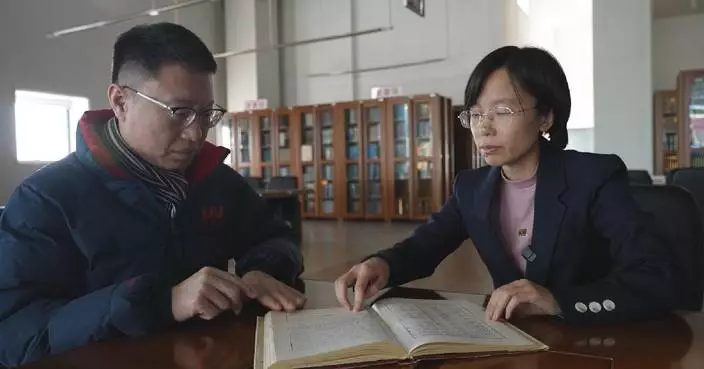
A video featuring a former member of Unit 731, a notorious Japanese germ-warfare unit during World War II (WWII), was released on Thursday in northeast China's Harbin, revealing details of how the unit used meteorological data to conduct horrific bacterial experiments on human beings.
The video was released by the Exhibition Hall of Evidence of Crimes Committed by Unit 731 of the Japanese Imperial Army, in which former Unit 731 member Tsuruo Nishijima detailed how the unit used meteorological data to carry out a bacterial dispersal experiment.
The video was recorded in 1997 by Japanese scholar Fuyuko Nishisato and donated to the exhibition hall in 2019, according to the hall, which was built on the former site of the headquarters of Unit 731 in Harbin, the capital city of Heilongjiang Province.
Jin Shicheng, director of the Department of Publicity, Education and Exhibition of the exhibition hall, said that Nishijima joined Unit 731 in October 1938 and served in the unit's meteorological squad. The squad was not a simple observation section but rather an auxiliary force supporting the unit's field human experiments by measuring wind direction, wind speed, and other conditions to ensure optimal experimental results, according to Jin.
Nishijima confirmed in the footage that "the meteorological squad had to be present at every field experiment." He testified to the "rainfall experiments" conducted by Unit 731, which involved aircraft releasing bacterial agents at extremely low altitudes.
At a field-testing site in Anda City, Heilongjiang, Unit 731 aircraft descended to about 50 meters above the ground. They sprayed bacterial culture liquids onto "maruta" -- human test subjects -- who were tied to wooden stakes. Each experiment involved about 30 people, spaced roughly 5 meters apart. After the experiments, the victims were loaded into sealed trucks and transported back to the unit, where their symptoms and disease progression were recorded over a period of several days.
"Unit 731's bacterial weapons were dropped by aircraft from a height of 50 meters in the open air. Therefore, the meteorological squad needed to observe wind direction and speed, which directly affected the precision and accuracy of the bacterial weapons deployment," said Jin.
Nishijima recounted the harrowing experience of the human test subjects.
"They were fully aware that inhaling the substances would certainly lead to death, so they closed their eyes and held their breath to avoid breathing them in. Their resistance prevented the experiment from proceeding. To compel them to comply, they were forced at gunpoint to open their mouths and lift their heads," said Nishijima.
These experiments, disguised as "scientific research," were in fact systematic tests of biological warfare weapons conducted by the Japanese military. The data generated from these inhumane activities became "research findings" shared among the Japanese army medical school, the medical community, and the military at large.
"At that time, the entire Japanese medical community tacitly approved, encouraged, and even participated in the criminal acts of Unit 731. The unit comprised members from Japan's medical and academic sectors who served the Japanese war of aggression against China. Thus, Unit 731 was not just a military unit but represented an organized and systematic criminal enterprise operating from the top down," said Jin.
Unit 731 was a top-secret biological and chemical warfare research base established in Harbin as the nerve center for Japanese biological warfare in China and Southeast Asia during WWII.
At least 3,000 people were used for human experiments by Unit 731, and Japan's biological weapons killed more than 300,000 people in China.

Video offers details of Japan's germ-warfare crimes in northeast China