The 15th Five-Year Plan period (2026-2030) will be a new stage witnessing explosive growth in China's scientific and technological innovation, a Chinese expert said on Friday.
In an interview with China Central Television in Beijing, Zhu Min, a member of the Senior Expert Advisory Committee of the China Center for International Economic Exchanges interpreted the Communique of the Fourth Plenary Session of the 20th Central Committee of the Communist Party of China issued on Thursday, which reveals the country's major objectives and tasks for the 15th Five-Year Plan period, including achieving substantial improvements in scientific and technological self-reliance and strength.
China is capable of making new breakthroughs and taking a leading position in such areas as artificial intelligence (AI), quantum computing, and nuclear energy in the next five years, Zhu predicted.
"The 21st century is an era of development and competition in science and technology. Especially due to geopolitical factors, such competition is becoming increasingly fierce. In the next five years, I think it's very important in the science and technology field that China needs to make breakthroughs and take a globally leading position in several core cutting-edge areas. AI is currently the greatest trend. One year ago, it's generally believed that China is two or three years behind the U.S. in AI. But now, everything is different. We have DeepSeek's algorithms and large language models, Huawei's homegrown server chips, and advantages in data thanks to the central government's policies for accelerating the construction of the basic system for data. So, China has had the foundation for AI, and it is developing very rapidly. China is already ahead of the U.S. especially in some AI Plus areas," Zhu said.
"Now, AI models are all large language models. It is hard to describe something in language, but much clearer in images. So, if image algorithms come into use, China will achieve leapfrog development in AI. In the next five years, new breakthroughs will be made in AI Plus applications and fundamental theories of AI," he added.
"China is now also ahead of others in quantum computing and has laid a very good foundation," Zhu said.
"In terms of energy, China already has mature technologies in combining nuclear fusion and fission at its fourth-generation nuclear power plants. Now, efforts are under way to develop smaller reactors and adopt nuclear fusion technology for higher efficiency, and there should be new breakthroughs in this area during the 15th Five-Year Plan period," he said.
"So, the 15th Five-Year Plan period will be a new stage witnessing a sci-tech innovation boom in China," Zhu said.
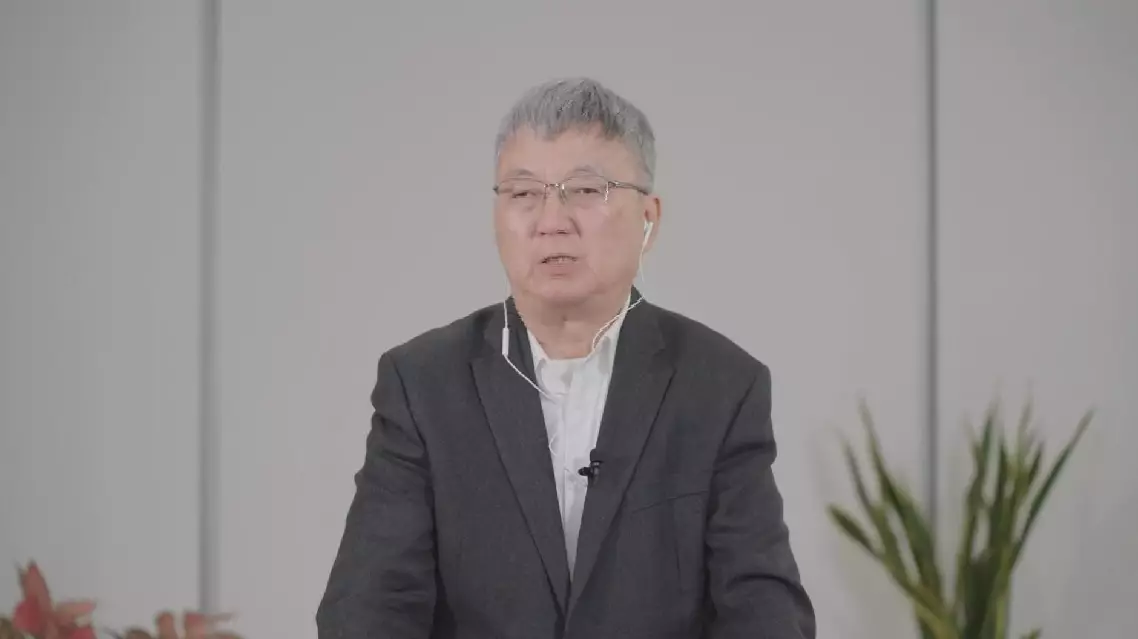
China to see sci-tech innovation boom in coming 5 years: expert