With hundreds of historical records of the Taiwan volunteer corps newly added to China’s national documentary heritage list, the stories of this group -- who fought alongside mainland forces against Japanese aggression during World War II -- are sparking patriotism among younger generations.
The Taiwan volunteer corps was a special anti-Japanese force formed by patriotic compatriots from Taiwan. It was mainly active in eastern Fujian and Zhejiang provinces during the Chinese People's War of Resistance Against Japanese Aggression.
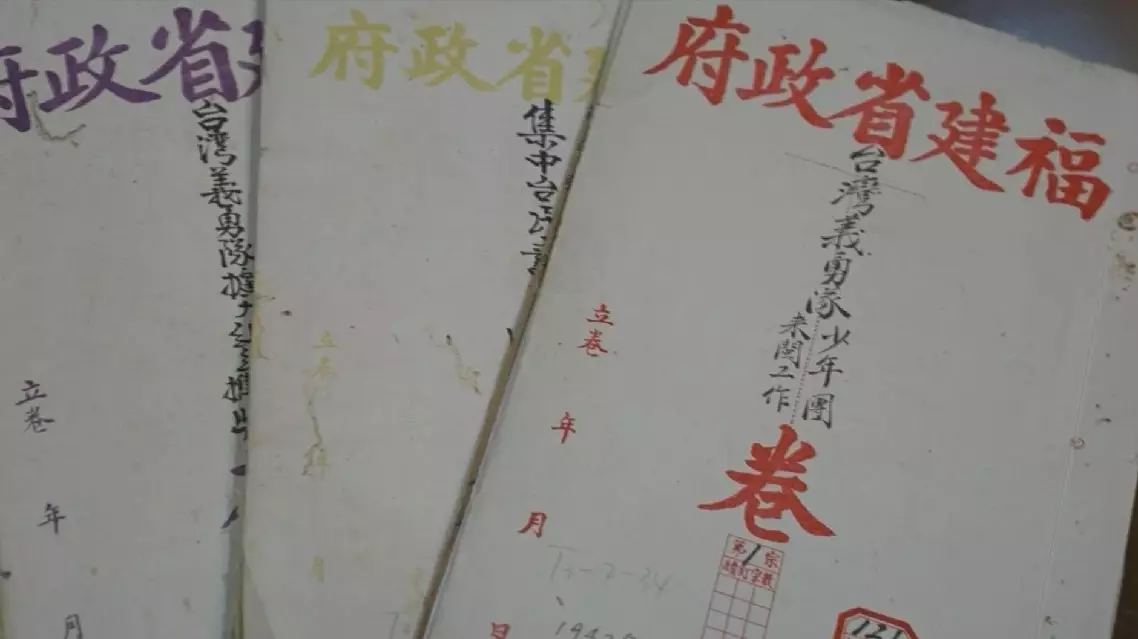
For many years, the wartime experiences of these patriots remained little known to the wider public. But in June, as a collection of 625 documents related to the Taiwan volunteer corps and its youth league was added to the latest edition of China’s national documentary heritage list, more people have begun to discover the full story.
In 1939, the Taiwan volunteer corps and the Taiwan youth league were founded by General Lee You-pang, a Taiwan-born patriot who had gone to the mainland to oppose Japanese colonial rule on the island.
After starting out with just over 30 members, the Taiwan volunteer corps grew to more than 380 by 1945. It was the largest, most influential, and longest-lasting organization of Taiwan compatriots who directly took part in the War of Resistance against Japanese Aggression on the mainland, playing an active role in intelligence gathering, medical aid, and other areas along the front lines in Zhejiang and Fujian.
Containing historical photographs, telegrams, letters, newspaper clippings, and various other paper records, the archive chronicles the full history of the Taiwan volunteer corps.
Chen Feng, director of compilation and research at the Fujian Provincial Archives, has spent the past two decades collecting and compiling documents on the corps. Since the launch of a systematic archival project in 2005, she and her colleagues have gathered materials by visiting local archives and historical sites across Fujian, as well as by interviewing veterans and their descendants.
Chen has worked on numerous projects during her nearly 30-year career, but she felt a special connection to this one. Born in Fujian’s coastal region, she had distant relatives living in Taiwan, just like many people in the province, reflecting the close bond between the two places.
"Many Taiwan compatriots in Fujian answered Lee You-pang's call, when he came to promote the War of Resistance against Japanese Aggression. Some families joined the corps together. Among those who registered, there were adults in their forties or fifties, and others in their twenties or thirties," said Chen.
Many families from Taiwan joined the resistance against Japanese aggression together, from the elderly to young children. This is also the reason, Chen explained, that General Lee established the youth league at the same time he founded the Taiwan volunteer corps.
The youth league members, who were generally between eight and 14 years old at the time, displayed remarkable patriotism in their writings, which were preserved and collected by Chen and her colleagues.
Zheng Lan, a descendant of Taiwan volunteer corps members, shared personal family stories that highlight the risks they faced. Both his grandfather and father served together in the group.
"My grandfather infiltrated the Japanese-occupied areas [in Xiamen] several times, often facing life-threatening situations. He recounted in his memoirs that there were several such situations. They had to hide in the sewers for several days until it was safe. He said it was extremely dangerous and even wrote testament," said Zheng.
China’s victory in 1945 ended Japan’s 50-year colonial rule over Taiwan. It is estimated that up to 650,000 people from Taiwan died resisting five decades of Japanese occupation. On October 25, 1945, the Chinese government at the time announced it was resuming sovereignty over the island.
"When I had just started my career, my first assignment was to compile archives on the Taiwan volunteer corps. I felt deeply honored to be involved in this work. While handling these historical documents, I realized that many of them were decades old, some even over a century old," said Chen.
Two years after the archival project began, a compilation of documents on the Taiwan volunteer corps was published in 2007. However, collection and research efforts continue today, with more materials still being gathered, preserved, and studied.
Story of Taiwan volunteer corps sparks patriotism in younger generations