Skip to Content Facebook Feature Image

Aunnual Conference of Financial Street Forum 2025 opens in Beijing

China

China

China

Aunnual Conference of Financial Street Forum 2025 opens in Beijing

2025-10-27 21:22 Last Updated At:22:37

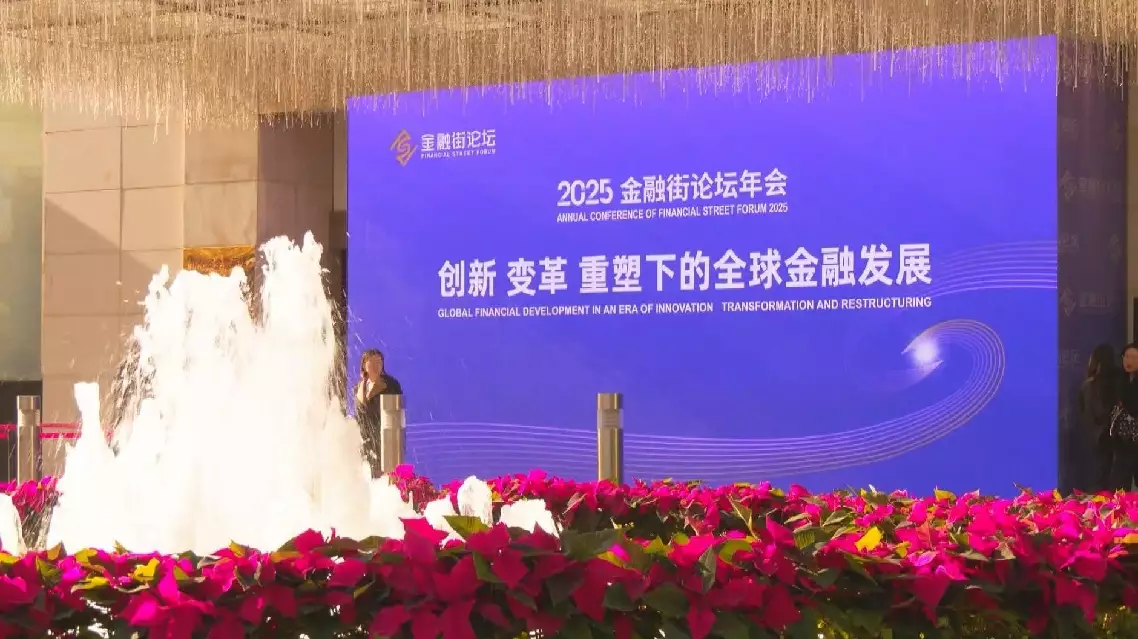
The Annual Conference of Financial Street Forum 2025 opened Monday in Beijing, focusing on global financial development in an era of innovation, transformation and restructuring.

The four-day event brings together more than 400 guests from over 30 countries and regions, including representatives from China's central bank, international regulators and economic experts, for talks on global financial development and cooperation.

It is the first global financial gathering to be held in the Chinese capital after the fourth plenary session of the 20th Central Committee of the Communist Party of China (CPC).

The meeting will release a batch of financial policies focusing on the direction of financial reform and development during the 15th Five-Year Plan period (2026-2030). It will also unveil a number of important institutions and see the signing of a number of international cooperation memorandums.

"In the face of the complex and severe domestic and international situation, we have adhered to a supportive monetary policy stance under the principal guidance of Vice Premier He Lifeng, in accordance with the decisions and arrangements of the Central Committee. We have comprehensively utilized various monetary policy tools, including quantity, price and structure, to maintain ample liquidity. The leading macro-financial indicators reflecting financial operations also show the state of the moderately loose monetary policy," said Pan Gongsheng, governor of the People's Bank of China, the country's central bank.

"We will thoroughly study and understand the General Secretary's important speeches and the guiding principles of the fourth plenary session of the 20th CPC Central Committee, focus on the goals and tasks of economic and social development in the 15th Five-Year Plan period, unwaveringly follow the path of financial development with Chinese characteristics, and accelerate the building of a strong financial country," said Li Yunze, head of the National Financial Regulatory Administration.

The main topics of discussion include finance and artificial intelligence technology, green finance and cross-border investment.

One of the highlights of this year's forum is the participation of five overseas sub-venues, in cities including Abu Dhabi, Madrid and New York, with their focus on China's economic and financial cooperation with the Middle-East, Europe and beyond.

"We are gathering at a time of high global uncertainty against a backdrop of major and ongoing shifting trade, geopolitics and technology, including financial technology. Despite this uncertainty, global growth is holding up better than expected, yet it falls short of what is needed," said Kristalina Georgieva, managing director of the International Monetary Fund, via a video speech.

"Asia has become an increasingly central pillar of the global financial system. The region continues to account for more than half of global growth. While uncertainties have weighed on external demand and prompted some firms to delay investment, domestic conditions remain broadly resilient," said Pablo Hernández de Cos, general manager of the Bank for International Settlements, also online.

This year's CPC plenary communique emphasized China's economic resilience and technological self-reliance. Experts hope the Financial Street Forum will showcase China's willingness to further open up its economy, and expand economic collaboration.
Aunnual Conference of Financial Street Forum 2025 opens in Beijing
Aunnual Conference of Financial Street Forum 2025 opens in Beijing

Aunnual Conference of Financial Street Forum 2025 opens in Beijing
Aunnual Conference of Financial Street Forum 2025 opens in Beijing
South China's Guangdong Province is accelerating its transformation into an international medical tourism hub, positioning itself as a destination for patients worldwide seeking affordable, high-quality care.

The push follows a joint initiative announced in late March by nine Chinese government departments, including the Ministry of Commerce, aimed at boosting spending by foreign tourists and enhancing exports of tourism services as part of broader efforts to expand the country's service sector.

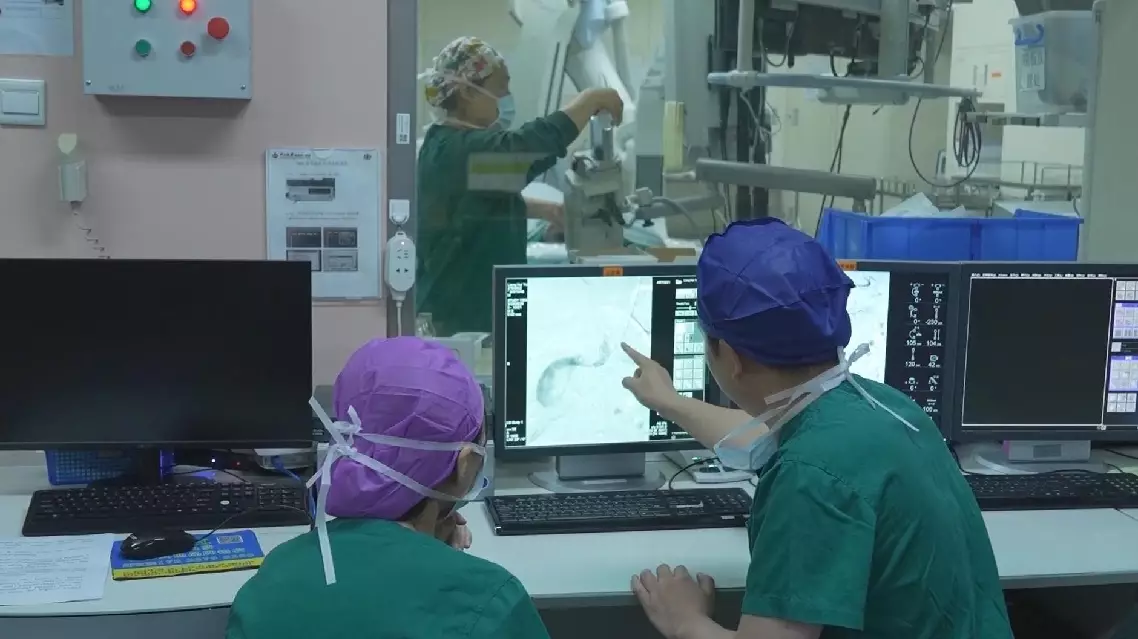
Every day, some of the most complex surgeries are performed here. Li Zilun, deputy director of the division of vascular surgery at the First Affiliated Hospital of Sun Yat‑sen University, is among the doctors capable of carrying out these intricate procedures.

He recently completed surgery on a patient with an aortic aneurysm, a condition often described as a "time bomb" in the body’s main artery, increasingly common in aging societies around the globe. Li also specializes in highly difficult and pioneering procedures, including repairing leaks caused by failed grafts.

"This was a very challenging case. And then, we implanted the covered stent to eliminate the endoleak. Actually, the outcome was pretty good. The patient will be discharged today," said Li Zilun.

The ability to handle such complex cases -- combining international techniques with domestically produced devices -- is drawing patients from around the world to seek treatment. In addition, high safety standards and low costs are also major draws.

"Our government is encouraging innovation. So, lots of physicians -- including our vascular surgeons -- we are actively involved in the innovation that helps to increase the effectiveness and safety, and also bring down the cost," said Li.

This hospital is one of the first in Guangdong to be designated by the provincial health commission as a pilot site for building an international medical service hub.

The growing number of patients has pushed the hospital to explore new ways to transform every step -- from treatment to payment and everything in between -- into a seamless experience, reducing waiting times and delivering better care for patients.

"I think it's fast. When the patient come here for just about, I think, one week, you can solve the problem," said Xiao Haipeng, president of the First Affiliated Hospital of Sun Yat-sen University.

The hospital is also deepening its international cooperation with top-tier medical institutions, including those at Harvard University.

"Not just for China, for the whole globe, we are facing health care challenges -- emerging infectious disease and chronic, lung infectious diseases, and also the aging population, also the shortage of healthcare workforce," said Xiao.

In response to these challenges, China is promoting its own solutions, including aggressive innovation in artificial intelligence (AI)-driven workflows, while stepping up research and development investment and global engagement along the way.

"In recent years, the innovation in Western medicine is dramatically growing. An example of my hospital -- in the past few years, we have 140 innovations and seven of them are international leading innovations," said Xiao.

As global demand for medical tourism grows, China is positioning itself as a new destination. Official data shows that the number of foreign patients in Guangdong increased by 20 percent last year. Among them, the growth in inpatient admissions was even faster, rising by 76 percent.

Guangdong fast-tracks pilot for int'l medical service hub

Guangdong fast-tracks pilot for int'l medical service hub

Recommended Articles