KINGSTON, Jamaica (AP) — Hurricane Melissa has made landfall on Jamaica as the strongest storm to hit the Caribbean island since records were first kept 174 years ago. It is tied for the strongest Atlantic hurricane to ever hit land.
Melissa is a Category 5 storm with sustained wind speeds of 185 mph (295 kph). It is expected to slice diagonally across the island, entering near St. Elizabeth parish in the south and exiting around St. Ann parish in the north. A life-threatening storm surge of up to 13 feet (4 meters) is expected across southern Jamaica. The storm is expected to make landfall in eastern Cuba late Tuesday or early Wednesday.
Click to Gallery
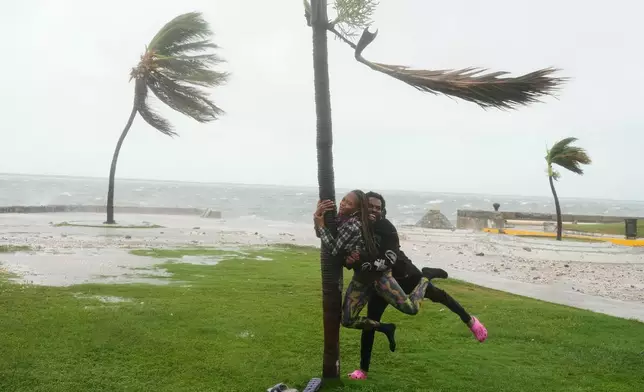
A couple jokes around on the coast in Kingston, Jamaica, as Hurricane Melissa approaches, Tuesday, Oct. 28, 2025. (AP Photo/Matias Delacroix)
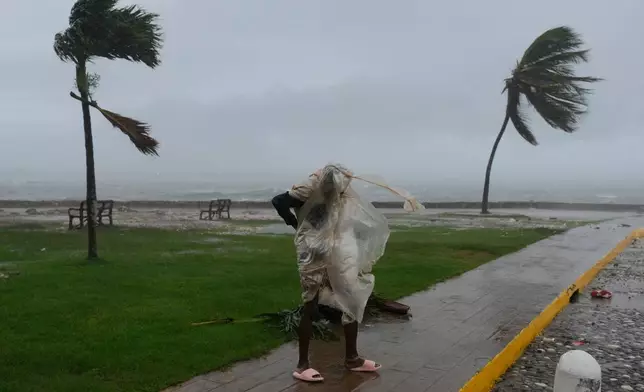
A man walks in Kingston, Jamaica, as Hurricane Melissa approaches, Tuesday, Oct. 28, 2025. (AP Photo/Matias Delacroix)
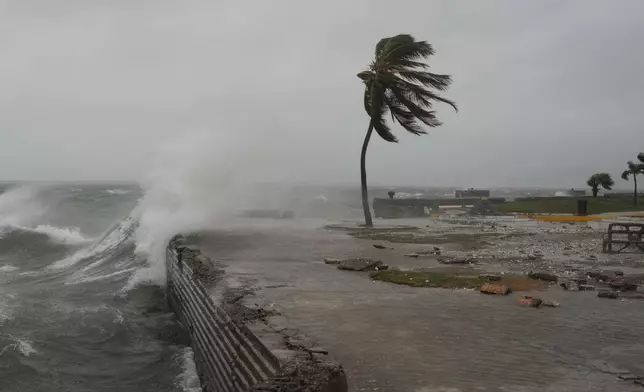
Waves splash in Kingston, Jamaica, as Hurricane Melissa approaches, Tuesday, Oct. 28, 2025. (AP Photo/Matias Delacroix)
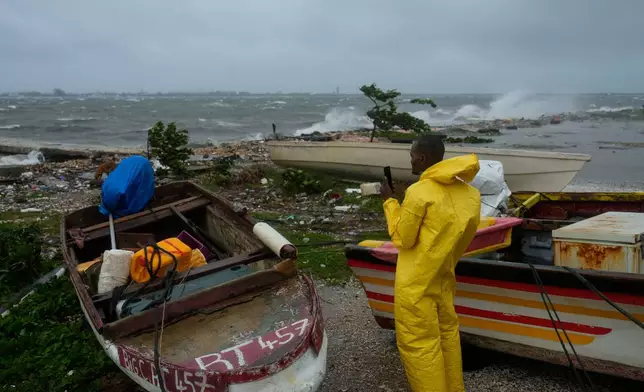
A man watches the coastline in Kingston, Jamaica, as Hurricane Melissa closes in, Tuesday, Oct. 28, 2025. (AP Photo/Matias Delacroix)
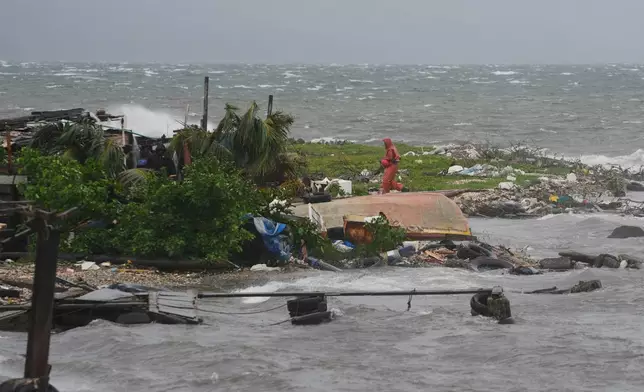
A man walks along the coastline in Kingston, Jamaica, as Hurricane Melissa approaches, Tuesday, Oct. 28, 2025. (AP Photo/Matias Delacroix)
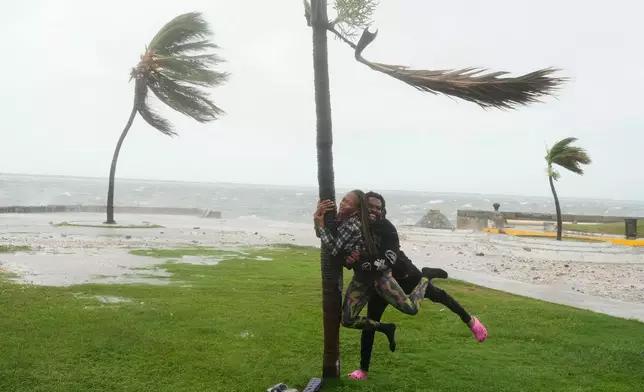
A couple jokes around on the coast in Kingston, Jamaica, as Hurricane Melissa approaches, Tuesday, Oct. 28, 2025. (AP Photo/Matias Delacroix)
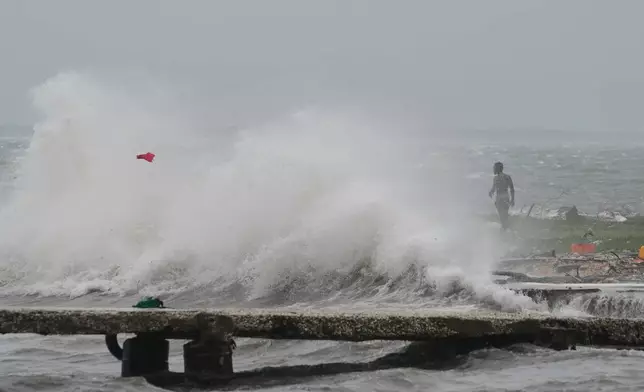
Waves splash in Kingston, Jamaica, as Hurricane Melissa approaches, Tuesday, Oct. 28, 2025. (AP Photo/Matias Delacroix)
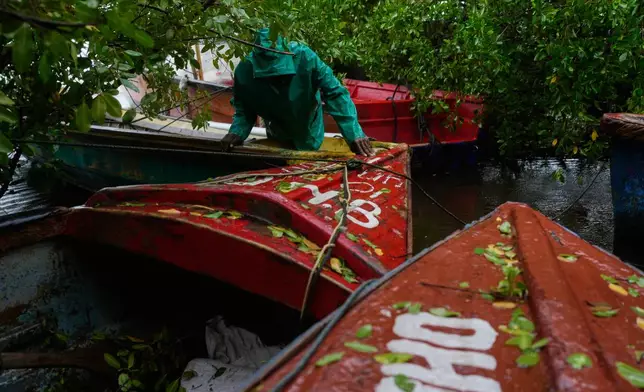
A fisherman ties boats in preparation for the forecasted arrival of Hurricane Melissa in Old Harbour, Jamaica, Monday, Oct. 27, 2025. (AP Photo/Matias Delacroix)
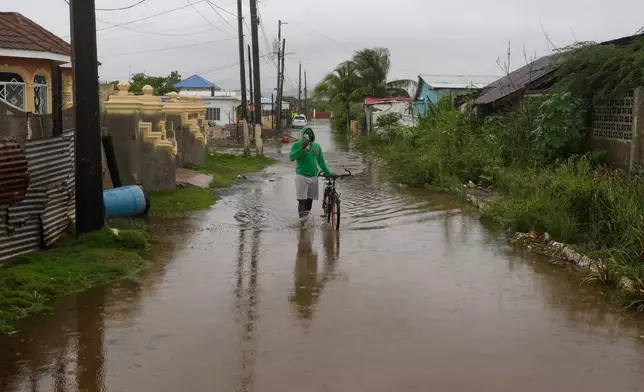
A man wades through a flooded street ahead of the forecasted arrival of Hurricane Melissa in Old Harbour, Jamaica, Monday, Oct. 27, 2025. (AP Photo/Matias Delacroix)
Officials said there was no more preparation they could do and warned that damage assessment will be slow. The storm has been blamed for at least seven deaths in the Caribbean — three in Jamaica, three in Haiti and one in the Dominican Republic.
Here's the latest:
“We’re watching it closely, and we’re prepared to move,” President Donald Trump said.
Trump marveled at the storm’s strength.
“I’ve never seen that before. I guess it can get that high, but I’ve never seen it,” he said.
The Miami Heat has donated $1 million to the humanitarian organization Direct Relief to assist with Hurricane Melissa recovery efforts, according to an NBA statement.
The donation is being made in partnership with the Micky and Madeleine Arison Family Foundation and Carnival Corporation & plc. The three organizations have given more than $17 million to Direct Relief’s crisis response since 2013.
“In Florida, we are all too familiar with the widespread devastation caused by a Category 5 storm,” Eric Woolworth, president of The Heat Group’s business operations, said in a statement. “Direct Relief provides life-saving and ongoing assistance, which is so critical as residents begin the long road to rebuilding their communities.”
”Direct Relief will help sustain healthcare access after the storm and support Jamaica health facilities, many of which are in coastal and low-lying areas,” a spokesperson for the nonprofit told The Associated Press.
▶ Read more about how to help those impacted here
Jamaican officials warned against going outside during Hurricane Melissa, but curiosity got the better of a few teens who had never experienced the wrath of such a ferocious storm.
“I’ve never seen a Category 5 storm, so I couldn’t help but imagine what it must be like,” 15-year-old Gavin Fuller said. Despite being told by his parents not to go outside, he went anyway.
“I wanted to know what it feels like to stand in the eye of something so powerful,” he said.
His home in Portmore, St. Catherine, was not in the direct path of the hurricane, but the tropical storm-force winds were enough to pique his interest.
His neighbor, Demario Smith, joined him in the whipping winds.
“Yes, I do believe that the storm is dangerous, but I just wanted to see for myself what it is doing. Feel how powerful the wind is blowing,” the 16-year-old shared, admitting that his parents were not happy with his actions.
Melissa has top sustained winds of 125 mph (205 kph) and was moving north-northeast at 8 mph (13 kph) through the Caribbean Sea, according to the latest advisory from the U.S. National Hurricane Center in Miami.
The hurricane was centered about 50 miles (80 kilometers) east-northeast of Montego Bay, Jamaica, and about 160 miles (260 kilometers) southwest of Guantánamo, Cuba.
The president of the Provincial Defense Council and first secretary of the Cuban Communist Party in the eastern province of Santiago de Cuba, Beatriz Johnson Urrutia, said that some 281,000 people have already been evacuated and taken to 101 evacuation centers in that region or are staying with neighbors or relatives.
Some low-lying or coastal communities have been completely evacuated, with only the personnel in charge of safeguarding property remaining.
Of the 16 reservoirs managed by the National Institute of Hydraulic Resources in the province, five are discharging water, with 78% of their capacity accumulated in anticipation of heavy downpours.
Desmond McKenzie, deputy chairman of Jamaica’s Disaster Risk Management Council, noted that extensive damage was reported in the southwestern parish of St. Elizabeth, which he said “is under water.”
He said severe damage also was reported in parts of Clarendon in southern Jamaica.
Almost every parish in the country is experiencing blocked roads, fallen trees, damaged utility poles and excessive flooding, McKenzie said.
He said four main hospitals are damaged, with the storm knocking out power to one of them, forcing officials to evacuate 75 patients.
Floodwaters trapped at least three families in their homes in the community of Black River in western Jamaica, and crews were unable to help them because of dangerous weather conditions, said Desmond McKenzie, deputy chairman of Jamaica’s Disaster Risk Management Council.
“Roofs were flying off,” he said. “We are hoping and praying that the situation will ease so that some attempt can be made to get to those persons.”
McKenzie said there are no confirmed reports of deaths and stressed that it was too early to talk about the extent of the damage because the storm was still pummeling the island.
Rohan Brown, with Jamaica’s Meteorological Service, said damaging hurricane winds were persisting late Tuesday afternoon in St. James, Trelawny and sections of St. Ann and Hanover.
“We’re not in the clear as yet,” he said.
He warned that as Melissa moves off the island, its counterclockwise rotation will bring a heavy storm surge to northern Jamaica through the night.
Meanwhile, officials are working to determine how best to clear the debris after the storm and distribute emergency relief supplies to avoid bottlenecks at Jamaica’s ports, said Richard Thompson, acting general director for Jamaica’s emergency management office.
“People out there are in need,” he said.
Officials have said they hope to reopen the island’s airports by Thursday.
Nearly 15,000 people were in shelters as Melissa continued to pummel Jamaica. Some 540,000 customers, or 77%, were without power, officials said.
Michael Brennan, director of the U.S. National Hurricane Center in Miami, said late Tuesday that winds across Jamaica would remain dangerous even though Melissa’s center had moved into open water.
He said people in Jamaica are still facing “dangerous conditions across the island.”
Melissa was now headed toward the southeast coast of Cuba, where it was expected to make landfall as a major hurricane early Wednesday.
The storm was expected to generate a storm surge of up to 12 feet (30 centimeters) in the region and drop up to 20 inches (51 centimeters) of rain in parts of eastern Cuba.
“Numerous landslides are likely in those areas,” Brennan said.
Cuban President Miguel Díaz-Canel said every effort will be made to protect residents despite the fragility of the island’s economy.
In a televised address to the nation and wearing an olive-green uniform, Díaz-Canel urged the population to not underestimate the power of the storm, calling it “the strongest ever to hit national territory.”
He asked residents to avoid bathing in swollen rivers and urged them not to leave evacuation sites “until the order has been given.”
“There will be a lot of work to do. We know there will be a lot of damage.”
Officials in Jamaica are warning the public in the capital, Kingston, and surrounding areas to beware of crocodiles and avoid floodwaters.
“Heavy rains and flooding associated with Hurricane Melissa may result in crocodiles being displaced from their natural habitats,” said the island’s South East Regional Health Authority in an official social media post.
It warned people to not try and capture or harm any crocodile “that appears displaced.”
The only species of crocodile in Jamaica is found primarily along the island’s southern coast from St. Thomas to Westmoreland. Smaller populations may be found in Hanover and Trelawny, according to Jamaica’s National Environment and Planning Agency.
China’s ambassador to Cuba, posted a video on X showing the transportation of hundreds of boxes of what he called “family kits,” along with pictures of their contents: footwear, toothbrushes, forks, spoons, bowls, umbrellas and thermal blankets, among others.
“The damage is expected to be considerable,” Hua Xin wrote.
The products were pre-positioned in eastern Cuba ahead of the hurricane and were delivered by the Chinese Red Cross to its Cuban counterpart.
People in Santiago de Cuba, the island’s second-largest city with more than one million inhabitants, spent Tuesday frantically preparing for Melissa.
Few people were on the streets, while state television showed Cubans in rural areas rounding up animals and protecting crops.
“This is coming with more power than (Hurricane) Sandy. We’ll see what happens,” Miguel León, 60, told The Associated Press as he recalled one of the most damaging storms to hit the city in 2012.
Diamon Mendoza, 36, did not hide her concern about the unavoidable storm.
“May God have mercy on us, because it’s coming with a lot of strength,” Mendoza said. “Anything can happen.”
Experts say Hurricane Melissa’s 185 mph winds and 892 millibars of central pressure on landfall tied two different records for the strongest Atlantic storm upon hitting land.
The pressure measurement — the key one meteorologists use — ties with 1935’s Labor Day hurricane in Florida. And the wind speed ties with that 1935 hurricane and 2019’s Hurricane Dorian. That’s according to hurricane scientists Philip Klotzbach of Colorado State University and Brian McNoldy of the University of Miami.
“It’s been a remarkable just a beast of a storm,” Klotzbach told The Associated Press.
Melissa is the strongest Atlantic hurricane to make landfall since Hurricane Dorian made landfall on Abaco Island in the Bahamas in 2019 with 185 mph winds. That’s according to Philip Klotzbach, a Colorado State University hurricane researcher.
Hurricane Melissa has made landfall in Jamaica as a Category 5 storm, the strongest direct hit to the island in 174 years.
Melissa is the strongest hurricane to make landfall in Jamaica since record-keeping began in 1851. That’s according to Jamaica’s Meteorological Service and other experts.
Authorities in the eastern Cuban province of Holguín prepared to evacuate more than 200,000 people on Tuesday, in addition to a similar number moved to safety from the town of Banes.
Reports on social media and state television showed blue-and-white buses ferrying evacuees to shelter. Families clutched babies and belongings, and elderly people steadied themselves with canes as they disembarked.
“This phenomenon is very dangerous,” Deputy Prime Minister Eduardo Martínez said in a statement from Banes, where he was located in what appeared to be a shelter. “It is unprecedented,” he said of Hurricane Melissa.
“It’s going to be a very dangerous scenario,” said Michael Brennan, director of the U.S. National Hurricane Center in Miami, warning that there would be “total building failures.”
Brennan said Jamaica’s highest mountains could see wind gusts of up to 200 mph (321 kph).
“It’s just a catastrophic situation playing out here for Jamaica,” he said.
Brennan noted that Melissa would make landfall in eastern Cuba overnight Tuesday or early Wednesday.
As Jamaica shut down before landfall, one of the island’s main radio stations played uplifting songs, including a new reggae jam that referenced Melissa.
“Hold on, Jamaica!” the singer crooned as he gave a shout out to all those in the Caribbean affected by the storm, “our family in Cuba, our sisters in Haiti.”
In between songs, people called in and reported conditions in their neighborhoods, with one woman in western Jamaica saying it sounded like someone was knocking heavily on her door.
“Jamaica, this is not the time to be brave,” said Desmond McKenzie, deputy chairman of Jamaica’s Disaster Risk Management Council.
McKenzie said the government was prepared for potential rescues immediately after the storm.
“We have boats, helicopters, you name it,” he said.
The British government says it is ready to deliver humanitarian aid to Jamaica if requested, as the Caribbean nation braces for the impact of Hurricane Melissa.
Foreign Secretary Yvette Cooper said she spoke to her Jamaican counterpart Kamina Johnson Smith “to offer the U.K.’s full support and solidarity, and we are prepared to mobilize resources at their request.”
Cooper said the government is “positioning specialist rapid deployment teams to provide consular assistance to British nationals in the region.”
There are thought to be thousands of U.K. nationals in Jamaica, a combination of vacationers and people visiting relatives. The Foreign Office urged Britons to register their presence through an online portal to get updates from the British government.
The U.N.’s International Organization for Migration said Tuesday that it is dispatching solar lamps, blankets, indoor tents, generators and other items from its logistics hub in Barbados to Jamaica as soon as the storm crosses the island.
“Many people are likely to be displaced from their homes and in urgent need of shelter and relief,” said Natasha Greaves, interim head for IOM Jamaica.
Meanwhile, the nonprofit Direct Relief said it has two packages with enough medications to treat 3,000 people in one month staged in Panama and ready to deploy to Jamaica.
It also will send a shipment of 100 field medic packs from its warehouse in California to Jamaica as soon as the island’s main international airport reopens.
Officials in Jamaica say they are concerned that not enough people are seeking shelter as the catastrophic storm approaches.
More than 130 shelters were open across the island, but by late Monday, fewer than 1,000 people had heeded evacuation orders.
One exception was the small community of Old Harbor, just west of Kingston. Some 200 people crowded in its shelter by late Monday.
“It’s definitely more than last time,” said Jason Fuller, a firefighter and shelter volunteer, referring to the number of people that sought shelter from Hurricane Beryl last year.
He said the team of volunteers have ensured that there is adequate food, bedding and security with police and soldiers on location.
In the past, Jamaicans have complained about the safety in shelters and lack of basic goods.
“I am feeling safe and OK,” said a cheerful 13-year-old girl who only provided her first name, Natanya.
On Tuesday morning, Melissa was centered about 55 miles (90 kilometers) south-southeast of Negril, Jamaica, and about 265 miles (430 kilometers) southwest of Guantánamo, Cuba. The system had maximum sustained winds of 175 mph (280 kph) and was moving north-northeast at 7 mph (11 kph), according to the U.S. National Hurricane Center in Miami.
The NHC predicted landfall in Jamaica in the next few hours and said it would issue a special update at that time.
Colin Bogle, a Mercy Corps advisor based near Kingston, said most families are sheltering in place despite the government ordering evacuations in flood-prone communities.
Melissa also is expected to make landfall in eastern Cuba late Tuesday as a powerful hurricane. Cuban officials said Monday that they were evacuating more than 600,000 people from the region, including Santiago, the island’s second-largest city.
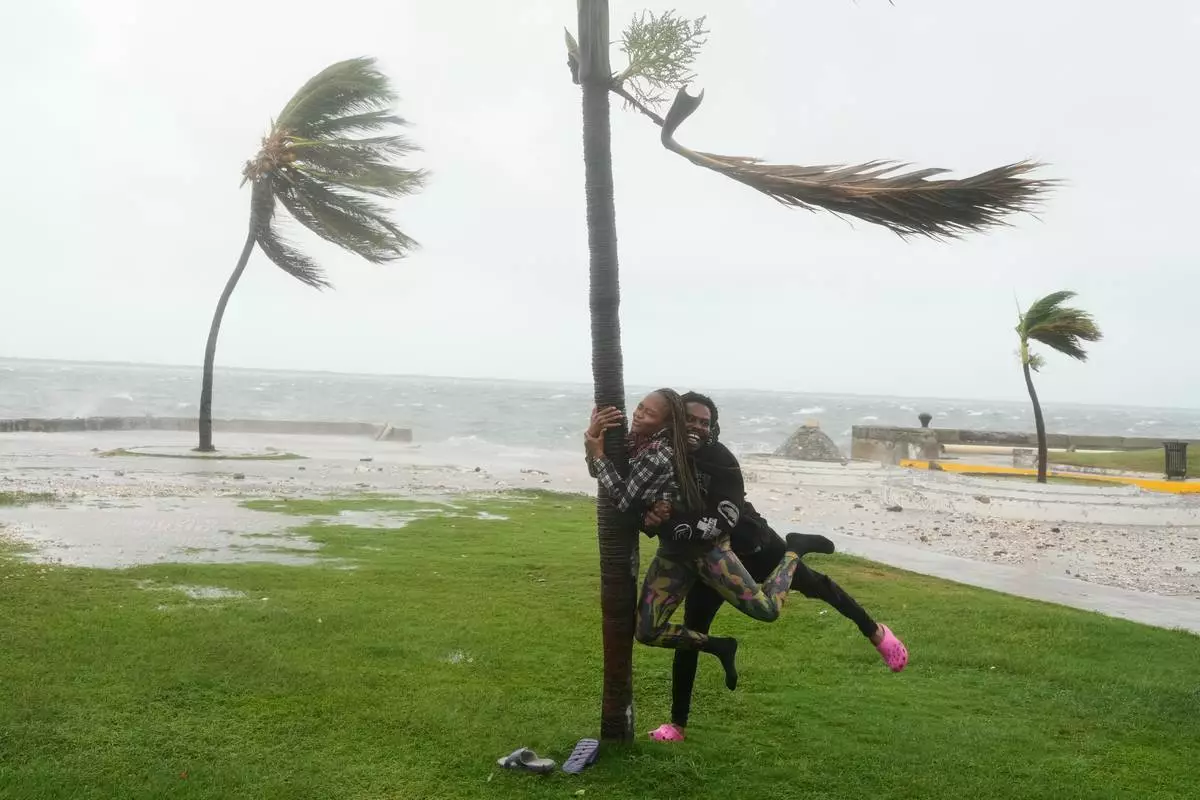
A couple jokes around on the coast in Kingston, Jamaica, as Hurricane Melissa approaches, Tuesday, Oct. 28, 2025. (AP Photo/Matias Delacroix)

A man walks in Kingston, Jamaica, as Hurricane Melissa approaches, Tuesday, Oct. 28, 2025. (AP Photo/Matias Delacroix)
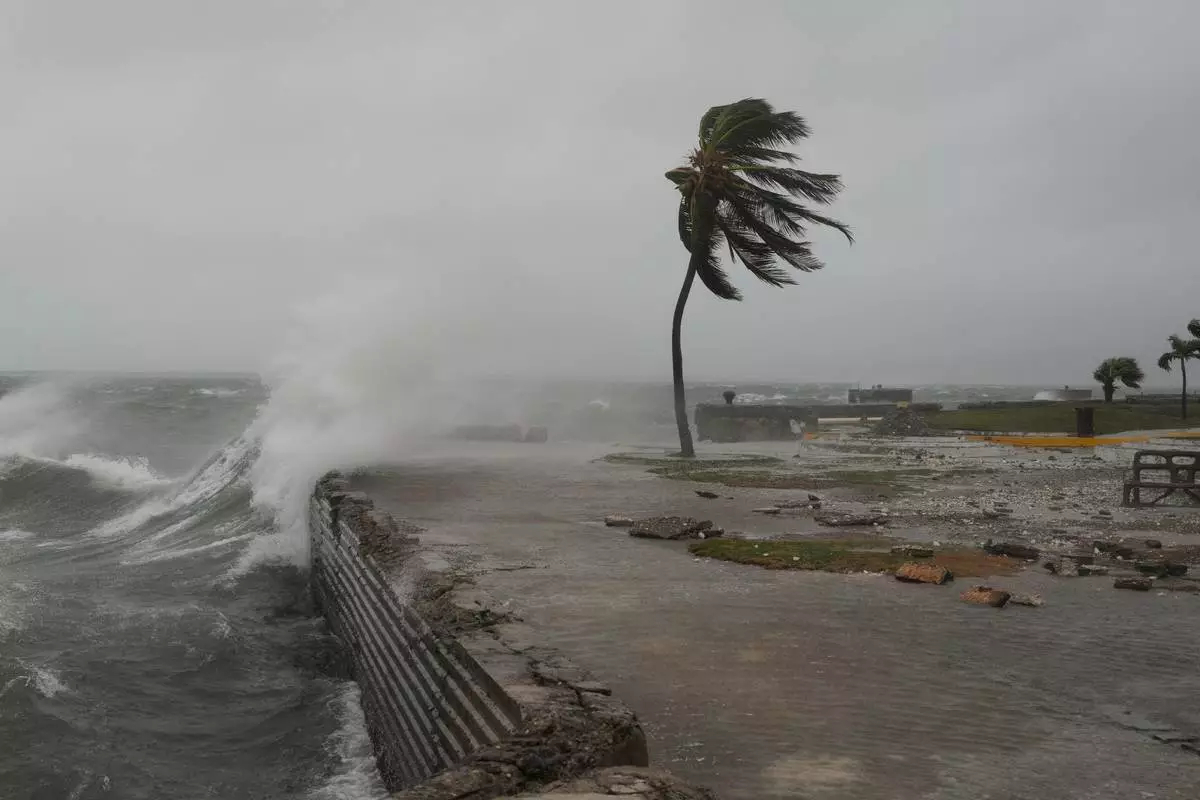
Waves splash in Kingston, Jamaica, as Hurricane Melissa approaches, Tuesday, Oct. 28, 2025. (AP Photo/Matias Delacroix)
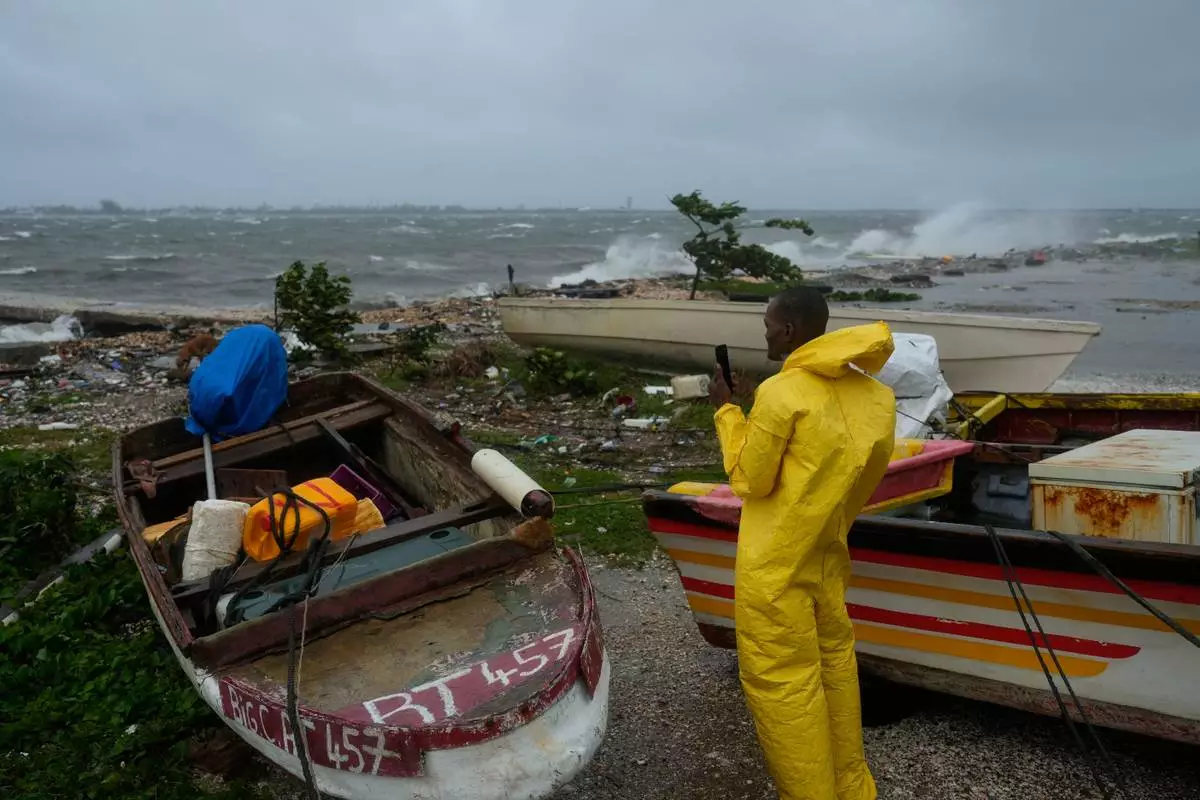
A man watches the coastline in Kingston, Jamaica, as Hurricane Melissa closes in, Tuesday, Oct. 28, 2025. (AP Photo/Matias Delacroix)
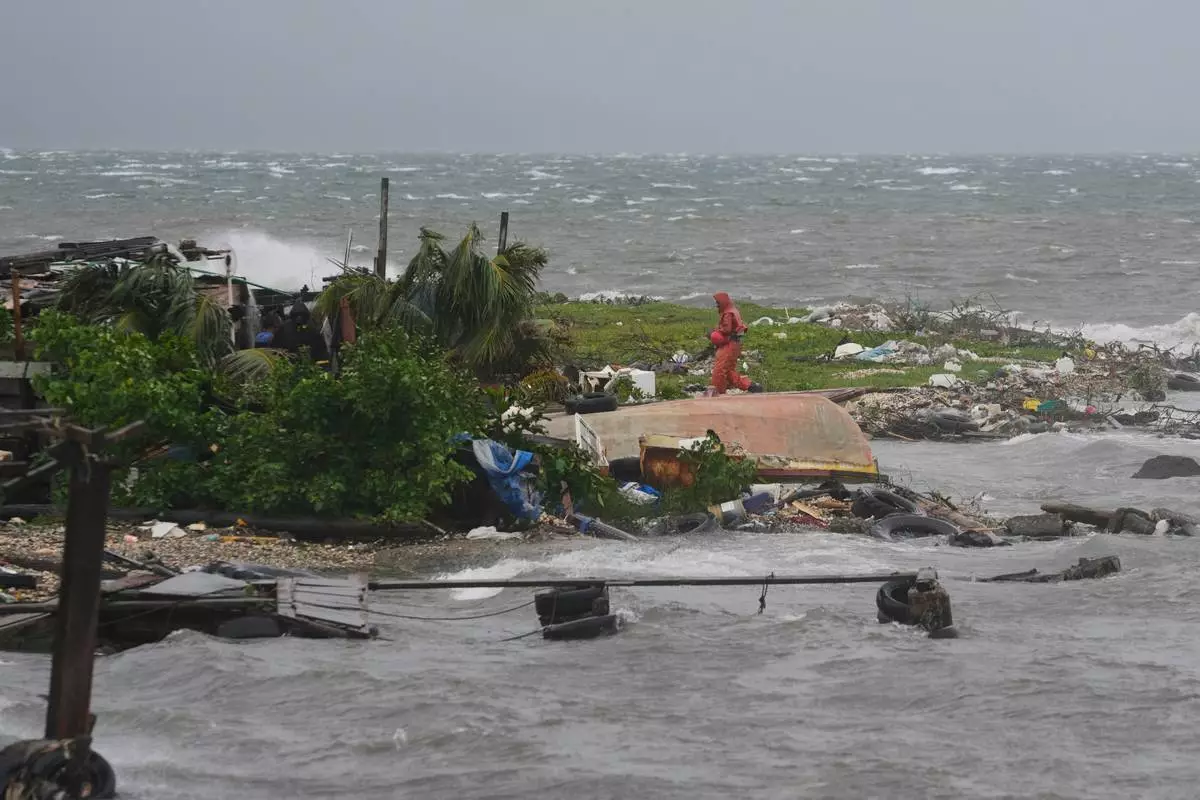
A man walks along the coastline in Kingston, Jamaica, as Hurricane Melissa approaches, Tuesday, Oct. 28, 2025. (AP Photo/Matias Delacroix)
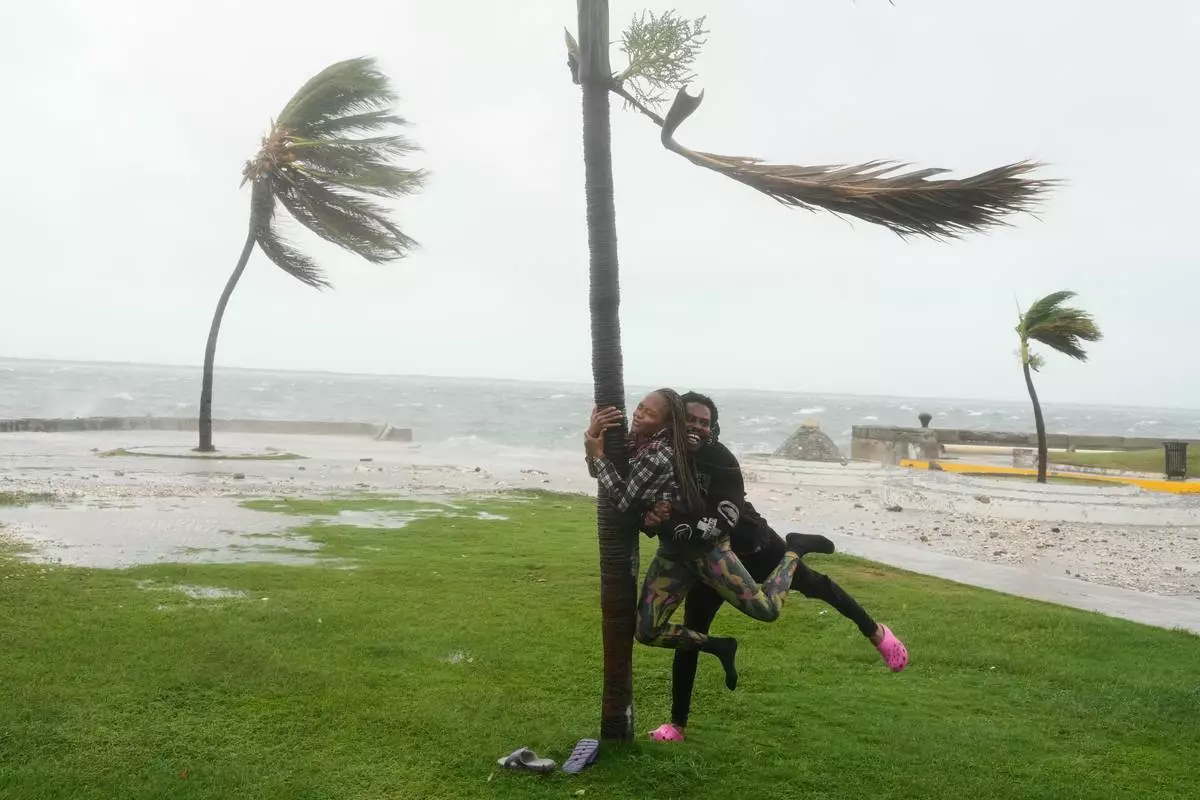
A couple jokes around on the coast in Kingston, Jamaica, as Hurricane Melissa approaches, Tuesday, Oct. 28, 2025. (AP Photo/Matias Delacroix)
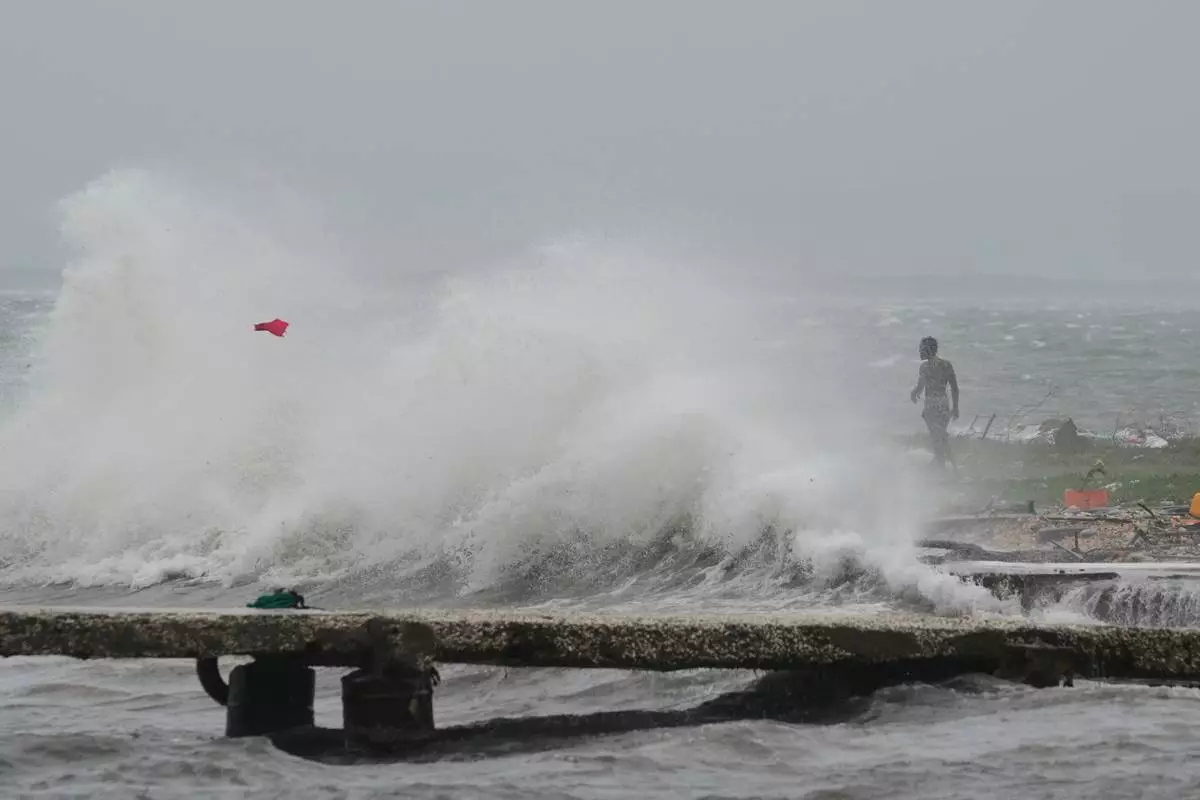
Waves splash in Kingston, Jamaica, as Hurricane Melissa approaches, Tuesday, Oct. 28, 2025. (AP Photo/Matias Delacroix)
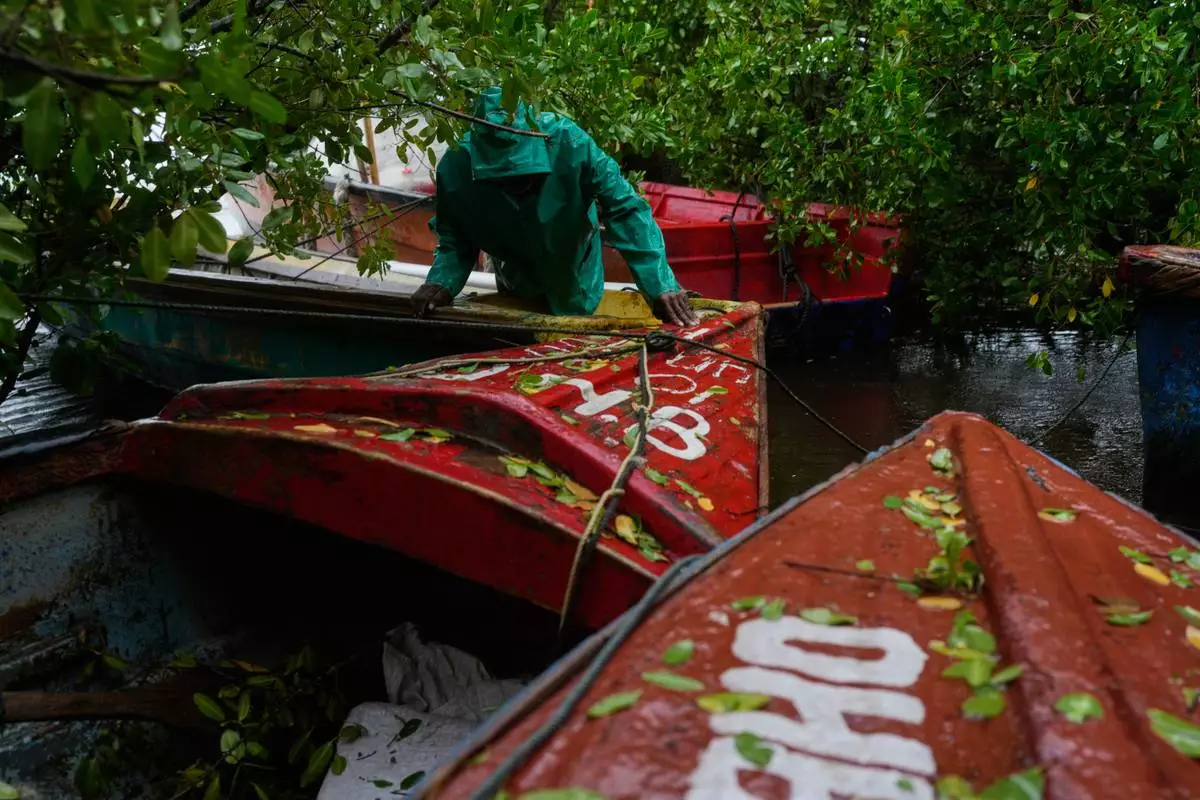
A fisherman ties boats in preparation for the forecasted arrival of Hurricane Melissa in Old Harbour, Jamaica, Monday, Oct. 27, 2025. (AP Photo/Matias Delacroix)

A man wades through a flooded street ahead of the forecasted arrival of Hurricane Melissa in Old Harbour, Jamaica, Monday, Oct. 27, 2025. (AP Photo/Matias Delacroix)