The Mengdigou and Yagen Class 1 hydropower stations, key components of China's first integrated hydro-wind-solar power base in the Yalong River basin, successfully completed simultaneous river diversion on Tuesday, enabling both projects to enter the main construction phase.
Engineers diverted the river's flow through tunnels drilled through adjacent mountains, allowing the riverbed to be fully de-watered for dam construction while preserving ecological conditions downstream.
The successful river diversion has paved the way for next critical steps, including foundation pit excavation and concrete pouring for the main dams.
"During the river diversion process, about 90,000 cubic meters of rockfill were placed, with the entire operation completed in less than 30 hours. The simultaneous diversion at both hydropower stations has enhanced overall efficiency, maximized water resource utilization, shortened the total construction period by about one month, and saved 12 million yuan (about 1.69 million U.S. dollars) in investment," said Sun Wenliang, chairman of the Yalong River Hydropower Development Company, a subsidiary of the State Development and Investment Corporation.
The 2,400-megawatt (MW) Mengdigou hydropower station is located on the main stream of the Yalong River at the border of Jiulong County in Ganzi Tibetan Autonomous Prefecture and Muli County in Liangshan Yi Autonomous Prefecture in southwest China's Sichuan Province. It is currently the largest hydropower project under construction in the Yalong River basin.
The 300-MW Yagen Class 1 hydropower station, situated in Yajiang County in Ganzi, serves as a re-regulation facility for the massive 3,000-MW Lianghekou hydropower station, the largest of its kind in Sichuan Province.
The Yalong River basin hydro-wind-solar multi-energy power base is a cornerstone of China's clean energy strategy. With a planned total installed capacity of 78 gigawatts (GW), the base is expected to be fully operational by 2035.
To date, it has already commissioned about 21 GW of clean energy capacity, with another 14 GW currently under construction. Collectively, the base has delivered over 1.1 trillion kilowatt-hours of clean electricity.
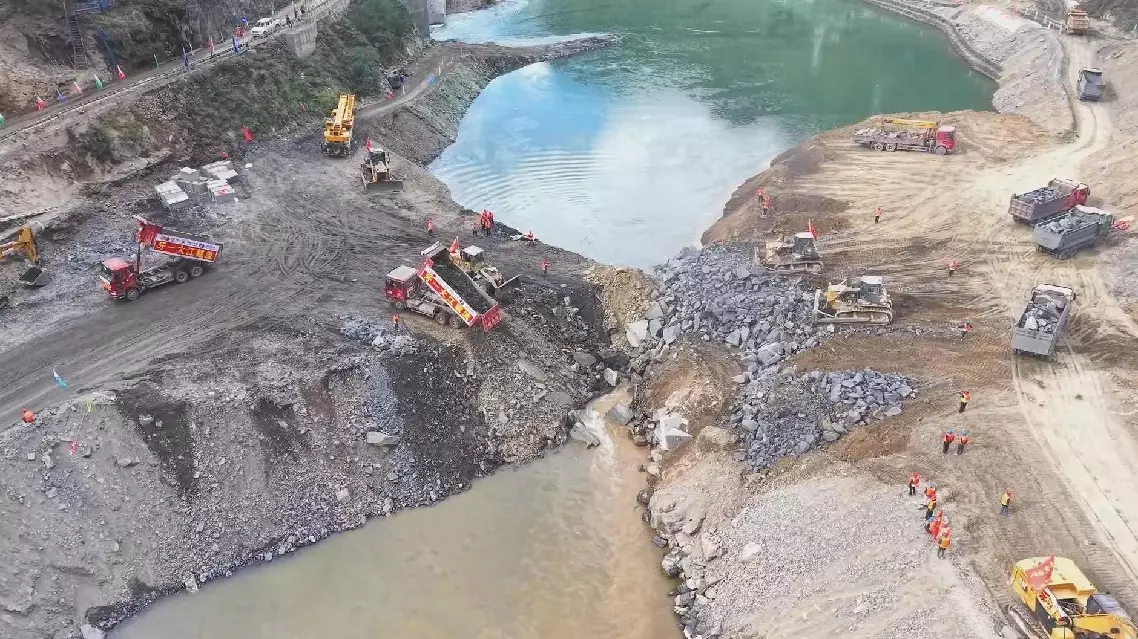
Two hydropower stations in Yalong River basin achieve simultaneous river diversion