Skip to Content Facebook Feature Image

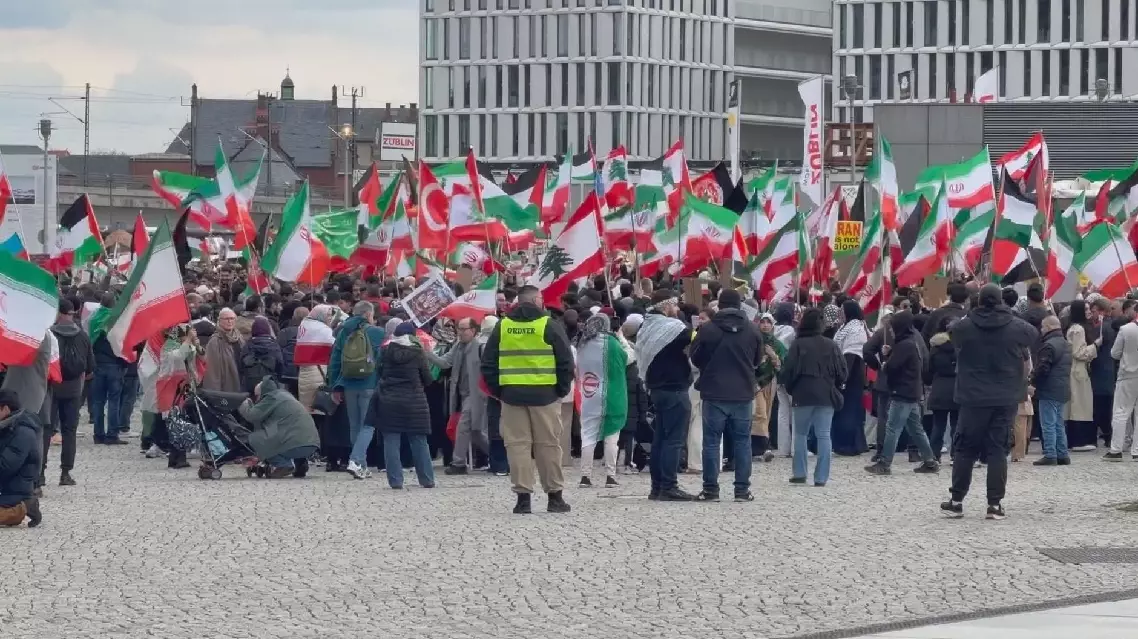
Demonstrators march in Berlin to condemn U.S.-Israeli strikes on Iran

China

China

China

Demonstrators march in Berlin to condemn U.S.-Israeli strikes on Iran

2026-04-06 13:37 Last Updated At:20:57

Demonstrators took to the streets of Germany's capital on Sunday to voice opposition against military strikes by the United States and Israel on Iran, marking the third such rally in Berlin in recent weeks.

The protest began at Berlin Central Station, with marchers carrying banners and chanting slogans as they made their way through the city's main thoroughfares toward the Brandenburg Gate. The planned route took protesters past key government landmarks, including the Chancellery and the Reichstag building, before concluding at Pariser Platz -- just a few tens of meters away from the U.S. Embassy in Germany.

Organized by several anti-war groups, the demonstration reflected growing public concern in Germany over escalating tensions in the Middle East. Protesters condemned the military action against Iran as both illegal under international law and a serious threat to regional peace and security.

An Iranian protester living in Berlin called the U.S.-Israeli strikes against Iran "completely illegal," while warning of the wider consequences of the war.

"It's a completely illegal war against Iran from the United States and Israel. And we Iranians hope to defeat them back home, because we are not a nation who can be oppressed (by) some countries who think they are the best, who think they are super power on the Earth. They are destabilizing energy for countries on the Earth. I think that's the consequences of the war against Iranian people," he said.

German citizens at the rally echoed this disdain for the conflict, describing the U.S.-Israeli military action as an illegal war of aggression.

"The U.S. and Israel's attack on Iran is an illegal war of aggression. This violates the United Nations Charter and must be stopped immediately. Otherwise, it will go against the rules-based international order established after the victory in World War II in 1945 and will lead the world back to the law of the jungle," said a German protester.

The ongoing conflict began on Feb. 28, Israel and the United States launched joint military strikes on Tehran, the capital city of Iran. Iran responded with waves of missile and drone strikes targeting Israel and U.S. bases and assets in the Middle East.
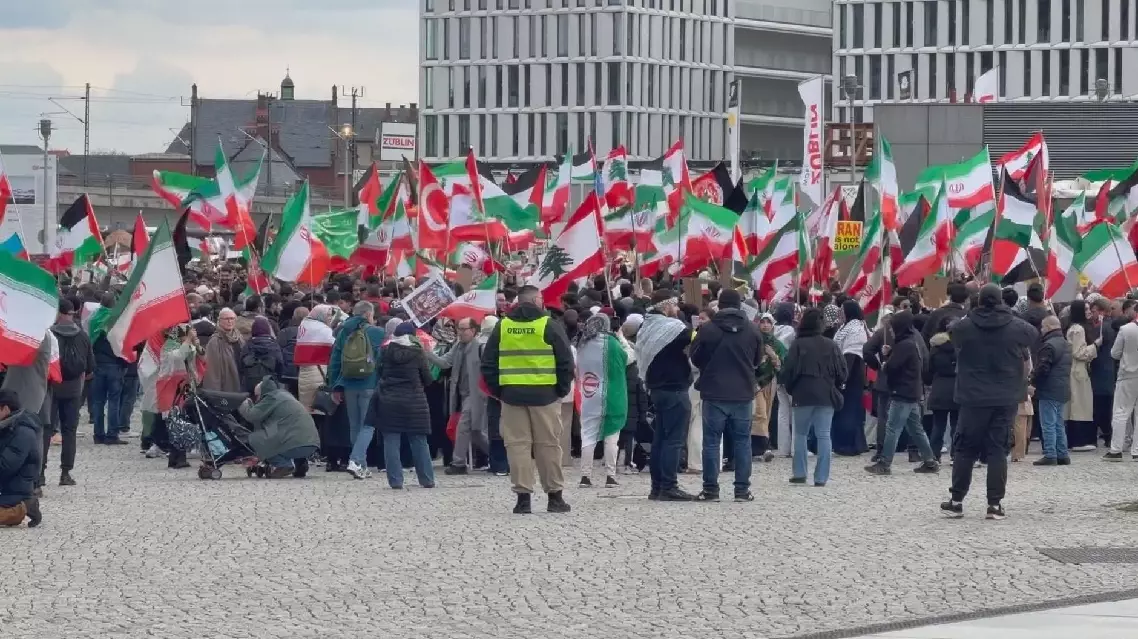
Demonstrators march in Berlin to condemn U.S.-Israeli strikes on Iran
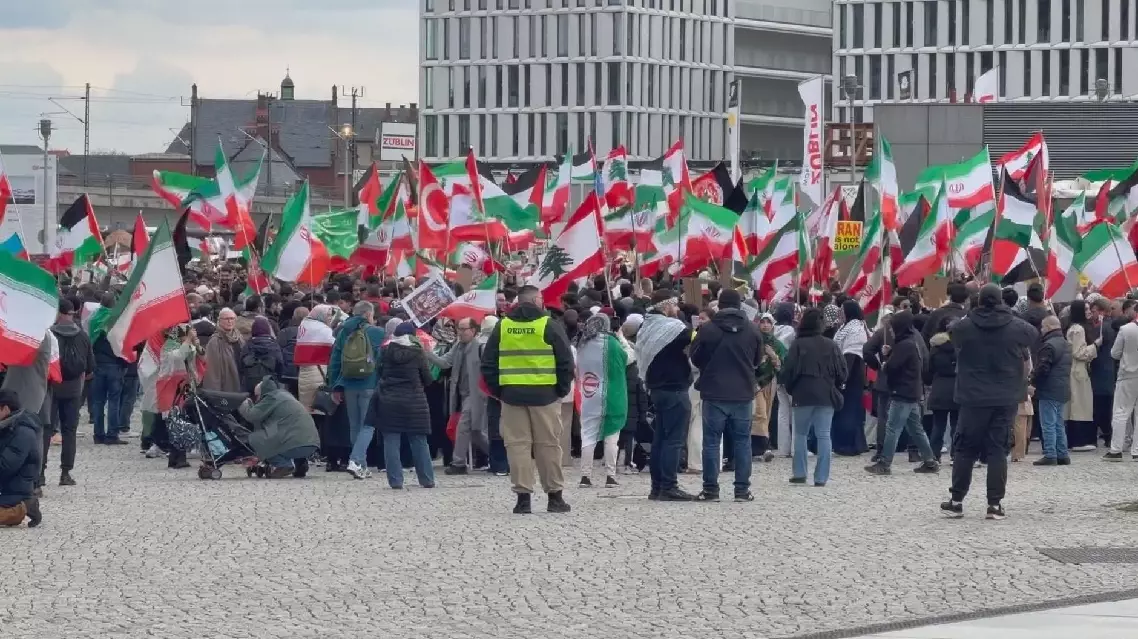
Demonstrators march in Berlin to condemn U.S.-Israeli strikes on Iran
Demonstrators march in Berlin to condemn U.S.-Israeli strikes on Iran

Demonstrators march in Berlin to condemn U.S.-Israeli strikes on Iran
Demonstrators march in Berlin to condemn U.S.-Israeli strikes on Iran
Demonstrators march in Berlin to condemn U.S.-Israeli strikes on Iran

The African Union (AU) and its partners have warned that the ongoing Middle East conflict poses a "serious risk" to African economies.

In a recent joint policy brief, the AU, the United Nations (UN) Economic Commission for Africa, the African Development Bank, and the UN Development Program warned that the longer the conflict lasts and the more severe the disruption of shipping routes, energy, and fertilizer supplies, the greater the risk of a significant growth slowdown across Africa.

With most African countries still growing at rates below pre-COVID levels, the brief projected a 0.2 percentage-point decline in Africa's gross domestic product growth in 2026 if the conflict lasts more than six months.

The organizations stressed that the conflict, which has already triggered a trade shock, could quickly become a "cost-of-living crisis" due to higher fuel and food prices. Rising shipping costs, insurance premiums, exchange rate pressures, and tighter fiscal conditions could further compound the crisis, with vulnerable households bearing the heaviest burden.

The Middle East accounts for 15.8 percent of Africa's imports and 10.9 percent of its exports, underscoring the critical implications of the current situation for African economies, according to the brief.

Highlighting that the fertilizer channel may prove more consequential than oil shocks for some countries, the brief noted that disruptions to Gulf liquid natural gas supply would affect ammonia and urea production, raising fertilizer costs during the crucial March-to-May planting season.

It warned that the phenomenon will put further upward pressure on food prices and hit vulnerable households hardest, with significant negative impacts on food security in Africa.

Expressing concern over potential geopolitical spillover effects that could reshape Africa's security, it also warned that a wider conflict could intensify competition for influence in Africa, with regional conflicts in Sudan, Somalia, and Libya already reflecting external sponsorship.

The brief emphasized the importance of strengthening energy security, safeguarding and restoring fiscal space, accelerating the implementation of the African Continental Free Trade Area, and establishing financial safety nets across Africa as essential strategies for building resilience.

African leading organizations warn Middle East conflict poses "serious risk" to African economies

African leading organizations warn Middle East conflict poses "serious risk" to African economies

Recommended Articles