Pharmaceutical giant AstraZeneca has opened up a brand new global research and development center in Beijing as it looks to deepen its strategic focus on China and leverage the country's innovation ecosystem to "revolutionize" the treatment of rare diseases, according to a senior company executive.
The new facility officially opened on Saturday in the BioPark of the Beijing Economic-Technological Development Area (BDA), a key hub for high-end industries and the biomedical sector which hosts over 5,000 pharmaceutical companies.
It marks the British-Swedish multinational's sixth global strategic R and D center and its second in China, following its first in Shanghai. The company says its newly-established Beijing base will collaborate closely with the Shanghai center to lead drug discovery and clinical development efforts, accelerating the translation of innovations into medicines.
In an interview with the China Global Television Network (CGTN) in Beijing, Iskra Reic, AstraZeneca's international executive vice president, spoke highly of the innovative biotech landscape in the Chinese capital.
"We do believe and we feel very confident that Beijing really established itself as a global hub for science and innovation, and the great presence of academia, researchers and bio-tech [firms], as well as with the great support of the Beijing government, we feel very excited to be part of that healthcare, life science ecosystem here in Beijing. And we do believe that our R and D center will enable us to broaden and expand collaboration and be an even better partner for that ecosystem here in China," she said.
Since entering the Chinese market in 1993, AstraZeneca has invested more than 5 billion dollars in the country and introduced more than 40 innovative medicines, with China now becoming the company's second-largest market globally.
Last year, the company invested 475 million dollars in a new small molecule factory in Wuxi of east China's Jiangsu Province and it has also invested around 750 million dollars in an inhalation aerosol manufacturing and supply site in the eastern coastal city of Qingdao.
Having launched three innovative medicines for five different rare diseases for patients in China, Reic said she hopes AstraZeneca's partnerships with the Chinese biotech community will transform patient care in China and around the world.
"When we look forward, we clearly stay committed to continuing to develop the new modalities that will revolutionize the cancer care, that will help the patients who are suffering from the cardiometabolic diseases, respiratory diseases or rare diseases," said Reic.
She added that China's advances in emerging industries, such as in digital technology and artificial intelligence, will play a key role in reshaping the pharmaceutical industry.
"I believe that China and Beijing are definitely going to continue leading and representing really the global hub for science and innovation. And again, that's the reason why we are strategically positioned in Shanghai and Beijing and we want to be part of that trend. On top of that, I think that there is clearly [potential] on what digital and technology and AI can do to contribute and accelerate even more science and innovation here," she said.
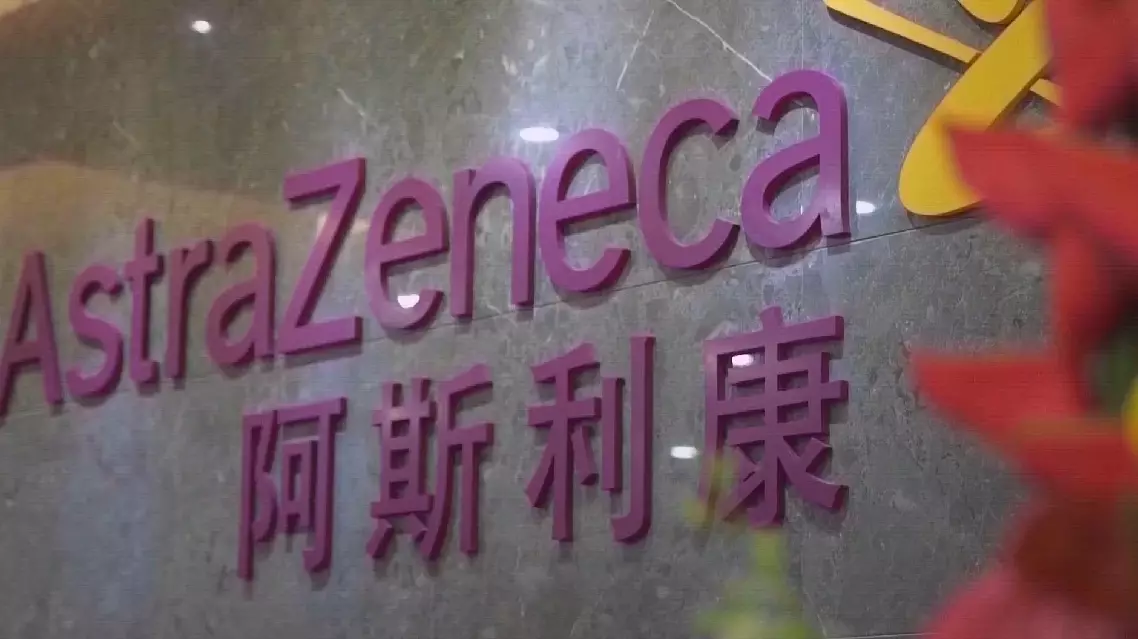
AstraZeneca aims to revolutionize rare disease treatment with new Beijing research center