KINGSTON N.Y. (AP) — A former New York state trooper was accused in court Tuesday of using his patrol car as a battering ram in a high-speed pursuit that killed an 11-year-old girl, a case one prosecutor called a “fatal abuse of power.”
Christopher Baldner faces multiple charges for his actions on the night of Dec. 22, 2020, after he pulled over a Dodge Journey driven by Tristin Goods for speeding. Goods was driving north on the New York State Thruway with his wife and two daughters for a holiday with family.
The trooper and the driver argued, and Baldner pepper-sprayed the inside of the vehicle. Goods drove off and Baldner pursued at speeds as high as 130 mph, twice ramming the SUV, causing it to lose control and flip over after the second impact, according to prosecutors.
“He used his patrol car as a weapon and rammed into the back of the Goods’ family car, not once, but twice,” Assistant Attorney General Jennifer Gashi told a jury in her opening statement.
Eleven-year-old Monica Goods was found dead inside the vehicle.
Gashi said Baldner's actions that night were deliberate, willful and depraved. The case was not about a tragic accident, but a "fatal abuse of power,” she said.
Baldner was indicted in October 2021 on charges of murder, second-degree manslaughter and first-degree reckless endangerment. Three of the six endangerment charges stem from a separate 2019 case on the Thruway in which he is accused ramming the back of a Dodge Caravan with three people aboard, causing the vehicle to crash into a guard rail.
A defense attorney told the jury the prosecution was trying to “demonize” Baldner, who was dealing with a belligerent and uncooperative driver.
Tristin Goods refused to show the trooper his license and registration, or to provide his name. He was raging and swearing, despite pleas from his family to calm down, said attorney Anthony Ricco.
“New York State Trooper Baldner was laser-focused on a man who conducted himself that way in front of his wife and children,” Ricco said.
Ricco said Baldner did not act out of depravity.
Baldner had radioed dispatch that night that the SUV had rammed his vehicle, according to court papers. Ricco told the jury it was possible the SUV decelerated before impact.
Baldner. has been free on $100,000 bail. He retired in 2022 after almost 20 years with the state police.
The trial is expected to take several weeks.

Former New York state trooper Christopher Baldner, who is charged in the death of an 11-year-old girl, leaves the court room during his trial Tuesday, Oct. 28, 2025 in Kingston, N.Y. (AP Photo/Michael Hill)
CAPE CANAVERAL, Fla. (AP) — An ailing astronaut returned to Earth with three others on Thursday, ending their space station mission more than a month early in NASA’s first medical evacuation.
SpaceX guided the capsule to a middle-of-the-night splashdown in the Pacific near San Diego, less than 11 hours after the astronauts exited the International Space Station.
“It’s so good to be home,” said NASA astronaut Zena Cardman, the capsule commander.
It was an unexpected finish to a mission that began in August and left the orbiting lab with only one American and two Russians on board. NASA and SpaceX said they would try to move up the launch of a fresh crew of four; liftoff is currently targeted for mid-February.
Cardman and NASA’s Mike Fincke were joined on the return by Japan’s Kimiya Yui and Russia’s Oleg Platonov. Officials have refused to identify the astronaut who had the health problem or explain what happened, citing medical privacy.
While the astronaut was stable in orbit, NASA wanted them back on Earth as soon as possible to receive proper care and diagnostic testing. The entry and splashdown required no special changes or accommodations, officials said, and the recovery ship had its usual allotment of medical experts on board. It was not immediately known when the astronauts would fly from California to their home base in Houston. Platonov’s return to Moscow was also unclear.
NASA stressed repeatedly over the past week that this was not an emergency. The astronaut fell sick or was injured on Jan. 7, prompting NASA to call off the next day’s spacewalk by Cardman and Fincke, and ultimately resulting in the early return. It was the first time NASA cut short a spaceflight for medical reasons. The Russians had done so decades ago.
The space station has gotten by with three astronauts before, sometimes even with just two. NASA said it will be unable to perform a spacewalk, even for an emergency, until the arrival of the next crew, which has two Americans, one French and one Russian astronaut.
The Associated Press Health and Science Department receives support from the Howard Hughes Medical Institute’s Department of Science Education and the Robert Wood Johnson Foundation. The AP is solely responsible for all content.
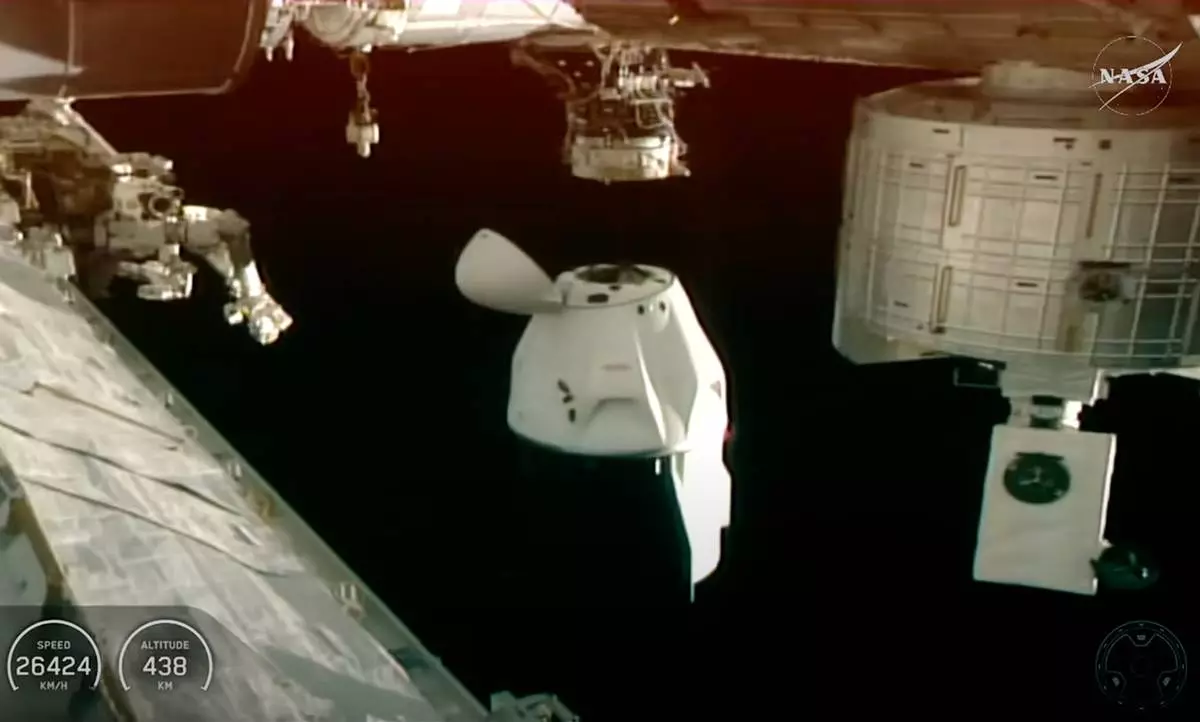
This screengrab from video provided by NASA TV shows the SpaceX Dragon departing from the International Space Station shortly after undocking with four NASA Crew-11 members inside on Wednesday, Jan. 14, 2026. (NASA via AP)
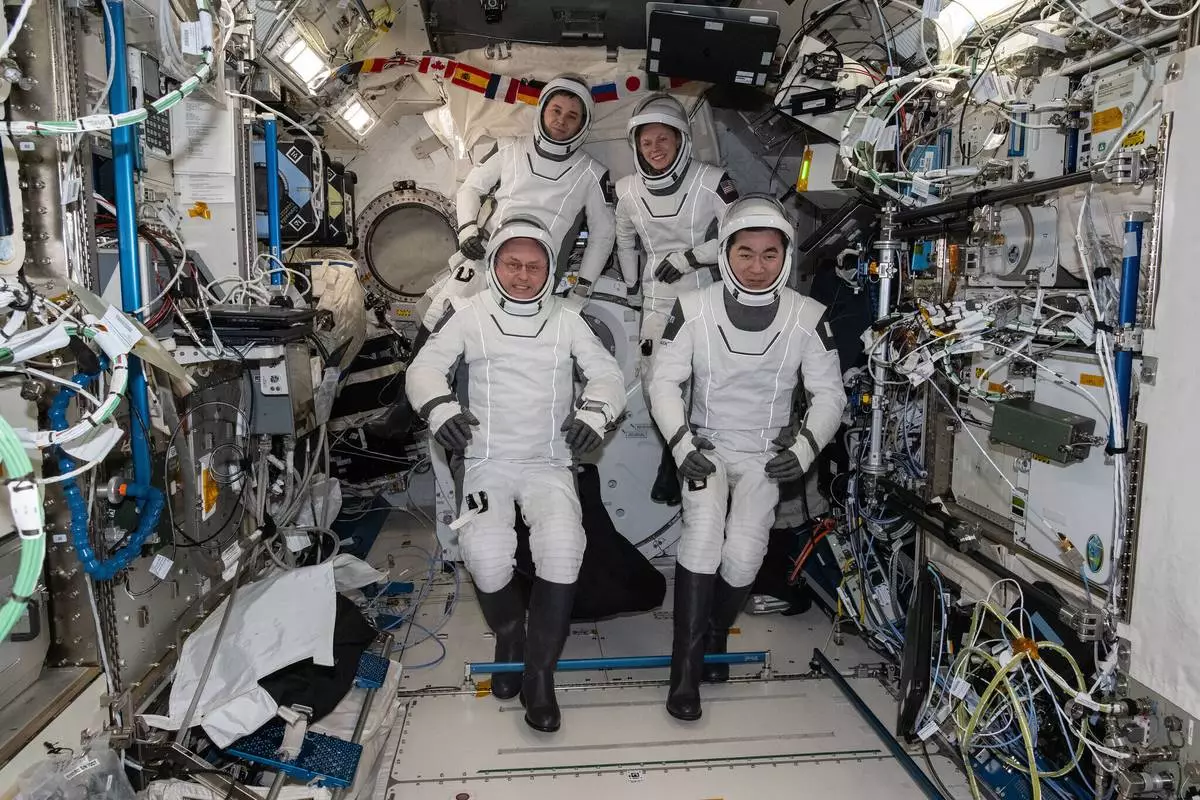
This photo provided by NASA shows clockwise from bottom left are, NASA astronaut Mike Fincke, Roscosmos cosmonaut Oleg Platonov, NASA astronaut Zena Cardman, and JAXA (Japan Aerospace Exploration Agency) astronaut Kimiya Yui gathering for a crew portrait wearing their Dragon pressure suits during a suit verification check inside the International Space Station’s Kibo laboratory module, Wednesday, Jan. 14, 2026. (NASA via AP)
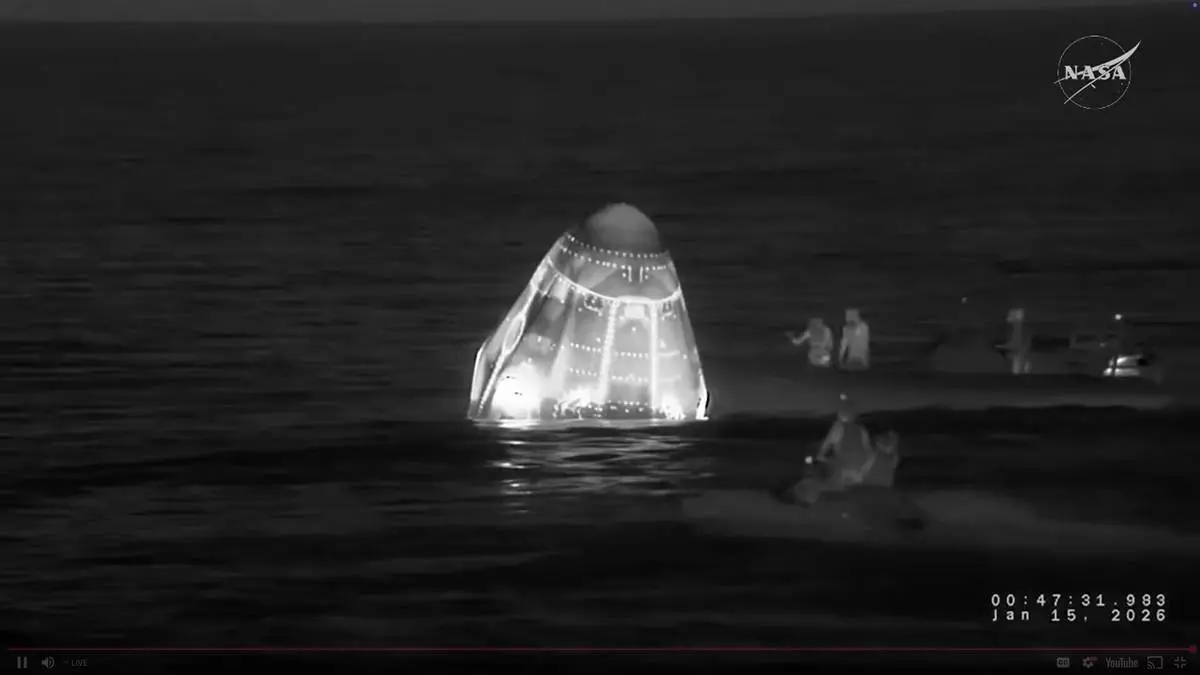
This screengrab from video provided by NASA shows recovery vessels approaching the NASA's SpaceX Crew-11 capsule to evacuate one of the crew members after they re-entered the earth in a middle-of-the-night splashdown near San Diego, Calif., Thursday, Jan. 15, 2026. (NASA via AP)
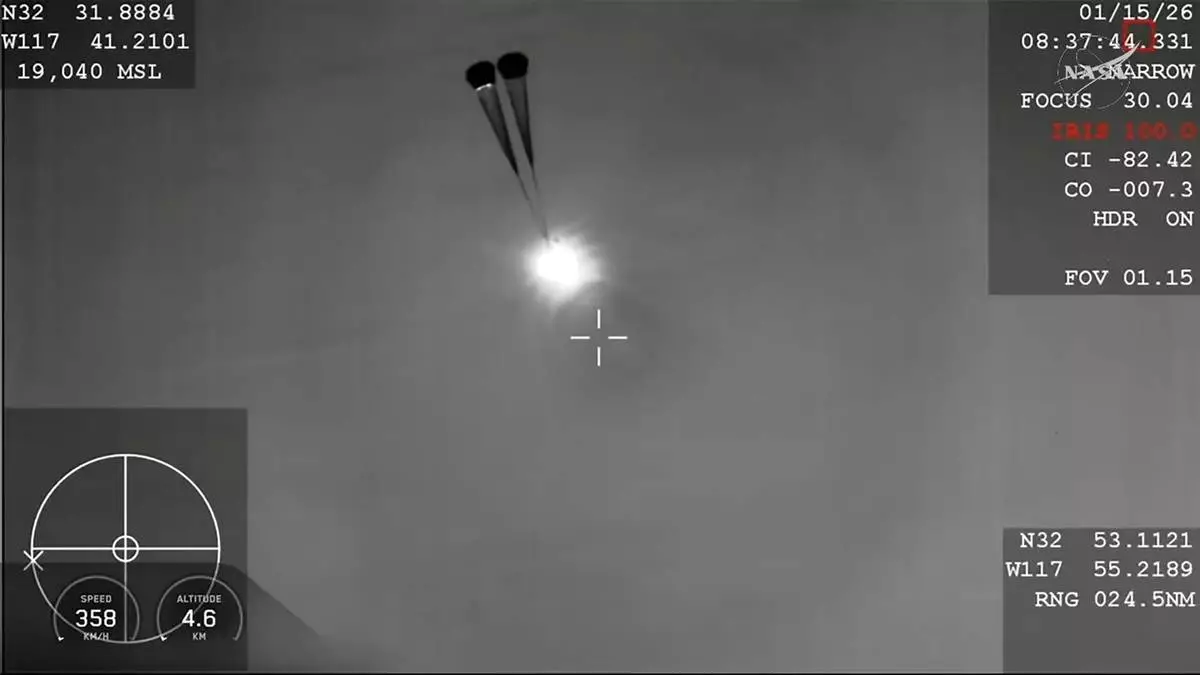
This screengrab from video provided by NASA shows the NASA's SpaceX Crew-11 members re entering the earth in a middle-of-the-night splashdown near San Diego, Calif., Thursday, Jan. 15, 2026. (NASA via AP)
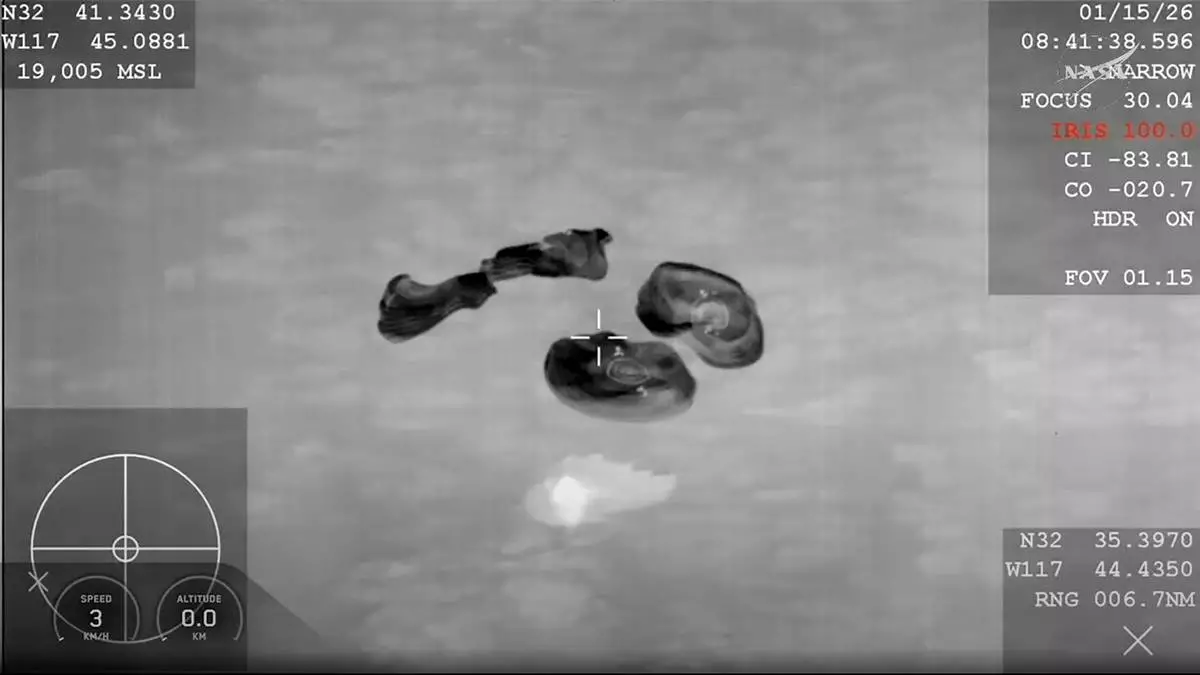
This screengrab from video provided by NASA shows the NASA's SpaceX Crew-11 members re entering the earth in a middle-of-the-night splashdown near San Diego, Calif., Thursday, Jan. 15, 2026. (NASA via AP)