Skip to Content Facebook Feature Image

The US draws down troops on NATO's eastern flank as Europe frets about a security vacuum

News

The US draws down troops on NATO's eastern flank as Europe frets about a security vacuum
News

News

The US draws down troops on NATO's eastern flank as Europe frets about a security vacuum

2025-10-30 02:26 Last Updated At:02:31

BRUSSELS (AP) — The U.S. confirmed on Wednesday that it will reduce its troop presence on NATO’s borders with Ukraine but shed no light on any future cuts, as its allies worry about a security gap being created at a time when Russia is increasingly confrontational.

The news first came from Romania, whose defense minister said the decision reflects Washington’s shift “toward the Indo-Pacific” region. However, Ionut Mosteanu said allied troop numbers would remain above the number before Russia’s full-scale invasion of neighboring Ukraine in 2022.

The U.S. armed forces later confirmed the move, but denied it was a sign of lessened commitment to NATO. Analysts say it might tempt Russia to test the military alliance.

Depending on operations and exercises, around 80,000-100,000 U.S. troops are usually present on European soil. NATO allies have expressed concern that the Trump administration might drastically cut their numbers and leave a security vacuum as European countries confront an increasingly aggressive Russia.

The administration has been reviewing its military “posture” in Europe and elsewhere, but U.S. officials have said that the findings of the review were not expected to be known before early next year.

NATO has recently been bulking up its defensive posture on its eastern flank bordering Belarus, Russia and Ukraine after a series of airspace violations by drones, balloons and Russian aircraft.

The Romanian defense ministry said the U.S. decision will “stop the rotation in Europe of a brigade that had elements in several NATO countries,” including at a base in Romania.

It said in a statement that about 1,000 U.S. troops will remain stationed in Romania. As of April, more than 1,700 U.S. military personnel were estimated to be deployed there. A brigade usually numbers anywhere from 1,500 to 3,000 troops.

“Our strategic partnership is solid, predictable and reliable,” Mosteanu said in a news conference.

In a post on X, U.S. Ambassador to NATO Matthew Whitaker said the U.S. “remains committed to Romania.”

“Our strong presence in and enduring commitment to Europe remains steadfast, including support for Eastern Sentry,” a NATO operation along the eastern flank, he wrote. He did not mention the troop drawdown.

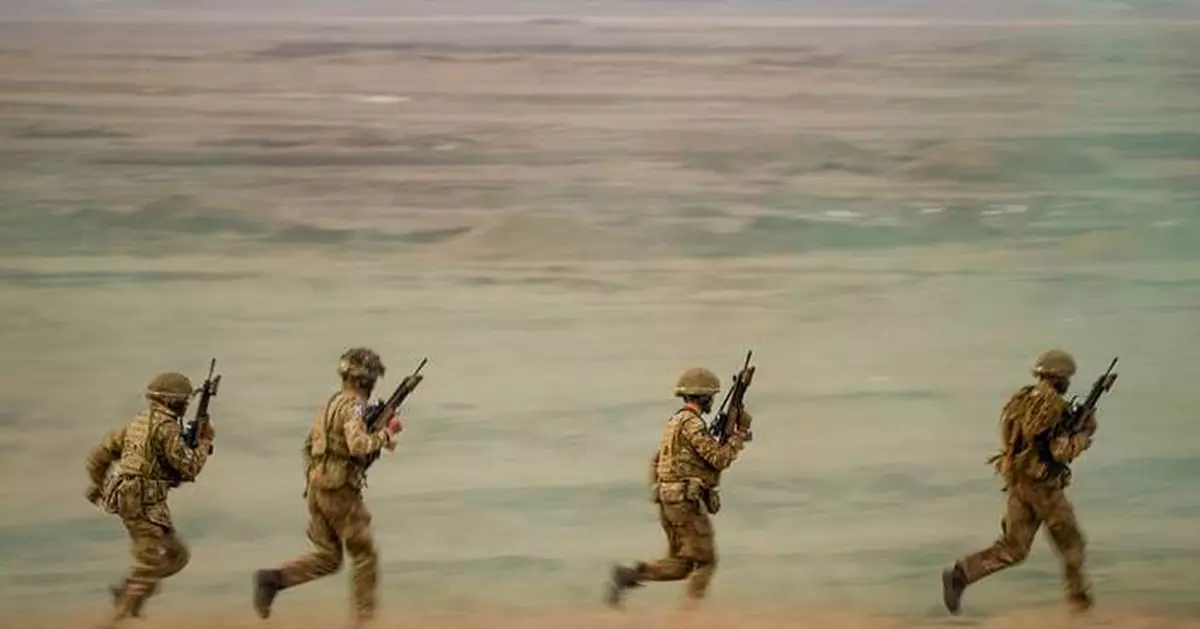
After the war started in 2022, NATO bolstered its presence on Europe’s eastern flank by sending additional multinational battle groups to Romania, Hungary, Bulgaria and Slovakia. Many more European troops are now stationed there.

The Romanian statement said the U.S. “decision also took into account the fact that NATO has strengthened its presence and activity on the Eastern Flank, which allows the United States to adjust its military posture in the region.”

In a statement later on Wednesday, U.S. Army Europe and Africa said the 2nd Infantry Brigade Combat Team of the 101st Airborne Division will return to its base in Kentucky as previously planned but that no other U.S. troops would rotate into Europe to replace it.

“This is not an American withdrawal from Europe or a signal of lessened commitment to NATO and Article 5,” it said, in a reference to the collective security guarantee in the organization’s treaty that an attack on one ally should be considered an attack on all 32.

“Rather this is a positive sign of increased European capability and responsibility. Our NATO allies are meeting President Trump’s call to take primary responsibility for the conventional defense of Europe,” it said.

It insisted the move “will not change the security environment in Europe.”

However, top Republican lawmakers overseeing the military in Congress spoke out against the move, issuing a rare rebuke of an action taken by the leader of their own party.

In a joint statement, Sen. Roger Wicker and Rep. Mike Rogers, who chair committees overseeing the U.S. military, said it “sends the wrong signal to Russia at the very moment President Trump is applying pressure to force Vladimir Putin to come to the table to achieve a lasting peace in Ukraine.”

Government officials in Poland and Lithuania, which lie farther north along Europe’s eastern flank, said they had not been informed of any U.S. troop drawdown in their countries.

Giuseppe Spatafora, research analyst at the EU Institute for Security Studies, said that while the full extent of the American withdrawal is not yet known, "we do know the direction of travel: fewer US troops and assets, and an expectation that Europeans will fill the gap.”

Asked about the move, a NATO official said that “adjustments to U.S. force posture are not unusual.” Under the terms of their employment contract, the official is permitted to speak to reporters but only on condition that they not be named.

The official said that even with this new adjustment, about which NATO was informed in advance, the American “force posture in Europe remains larger than it has been for many years, with many more U.S. forces on the continent than before 2022.”

The official played down any security concerns, saying that “NATO and U.S. authorities are in close contact about our overall posture – to ensure NATO retains our robust capacity to deter and defend.”

Spatafora said the U.S. drawdown could undermine NATO's deterrent effect.

“Russia could be tempted to test NATO even further, without seeking to open a new front, but checking how the alliance responds” in future to more drone incidents or acts of sabotage, he told The Associated Press.

McGrath reported from Leamington Spa, England. Claudia Ciobanu in Warsaw, Geir Moulson in Berlin and Stephen Groves in Washington contributed to this report.
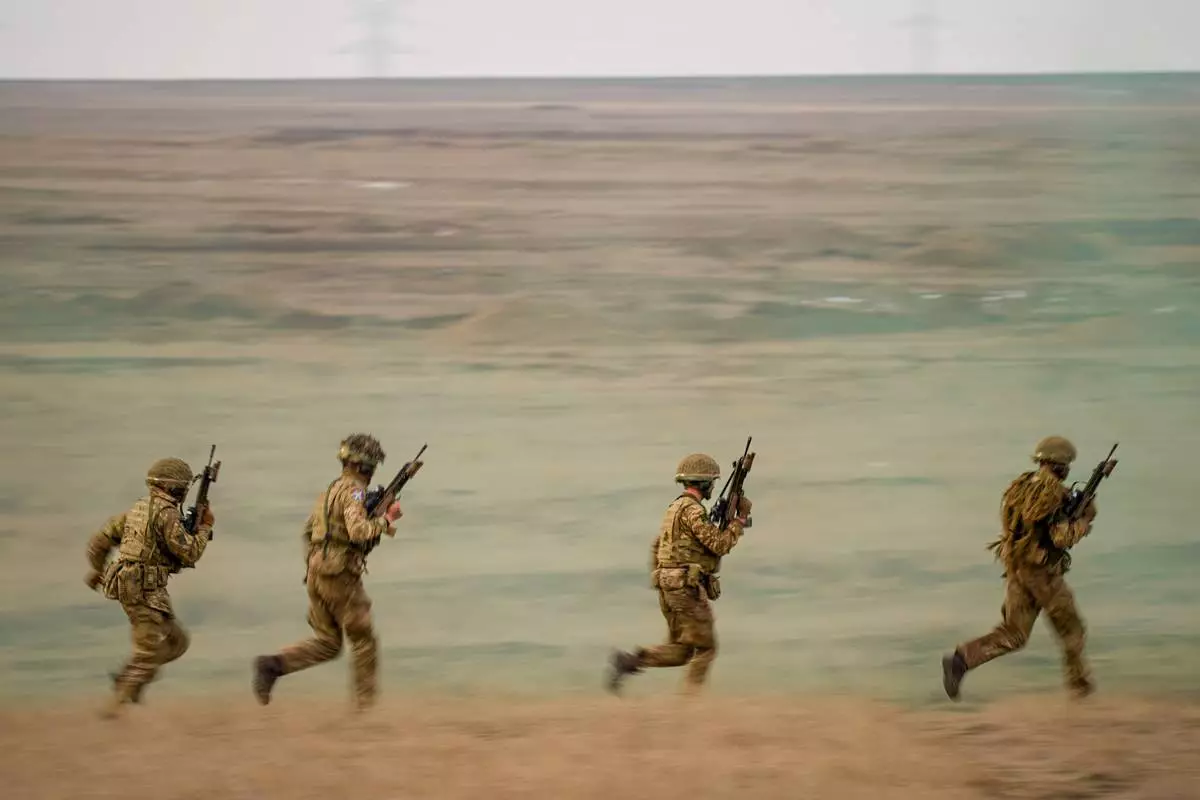
FILE- Servicemen run during the Steadfast Dart 2025 exercise, involving some 10,000 troops in three different countries from nine nations, representing the largest NATO operation planned this year, at a training range in Smardan, eastern Romania, Wednesday, Feb. 19, 2025. (AP Photo/Vadim Ghirda, file)
FILE- Servicemen run during the Steadfast Dart 2025 exercise, involving some 10,000 troops in three different countries from nine nations, representing the largest NATO operation planned this year, at a training range in Smardan, eastern Romania, Wednesday, Feb. 19, 2025. (AP Photo/Vadim Ghirda, file)

A federal appeals panel on Thursday reversed a lower court decision that released former Columbia University graduate student Mahmoud Khalil from an immigration jail, bringing the government one step closer to detaining and ultimately deporting the Palestinian activist.

The three-judge panel of the 3rd U.S. Circuit Court of Appeals didn’t decide the key issue in Khalil’s case: whether the Trump administration’s effort to throw Khalil out of the U.S. over his campus activism and criticism of Israel is unconstitutional.

But in its 2-1 decision, the panel ruled a federal judge in New Jersey didn’t have jurisdiction to decide the matter at this time. Federal law requires the case to fully move through the immigration courts first, before Khalil can challenge the decision, they wrote.

“That scheme ensures that petitioners get just one bite at the apple — not zero or two,” the panel wrote. “But it also means that some petitioners, like Khalil, will have to wait to seek relief for allegedly unlawful government conduct.”

Thursday’s decision marked a major win for the Trump administration’s sweeping campaign to detain and deport noncitizens who joined protests against Israel.

Tricia McLaughlin, a Homeland Security Department spokesperson, called the ruling “a vindication of the rule of law.”

In a statement, she said the department will “work to enforce his lawful removal order” and encouraged Khalil to “self-deport now before he is arrested, deported, and never given a chance to return.”

It was not clear whether the government would seek to detain Khalil, a legal permanent resident, again while his legal challenges continue.

In a statement distributed by the American Civil Liberties Union, Khalil called the appeals ruling “deeply disappointing."

“The door may have been opened for potential re-detainment down the line, but it has not closed our commitment to Palestine and to justice and accountability," he said. "I will continue to fight, through every legal avenue and with every ounce of determination, until my rights, and the rights of others like me, are fully protected.”

Baher Azmy, one of Khalil's lawyers, said the ruling was “contrary to rulings of other federal courts."

“Our legal options are by no means concluded, and we will fight with every available avenue,” he said.

The ACLU said the Trump administration cannot lawfully re-detain Khalil until the order takes formal effect, which won't happen while he can still immediately appeal.

Khalil’s lawyers can request that the panel's decision be set aside and the matter reconsidered by a larger group of judges on the 3rd Circuit Court of Appeals, or they can go to the U.S. Supreme Court.

An outspoken leader of the pro-Palestinian movement at Columbia, Khalil was arrested last March. He then spent three months detained in a Louisiana immigration jail, missing the birth of his first child.

Federal officials have accused Khalil of leading activities “aligned to Hamas,” though they have not presented evidence to support the claim and have not accused him of criminal conduct. They also accused Khalil, 31, of failing to disclose information on his green card application.

The government justified the arrest under a seldom-used statute that allows for the expulsion of noncitizens whose beliefs are deemed to pose a threat to U.S. foreign policy interests.

In June, a federal judge in New Jersey ruled that justification would likely be declared unconstitutional and ordered Khalil released.

President Donald Trump's administration appealed that ruling, arguing the deportation decision should fall to an immigration judge, rather than a federal court.

Khalil has dismissed the allegations as “baseless and ridiculous,” framing his arrest and detention as a “direct consequence of exercising my right to free speech as I advocated for a free Palestine and an end to the genocide in Gaza.”

New York City’s new mayor, Zohran Mamdani, said on social media Thursday that Khalil should remain free.

“Last year’s arrest of Mahmoud Khalil was more than just a chilling act of political repression, it was an attack on all of our constitutional rights,” Mamdani wrote on X. “Now, as the crackdown on pro-Palestinian free speech continues, Mahmoud is being threatened with rearrest. Mahmoud is free — and must remain free.”

Judge Arianna Freeman dissented Thursday, writing that her colleagues were holding Khalil to the wrong legal standard. Khalil, she wrote, is raising “now-or-never claims” that can be handled at the district court level, even though his immigration case isn't complete.

Both judges who ruled against Khalil, Thomas Hardiman and Stephanos Bibas, were Republican appointees. President George W. Bush appointed Hardiman to the 3rd Circuit, while Trump appointed Bibas. President Joe Biden, a Democrat, appointed Freeman.

The two-judge majority rejected Freeman's worry that their decision would leave Khalil with no remedy for unconstitutional immigration detention, even if he later can appeal.

“But our legal system routinely forces petitioners — even those with meritorious claims — to wait to raise their arguments," the judges wrote.

The decision comes as an appeals board in the immigration court system weighs a previous order that found Khalil could be deported to Algeria, where he maintains citizenship through a distant relative, or Syria, where he was born in a refugee camp to a Palestinian family.

His attorneys have said he faces mortal danger if forced to return to either country.

Associated Press writers Larry Neumeister and Anthony Izaguirre contributed to this story.

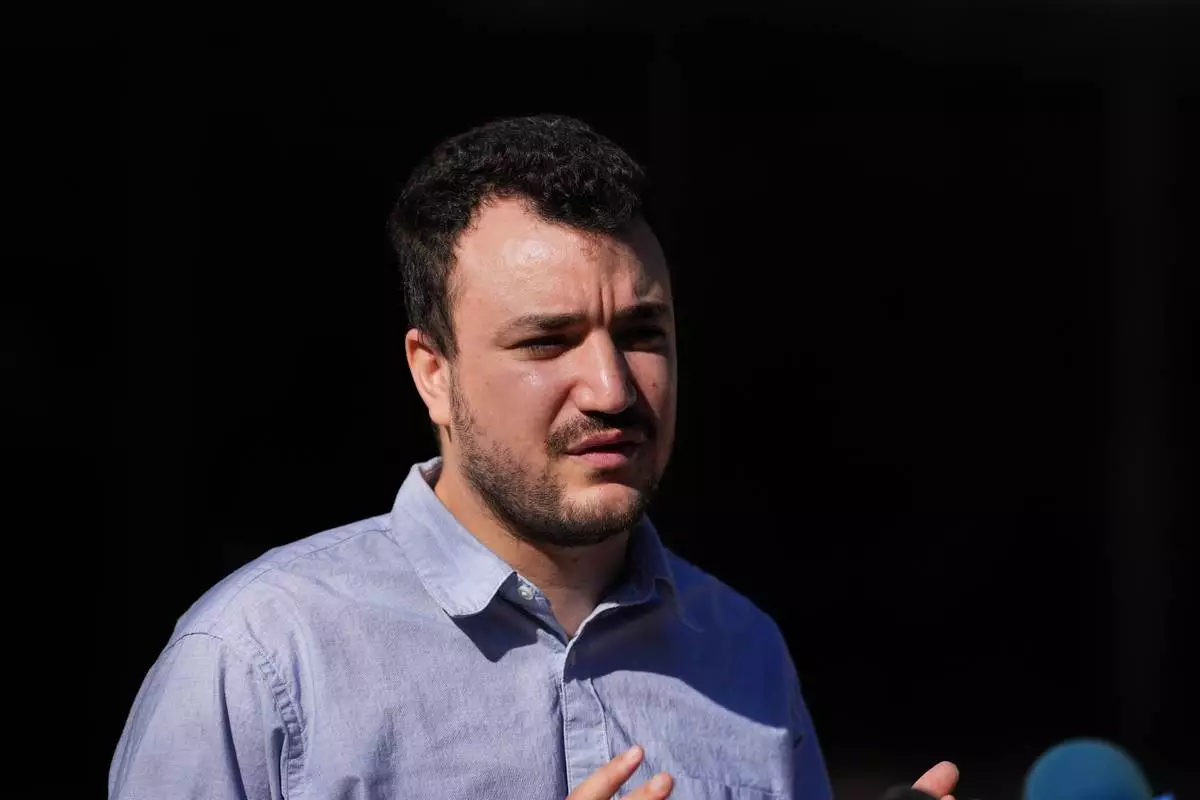
FILE - Palestinian activist Mahmoud Khalil holds a news conference outside Federal Court on Tuesday, Oct. 21, 2025 in Philadelphia (AP Photo/Matt Rourke, File)

FILE - Palestinian activist Mahmoud Khalil holds a news conference outside Federal Court on Tuesday, Oct. 21, 2025 in Philadelphia (AP Photo/Matt Rourke, File)

Recommended Articles