Chinese automakers in Thailand are partnering with local universities and training centers to cultivate the next generation of engineers and technicians specializing in electric vehicles (EVs), promoting the Southeastern Asian country's ambitions to become a regional leader in green mobility.
Nineteen-year-old Kittapart Yensabye is a student at Eastern Technical College in east Thailand's Chonburi Province. Every weekday, he leaves home at 4:30 a.m. for a gruelling two-hour journey across the province to school, where he learns skills that could one day take him far beyond the province's boundaries.
This kind of daily routine reflects a broader shift -- young people in Thailand are being trained to join the automotive industry that is increasingly dependent on electricity. Southeast Asia is accelerating toward the wave of EV revolution, but faces a shortage of skilled talents.
"At first, I thought it was tough. I felt I would be exhausted if I got up early every day to study so far away. But now, I actually want to study. I want to introduce new technologies to my country and apply them to our daily lives, such as electric vehicles, as most people still don't understand them. I want the industry to develop even further," Yensabye told China Global Television Network (CGTN).
For him, the Thailand-China Cooperation Center for Vocational Education is where the dream begins. Chinese EV manufacturers have signed memorandum of understanding with their college to blend classroom learning with real-world training, while also offering student exchange programs and scholarships, preparing the next generation to power Thailand's electric future.
"Our programs with China, the manufacturers themselves came to teach us, from the battery production factory to the car assembly plant. We gain new knowledge and also new teaching materials and methods. Most of our teaching material is in Chinese. We translate them to teach our students," said Jinda Chalood, head of the Electric Vehicle Department at Eastern Technological College.
The agreement came with new tools, new training modules, and the promise of real internships as Chinese EV brands rapidly grow their production bases on the Eastern Seaboard.
Thailand is Southeast Asia's largest EV market, led by Chinese automakers, which accounted for more than 70 percent of Thailand's EV sales this year. Supported by generous incentives, tax breaks, and growing cooperation under China's Belt and Road Initiative, Thailand's transformation from a traditional auto hub to an EV manufacturing powerhouse has been profound.
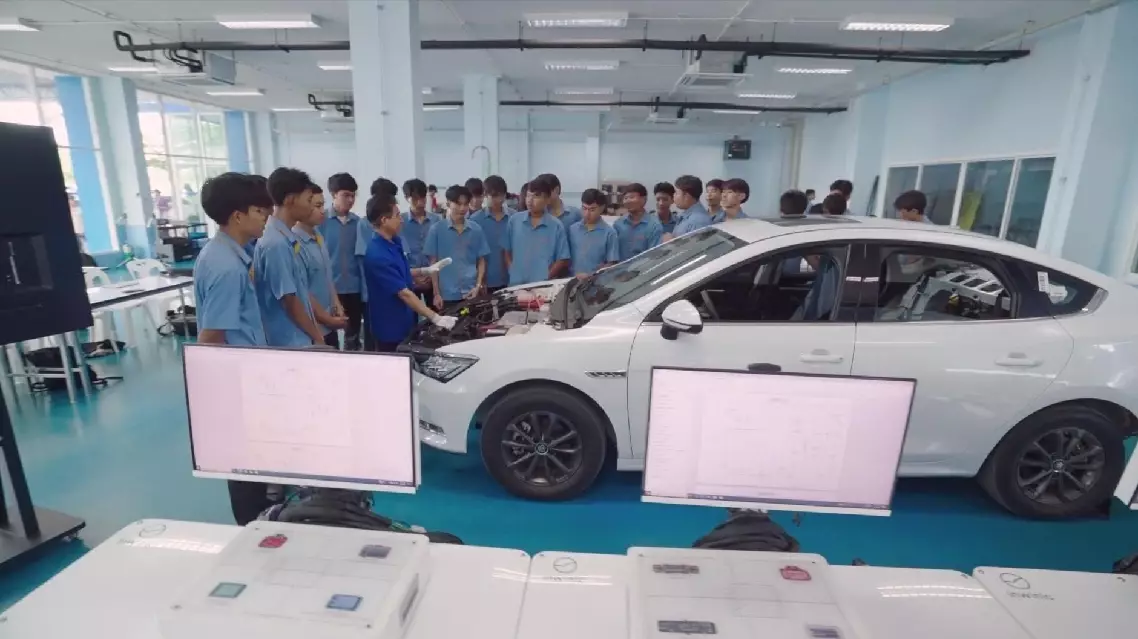
Chinese automakers help cultivate EV talents in Thailand