Skip to Content Facebook Feature Image

China promotes sci-tech innovation across Asia-Pacific under APEC framework

China

China

China

China promotes sci-tech innovation across Asia-Pacific under APEC framework

2025-10-30 16:06 Last Updated At:10-31 00:57

Under the framework of the Asia-Pacific Economic Cooperation (APEC), China is accelerating smart mobility and driving industrial innovation across the Asia-Pacific, with breakthroughs in autonomous technology and AI-powered robotics injecting fresh momentum into the global economy.

The APEC summit is scheduled to begin on Nov 1 in Gyeongju, Republic of Korea (ROK).

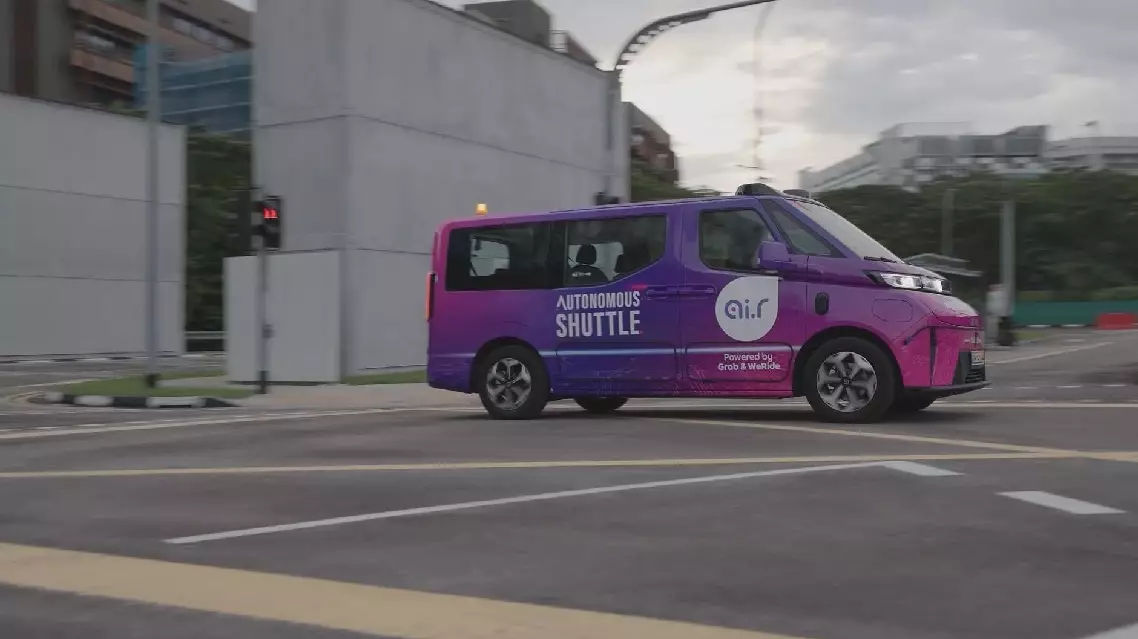
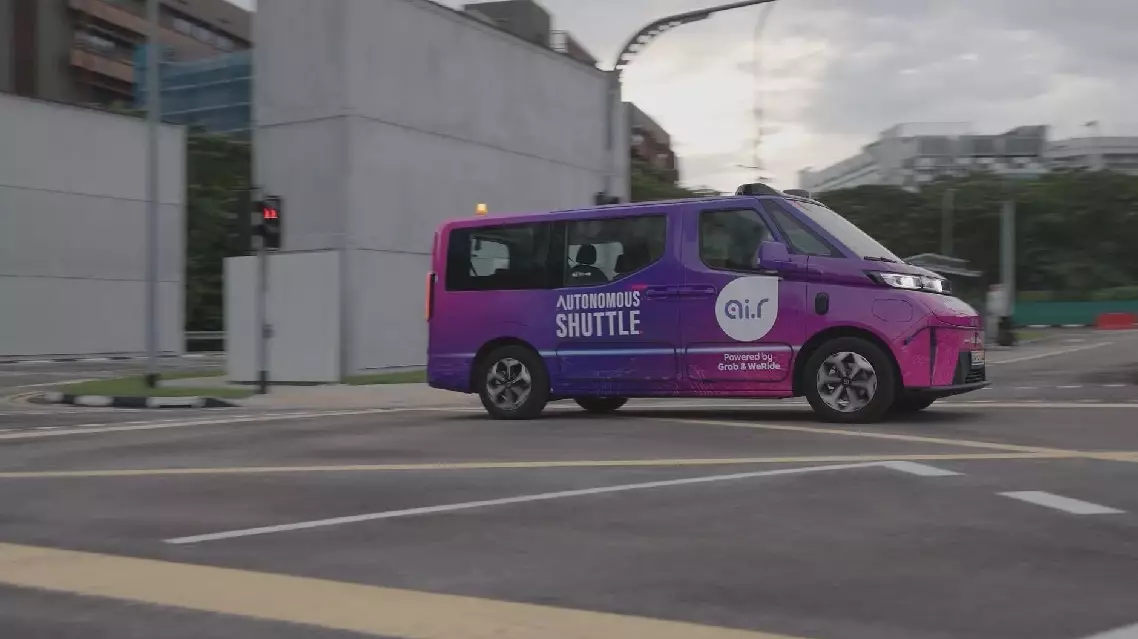
Chinese-developed driverless technologies are already reshaping urban mobility across Southeast Asia. In a residential district in northeastern Singapore, autonomous shuttle buses equipped with technologies developed by a Chinese company are currently undergoing road tests.

The project is slated to officially launch early next year, integrating Chinese driverless solutions into Singapore's daily urban life and offering residents a smarter, safer, and more environmentally friendly commuting experience.

"Our robot bus has been operating in the Resorts World Sentosa for almost one year. And since July this year, we have been running fully driverlessly. And this demonstrates our technological capability and our operational know-how for operating the EV on Singapore's public roads," said Xu Kaixin, general manager of a Chinese company's Singapore Branch.

As a member of APEC, China's Hong Kong Special Administrative Region (SAR) is also advancing sci-tech innovation with a focus on homegrown breakthroughs.

One standout achievement is the launch of Hong Kong's first self-developed AI quadruped robot by the Center for Logistics Robotics, nicknamed the "robot dog" for its agility, stair-climbing skills, and intelligent operational capabilities.

"Firstly, we aim at the last-mile delivery service of smart logistics. We want to explore if there is any opportunity for robot dogs in industries, including services and elderly care in the future," said Liu Yunhui, director of the Hong Kong Center for Logistics Robotics.

"APEC has always been promoting the development of smart manufacturing. In the future, Hong Kong would like to strengthen its cooperation with APEC in this regard, jointly advancing the global new industrialization," said Lillian Cheong, Under Secretary of Innovation, Technology and Industry of the Hong Kong Special Administrative Region.
China promotes sci-tech innovation across Asia-Pacific under APEC framework
China promotes sci-tech innovation across Asia-Pacific under APEC framework
China promotes sci-tech innovation across Asia-Pacific under APEC framework
China promotes sci-tech innovation across Asia-Pacific under APEC framework

More than three weeks after U.S. strikes on military sites in Venezuela, many Caracas residents said the psychological scars remain deep, even as people push forward with everyday routines.

The strikes on January 3 focused on military targets in Caracas, including Fort Tiuna, a major military installation in southwestern Caracas, which includes command centers, and civilian neighborhoods built by the government for low-income families.

The strikes left parts of the complex in ruins, with civilians living nearby experiencing intense fear and disruption.

Yesenia Acevedo, who runs a small convenience store in the residential area of Fort Tiuna, described how business has declined after the attack. Her shop, which had enjoyed steady customers for three years, was forced to close for a week due to safety concerns.

"After the bombing, this area was designated as a war zone. Everyone was forced to evacuate. After the airstrikes on January 3, the number of customers dropped sharply. Some of them were regulars. I think they're afraid and won't come back. If they personally experienced the bombing that day, it must have been a nightmare," said Acevedo.

Emma Chavez, owner of a bakery in the neighborhood, was out of the city when the strikes occurred. Family and employees called to alert her to the chaos.

"When I returned, I felt the vibe here was very strange, full of uncertainty. Everyone was talking about it [the bombing]. Many people came back because they had nowhere else to go, they had to return. Their hearts are filled with fear, even now. But everyone has to look forward and continue with normal life," said Chavez.

Both Acevedo and Chavez condemned the U.S. strikes as illegal and inhumane, while emphasizing the resilience of Venezuelans in the face of adversity.

"It's not so much about believing we can get through the hard times; it's that we have to keep living normally. We have no other choice. Venezuelans are very resilient, we can endure any adversity. Of course, we're afraid, because we don't know what the future holds. Everyone knows the United States is a warlike country, and war is a business for the U.S. But we Latin Americans love peace. For us, war is something from games or movies. I think it's inhumane, I can't imagine anyone thinking it's justified," said Chavez.

"I think all of America's actions toward Venezuela are illegal. The raid has become a turning point in our lives. It's hard to say our lives can return to normal right away, because the psychological trauma is still there. But Venezuelans are tough and unyielding; we always keep moving forward," said Acevedo.

Caracas residents struggle to rebuild life amid lingering trauma from US strikes

Caracas residents struggle to rebuild life amid lingering trauma from US strikes

Recommended Articles