COCONUT CREEK, Fla. (AP) — South Florida was spared a direct blow from Hurricane Melissa, but the massive storm still hit home for the millions of residents there who have deep roots in the Caribbean.
Now, the Caribbean diaspora from Miami to New York City is turning its heartbreak into action: filling warehouses with emergency supplies to send to communities across Jamaica, Cuba, Haiti and the Bahamas that were battered by Melissa, one of the strongest Atlantic hurricanes on record.
Click to Gallery
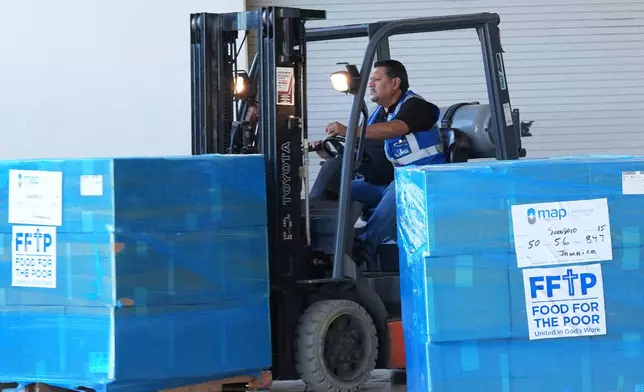
Emergency supplies are loaded on a semi truck bound for Jamaica, Thursday, Oct. 30, 2025, at Food for the Poor in Coconut Creek, Fla. (AP Photo/Marta Lavandier)
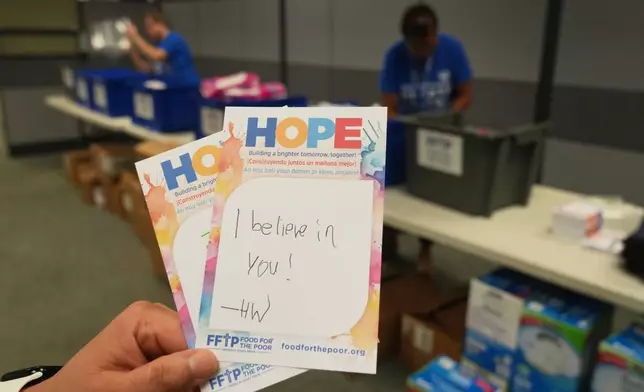
Encouraging notes written by volunteers wait to be placed in feminine hygiene packages bound for Jamaica, Thursday, Oct. 30, 2025, at Food for the Poor in Coconut Creek, Fla. (AP Photo/Marta Lavandier)
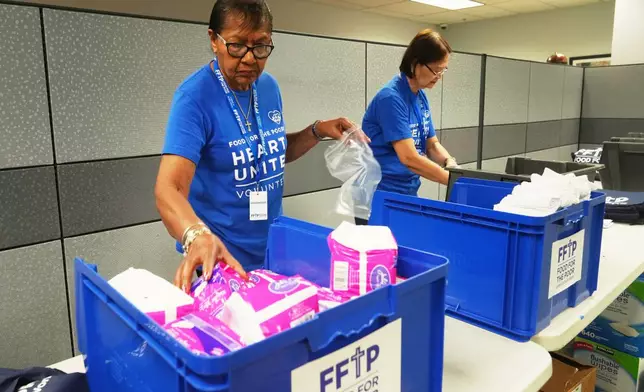
Volunteers put together feminine hygiene packages for those affected by Hurricane Melissa in Jamaica Thursday, Oct. 30, 2025, at Food for the Poor in Coconut Creek, Fla. (AP Photo/Marta Lavandier)
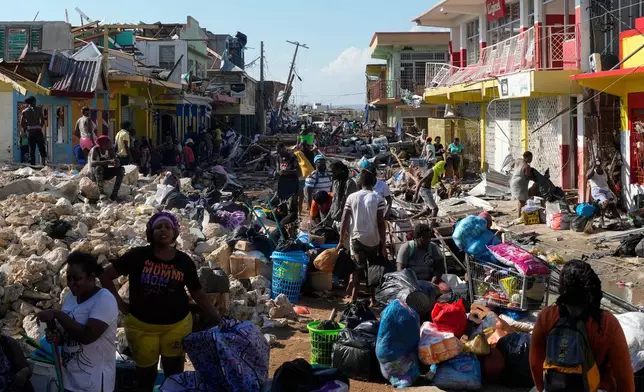
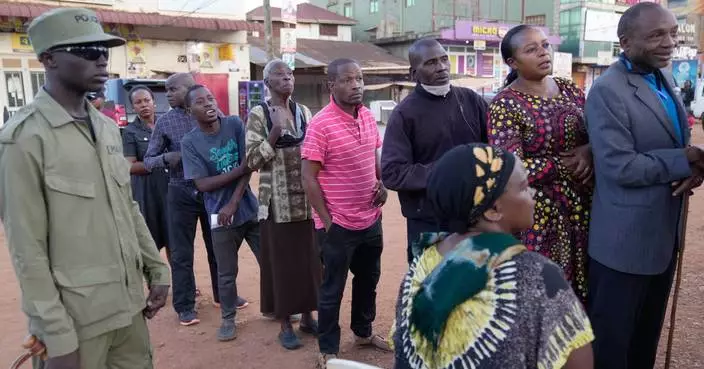
Residents gather amid debris in the aftermath of Hurricane Melissa on a street in Black River, Jamaica, Thursday, Oct. 30, 2025. (AP Photo/Matias Delacroix)
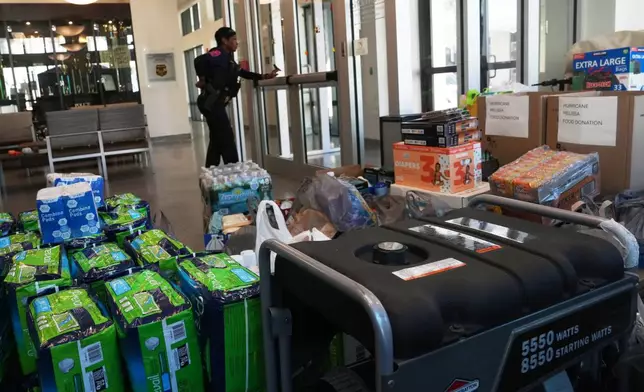
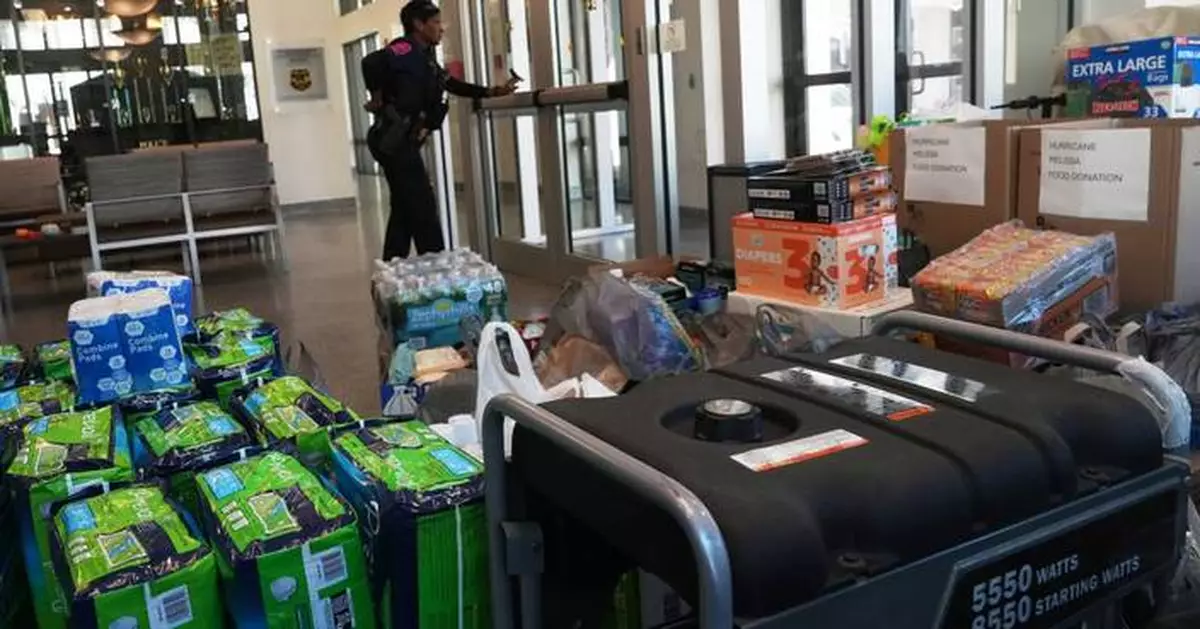
Donated emergency supplies for Jamaica sit in the lobby at the Miramar Police Department Thursday, Oct. 30, 2025, in Miramar, Fla. (AP Photo/Marta Lavandier)
Centers of global wealth — and vibrant exile communities that run generations deep — both cities are cultural melting pots that have long been major points of entry for immigrants. Miami-Dade County, Florida’s largest county, is now home to more immigrants than native-born Americans.
More immigrants have moved into the New York and Miami areas so far this decade than any other U.S. metro areas, 721,000 people and 553,000 people respectively.
For many in Miami, the city is an unofficial capital of Latin America — where the salsa clubs of Little Havana and the rooster-filled streets of Little Haiti feel physically and culturally closer to the Caribbean than the rest of the mainland U.S.
Across Florida, there are more than a million foreign-born Cubans and 231,000 foreign-born Jamaicans, while New York state is home to 22,800 foreign-born Cubans and 225,000 foreign-born Jamaicans, according to the U.S. Census Bureau.
Many Haitian Americans are all too familiar with the pain of watching a catastrophe unfold from afar, with Melissa being the latest in a long line of crises. But members of the diaspora do their best to support loved ones back home, said Carine Jocelyn, Chief Executive Officer of Brooklyn-based Diaspora Community Services.
The feeling of “donation fatigue” doesn’t apply to Haiti, she said, adding, “we don’t really get to say that.”
Even as gang violence continues to disrupt transportation in the capital of Port-au-Prince, Jocelyn says she hopes resources will still be able to get in through the Cap-Haïtien and Les Cayes airports. She urged donors to give to verified Haitian nonprofits to ensure aid reaches communities most in need.
Nonprofit groups told The Associated Press that cash is the best way to help, and experts recommend using sites like Charity Navigator or the Better Business Bureau’s Wise Giving Alliance to check out unfamiliar charities before donating.
Eugene Lapaine, president of the rural development and civic engagement organization Association des Paysans Haut Douzieme, is leading a rescue mission in communities near his mountainside city of Petit-Goâve in southern Haiti.
“People are leaving their homes to seek shelter,” Eugene said. “We are doing our best as a community to help each other through this.”
At a bustling warehouse in the suburban Broward County, Florida, city of Coconut Creek on Thursday, volunteers with the hunger and poverty relief organization Food For The Poor hustled to assemble emergency care kits and load dozens of palates of food, water and personal hygiene products.
Susan James-Casserly, who comes from a long line of Jamaican cattle farmers, was born on the island but came to South Florida in 1978, and she now works for the charity. She's flying out next week to help with the on-site relief effort in her home country, where many were still recovering from last year's Hurricane Beryl when Melissa showed up on the radar.
“Jamaicans are very strong and resilient. I’m afraid of what I’m going to see. But one of the things I know is that we are ready to help,” she said.
Kivette Silvera, who was born in Jamaica and now lives in South Florida, was among the Food For The Poor team who rode out the storm on the island, huddled in prayer as she listened to the winds howl and watched the trees bend.
“Words can't express what they’re going through right now. It’s devastating. It is devastating,” she said in an interview from the organization’s office in the city of Spanish Town, west of the capital Kingston.
Marlon Hill is a corporate attorney in Miami who is helping lead the group South Florida Caribbean Strong to mobilize volunteers and donors for the storm response.
“For me being a born Jamaican and a raised American, this one hits different,” Hill told reporters.
In the Broward County suburb of Miramar — where every member of the city council is either a Caribbean immigrant or the child of one — residents have also sprung into action.
Local officials have organized a citywide relief effort to collect and deliver essential supplies to the islands. Residents can drop off items like shelf-stable food, water, tarps, flashlights and sleeping bags at designated donation sites at fire departments and police stations, 24 hours a day.
In the nearby city of Lauderhill, residents can take donations to city hall, parks, and Jamaican restaurants in the area.
In Cooper City, Brittany and Dwayne Wolfe have offered up their home as a drop-off site for diapers and other necessities. The couple are the cofounders of The Greater Fort Lauderdale Diaper Bank, and many of the organization's volunteers and supporters grew up in Jamaica or still have family on the island.
Dwayne, who was born in the central Jamaican city of Mandeville, still hasn't been able to reach cousins, friends and loved ones there in the aftermath of the storm. But while he waits for a call, he can focus on gathering more donations.
“I truly feel that a lot of folks that live in South Florida can really relate,” he said, “because we’re so close.”
Contributions to the diaper bank's online fundraising site have been coming in from around the world, Brittany Wolfe said, as the organization prepares to send its first shipment of diapers to Jamaica.
“It’s home,” she said. “And when things like this happen, you know, you have to help.”
Associated Press journalists Liseberth Guillaume in New York and Mike Schneider in Orlando, Florida, contributed reporting. Kate Payne is a corps member for The Associated Press/Report for America Statehouse News Initiative. Report for America is a nonprofit national service program that places journalists in local newsrooms to report on undercovered issues.
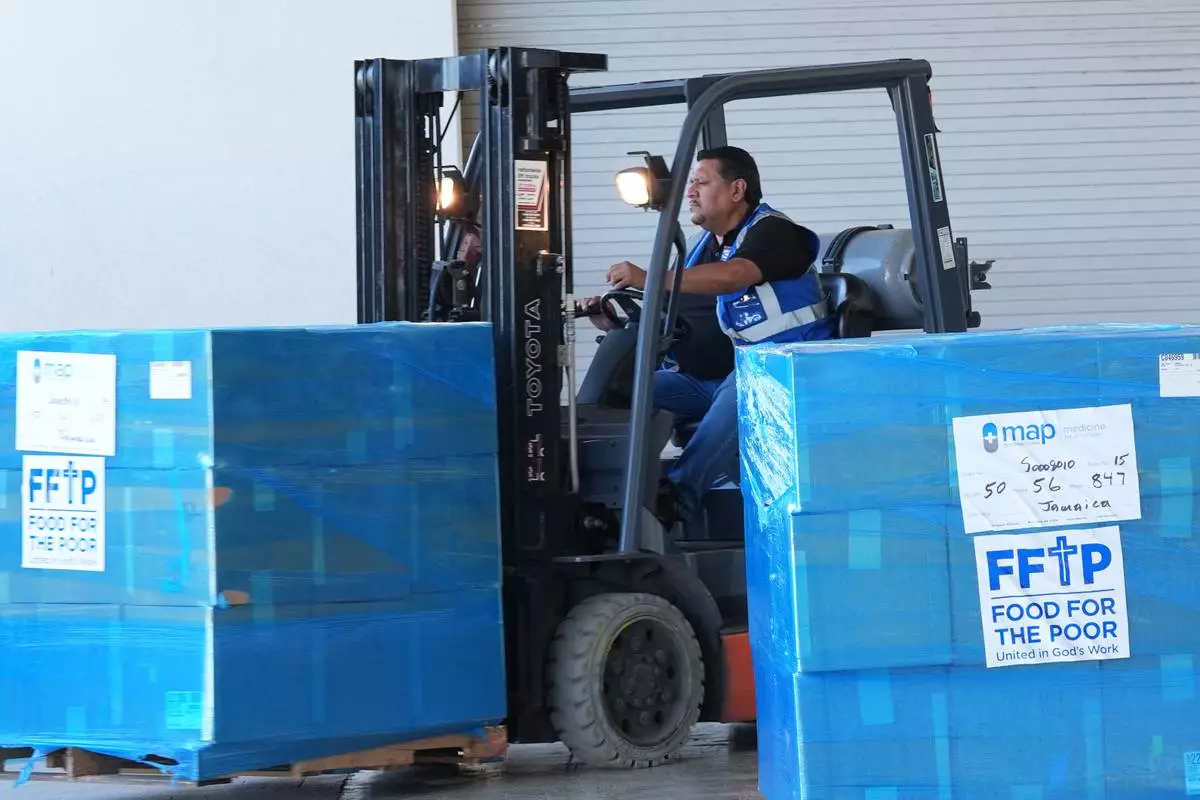
Emergency supplies are loaded on a semi truck bound for Jamaica, Thursday, Oct. 30, 2025, at Food for the Poor in Coconut Creek, Fla. (AP Photo/Marta Lavandier)
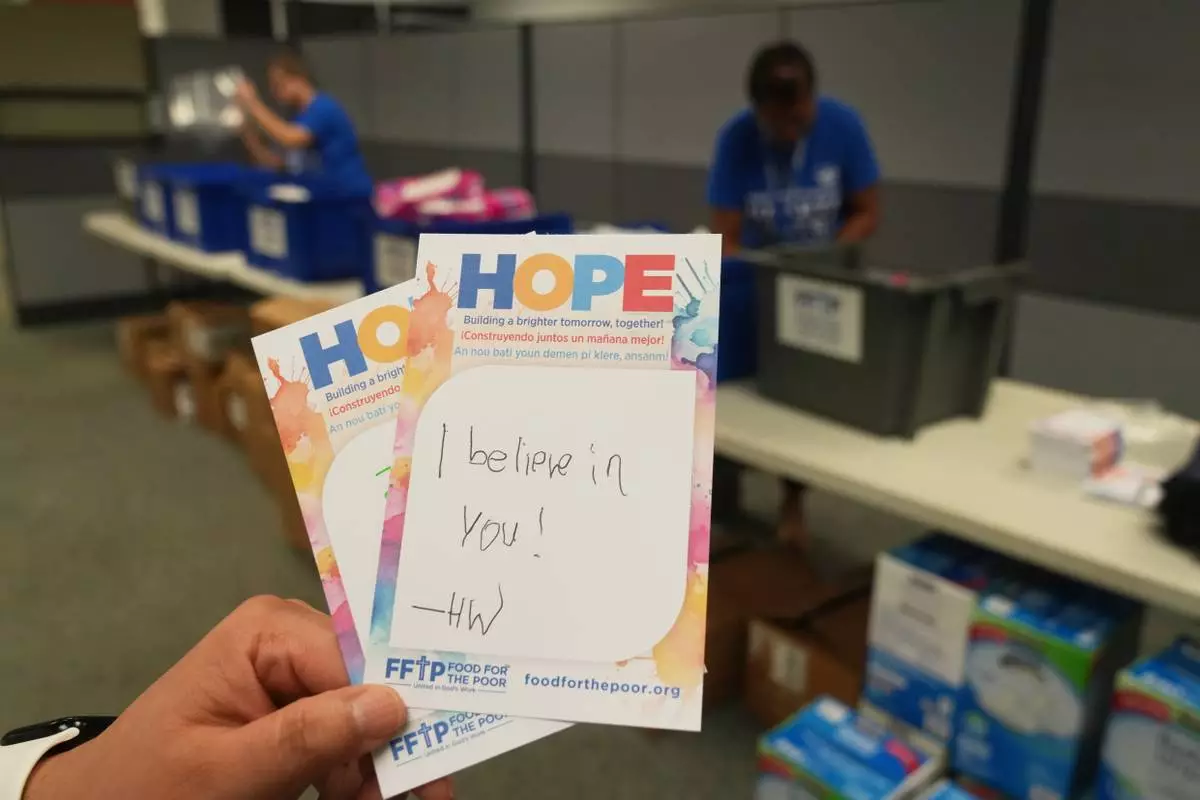
Encouraging notes written by volunteers wait to be placed in feminine hygiene packages bound for Jamaica, Thursday, Oct. 30, 2025, at Food for the Poor in Coconut Creek, Fla. (AP Photo/Marta Lavandier)
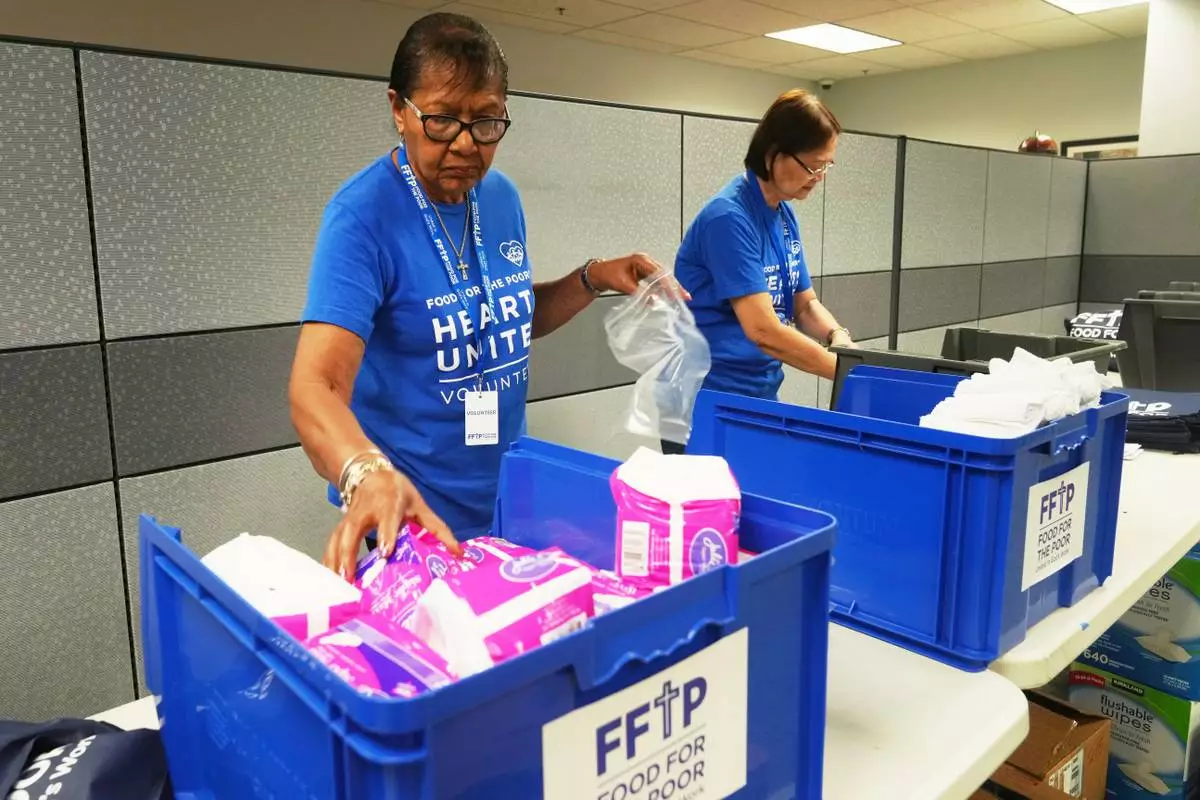
Volunteers put together feminine hygiene packages for those affected by Hurricane Melissa in Jamaica Thursday, Oct. 30, 2025, at Food for the Poor in Coconut Creek, Fla. (AP Photo/Marta Lavandier)
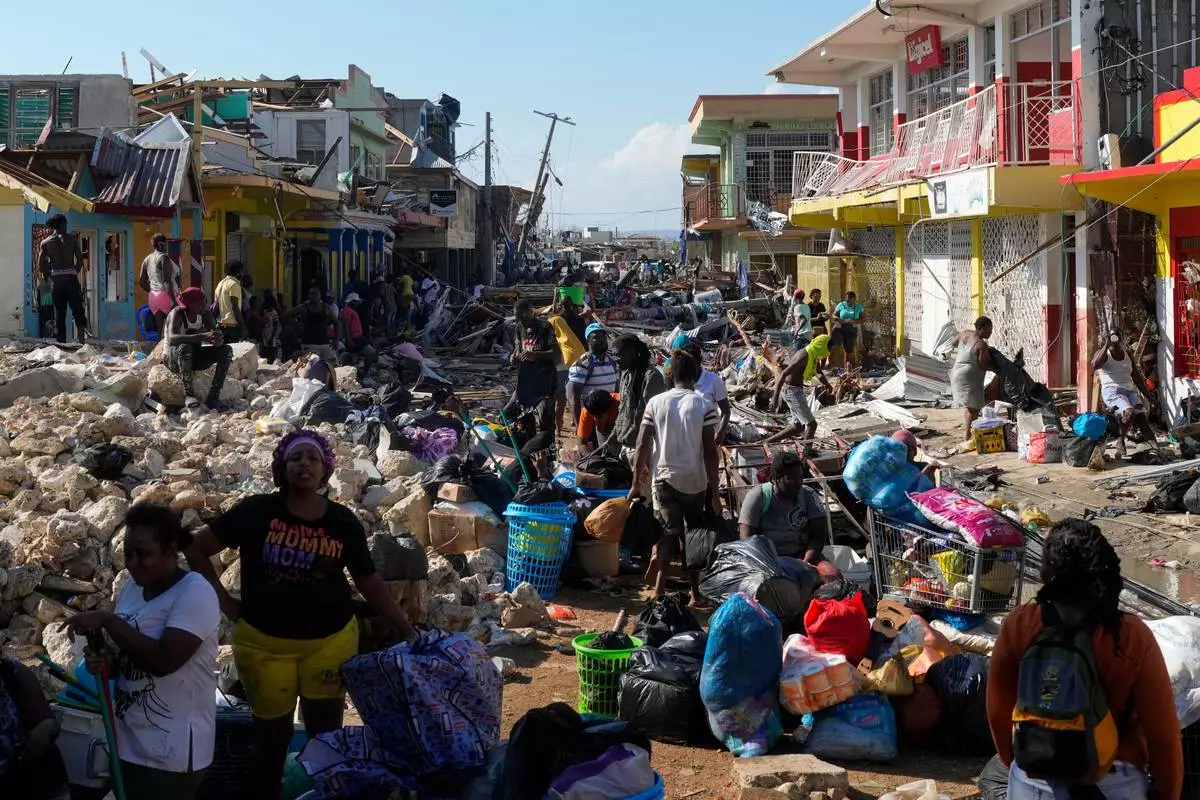
Residents gather amid debris in the aftermath of Hurricane Melissa on a street in Black River, Jamaica, Thursday, Oct. 30, 2025. (AP Photo/Matias Delacroix)
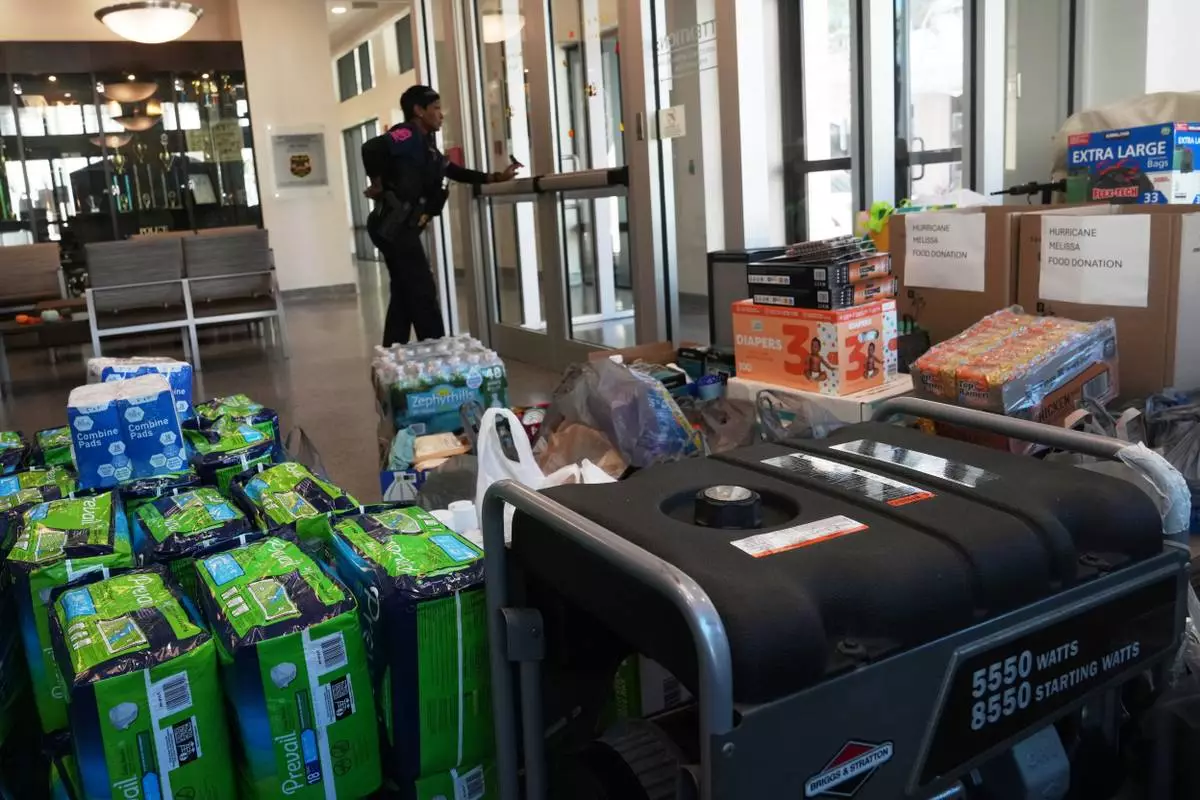
Donated emergency supplies for Jamaica sit in the lobby at the Miramar Police Department Thursday, Oct. 30, 2025, in Miramar, Fla. (AP Photo/Marta Lavandier)