Skip to Content Facebook Feature Image

Commander on Long March-2F carrier rocket's development in 20 years

China

China

China

Commander on Long March-2F carrier rocket's development in 20 years

2025-10-31 14:19 Last Updated At:16:17

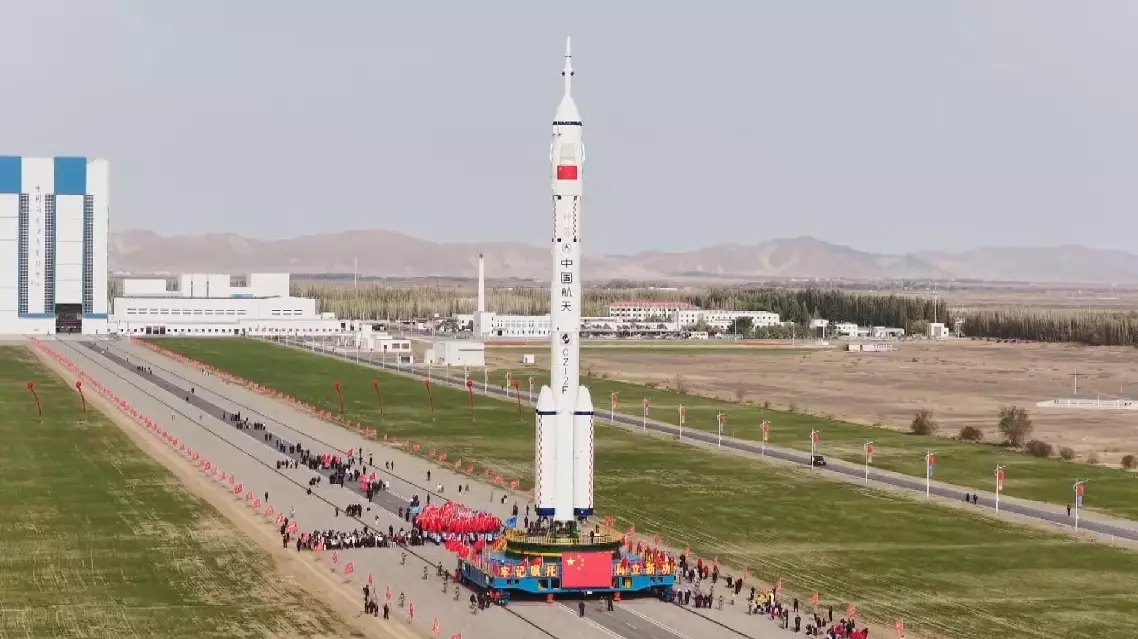
China has made important progress in developing its Long March-2F carrier rocket for the country's manned space program over the past two decades, with the vehicle able to carry out routine launch operations in much short intervals, according the commander in chief of the carrier rocket project.

Jing Muchun, the commander, recalled that back when the Long March-2F, part of China's Long March 2 rocket family, undertook the Shenzhou-6 manned spaceflight mission in 2005, the launch procedures would cost more than two months. After 20 years of development, the carrier rocket is able to operate at a regular interval of just one month -- half of the time it used to took -- for manned spaceflights.

"The standard procedure [for rocket launch] has been shortened to just one month, or about 30 days, now. Additionally, under our current workflow, we have one standby rocket, which means we have two carrier rockets at the launch site. We now have a routine 'Earth-space transportation system' in place, which functions like a shuttle service operating one time in the first half of the year and the other in the second half. It's fair to say that we're getting better both in term s of procedure and technology," said Jing.

During the past two decades, China's manned space program has advanced from short-duration spaceflights to much longer missions to support the operations of its space station, Jing said, noting that years of extensive upgrades for the Long March-2F carrier rocket has been instrumental in making this happen.

"We always uphold the principle of prioritizing human safety in the crewed space mission. These principles have remained unchanged since we put them forward, that it, we will never waver in our commitment to advancing, in keeping the standards of, and in fulfilling the requirements for, the crewed space mission," he said.

The Long March-2F carrier rocket is scheduled to send yet another Chinese crew -- the Shenzhou-21 astronaut trio -- to space at 23:44 Friday (Beijing Time) from the Jiuquan Satellite Launch Center in northwest China.
Commander on Long March-2F carrier rocket's development in 20 years


Commander on Long March-2F carrier rocket's development in 20 years

Israelis have welcomed the Israel–Lebanon negotiations in Washington,United States, though many remain uneasy about how the talks will affect Hezbollah.

Israel-Lebanon direct talks at the ambassador level are underway on Tuesday at the U.S. State Department in Washington, D.C. The meeting marked the first major high-level engagement between the governments of Israel and Lebanon since 1993.

Lebanese Ambassador to the U.S. Nada Hamadeh and Israeli Ambassador to the U.S. Yechiel Leiter took part in the talks, along with U.S. Secretary of State Marco Rubio and other U.S. officials.

Israel and Lebanon laid out different expectations on Monday, with Israel insisting on Hezbollah's disarmament and a peace agreement, and Lebanon voicing hope for a ceasefire and the launch of direct negotiations.

This divide was underscored when Hezbollah leader Naim Qassem rejected direct talks with Israel and vowed continued resistance, urging the Lebanese government to withdraw from the Washington negotiations. His remarks came as the Israeli military reported striking about 150 Hezbollah targets in southern Lebanon in the past 24 hours and expanding ground operations against the group.

"It's a good thing that we started negotiating with Lebanon because we are not in a conflict with Lebanon," said Eli, a Tel Aviv resident.

"I think that if it comes to a ceasefire and it is something that will save lives in this situation here, it's always a good thing," said Ido, another resident.

It may be in the interest of both nations to reach an agreement but Israelis fear that when it comes to Lebanon, it is not the local government or even the armed forces who call the shots.

"Obviously, we want to get rid of Hezbollah, we want to dismantle the threat, but we need to live peacefully beside Lebanon which is a different thing," said Ido.

The talks took place while cross border fire still raged on.

Hezbollah entered the U.S.-Israeli war with Iran on March 2, launching rockets from southern Lebanon toward Israel for the first time since the 2024 ceasefire. Israel responded with a ground offensive amid an intensified military campaign targeting multiple areas across the country, killing more than 2,000 people.

At least 35 people have been killed in Israeli attacks on Lebanon in the past 24 hours, the Lebanese Health Ministry said Tuesday in a daily update.

For many in Israel, pursuing negotiations while continuing military pressure on Hezbollah is seen as the right strategy.

"By attacking Hezbollah and weakening it, maybe it will allow the government of Lebanon to implement what will be agreed upon," said Eli.

Israelis welcome talks with Lebanon, expressing concern over Hezbollah

Israelis welcome talks with Lebanon, expressing concern over Hezbollah

Recommended Articles