The China Education Expo (CEE) 2025 kicked off on Saturday in Beijing, gathering nearly 400 universities and other educational institutions from 38 countries and regions.
This year's expo has seen a steady increase in the number of overseas exhibitors, with Saudi Arabia, Romania, and Panama joining for the first time.
New Zealand, serving as the guest country for the second time after a decade, has brought 17 participating universities and institutions, four more than last year.
"Our government has announced they are going for a growth plan which includes doubling the number of international students coming to New Zealand by the year 2034. Chinese students make up 35 percent of all international students studying in New Zealand. Students who graduate with a bachelor's degree have post-study work rights in New Zealand for up to three years," said Amanda Malu, chief executive of Education New Zealand.
In addition to direct exchanges with prospective universities and representatives from some embassies in China, the event features nearly 60 themed seminars.
Topics range from application strategies and policy updates to full scholarship programs, career planning, and the latest study-abroad trends.
Following its Beijing stop, which will last two days, the expo will tour four other Chinese cities - Wuhan, Chengdu, Guangzhou, and Shanghai - on November 4, 6, 8, and 9, respectively, further promoting educational exchange and cooperation for China with the world.
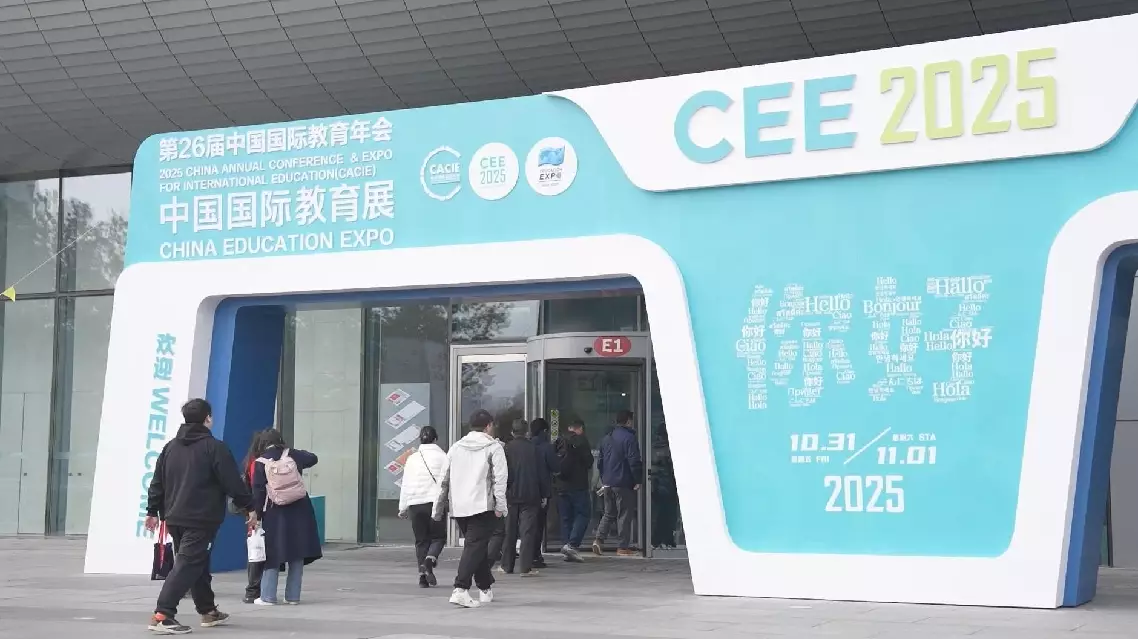
China Education Expo 2025 opens in Beijing with record global participation
Japanese citizens took to the streets of Tokyo's Shinjuku district on Saturday, voicing strong opposition to Prime Minister Sanae Takaichi's administration for lifting the ban on lethal weapons exports, advancing a "National Intelligence Agency" bill, and pushing for the revision of the country's postwar pacifist constitution.
On Tuesday, the Japanese government, led by Prime Minister Sanae Takaichi, officially revised the "three principles on transfer of defense equipment and technology" and their implementation guidelines.
The revisions scrap the restrictions that had limited arms exports to five non-combat categories, allow, in principle, the export of lethal weapons, permit transfers to nations engaged in active conflict under specified circumstances, and sideline parliament from the decision-making process, crossing a line that previous governments had at least nominally upheld.
"Allowing the export of lethal weapons and even attempting to possess nuclear arms, the Takaichi administration is leading Japan toward war, despite our postwar commitment of never starting a war again. Many people are worried. This must be stopped," said a protester.
The cornerstone of Japan's pacifist constitution is Article 9, which renounces the nation's right to engage in war or to resort to military force to resolve international conflicts. For decades, this article has been a fundamental constraint on Japan's military endeavors.
"I am firmly opposed to amending the Constitution. Takaichi claims 'the time has come,' but that's just her own decision. Without Article 9 of the Constitution, Japan could be swept into America's wars. That must not happen," said another participant.
"Japan once invaded other Asian countries and has maintained a pacifist constitution ever since. But now the government has arbitrarily decided to lift the ban on exporting lethal weapons without sufficient parliamentary debate. It's unacceptable," said another demonstrator.
"If we abandon our stance as a peaceful nation under the constitution, it would be absolutely intolerable. Thanks to Article 9, Japan hasn't waged war or been pulled into conflict. For Japan's place in the international community, Article 9 must not be changed," said another protester.
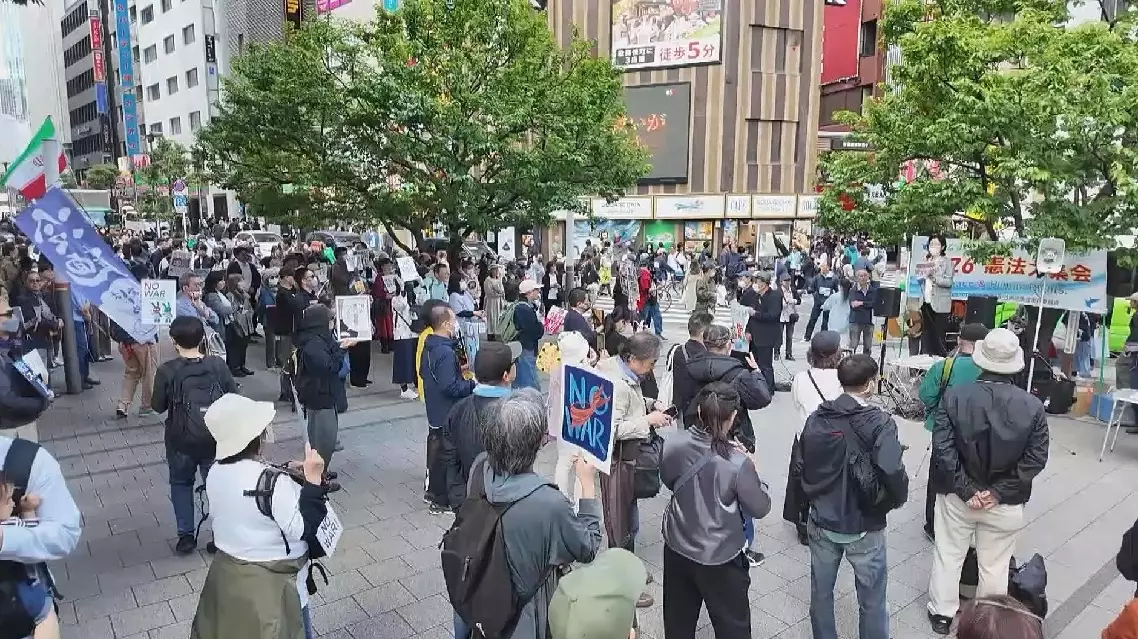
Tokyo protesters oppose Takaichi’s lethal weapons export, constitution revision plans