Skip to Content Facebook Feature Image

Xi's APEC speech highlights multilateralism, green development, shared innovation: experts

China

China

China

Xi's APEC speech highlights multilateralism, green development, shared innovation: experts

2025-11-03 22:41 Last Updated At:11-04 06:57

Chinese President Xi Jinping's speech at the 32nd APEC Economic Leaders' Meeting in Gyeongju, South Korea demonstrated leadership in upholding multilateralism, sustainability, and shared development in science and technology, according to experts from around the world.

In his speech titled "Building an Inclusive Open Asia-Pacific Economy for All", Xi presented a five-point proposal designed to advance inclusive economic globalization while fostering an Asia-Pacific community.

At a time of mounting regional uncertainty and global turbulence, scholars and observers said China had demonstrated its leadership, and said that Xi's proposals offer valuable direction for tackling today's economic and geopolitical challenges.

"China and President Xi played an extremely important role at this year's APEC meeting. China has demonstrated its position as a leading force in the Asia-Pacific region, and this leadership has been well-executed. Another key initiative raised by President Xi concerns green and sustainable development. This will encourage more countries to prioritize climate issues and drive the Asia-Pacific toward a greener and more sustainable future," said Piti Srisangnam, executive director of the ASEAN Foundation.

Hoang Hue Anh, Director of the China Research Center at the Vietnam Academy of Social Sciences, said that China's proposals align closely with APEC's guiding principles.

"At the fourth plenary session of the 20th Communist Party of China Central Committee, China reaffirmed its commitment to further opening up, trade liberalization, and multilateralism. We have also seen that China introduced a series of new global initiatives, including the Global Security Initiative, the Global Development Initiative, the Global Civilization Initiative, and the recently proposed Global Governance Initiative. These all reflect China's consistent support for free trade and further opening up, which aligns with APEC's principles," she said.

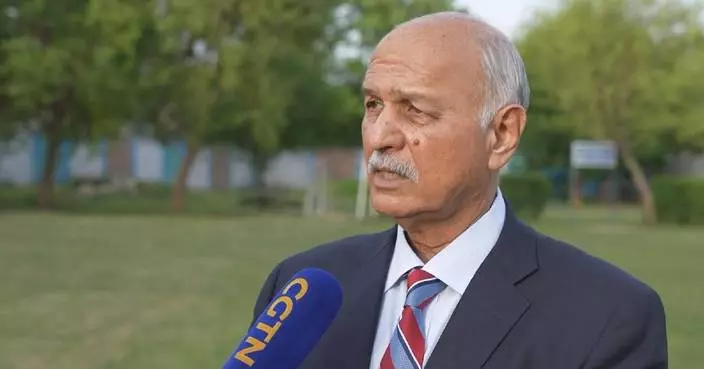
Alireza Rastegar, President of the International Federation of Inventors' Associations, highlighted China's achievements in science and technology, and its ambition to pursue shared innovation across borders.

"I know Mr Xi, President of China, has a very good feeling for innovation and technology, and they are doing very well. This is amazing because it's not just looking for the business, it's also looking for the basic science and technology. So right now, China is one power(ful) country at the base of innovation. China can open this part of the technology section and innovation section, and they encourage furthering this knowledge to other countries. China can be the leader of road-mapping for the future," he said.

Xi's APEC speech highlights multilateralism, green development, shared innovation: experts

Xi's APEC speech highlights multilateralism, green development, shared innovation: experts

Yemen's temporary capital Aden is showing resilience and stability in economy, with market operations and public services running smoothly despite a recent escalation in the region's volatile military and political situation.

Currently, various essential supplies, including grain, oil, food and everyday items, are consistently available on the markets.

Public services such as water, electricity and communications are also functioning normally, and shops in multiple commercial districts remain open.

"We went out to buy household items today. The prices were the same. There was no rise in prices," said Mohamed Naguib, a resident.

The current market stability is attributed to the efficient functioning of the transportation and logistics systems, as well as the government's ongoing efforts to enhance market oversight and regulate prices, which have helped reduce market volatility, according to analysts.

"Although there are some rumors about rising tensions, the overall situation in Aden remains stable. The industry and commerce department has continued to monitor the market and rigorously control prices to prevent increases in commodity and food costs," said Amjad Al-Husseini, director of the Aden Governor's Office.

The city's monetary circulation system has also largely maintained balance, with the exchange rate of the local currency against major foreign currencies remaining relatively stable.

Aden has long been a flashpoint in the country's civil war, which erupted in 2014 when Houthi forces seized much of the north, prompting a Saudi-led military intervention in the following year. Tensions in the south have persisted despite repeated power-sharing deals.

The tensions further escalated last month after the United Arab Emirates-backed Southern Transitional Council (STC) seized large swathes of Yemen's oil-rich Hadramout province and the eastern province of Al-Mahrah. Riyadh considers these areas as a "red line" due to their proximity to the Saudi border and their concentration of Yemen's remaining energy reserves.

Last week, airstrikes and ground operations by the Saudi-led coalition forced the STC forces to withdraw from the two provinces.

Formed in 2017, the STC seeks autonomy and eventual independence for southern Yemen. Although it joined the Saudi-led coalition and became part of the Yemen's Presidential Leadership Council in 2022, the group's push for southern self-rule has continued to fuel disputes over power-sharing and control of territory and resources.

Economy, market remain stable in Yemen's Aden despite escalating violence

Economy, market remain stable in Yemen's Aden despite escalating violence

Recommended Articles