Starbucks said Monday it is forming a joint venture with Chinese investment firm Boyu Capital to operate Starbucks stores in China.
Under the agreement, Boyu will acquire a 60% interest in Starbucks' retail operations in China, which is valued at $4 billion. Starbucks will retain a 40% interest in the joint venture and will own and license the Starbucks brand.
Starbucks said its business in China will have a total value of more than $13 billion, including the proceeds from the sale of the controlling interest to Boyu, the value of its 40% stake and the value of its royalties.
Starbucks entered China almost 30 years ago, and has been credited with growing coffee culture in the country. China is Starbucks' second-largest market outside the U.S., with 8,000 locations.
But in recent years, the Seattle coffee giant has struggled in China with cheap, fast-growing Chinese startups like Luckin Coffee. Starbucks' same-store sales in China have fallen in both of its last two fiscal years.
As a result, Starbucks has been looking for a partner to help it grow its business in China, particularly in smaller cities. In July, Starbucks Chairman and CEO Brian Niccol said the company was evaluating around 20 offers for a stake in the company.
Niccol said Monday that Boyu shares Starbucks' commitment to providing a great experience for both customers and employees. It will also help Starbucks achieve its goal of growing to 20,000 stores in China over time, Niccol said.
“Boyu’s deep local knowledge and expertise will help accelerate our growth in China, especially as we expand into smaller cities and new regions," Niccol said in a statement.
Boyu Capital Partner Alex Wong said Starbucks has built a deep connection with Chinese consumers over nearly three decades.
“This partnership reflects our shared belief in the enduring strength of that brand and the opportunity to bring even greater innovation and local relevance to customers across China," Wong said in a statement.
Starbucks' China headquarters will remain in Shanghai. Boyu Capital, which was founded in 2011, has offices in Shanghai, Hong Kong, Singapore and Beijing.
The companies said they expect to finalize the deal in the second quarter of Starbucks' 2026 fiscal year. Starbucks' 2026 fiscal year began on Sept. 29.
Starbucks shares were flat in after-hours trading.
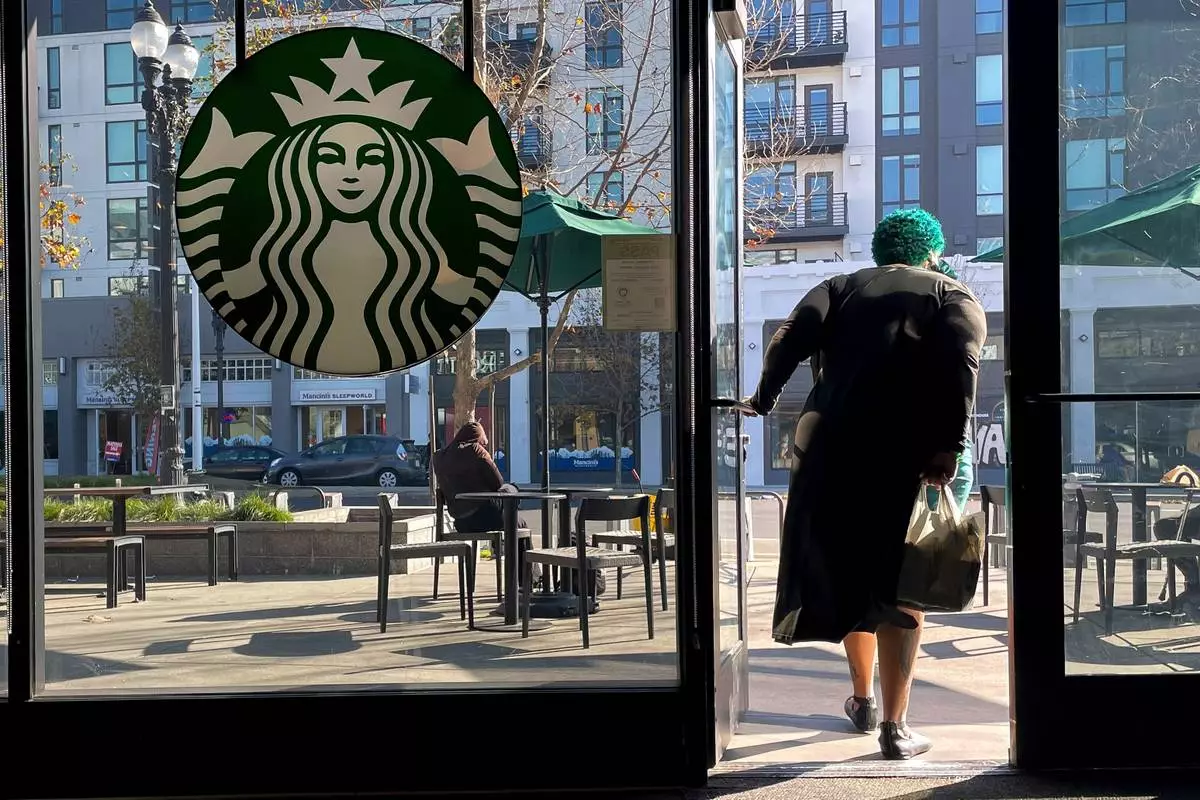
FILE - A costumer exits a Starbucks store in Oakland, Calif., Thursday, Jan. 16, 2025. (AP Photo/Godofredo A. Vásquez, File)

FILE - Chinese customers enjoy their drinks at a store of U.S. coffee giant Starbucks in Beijing on May 10, 2019. (AP Photo/Ng Han Guan, File)
JERUSALEM (AP) — The White House says it is moving into the second phase of President Donald Trump’s Gaza ceasefire plan – breathing new life into a proposal that aims to rebuild the war-ravaged area and reshape the wider Middle East.
Trump’s Mideast envoy, Steve Witkoff, broke the news Wednesday in a post on X, saying the new phase will include the establishment of a transitional Palestinian governing committee and begin the complicated tasks of disarming Hamas and reconstruction.
But the announcement included few details about the new Palestinian committee or other key aspects of the plan, signaling just how much work lies ahead.
Trump's 20-point plan — which was approved by the U.N. Security Council — lays out an ambitious vision for ending Hamas’ rule in Gaza. If successful, it would see the rebuilding of a demilitarized Gaza under international supervision, the normalization of relations between Israel and the Arab world, and the creation of a possible pathway to Palestinian independence.
But if the deal stalls, Gaza could be trapped in an unstable limbo for years to come, with Hamas remaining in control of parts of the territory, Israel’s army enforcing an open-ended occupation, and its residents stuck homeless, unemployed, unable to travel abroad and dependent on international aid to stay alive.
“We’re going to do our best to try and see if we can work with the Palestinian people to try something new,” said a U.S. official, speaking on condition of anonymity to discuss the evolving plan. “It will be hard to do,” he acknowledged.
Here is a closer look at the next stages of the ceasefire and the potential pitfalls.
The ceasefire took effect on Oct. 10, halting two years of fighting between Israel and Hamas. It also included the release of all remaining hostages held in Gaza in exchange for hundreds of Palestinians held by Israel.
The ceasefire has largely held, though both sides accuse each other of ongoing violations. Israeli fire has killed more than 400 Palestinians, according to Gaza health officials. Israel says it has targeted militants or responded to violations of the ceasefire, but the Palestinians say scores of civilians have been shot.
Palestinian militants, meanwhile, continue to hold the remains of the last hostage — an Israeli police officer killed in the Hamas-led Oct. 7, 2023, attack that triggered the war. Israeli Prime Minister Benjamin Netanyahu has made clear he is in no rush to move forward until the remains are returned.
Netanyahu appeared to play down Witkoff’s announcement as symbolic, calling the creation of a new Palestinian committee a “ declarative move.”
The new committee will consist of independent Palestinian experts who are to run Gaza’s daily affairs under American supervision.
Wednesday’s announcement didn't say who will serve on the committee. But the other mediators of the ceasefire — Egypt, Turkey and Qatar — said it would be led by Ali Shaath, an engineer and former deputy minister in the Palestinian Authority in the West Bank.
The U.S. official who spoke on the condition of anonymity said other names are expected in the next two days, and the committee will focus on attracting investment and improving the quality of life.
“This really will be a technocratic committee,” he said. “They seem to be a group that wants to have peace.”
The committee will report to the Board of Peace, a group of world leaders supervising the ceasefire and led by Trump. If the Palestinian committee is seen as just a façade, it risks not gaining public support.
Also, its exact powers remain unclear. Hamas has said it will dissolve its government once the committee takes office, but it has shown no signs that it will dismantle its military wing or security forces.
The board will oversee the ceasefire, reconstruction and an open-ended reform process by the Palestinian Authority, with the goal of one day allowing the internationally recognized authority to return to Gaza to govern.
The U.S. official said invitations for the board have been extended, but he declined to name any of the people expected to join. “It’s going to be a great list,” he said.
The key challenge will be forming a board that can work with Israel, Hamas, the mediators and international aid agencies.
One key appointment appears to have been made. Nickolay Mladenov, a former Bulgarian politician and U.N. Mideast envoy, is expected to serve as the board’s on-the-ground representative. He already has met with Netanyahu and Palestinian leaders in the occupied West Bank.
Trump's plan calls for the formation of an International Stabilization Force to maintain security and train Palestinian police to one day to take over. That force hasn't been formed yet, and a deployment date hasn't been announced.
The U.S. official insisted there is “great excitement” over the force and said there would be important announcements in the coming weeks.
But the force’s command structure and authorities remain unknown.
Hamas said it will oppose any attempts by the force to disarm it, and contributing nations may not to want to risk clashes with the militant group. Israel, meanwhile, is hesitant to trust an international body with its security needs.
Trump’s plan calls for an economic development outline to “rebuild and energize Gaza,” which suffered widespread destruction during the war and where most of the territory’s 2 million people are displaced and unemployed.
Still, no such plan has been announced, and it remains unclear who will pay for a process the U.N. estimates will cost $70 billion.
The ceasefire deal calls for Hamas to surrender its weapons under the supervision of international monitors. Militants who disarm will be granted amnesty and the option to leave Gaza.
However, Hamas, whose ideology is based on armed resistance against Israel, has said it won't disarm until Israel ends its occupation of Palestinian territories.
Bassem Naim, a senior Hamas official, told The Associated Press last month that the group is open to “ freezing or storing” its weapons while a political process takes place, perhaps over many years. It is unclear whether that would be sufficient for Israel.
Failure to disarm Hamas could lead to renewed fighting with Israel and clashes with international troops, and could block progress on the rest of the peace plan.
Under the ceasefire, Israel is to withdraw from all of Gaza, with the exception of a small buffer zone along the border. At the moment, Israel retains control of just over half of Gaza.
The plan says further withdrawals will be based upon “standards, milestones and timeframes linked to demilitarization” to be negotiated by Israel, the U.S., the international force and other “guarantors.”
There are no firm timelines for further withdrawals, and Israel may refuse to pull back further.
The plan calls for an overhaul of the Palestinian Authority, which runs the West Bank, and the creation of conditions for a “credible pathway” to Palestinian statehood.
Palestinian officials say they have begun making reforms in key areas such as corruption, the education system and payments to families of prisoners convicted in attacks on Israelis.
Israel rejects the creation of a Palestinian state and opposes any role for the authority in postwar Gaza. Without a pathway to statehood, any Palestinian support for the new system could crumble. The plan also offers no clear benchmarks or timelines for the reform process.
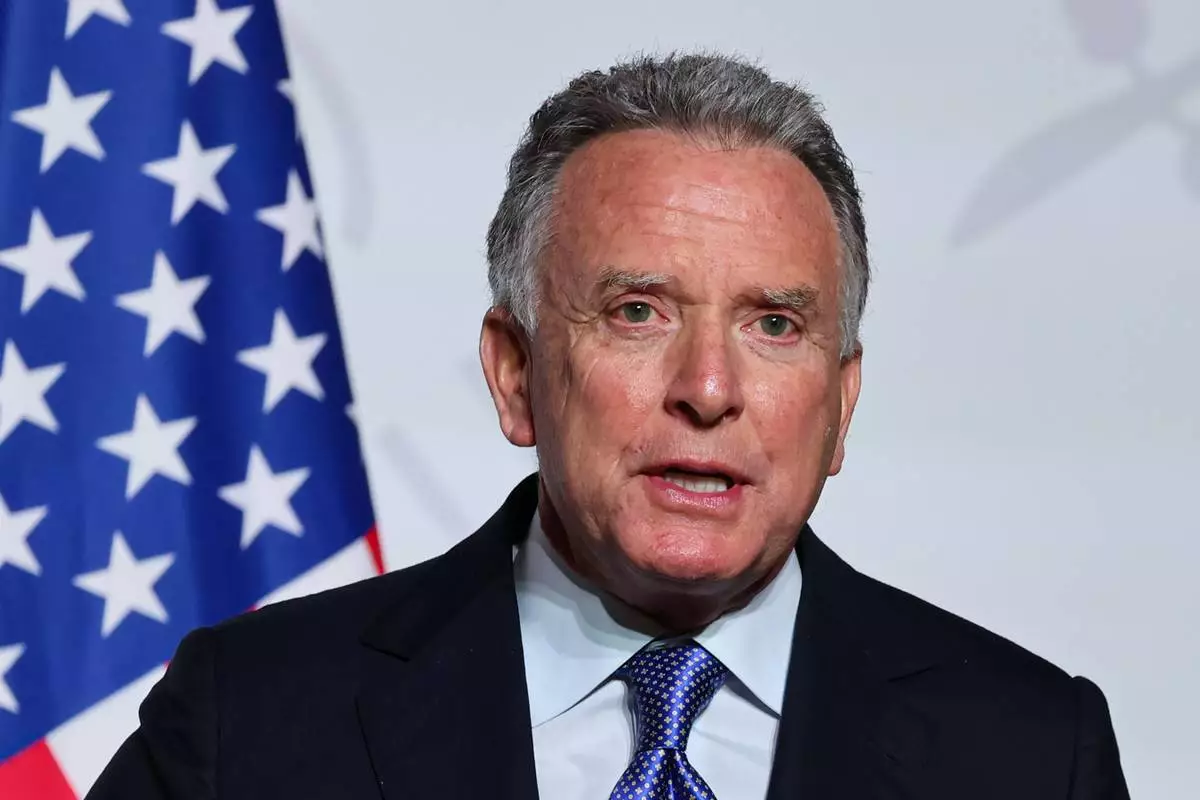
US Special Envoy Steve Witkoff delivers a speech upon the signing of the declaration on deploying post-ceasefire force in Ukraine during the 'Coalition of the Willing' summit on security guarantees for Ukraine, at the Elysee Palace in Paris Tuesday, Jan 6, 2026. (Ludovic Marin, Pool photo via AP)
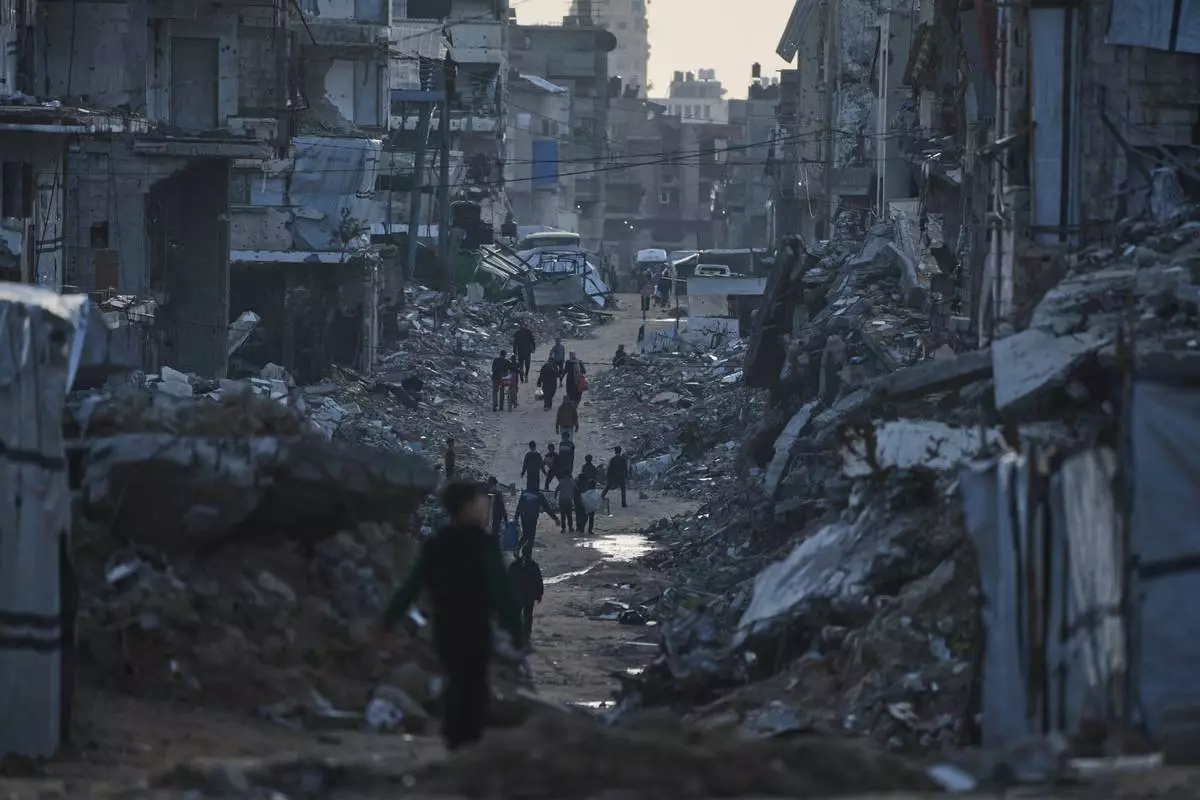
Palestinians walk amid buildings destroyed by Israeli air and ground operations in Gaza City Thursday, Jan. 15, 2026. (AP Photo/Jehad Alshrafi)
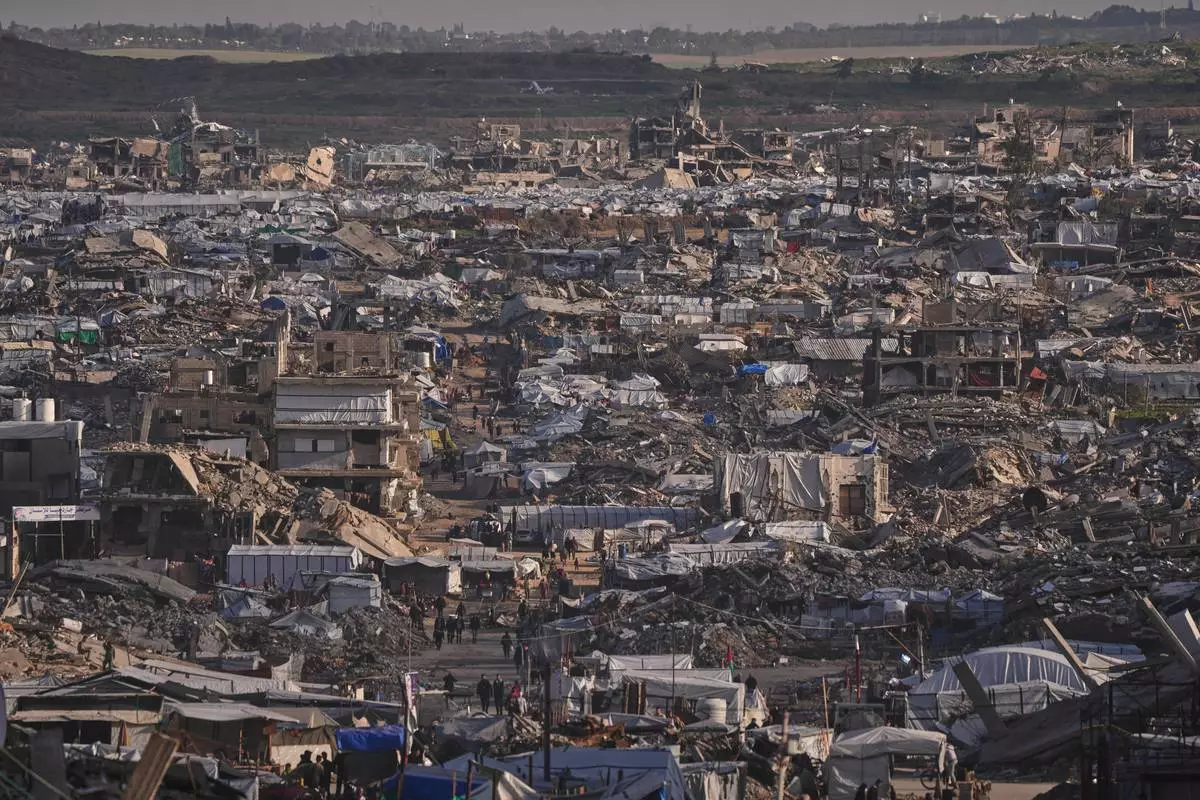
Makeshift tents shelter displaced Palestinians stand among buildings destroyed by Israeli air and ground operations in Gaza City Thursday, Jan. 15, 2026. (AP Photo/Jehad Alshrafi)