The CCTV Video News Agency (CCTV+) of the China Media Group (CMG) on Thursday signed a memorandum of cooperation with the national broadcaster of the Democratic Republic of the Congo (DRC) in Xi'an, the provincial capital of northwest China's Shaanxi.
Li Xia, CEO of CCTV+, and Sylvie Elenge Nyembo, director general of the Congolese National Radio and Television (RTNC), jointly signed the agreement between the two organizations, at a ceremony held during the 13th Global Video Media Forum (VMF).
Fan Yun, deputy editor-in-chief of the CMG and editor-in-chief of the China Global Television Network (CGTN), and Patrick Muyaya, minister of communication and media and spokesperson for the government of the DRC, also witnessed the signing of the document.
The cooperation deal came during the two-day 13th VMF, which gathered hundreds of government officials, leaders of international organizations, and representatives of major media outlets under the theme "Building Consensus for Shared Benefits: Media's Role in Global Governance."
The forum also saw the inauguration meeting of the Global South Media Partners Mechanism, a new initiative launched by CMG which aims to promote deeper collaboration among Global South media and enhance the discourse power of the Global South.
Established by CCTV+ in 2011, the VMF focuses on video content dissemination and technological innovations and serves as a key annual exchange platform for global media users and partners. The event has now evolved into a premier global forum, attracting extensive participation from media organizations and professionals worldwide.
The CCTV+ is the first and leading video news agency in China that offers domestic news content and a Chinese perspective on international news. It provides quality news footage, live signals and extensive archives to global media organizations and production companies.
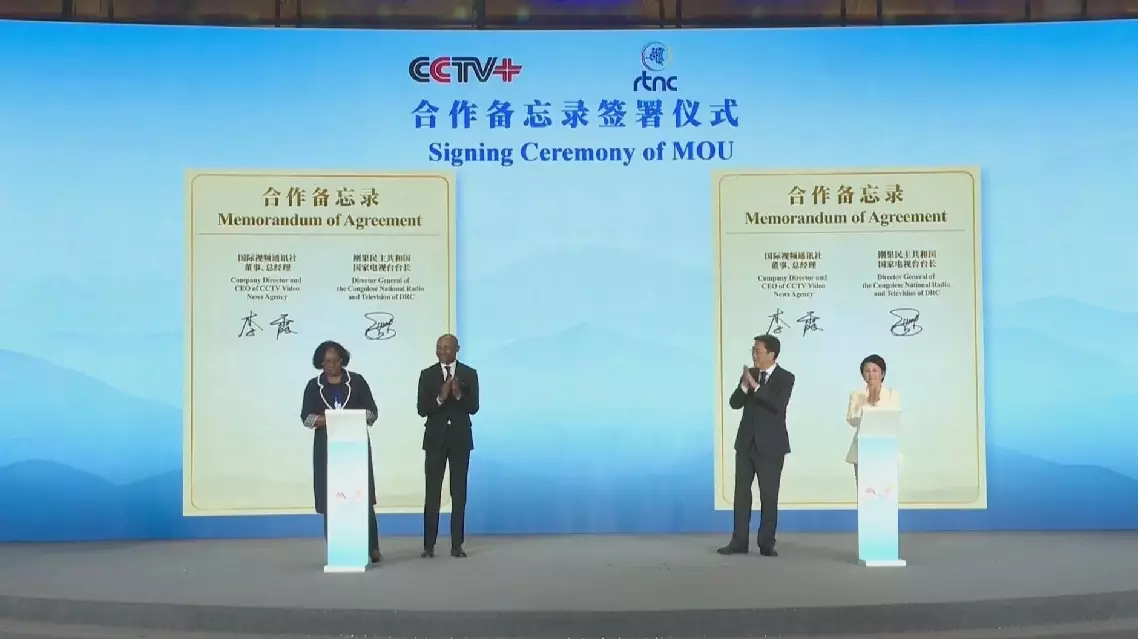
CCTV+ signs memorandum of cooperation with DRC national broadcaster
CCTV+ signs memorandum of cooperation with DRC national broadcaster
China has made steady progress in building the 21st Century Maritime Silk Road, with its international container liner services now covering more than 100 countries and regions.
China has opened multiple new foreign trade routes directly to Latin America and Southeast Asia this year. Recently, a new weekly service was launched from east China's Fujian Province to the east coast of South America, the first of its kind from the province.
The route directly links five major ports on Brazil's east coast and extends to ports in Argentina, Uruguay and other Belt and Road partner countries through seamless connections. It has added a new channel to maritime connectivity between China and Belt and Road partner countries, providing support for foreign trade enterprises to consolidate traditional markets and explore emerging markets such as South America.
"Since the route opened, shipping time to South America has nearly halved, and the service has become more reliable. Preliminary estimates suggest it will boost our product exports by about 20 percent," said Li Zhenbang, sales director of Xiamen Risun Group Co., Ltd.
Behind these new routes is a continuously expanding maritime connectivity network. Building on the development of Silk Road Maritime in Fujian and other regions, China is promoting integrated port, shipping and trade development to improve connectivity efficiency at ports along the route.
In the first eight months of this year, foreign trade throughput at China's 11 international hub seaports reached nearly 2.2 billion tonnes, accounting for more than 50 percent of their total throughput. International container liner routes now reach more than 100 countries and regions.
"The building of the 21st Century Maritime Silk Road has given strong impetus to China's economic and trade cooperation with countries in Southeast Asia, Africa and Latin America, bringing it to new levels. China remains ASEAN's largest trading partner and Latin America's second-largest trading partner, with the scale and quality of our economic and trade cooperation steadily improving." said Liang Linchong, director of the Department of Regional Opening-up of the National Development and Reform Commission.
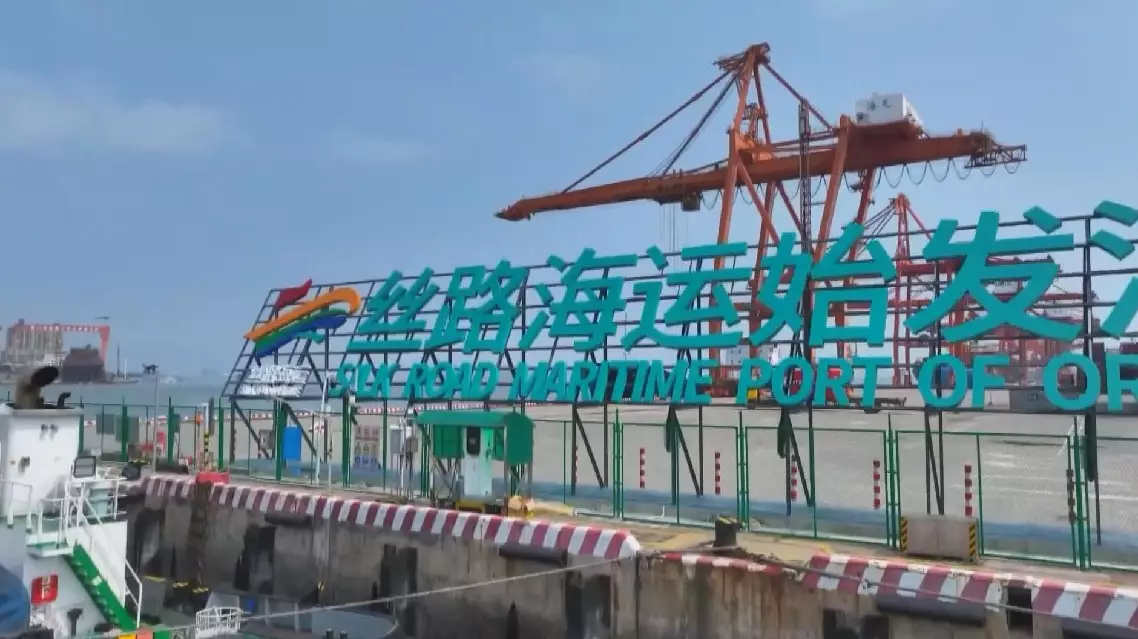
China expands maritime connectivity with new routes to Latin America, Southeast Asia