Skip to Content Facebook Feature Image

Denmark's government aims to ban access to social media for children under 15

News

Denmark's government aims to ban access to social media for children under 15
News

News

Denmark's government aims to ban access to social media for children under 15

2025-11-08 03:21 Last Updated At:15:38

Denmark’s government on Friday announced an agreement to ban access to social media for anyone under 15, ratcheting up pressure on Big Tech platforms as concerns grow that kids are getting too swept up in a digitized world of harmful content and commercial interests.

The move would give some parents — after a specific assessment — the right to let their children access social media from age 13. It wasn't immediately clear how such a ban would be enforced: Many tech platforms already restrict pre-teens from signing up. Officials and experts say such restrictions don't always work.

Such a measure would be among the most sweeping steps yet by a European Union government to limit use of social media among teens and younger children, which has drawn concerns in many parts of an increasingly online world.

Speaking to The Associated Press, Caroline Stage, Denmark's minister for digital affairs, said 94% of Danish children under age 13 have profiles on at least one social media platform, and more than half of those under 10 do.

“The amount of time they spend online — the amount of violence, self-harm that they are exposed to online — is simply too great a risk for our children,” she said, while praising tech giants as “the greatest companies that we have. They have an absurd amount of money available, but they’re simply not willing to invest in the safety of our children, invest in the safety of all of us.”

Stage said a ban won’t take effect immediately. Allied lawmakers on the issue from across the political spectrum who make up a majority in parliament will likely take months to pass relevant legislation.

"I can assure you that Denmark will hurry, but we won’t do it too quickly because we need to make sure that the regulation is right and that there is no loopholes for the tech giants to go through," Stage said. Her ministry said pressure from tech giants’ business models was “too massive.”

It follows a move in December in Australia, where parliament enacted the world’s first ban on social media for children — setting the minimum age at 16.

That made platforms including TikTok, Facebook, Snapchat, Reddit, X and Instagram subject to fines of up to 50 million Australian dollars ($33 million) for systemic failures to prevent children younger than 16 from holding accounts.

Officials in Denmark didn't say how such a ban would be enforced in a world where millions of children have easy access to screens. But Stage noted that Denmark has a national electronic ID system — nearly all Danish citizens over age 13 have such an ID — and plans to set up an age-verification app. Several other EU countries are testing such apps.

“We cannot force the tech giants to use our app, but what we can do is force the tech giants to make proper age verification, and if they don’t, we will be able to enforce through the EU commission and make sure that they will be fined up to 6% of their global income.”

Many governments have been grappling with ways of limiting harmful fallout from online technologies, without overly squelching their promise. Stage said Denmark's legislative push was “not about excluding children from everything digital” — but keeping them away from harmful content.

China — which manufacturers many of the world's digital devices — has set limits on online game time and smart-phone time for kids.

Prosecutors in Paris this week announced an investigation into allegations that TikTok allows content promoting suicide and that its algorithms may encourage vulnerable young people to take their own lives.

“Children and young people have their sleep disrupted, lose their peace and concentration, and experience increasing pressure from digital relationships where adults are not always present,” the Danish ministry said. “This is a development that no parent, teacher or educator can stop alone.”

The EU's Digital Services Act, which took effect two years ago, forbids children younger than 13 to hold accounts on social media like TikTok and Instagram, video sharing platforms like YouTube and Twitch, and sites like Reddit and Discord, as well as AI companions.

Many social media platforms have for years banned anyone 13 or under from signing up for their services. TikTok users can verify their ages by submitting a selfie that will be analyzed to estimate their age. Meta Platforms, parent of Instagram and Facebook, says it uses a similar system for video selfies and AI to help figure out a user's age.

TikTok said in an email that it recognizes the importance of Denmark's initiative.

“At TikTok, we have steadfastly created a robust trust and safety track record, with more than 50 preset safety features for teen accounts, as well as age appropriate experiences and tools for guardians such as Family Pairing," a tool allowing parents, guardians, and teens to customize safety settings.

We look forward to working constructively on solutions that apply consistently across the industry,” it added.

Meta didn’t respond immediately to requests for comment from the AP.

“We’ve given the tech giants so many chances to stand up and to do something about what is happening on their platforms. They haven’t done it," said Stage, the Danish minister. “So now we will take over the steering wheel and make sure that our children’s futures are safe.”

AP Business Writer Kelvin Chan contributed to this report.
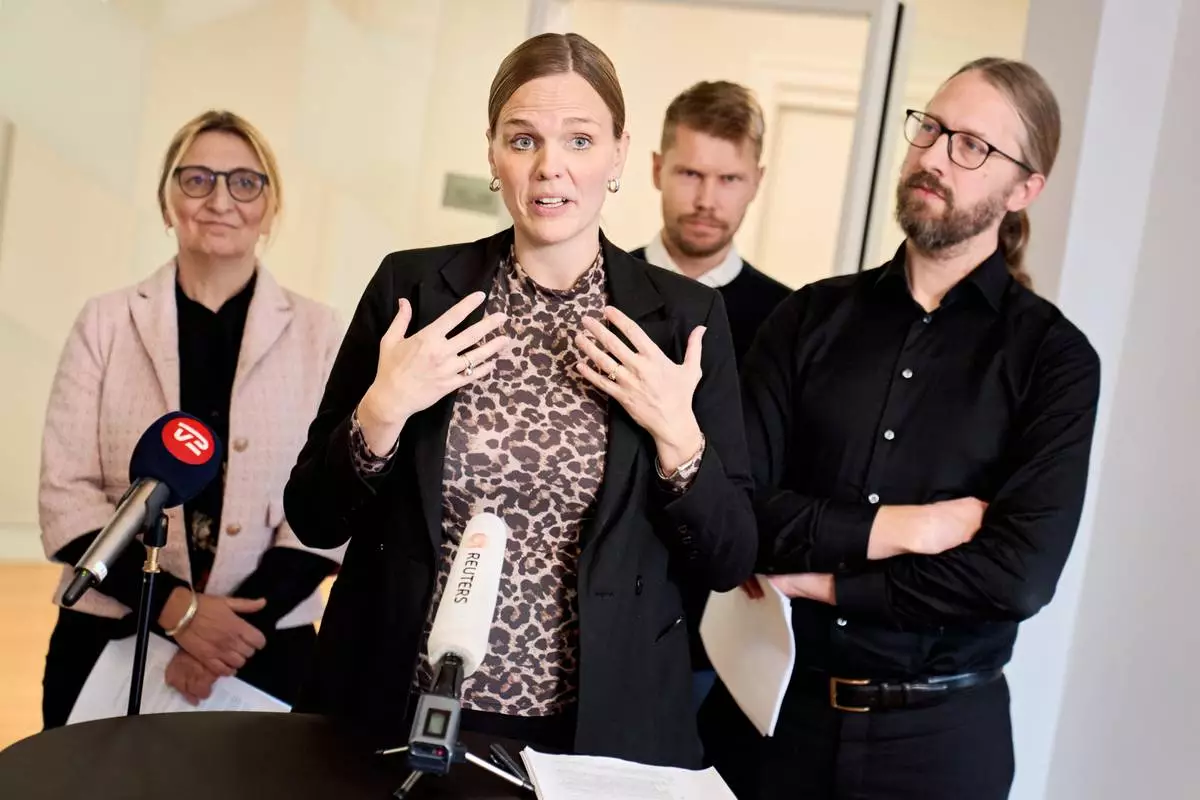
Caroline Stage, Danish Minister for Digitalization and representatives from the agreement parties attends a press conference about a new political agreement for better protection of children and young people online, in Copenhagen, Friday, Nov. 7, 2025. (Thomas Traasdahl/Ritzau Scanpix via AP)
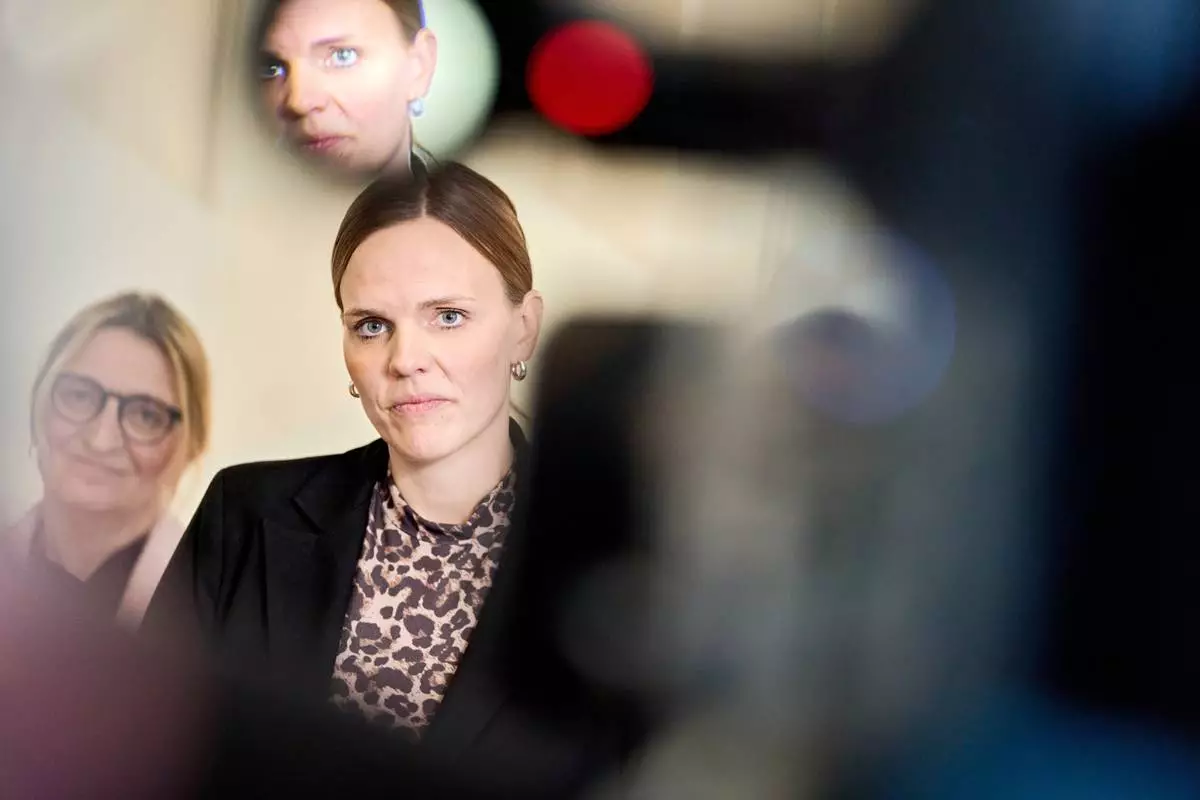
Caroline Stage, Danish Minister for Digitalization and representatives from the agreement parties attends a press conference about a new political agreement for better protection of children and young people online, in Copenhagen, Friday, Nov. 7, 2025. (Thomas Traasdahl/Ritzau Scanpix via AP)
Caroline Stage, Danish Minister for Digitalization and representatives from the agreement parties attends a press conference about a new political agreement for better protection of children and young people online, in Copenhagen, Friday, Nov. 7, 2025. (Thomas Traasdahl/Ritzau Scanpix via AP)
Caroline Stage, Danish Minister for Digitalization and representatives from the agreement parties attends a press conference about a new political agreement for better protection of children and young people online, in Copenhagen, Friday, Nov. 7, 2025. (Thomas Traasdahl/Ritzau Scanpix via AP)
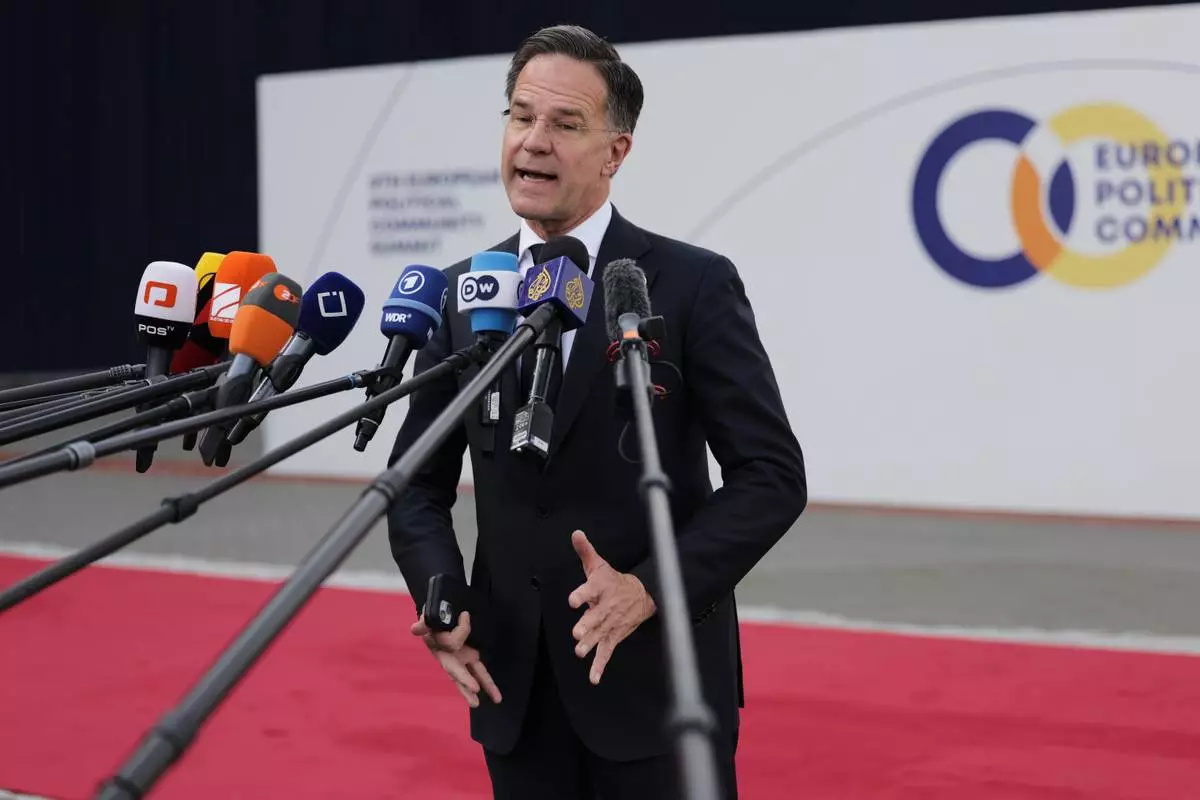
YEREVAN, Armenia (AP) — European leaders on Monday said that U.S. President Donald Trump’s snap decision to pull thousands of U.S. troops out of Germany came as a surprise but is a fresh sign that Europe must take care of its own security.

The Pentagon announced last week that it would pull some 5,000 troops out of Germany, but Trump told reporters on Saturday that “we’re going to cut way down. And we’re cutting a lot further than 5,000.”

He offered no reason for the move, which blindsided NATO, but his decision came amid an escalating dispute with German Chancellor Friedrich Merz over the U.S-Israeli war on Iran, and Trump’s anger that European allies have been reluctant to get involved in the conflict in the Middle East.

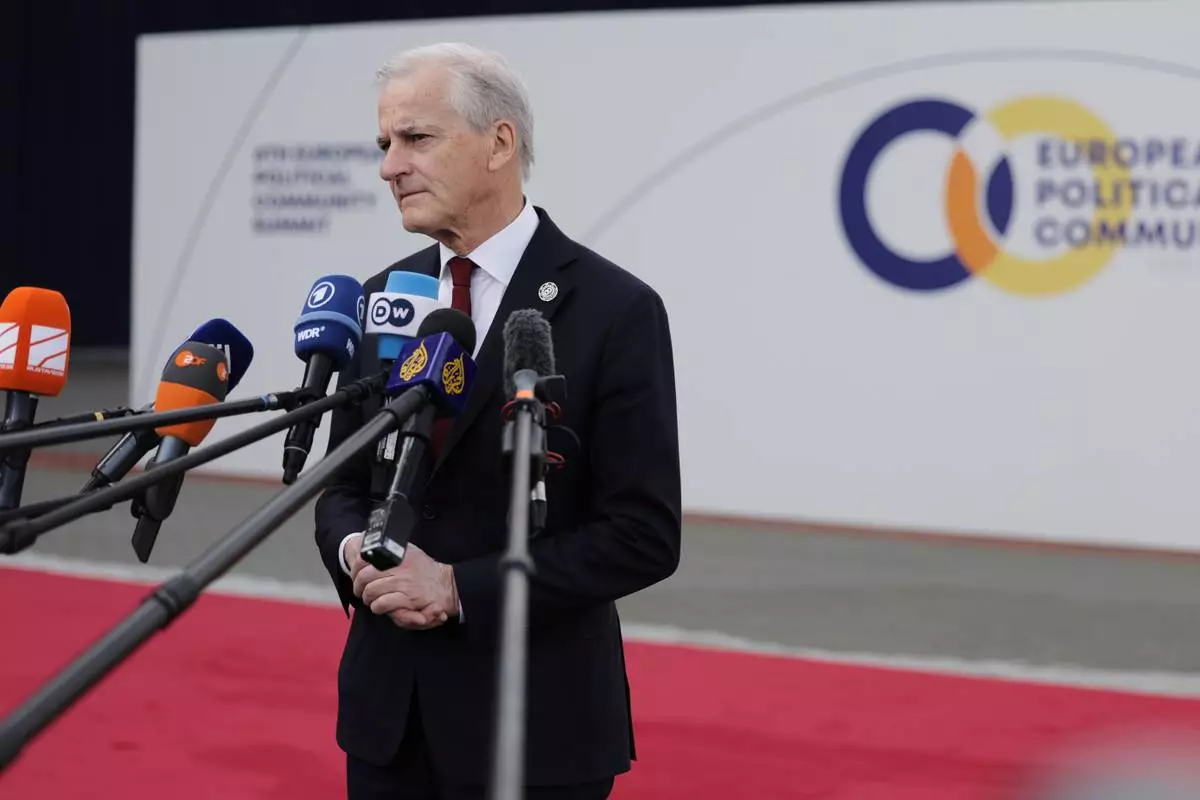
Asked about the decision to pull out 5,000 troops from Germany, Norwegian Prime Minister Jonas Gahr Støre said: “I wouldn’t exaggerate that because I think we are expecting that Europe is taking more charge of its own security.

“I do not see those figures as dramatic, but I think they should be handled in a harmonious way inside the framework of NATO,” he told reporters in Yerevan, Armenia, where European leaders are holding a summit.

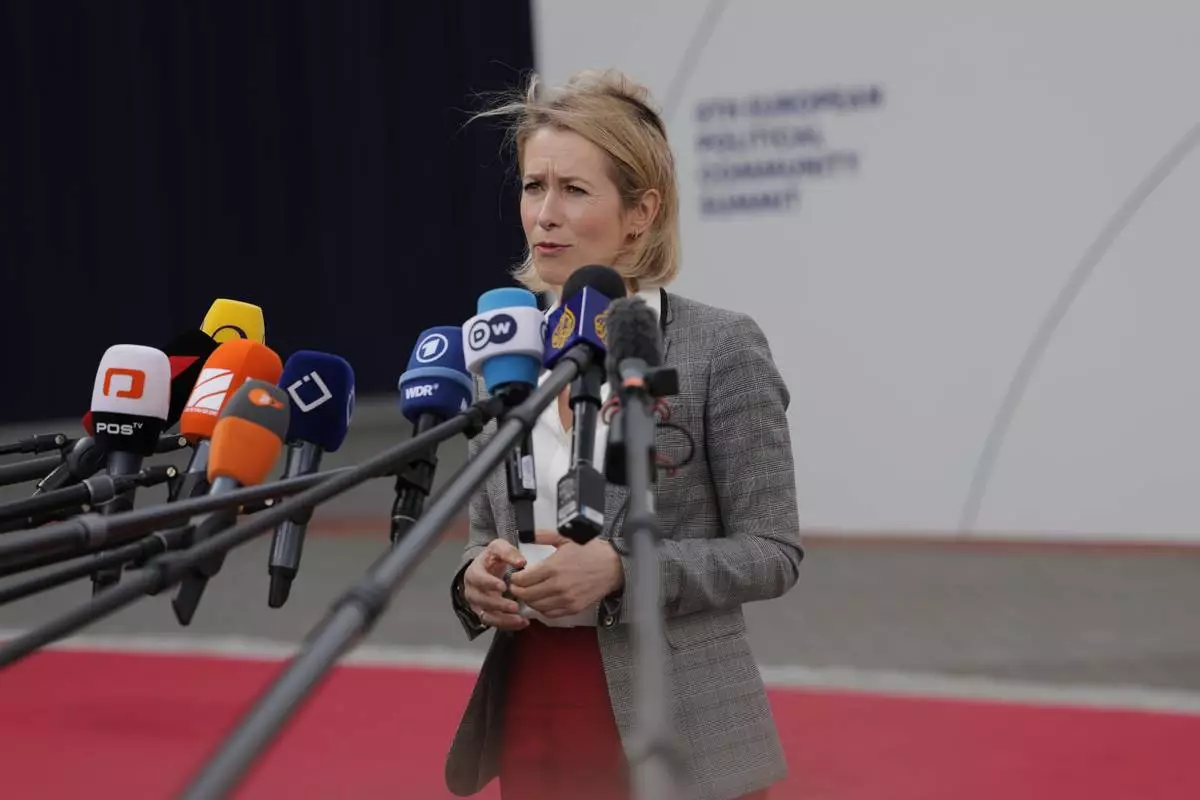
The European Union’s foreign policy chief, Kaja Kallas, said “there has been a talk about withdrawal of U.S. troops for a long time from Europe. But of course, the timing of this announcement comes as a surprise.”

“I think it shows that we have to really strengthen the European pillar in NATO,” she said.

Asked whether she believes that Trump is trying to punish Merz, who said that the U.S. has been humiliated by Iran in talks to end the war, Kallas said: “I don’t see into the head of President Trump, so he has to explain it himself.”

Over the weekend, NATO spokesperson Allison Hart said that officials at the 32-nation military alliance “are working with the U.S. to understand the details of their decision on force posture in Germany.”

European allies and Canada have known since just after he came to office again last year that Trump would pull troops out of Europe — indeed some left Romania in October — but U.S. officials had pledged to coordinate any moves with their NATO allies to avoid creating a security vacuum.

NATO Secretary-General Mark Rutte played down the move, saying that “there has been at this point disappointment on the U.S. side” about European support for the war on Iran.

Notably France, Spain and the U.K. have declined to give U.S. forces free rein to use bases on their territory to attack Iran. Spain has denied them the use of its airspace and bases there for the war.

But Rutte, who has championed Trump’s leadership at NATO despite the U.S. president's criticism of the majority of the allies, said: “I would say the Europeans have heard a message. They are now making sure that all the bilateral basing agreements are being implemented.”

Rutte added that European nations “have decided to pre-position assets, key assets, close to the theater for the next phase.”

He provided no details, but the Europeans have insisted they would not help police the Strait of Hormuz, a key energy trade route, until the war is over.

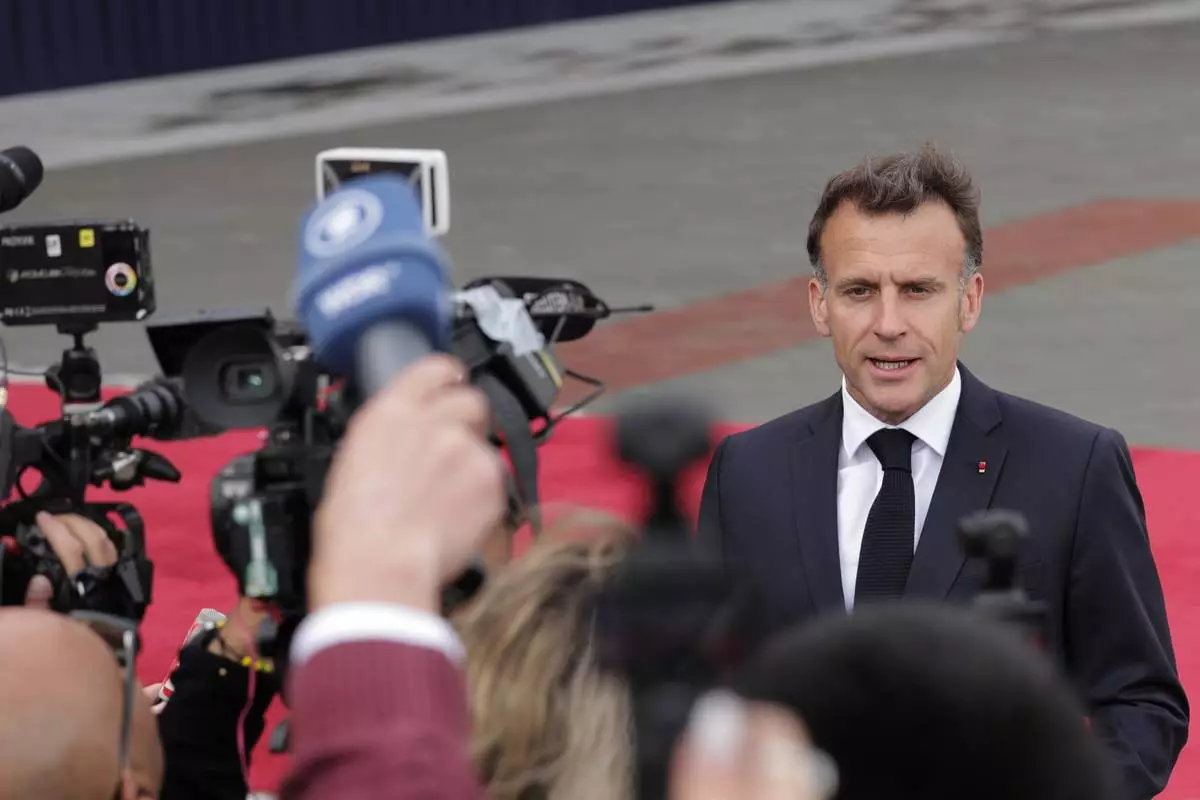
French President Emmanuel Macron said “if the United States is ready to reopen Hormuz, that’s great. That’s what we’ve been asking for since the beginning.” But he underlined that the Europeans are not ready to get involved in any operation “that does not seem clear to us.”

In another sign of friction with Merz, Trump has accused the EU of not complying with its U.S. trade deal and announced plans to increase tariffs next week on cars and trucks produced in the bloc to 25%, a move that would be particularly damaging to Germany, a major automobile manufacturer.

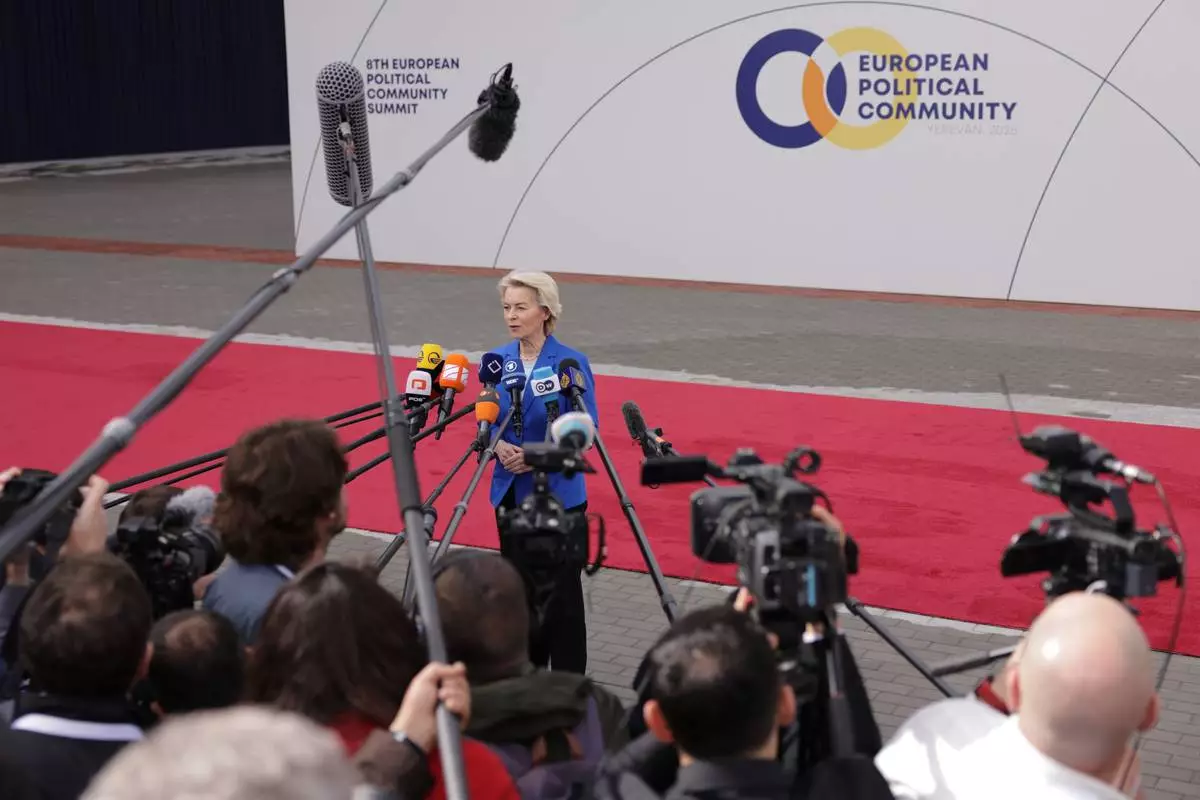
Without mentioning Trump or the United States, European Commission President Ursula von der Leyen listed recent trade deals that the bloc has sealed with Australia and India, and is now working on with Mexico.

“With like-minded friends, you have stable, reliable supply chains and Europe has the biggest network of free trade agreements,” von der Leyen, who is from Germany, told reporters.

Cook reported from Brussels.

French President Emmanuel Macron speaks with the media as he arrives for a meeting of the European Political Community in Yerevan, Armenia, Monday, May 4, 2026. (AP Photo/Anthony Pizzoferrato)

French President Emmanuel Macron speaks with the media as he arrives for a meeting of the European Political Community in Yerevan, Armenia, Monday, May 4, 2026. (AP Photo/Anthony Pizzoferrato)

European Commission President Ursula von der Leyen speaks with the media as she arrives for a meeting of the European Political Community in Yerevan, Armenia, Monday, May 4, 2026. (AP Photo/Anthony Pizzoferrato)

European Commission President Ursula von der Leyen speaks with the media as she arrives for a meeting of the European Political Community in Yerevan, Armenia, Monday, May 4, 2026. (AP Photo/Anthony Pizzoferrato)

European Union foreign policy chief Kaja Kallas speaks with the media as she arrives for a meeting of the European Political Community in Yerevan, Armenia, Monday, May 4, 2026. (AP Photo/Anthony Pizzoferrato)

European Union foreign policy chief Kaja Kallas speaks with the media as she arrives for a meeting of the European Political Community in Yerevan, Armenia, Monday, May 4, 2026. (AP Photo/Anthony Pizzoferrato)

NATO Secretary General Mark Rutte speaks with the media as he arrives for a meeting of the European Political Community in Yerevan, Armenia, Monday, May 4, 2026. (AP Photo/Anthony Pizzoferrato)

NATO Secretary General Mark Rutte speaks with the media as he arrives for a meeting of the European Political Community in Yerevan, Armenia, Monday, May 4, 2026. (AP Photo/Anthony Pizzoferrato)

Norway's Prime Minister Jonas Gahr Store speaks with the media as he arrives for a meeting of the European Political Community in Yerevan, Armenia, Monday, May 4, 2026. (AP Photo/Anthony Pizzoferrato)

Norway's Prime Minister Jonas Gahr Store speaks with the media as he arrives for a meeting of the European Political Community in Yerevan, Armenia, Monday, May 4, 2026. (AP Photo/Anthony Pizzoferrato)

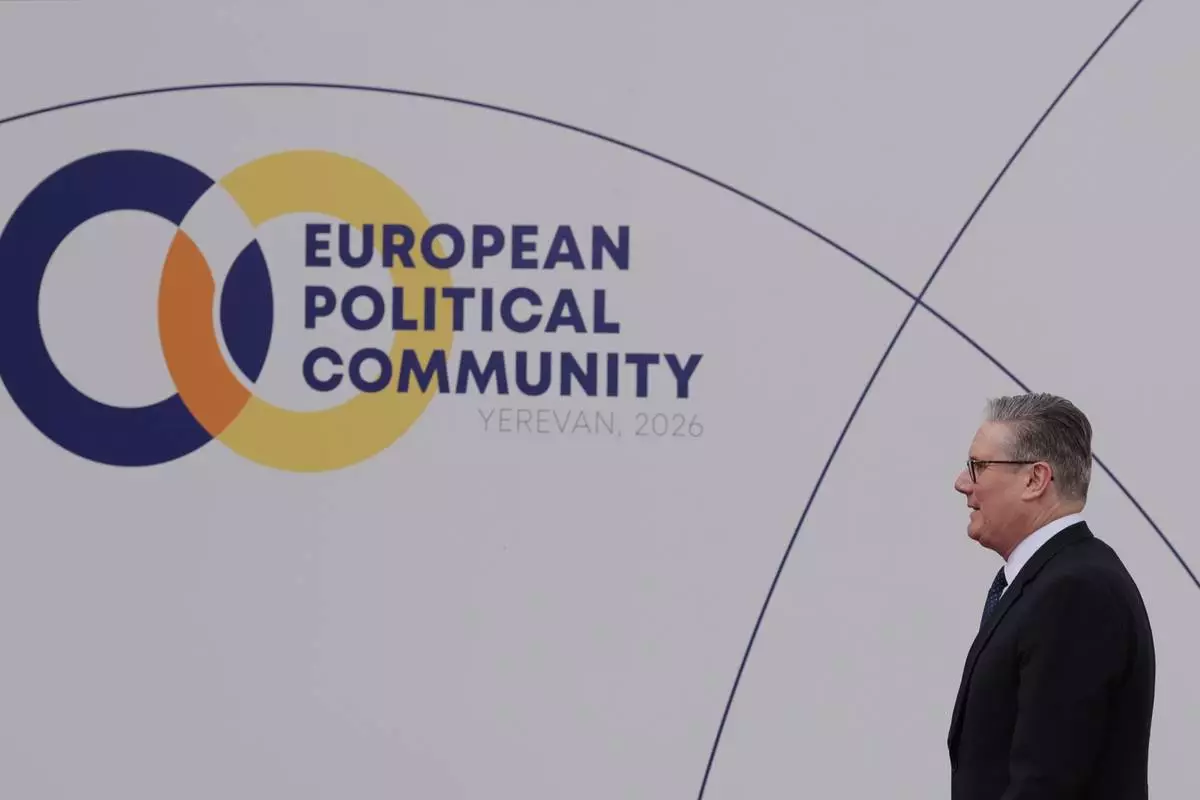
Britain's Prime Minister Keir Starmer arrives for a meeting of the European Political Community in Yerevan, Armenia, Monday, May 4, 2026. (AP Photo/Anthony Pizzoferrato)

Britain's Prime Minister Keir Starmer arrives for a meeting of the European Political Community in Yerevan, Armenia, Monday, May 4, 2026. (AP Photo/Anthony Pizzoferrato)

Recommended Articles