Lead designer of mascots of China's 15th National Games has hailed the rise of homegrown cultural and creative designs as their adorable creations are winning hearts across the country.
China's 15th National Games, hosted for the first time across Guangdong, Hong Kong and Macao, opened on Sunday evening. Xiyangyang and Lerongrong, mascots of the Games, have become instant favorites at the National Games.
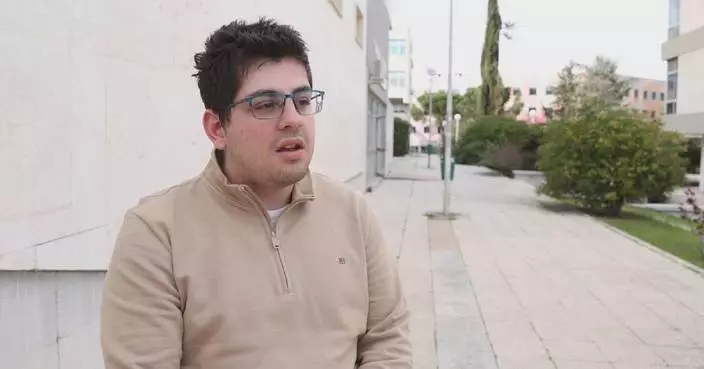
The team that designed them was led by Liu Pingyun, who sees them as embodying the distinct cultural identities of co-hosts Guangdong Province and the Hong Kong and Macao special administrative regions, while also symbolizing the region's shared roots and growing integration.
The mascots were inspired by the Chinese white dolphin, a resident of the Pearl River Estuary known as the "giant panda of the sea" and classified as an endangered species under first-class national protection.
In an interview with China Global Television Network (CGTN), Liu said that the design of China's popular visual symbols including Bing Dwen Dwen, the mascot of Beijing 2022 Olympic Winter Games, and Chinese animated blockbuster "Ne Zha 2", symbolize the rise of the country's cultural creative design over the past decade.
"From Bing Dwen Dwen to Ne Zha to our Xiyangyang and Lerongrong, these visual symbols and IPs are now being created by domestic designers. Twenty years ago that would have been unlikely because back then we mostly imported IPs from abroad or introduced hits through other channels. Over the last 10 years you can see a change. I think that's because the market has reached a new stage," said Liu.
He recalled how the success of mascots like Bing Dwen Dwen opened new avenues, showcasing China's potential in the cultural-creative market.
"When Bing Dwen Dwen became a huge hit, I said it really opened a new chapter for China's cultural-creative industry. It made people see the growing potential and possibilities within our domestic cultural and creative sector. At the time it was a lone phenomenon as many people didn't yet see the broader market possibility. Later Ne Zha also became popular, even though their styles are totally different. So both lines have produced hits, proving that this market is expanding and the public is paying more attention," Liu said.
He said cultural products can create genuine interaction with the public.
"We've tapped into the need for emotional value, as people now have a deeper appreciation for cultural-creative products and such designs, finding it increasingly relatable. They hope our imagery can in turn deliver emotional value, that's one aspect. So we intensified secondary creation through various formats within our animal product line," Liu said.

Mascot designer highlights rise of homegrown cultural design