Various regions across China are integrating healthcare and early education services are, promoting physical and emotional development of toddlers and children by providing personalized care, as part of the country's efforts to support high-quality population development.
As one of China's first pilot cities for infant and toddler care, Meishan City in southwest China's Sichuan Province has established five public childcare institutions that integrate healthcare with early education.
For instance, Meishan Municipal Nursery Institute, which is able to accommodate 140 children, combines medical care with educational services to provide full-day, half-day, and hourly care for children aged zero to three.
"We provide comprehensive care for children aged zero to three, covering their feeding, daily routines, and overall growth and development. If any health issues or illnesses arise while they are at the nursery, our partnered hospitals will offer fast-track access to treatment," said Chen Jie, secretary of the general Party branch of the Meishan Maternal and Child Care Hospital.
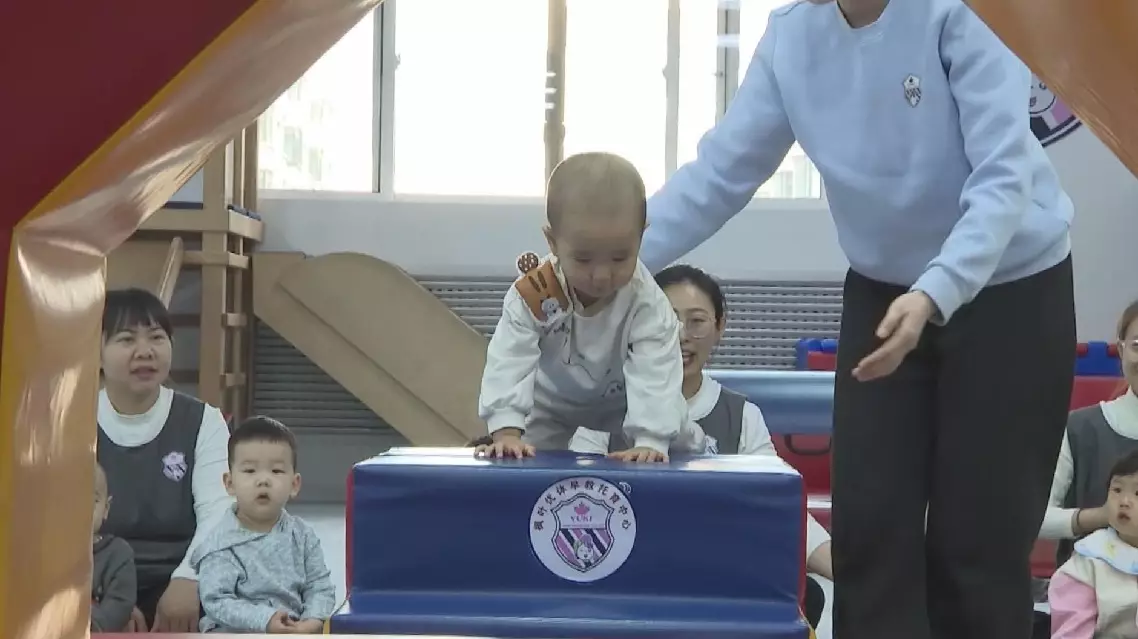
In Shenyang, the capital of northeast China's Liaoning Province, more than a dozen toddlers aged one to three are taking part in sensory integration exercises led by early childhood education teachers at a nursery center, These activities are designed to enhance children's physical coordination and emotional development.
"My child has changed so much! The nursery center offers sensory integration and music classes as part of its early childhood program. The sensory classes have improved his physical coordination and balance, and the music lessons have encouraged him to express himself. He can even give some cute performs to us at home now," said Li Ming, mother of a child at the center.
In addition to structured lessons, the center also provides customized wellness programs for infants, combining traditional massage therapy with dietary adjustments to strengthen children's constitution and support their healthy development.
"We incorporate observation, including visual, auditory, olfactory, tactile and questioning, into daily care, and use facial and tongue diagnosis to create tailored wellness plans. We also teach parents simple massage techniques so that traditional Chinese medicine-based childcare can continue at home," said Wang Hong, a massage therapist at the center.
Integration of healthcare, early education promotes children's healthy development in China
Highlighting the "Future Energy" as a key direction for China's strategic emerging industries, the country's nuclear energy development, guided by its three-step strategy, has seen major strides in the past year, said a member of the 14th National Committee of the Chinese People's Political Consultative Conference (CPPCC).
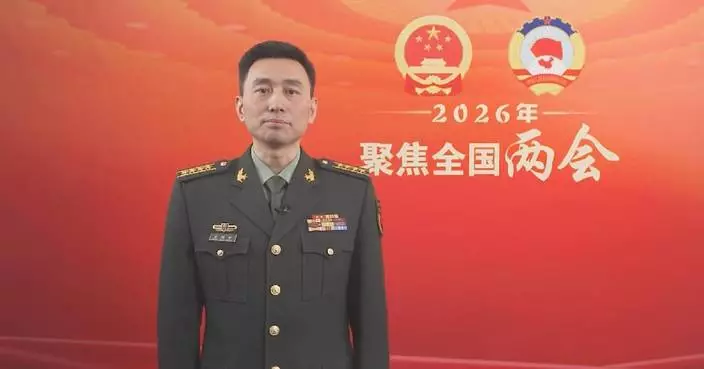
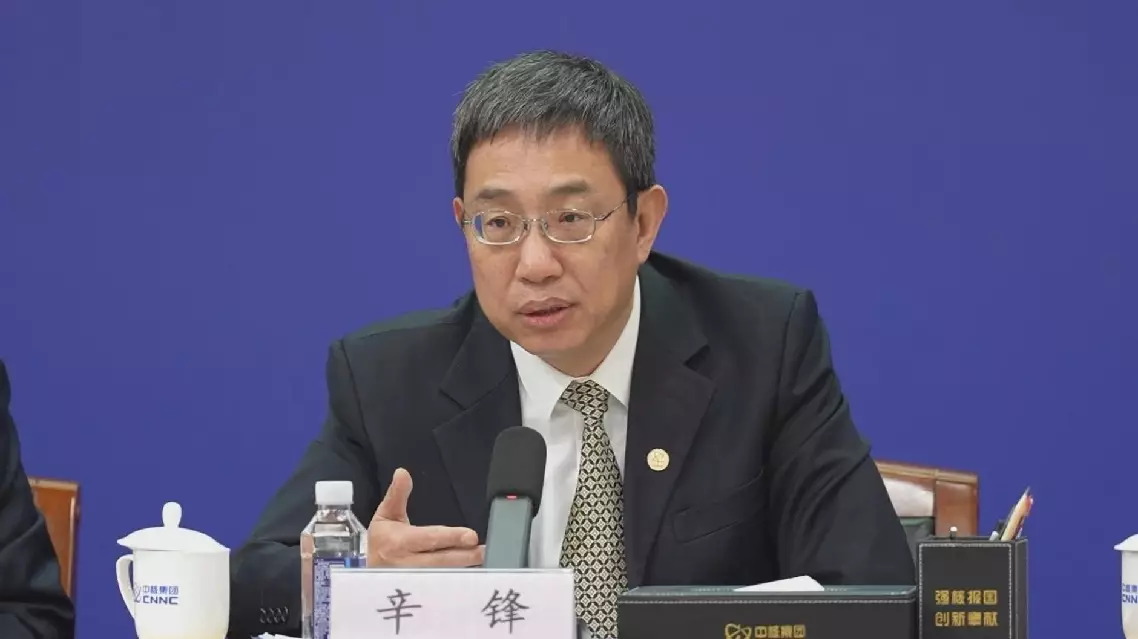
In a recent press briefing, Xin Feng, also deputy general manager of China National Nuclear Corporation (CNNC), updated the media on the progresses China has achieved under the strategy.
"China's three-step strategy for nuclear energy development -- from the thermal reactor to the fast reactor and the fusion reactor -- was formulated in 1983 as a medium- and long-term plan. For the thermal reactor, over the past year, our 2.0 version of the Hualong One technology has been approved. This is a unified and fully self-owned intellectual property based third-generation nuclear power technology solution. And the Linglong One small modular reactor also successfully completed its cold-state functional test last year and is expected to be put into commercial operation this year," he said.
For the second and third steps, Chinese researchers and engineers have achieved milestones in the past year with the government support, Xin noted.
"Then for the fast reactor, last year, a closed-cycle system for an integral fast reactor successfully achieved preliminary standard design. We will continue to solve its engineering technology challenges. As for the fusion reactor, in 2025, with national support, we established the China Fusion Energy Company in Shanghai. And our Huanliu-3, a platform for conducting research and development of fusion technology, made a big stride, with an iron temperature in it achieving 117 million Celsius and an electron temperature reaching 160 million Celsius. We will continue to adhere to the development strategy and focus on technological research and engineering technology development," Xin said.
The fourth session of the 14th NPC and the fourth session of the 14th National Committee of the CPPCC kicked off in Beijing on March 5 and March 4, respectively.
The "two sessions" -- which refer to the annual meetings of China's supreme organ of state power, the National People's Congress (NPC), and its top political advisory body, the National Committee of the CPPCC -- are a key event on the country's political calendar and offer a window into the country's development direction.
China's nuclear energy development makes great strides with three-step strategy: CPPCC member