U.S. stocks ended mixed on Tuesday as investors took a breather following Monday's strong rally.
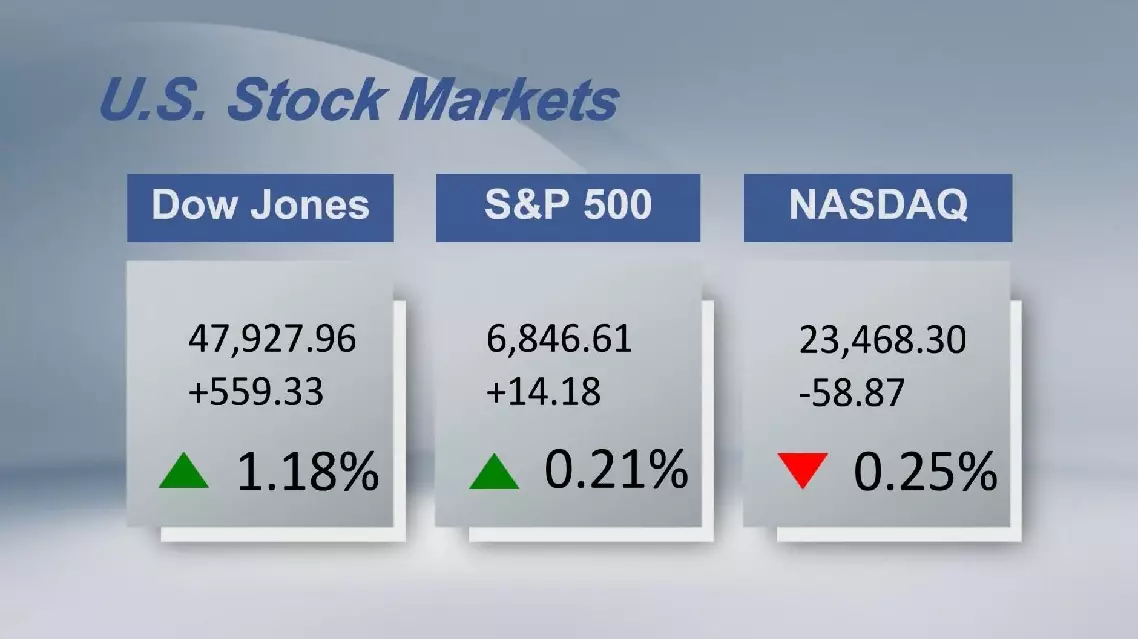
The Dow Jones Industrial Average rose 559.33 points, or 1.18 percent, to 47,927.96. The Standard & Poor's 500 added 14.18 points, or 0.21 percent, to 6,846.61. The Nasdaq Composite Index shed 58.87 points, or 0.25 percent, to 23,468.3.
Ten of the 11 primary Standard and Poor's 500 sectors ended higher, with health and energy leading the gainers by adding 2.33 percent and 1.29 percent, respectively. Meanwhile, technology bucked the trend by dropping 0.72 percent.
Shares of major technology firms came under pressure on Tuesday. Nvidia fell nearly 3 percent after surging over 5 percent the previous session, following reports that Japan's SoftBank had sold its entire stake in the chipmaker.
CoreWeave dropped more than 16 percent after the Nvidia-backed cloud computing company issued weaker-than-expected guidance on Monday.
On the economic front, a new report from ADP showed that the private sector shed more than 11,000 jobs on average per week over the four weeks ending Oct. 25, suggesting signs of cooling in the labor market.
Meanwhile, late Monday, the U.S. Senate approved legislation to fund the government and end the shutdown. The measure now heads to the House of Representatives, which is expected to vote as soon as Wednesday afternoon. U.S. President Donald Trump has said he will sign the bill.

U.S. stocks close mixed as investors pause after rally
U.S. stocks close mixed as investors pause after rally
The escalating military conflict in the Middle East could bring severe economic consequences and job losses to the region which may plunge up to 4 million people into poverty, a United Nations spokesman has warned.
Stephane Dujarric, spokesperson for United Nations Secretary-General Antonio Guterres, outlined the growing concerns surrounding the deepening conflict during a regular press briefing on Tuesday.
Citing data released by the United Nations Development Programme (UNDP), Dujarric said the widening war could result in a devastating economic impact, which will have a profound effect on people's livelihoods.
"I wanted to flag some interesting data just released by the United Nations Development Programme that suggests the military escalation in the Middle East may cost economies in the region from 3.7 to 6 percent of their collective gross domestic product (GDP). This represents a staggering loss of 120 to 194 billion U.S. dollars and exceeds the cumulative regional GDP growth achieved in 2025. This is coupled with an estimated rise in unemployment of up to 4 percentage points or 3.6 million lost jobs, which is more than the total jobs created in the region last year. These reversals will push up to 4 million people into poverty, according to UNDP's analysis," he said.
The conflict erupted on Feb. 28 when the United States and Israeli launched joint airstrikes on the Iranian capital Tehran and several other cities. U.S-Israeli attacks have continued since, targeting key Iranian military command centers, missile installations, energy infrastructures and nuclear facilities.
In response, Iran has launched waves of missile and drone strikes against Israel and U.S. military facilities across the Middle East, including those in Kuwait, Bahrain, Qatar, Jordan, Saudi Arabia and the United Arab Emirates.
The situation shows little sign of de-escalation as Iranian Foreign Ministry spokesman Esmaeil Baghaei said on Monday that a recent truce plan proposed by the United States contains "very excessive, unrealistic and unreasonable" demands.
Wider concerns are also mounting over the disruption to trade and transport along the Strait of Hormuz, a vital shipping passageway that carries about one-quarter of global seaborne oil trade.
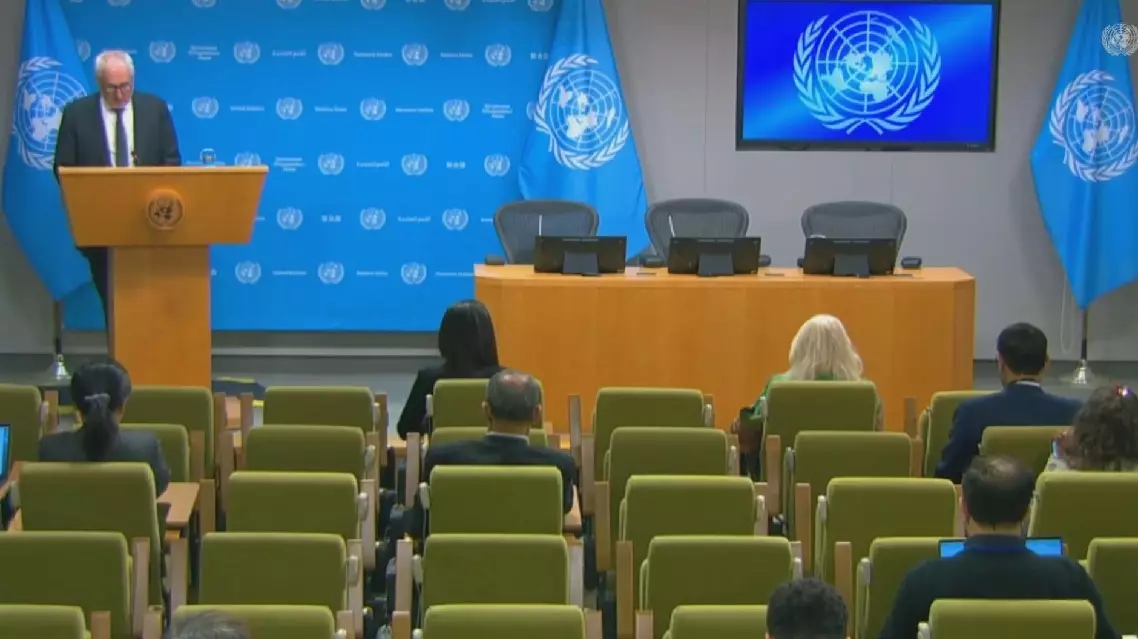
UN spokesman warns up to 4 million could be pushed into poverty by Mideast conflict