Skip to Content Facebook Feature Image

Indoor rock climbing rises as popular after-work escape for China's urban youth

China

China

China

Indoor rock climbing rises as popular after-work escape for China's urban youth

2025-11-12 16:53 Last Updated At:22:57

Indoor rock climbing has become a popular after-work activity among China's urban youth, offering a fresh way to build strength and shake off stress, a trend even noted by former Belgian Prime Minister Yves Leterme during his visit.

Originating from mountaineering, sport climbing has evolved into an Olympic discipline. Indoor formats such as bouldering, speed, and lead climbing are now surging in popularity across China.

As of January 2025, China hosts 811 climbing gyms, a 27.5 percent year-on-year increase, highlighting the sport's rapid rise among young enthusiasts.

"Our gym opened at the end of 2023. As climbing surges in popularity in recent two years, many young people become fond of the sport, taking it as a way to unwind after work," said Shi Jiacheng, coach at a climbing gym in Shanghai.

Lu Yao, a 26-year-old physics teacher, is one such enthusiast, part of a growing community reaching new heights. Just two years ago, Lu Yao scaled the world's tallest indoor climbing wall in eight minutes and earned a Guinness world record for her achievement.

The towering 51.28-meter structure is located inside a bustling shopping mall in Shanghai. Lu Yao revisited the site and climbed the wall once again.

Leterme, invited to observe the scene, was captivated.

"I found the climb very impressive both in speed and agility. Speed, for instance, I tried to follow first from down the wall. but then I had to take the automatic stairs. It was very difficult to catch up with Yao," he said.

For Lu Yao, each climbing is a challenge not only to her physical limit, but also willpower.

"In the last ten meters, I could feel my body reaching its limit. Climbing became so hard that the ultimate question came to me: to keep going or to stop. Only I could answer that, because I could hear nothing but my own breath and heartbeat. And in the end, I chose to keep climbing and I reached the top," Yao recalled.

"It's a striking combination of audacity, courage, the will to reach the top, the force of the physical force. Such a small girl reaching the top after only eight minutes," Leterme said.

The sport's demands: stamina, courage, and relentless training, mirror the resilience Lu Yao credits for personal growth.

"In climbing, success doesn't come every time. Sometimes, it takes several, even dozens of attempts. Through this process, how to face failure, how to learn from it, and how to grow, that's the best lesson climbing gives me," she said.

Leterme tied the social phenomenon to broader national vitality, highlighting how urban renovations provide accessible spaces for youth activities.

"It's very nice to see how the renovation of the embankment of the Huangpu River offers lots of possibilities for especially young people to engage in sporting activities. And this is very important because as we know: if the youth is strong, the country is strong," he said.

Indoor rock climbing rises as popular after-work escape for China's urban youth
Indoor rock climbing rises as popular after-work escape for China's urban youth

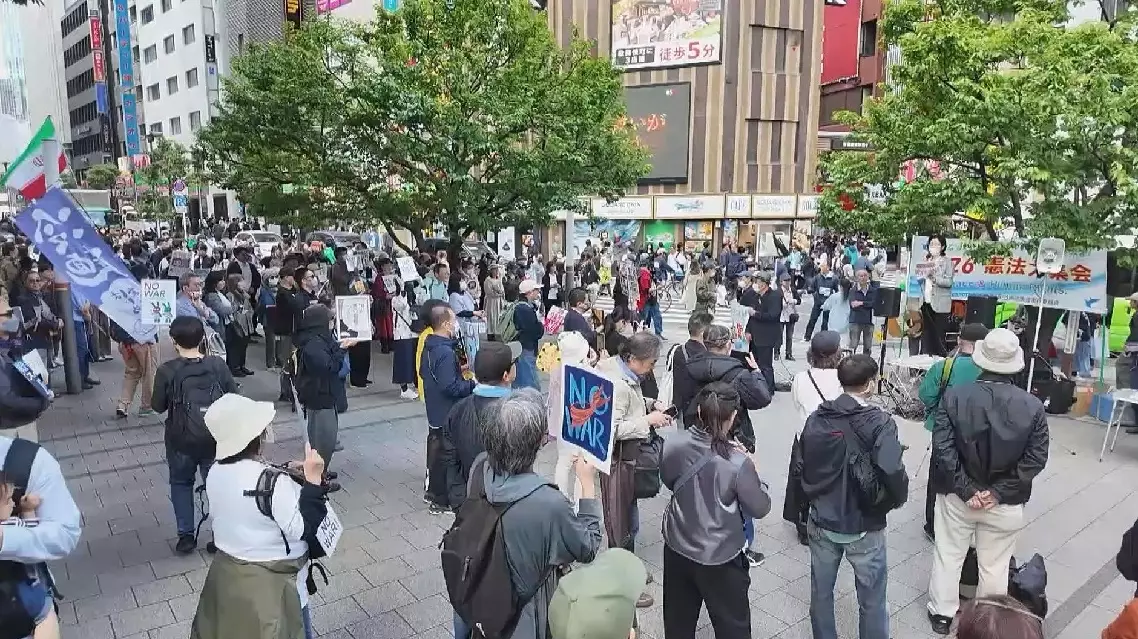
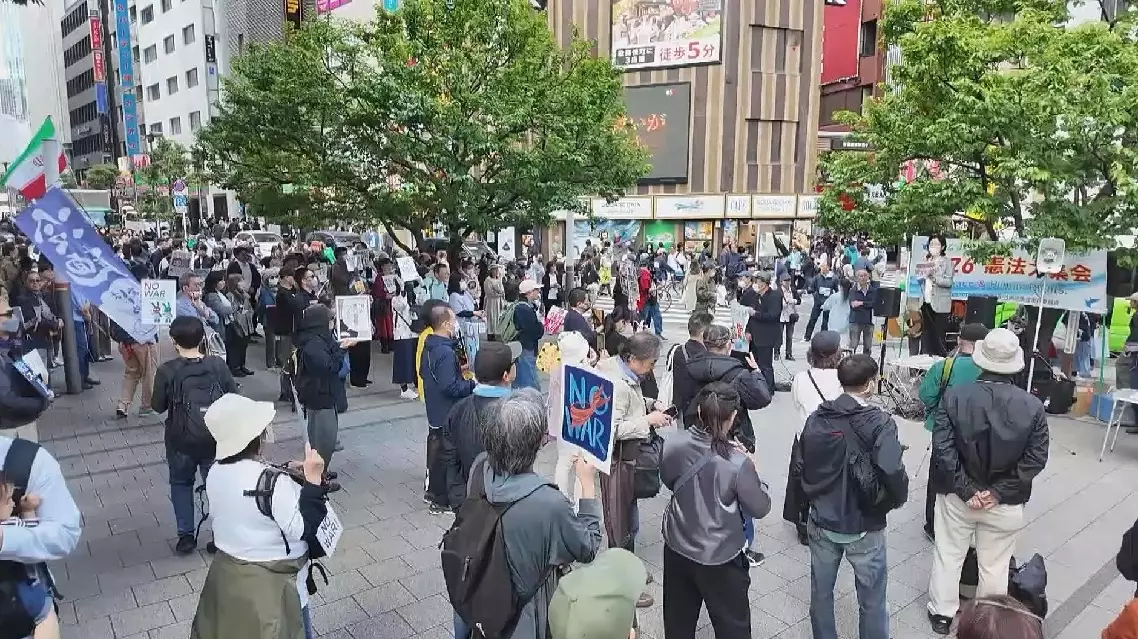
Japanese citizens took to the streets of Tokyo's Shinjuku district on Saturday, voicing strong opposition to Prime Minister Sanae Takaichi's administration for lifting the ban on lethal weapons exports, advancing a "National Intelligence Agency" bill, and pushing for the revision of the country's postwar pacifist constitution.

On Tuesday, the Japanese government, led by Prime Minister Sanae Takaichi, officially revised the "three principles on transfer of defense equipment and technology" and their implementation guidelines.

The revisions scrap the restrictions that had limited arms exports to five non-combat categories, allow, in principle, the export of lethal weapons, permit transfers to nations engaged in active conflict under specified circumstances, and sideline parliament from the decision-making process, crossing a line that previous governments had at least nominally upheld.

"Allowing the export of lethal weapons and even attempting to possess nuclear arms, the Takaichi administration is leading Japan toward war, despite our postwar commitment of never starting a war again. Many people are worried. This must be stopped," said a protester.

The cornerstone of Japan's pacifist constitution is Article 9, which renounces the nation's right to engage in war or to resort to military force to resolve international conflicts. For decades, this article has been a fundamental constraint on Japan's military endeavors.

"I am firmly opposed to amending the Constitution. Takaichi claims 'the time has come,' but that's just her own decision. Without Article 9 of the Constitution, Japan could be swept into America's wars. That must not happen," said another participant.

"Japan once invaded other Asian countries and has maintained a pacifist constitution ever since. But now the government has arbitrarily decided to lift the ban on exporting lethal weapons without sufficient parliamentary debate. It's unacceptable," said another demonstrator.

"If we abandon our stance as a peaceful nation under the constitution, it would be absolutely intolerable. Thanks to Article 9, Japan hasn't waged war or been pulled into conflict. For Japan's place in the international community, Article 9 must not be changed," said another protester.

Tokyo protesters oppose Takaichi’s lethal weapons export, constitution revision plans

Tokyo protesters oppose Takaichi’s lethal weapons export, constitution revision plans

Tokyo protesters oppose Takaichi’s lethal weapons export, constitution revision plans

Tokyo protesters oppose Takaichi’s lethal weapons export, constitution revision plans

Recommended Articles