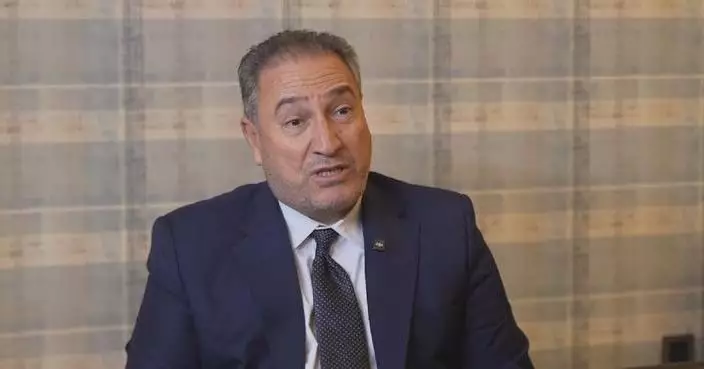
Volunteers in the Macao competition zone of China's ongoing 15th National Games are playing their part in the smooth running of the event, making valuable contributions in their own ways while also getting as close as possible to the sporting action.
Among the more than 3,500 volunteers serving both on and off-court roles in Macao is 19-year-old Wu Liheng, who is performing an important duty during matches at the women's volleyball venue, as he rushes onto court to dry the playing surface between points to ensure the safety of the players.
The volunteers, known as "court wipers," rapidly clean sweat left by athletes on the court, rising, sprinting, kneeling, wiping with both hands, and quickly retreating, completing the entire sequence within eight seconds.
"I also play volleyball at my university. We must ensure competing players can proceed smoothly and avoid injuries, which is the most important," said Wu Liheng, a volunteer court wiper at the volleyball court of the 15th National Games in Macao.
Wu currently studies at the University of Macau and has loved volleyball since childhood. When volunteer recruitment began for the Macao competition region of the 15th National Games, Wu signed up early, passed the selection process, and became a court wiper serving at the women's volleyball matches.
To perform well as a court wiper, Wu began targeted intensive training three months ago. Wu said each match requires hundreds of sprints, kneelings, and turnarounds, posing severe tests to his physical strength and endurance.
"If there's sweat on the court, we have to watch for the shiny spots, and it's easier to see them when we kneel. After we finish wiping, players will thank us. It feels great to have helped them," said Wu.
Wu was born not long after the time of Macao's return to the motherland in 1999. He said that he had witnessed Macao's rapid development and progress after integration with the mainland throughout his growth.
Currently, the deep integration and collaborative development of the Guangdong-Hong Kong-Macao Greater Bay Area enable young Macao residents like him to participate in national-level major events and showcase the spirit of Macao's youth to the whole nation. This sense of responsibility and honor constantly inspires him to serve each well in the match.
"The National Games make us particularly proud. Macao is one of the hosts, so many of us signed up as volunteers, making us feel more connected to the Greater Bay Area and more engaged in national development," said Wu.
The National Games are China's largest multi-sport event. Hosted for the first time by Guangdong Province, Hong Kong, and Macao Special Administrative Regions, it runs from November 9 to 21. The Games have attracted over 14,000 elite athletes from across the nation.
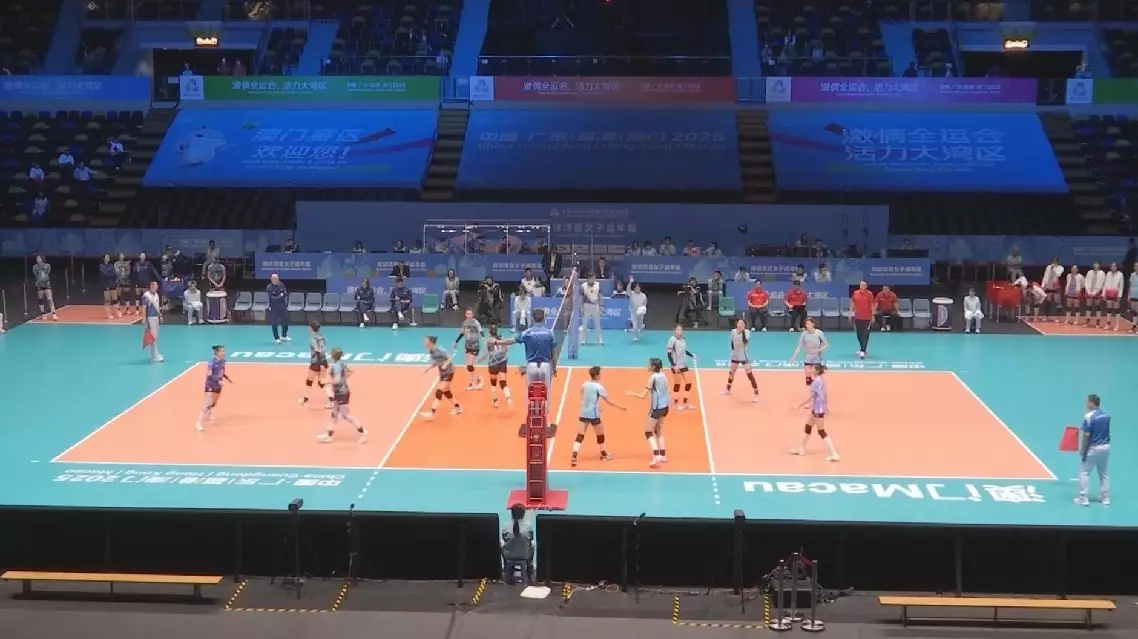
Volunteer at Macao's National Games competition guards players as swift court wipers
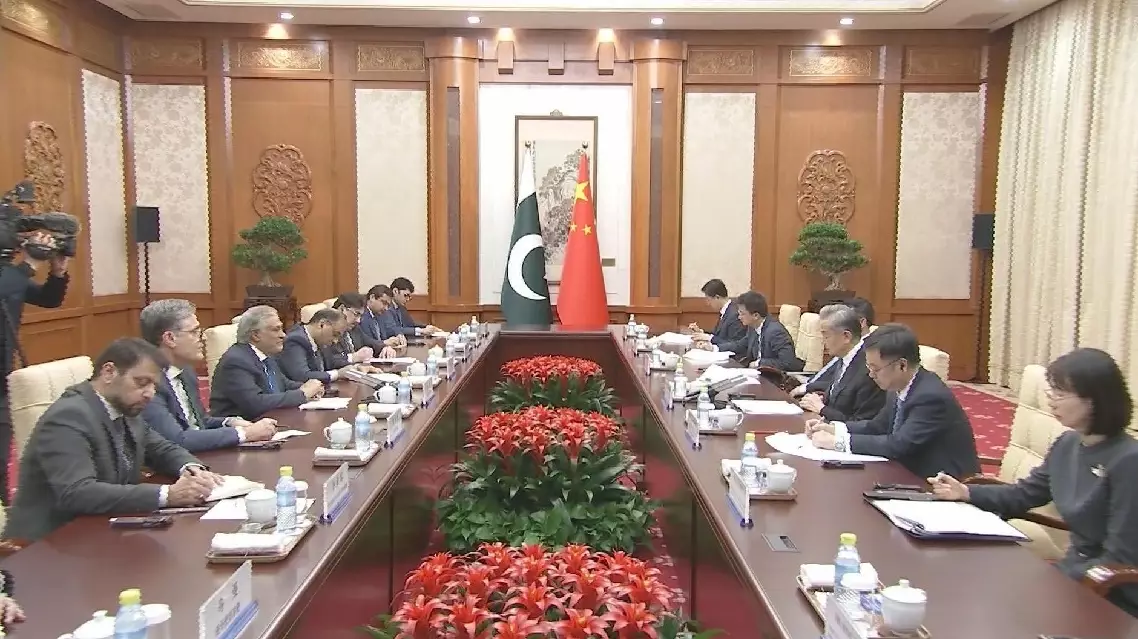
Chinese Foreign Minister Wang Yi said on Tuesday that mediation efforts of the Pakistani side regarding the Middle East tensions are in the common interests of all parties.
Wang, also a member of the Political Bureau of the Communist Party of China Central Committee, made the remarks in his talks with Pakistani Deputy Prime Minister and Foreign Minister Mohammad Ishaq Dar in Beijing.
During their talks, the two sides exchanged views on current international issues and regional conflicts.
Wang welcomed the visit of the Pakistani side to Beijing for discussion on easing tensions in the Middle East, just after its holding of a quadrilateral foreign ministers' meeting in Islamabad.
He said China supports and looks forward to Pakistan playing a unique and important role in easing the situation and resuming peace talks. This process is no easy task, and Pakistan's mediation efforts are in line with the common interests of all parties, Wang added.
He noted China is willing to make joint efforts with Pakistan to end the hostilities as soon as possible, create opportunities for peace and open the window for peace talks.
On bilateral ties, Wang said this year marks the 75th anniversary of the establishment of diplomatic relations between China and Pakistan, calling on both sides to implement the important consensus reached by the leaders of the two countries and constantly advance the building of a China-Pakistan community with a shared future.
For his part, Dar said the Pakistan-China friendship is precious and deeply rooted in people's hearts, adding that Pakistan is willing to work with China to promote the continuous development of the all-weather strategic cooperative partnership between the two countries.
Dar thanked China for supporting Pakistan's mediation of the situation in Iran, adding that the current conflict has disrupted international energy supplies and caused heavy damage to developing countries.
Noting that solutions can only be found through negotiation, Dar said Pakistan is willing to strengthen communication and coordination with China to push all parties to start peace talks as soon as possible and restore regional peace.
The two sides also put forward a five-point initiative for restoring peace and stability in the Gulf and the Middle East region:
I. Immediate cessation of hostilities: China and Pakistan call for immediate cessation of hostilities and utmost efforts to prevent the conflict from spreading. Humanitarian assistance must be allowed to all war-affected areas.
II. Start of peace talks as soon as possible. Sovereignty, territorial integrity, national independence and security of Iran and the Gulf states should be safeguarded. Dialogue and diplomacy is the only viable option to resolve conflicts. China and Pakistan support the relevant parties in initiating talks, with all parties committing to peaceful resolution of disputes, and refraining from the use or the threat of use of force during peace talks.
III. Security of nonmilitary targets. The principle of protecting civilians in military conflict should be observed. China and Pakistan call on parties to the conflict to immediately stop attacks on civilians and nonmilitary targets, and fully adhere to International Humanitarian Law, and stop attacking important infrastructure, including energy, desalination and power facilities, and peaceful nuclear infrastructure, such as nuclear power plants.
IV. Security of shipping lanes. The Strait of Hormuz, together with its adjacent waters, is an important global shipping route for goods and energy. China and Pakistan call on the parties to protect the security of ships and crew members stranded in the Strait of Hormuz, allow the early and safe passage of civilian and commercial ships, and restore normal passage through the Strait as soon as possible.
V. Primacy of the United Nations Charter. China and Pakistan call for efforts to practice true multilateralism, to jointly strengthen the primacy of the United Nations, and to support the conclusion of an agreement for establishing a comprehensive peace framework and realizing lasting peace based on the purposes and principles of the UN Charter and international law.
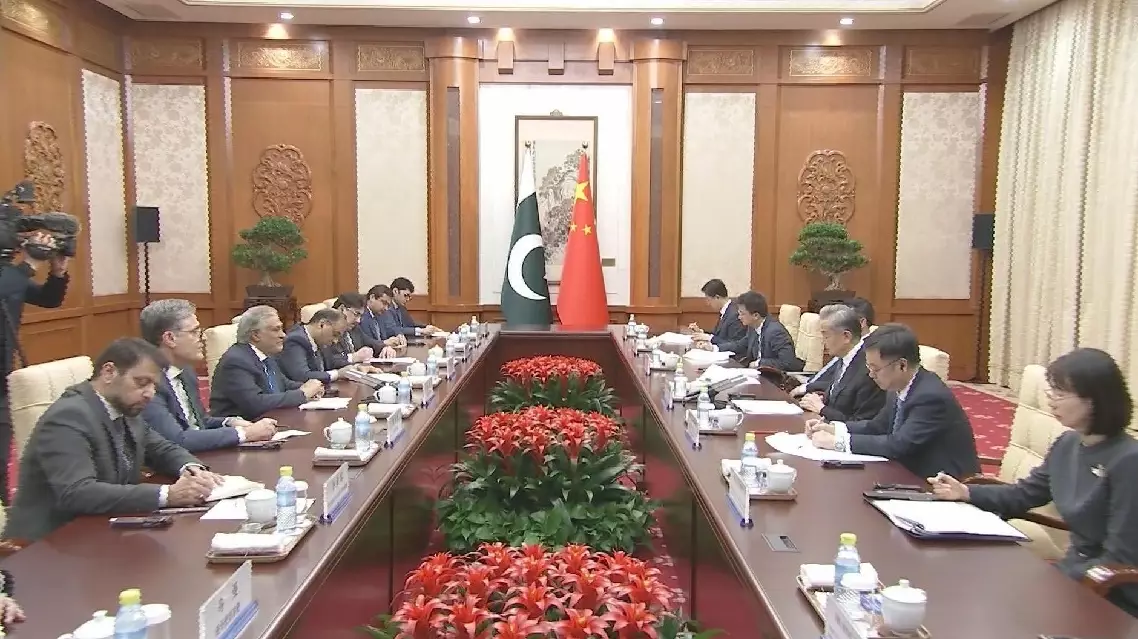
Pakistan's mediation efforts in common interests of all parties: Chinese FM
Pakistan's mediation efforts in common interests of all parties: Chinese FM