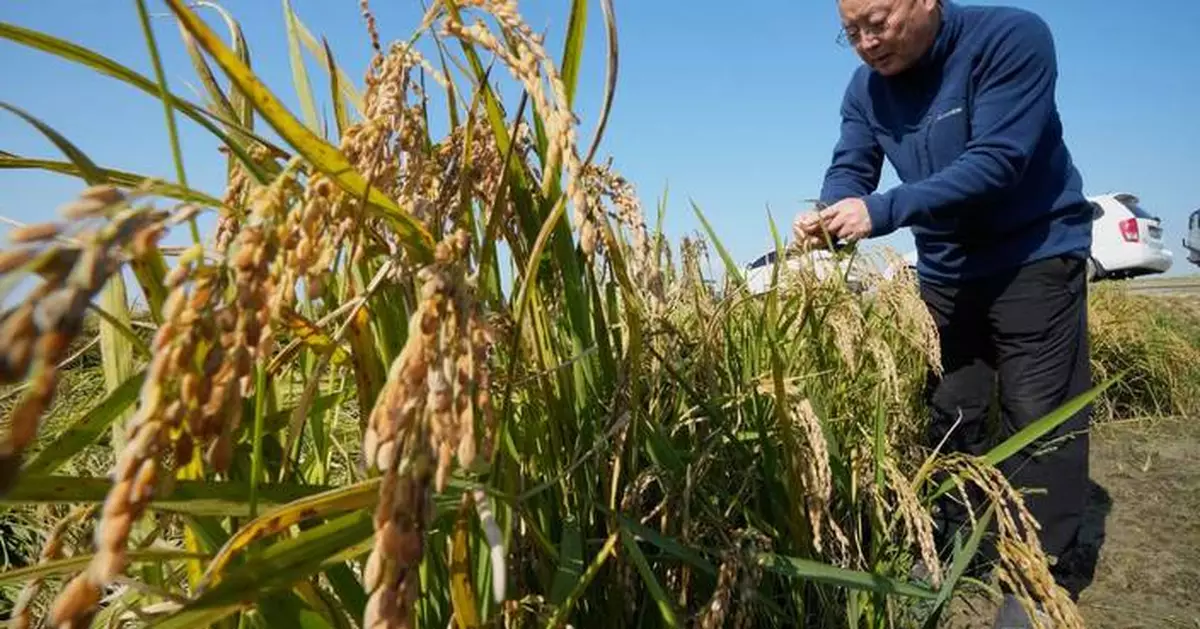
SEOSAN, South Korea (AP) — Hwang Seong-yeol stood at the edge of a golden field, watching nervously as a combine harvester crawled through his rice, churning up mud and stalks. Its steady hum filled the damp autumn air as grain poured into a truck waiting at the other end of the muddy paddy.
It was the final day of what Hwang said was one of his toughest seasons in three decades of farming. He and other farmers feel helpless against increasingly erratic weather that they link to climate change and damage to their crops. It has complicated their work and cast uncertainty over their futures.
Click to Gallery
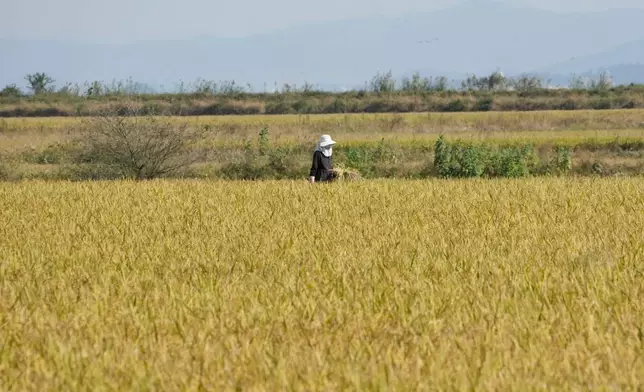
A farmer works at a rice paddy in Seosan, South Korea, Monday, Oct. 20, 2025. (AP Photo/Ahn Young-joon)

Hwang Seong-yeol, a South Korean rice farmer, shows crops damaged by a fungal disease that spread during an abnormally rainy autumn at his rice paddy in Seosan, South Korea, Monday, Oct. 20, 2025. (AP Photo/Ahn Young-joon)
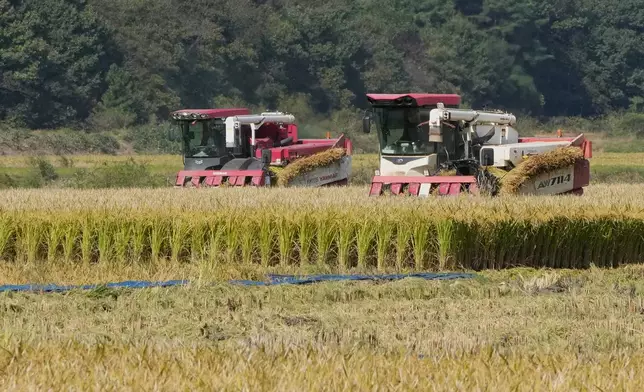
Farmers use combine harvesters at a rice paddy of farmer Hwang Seong-yeol in Seosan, South Korea, Monday, Oct. 20, 2025. (AP Photo/Ahn Young-joon)
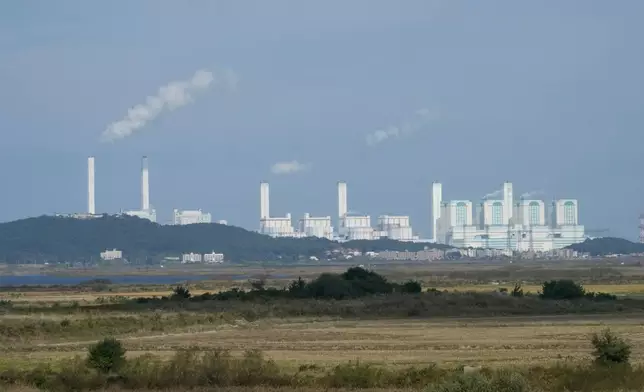
A general view of the Dangjin Power Station is seen in Dangjin, South Korea, Monday, Oct. 20, 2025. (AP Photo/Ahn Young-joon)
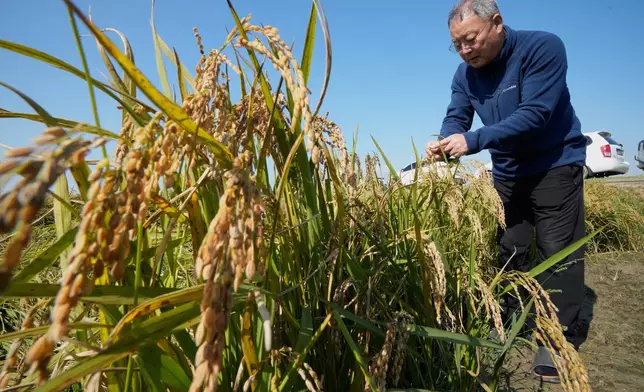
Hwang Seong-yeol, a South Korean rice farmer, watches crops damaged by a fungal disease that spread during an abnormally rainy autumn at his rice paddy in Seosan, South Korea, Monday, Oct. 20, 2025. (AP Photo/Ahn Young-joon)
Hwang is one of five South Korean farmers who recently sued the state utility Korea Electric Power Corporation and its power-generating subsidiaries, alleging that their reliance on coal and other fossil fuels has accelerated climate change and damaged their crops.
The lawsuit raises questions about whether power companies’ role in driving climate change, and the resulting agricultural losses, can be quantified. It is the first of its kind in South Korea, said Yeny Kim, a lawyer with the Seoul-based nonprofit Solutions for Our Climate, who is handling the case.
The case underscores the challenges South Korea, a manufacturing power that industrialized long after the Western nations now pressuring others to abandon fossil fuels, faces in transitioning to cleaner energy.
Hwang's fields are on a reclaimed coastal plain along South Korea’s western sea, where glimmering waterways crisscross dark, rich soil and flocks of migratory geese drift overhead, moving like a giant, living quilt.
A remarkably rainy September and October followed a bitterly cold spring that stunted plant growth. Summer floods caused further damage before the wet autumn bred fungal disease.
Hwang would have preferred to harvest in drier weather but had to do so sooner as relentless rains pushed rice stalks into the soil, causing the ripe grains to sprout. That day in late October was only the second dry day after 18 straight days of rain.
“It’s really unsettling – we know how much rice we should normally get from 30,000 pyeong (25 acres) of land, but the yield has been steadily declining every year,” said Hwang, who expects this year’s harvest to be 20% to 25% below normal.
“We began to question why it’s always the farmers — who haven’t done anything wrong — that end up suffering the consequences of the climate crisis. Shouldn’t we be demanding something from those who are actually causing it?”
Farmers are “inherently vulnerable" to climate change, said Kim, the lawyer.
In an annual climate report in April, South Korea’s government detailed how a year of extreme weather events in 2024, the country’s hottest year ever, triggered a series of “agricultural disasters” of heavy summer rains that destroyed thousands of hectares (acres) of cropland, followed by weeks of intense heat that wrecked still more crops, mostly rice.
Kim and her colleagues decided to file the lawsuit, which represents plaintiffs from across South Korea, after speaking with Hwang and others at farmers markets.
They say KEPCO, which holds a monopoly on electricity transmission and fully owns its subsidiaries, should bear some blame for the destabilized weather, citing what they say are excessive carbon emissions and a lagging transition to renewable energy.
From 2011-2022, the companies produced about 30% of South Korea’s greenhouse gas emissions and roughly 0.4% of global emissions, based on Kim's analysis of publicly available data.
“Therefore, they should also bear 0.4% of the responsibility for the farmers’ losses,” Kim said.
The lawsuit seeks initial damage claims of 5 million won ($3,400) per client, an amount likely to be adjusted as the case proceeds. The plaintiffs are also symbolically seeking 2,035 won ($1.4) each to urge the government to phase out coal power plants by 2035, ahead of its 2040 target.
Renewable energy accounted for only 10.5% of the national energy mix in 2024, and the five KEPCO subsidiaries relied on coal for more than 71% of the electricity they produced that year, according to government data.
KEPCO told The Associated Press it considers carbon reduction a key responsibility, citing its goal of cutting emissions 40% by 2030 from 2018 levels. But it declined to comment further on the lawsuit, saying it “cannot share information that could influence the verdict.”
Experts say mounting debt, now at over 200 trillion won ($137 billion), that accumulated over decades of government policies that kept electricity rates low for households and industries, limits the utility's ability to expand and modernize the power grid or invest in renewable energy.
Yun Sun-Jin, a professor at Seoul National University, said the lawsuit has symbolic value but questioned whether blame could fall solely on KEPCO, given that everyone benefits from its cheap electricity.
It would be difficult to prove the utility directly caused farm losses, when climate change is a “global problem,” she said.
It does draw attention to South Korea's need for a more effective approach to renewable energy, Yun said, including deregulating solar investments, expanding sources such as offshore wind, and ending KEPCO’s monopoly over electricity transmission to encourage other competitors with diverse technologies.
South Korea is expected to reach its target of 32.95% renewable energy by around 2038 — far slower than the 33.49% average in 2023 among developed economies in the Organization for Economic Cooperation and Development, according to the Institute for Energy Economics and Financial Analysis.
Some experts, including Yun, warn that South Korea’s slow shift to renewable energy could hinder its ambitions in advanced semiconductors and artificial intelligence, as its tech giants face global pressure to operate on clean power.
“Climate change and carbon neutrality are not just environmental concerns — they are economic issues, ultimately about jobs and our survival,” Yun said.
The impact of extreme weather resulting from climate change is far reaching in South Korea.
Farmers now face higher costs and must use more labor to produce the same or lower yields.
Ma Yong-un, an apple farmer in the southeastern town of Hamyang, said he is using more pesticides as pests and diseases become harder to control due to prolonged heat and humidity. The apples that thrived in cooler weather during his father's days are less plentiful and tasty, he said.
From tangerine farmers on Jeju island to strawberry growers in Sancheong to the southeast, farmers are trying to devise ways to survive.
For the first time since he began farming in 2011, Ma coated all the fruit on his 2,200 trees with a mixture of copper sulfate and lime to prevent fungal infections and skin damage from intense sunlight.
He began to think seriously about climate change in 2018, when a heavy April snowstorm damaged flower buds, leading to one of his worst harvests. Farming is becoming harder each year and he constantly wonders how much longer he can carry on.
“I think about that every day,” said Ma, who is raising two teenage boys with his wife. “The biggest concern is my children.”
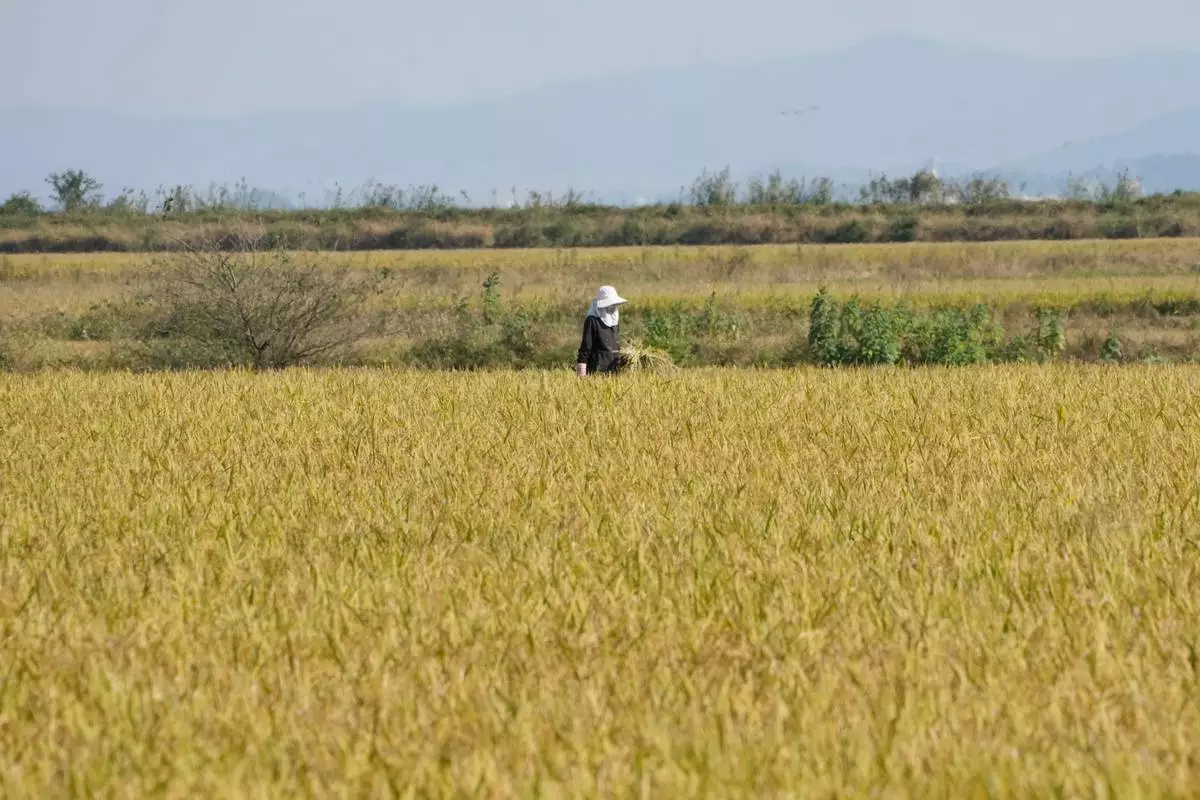
A farmer works at a rice paddy in Seosan, South Korea, Monday, Oct. 20, 2025. (AP Photo/Ahn Young-joon)
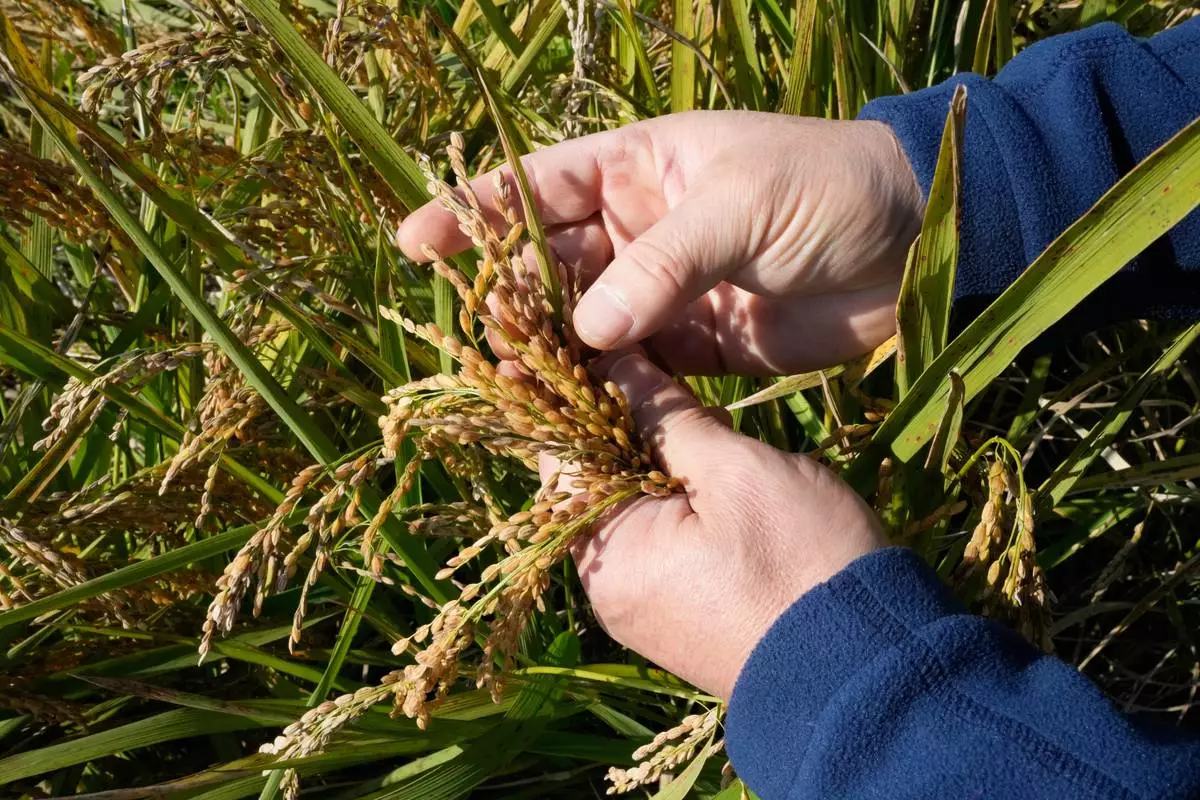
Hwang Seong-yeol, a South Korean rice farmer, shows crops damaged by a fungal disease that spread during an abnormally rainy autumn at his rice paddy in Seosan, South Korea, Monday, Oct. 20, 2025. (AP Photo/Ahn Young-joon)
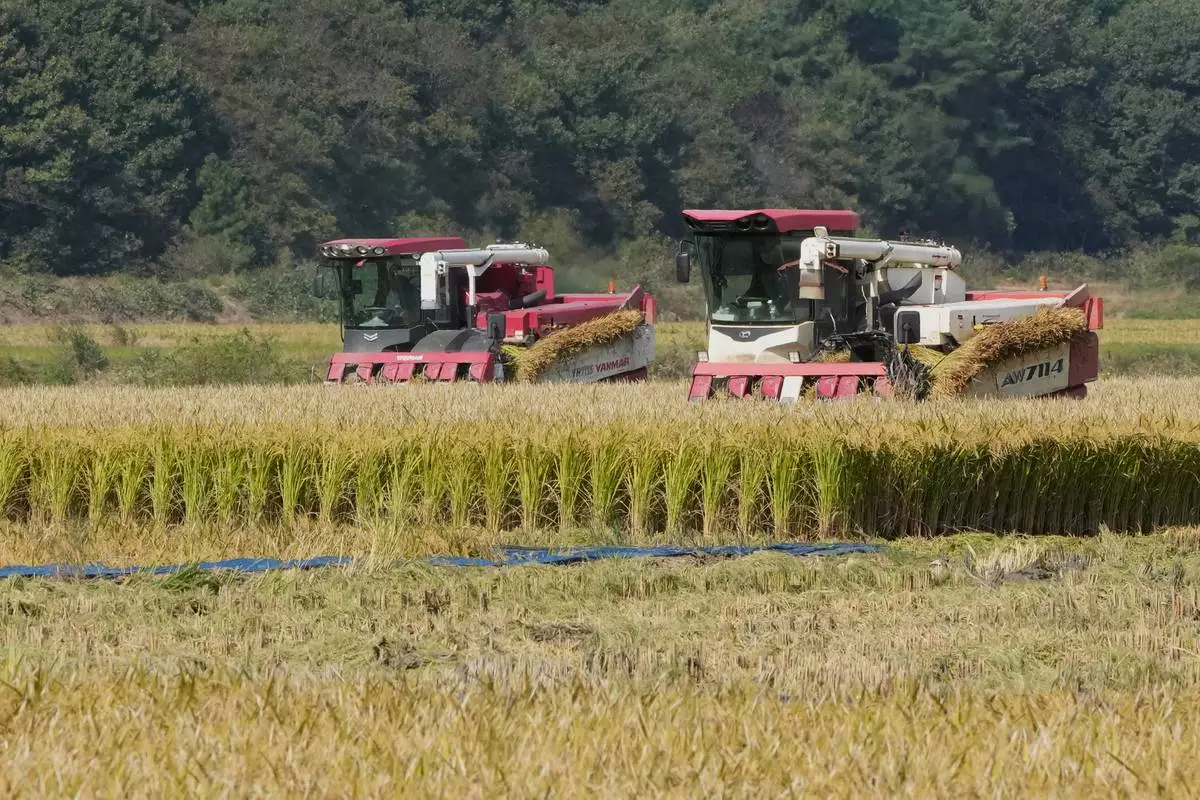
Farmers use combine harvesters at a rice paddy of farmer Hwang Seong-yeol in Seosan, South Korea, Monday, Oct. 20, 2025. (AP Photo/Ahn Young-joon)
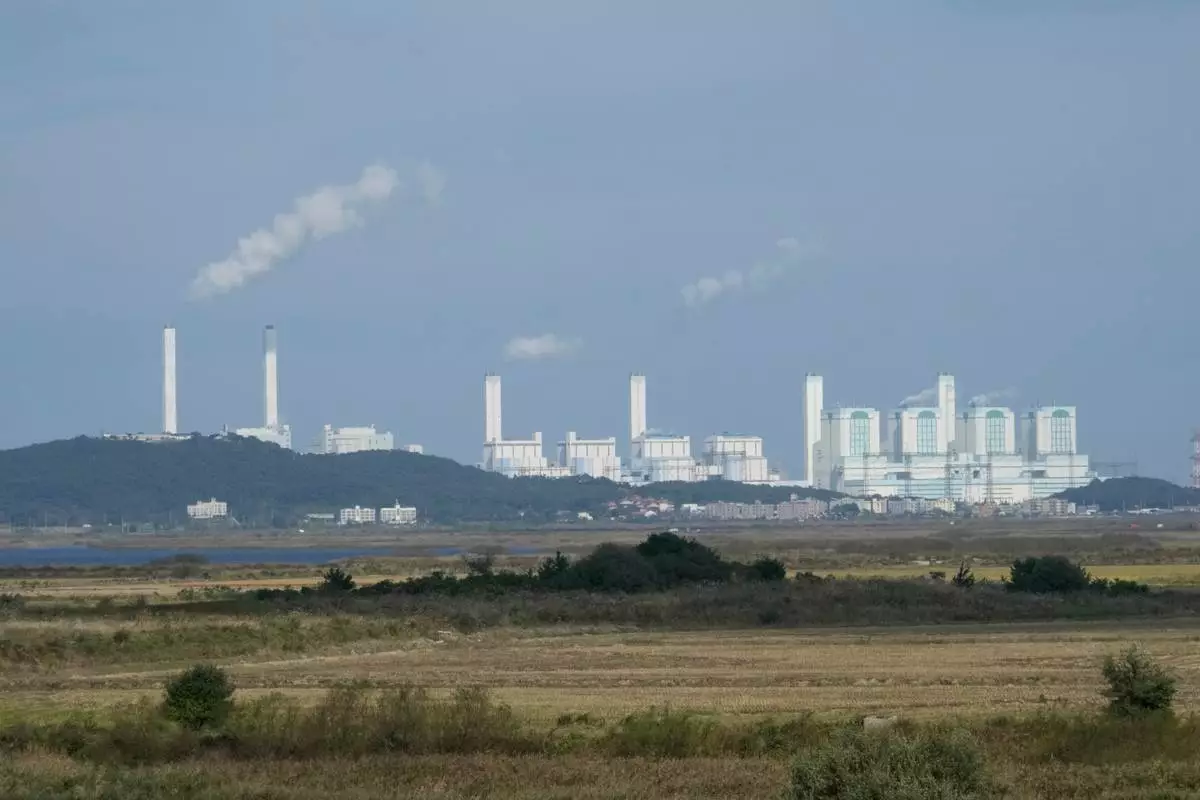
A general view of the Dangjin Power Station is seen in Dangjin, South Korea, Monday, Oct. 20, 2025. (AP Photo/Ahn Young-joon)
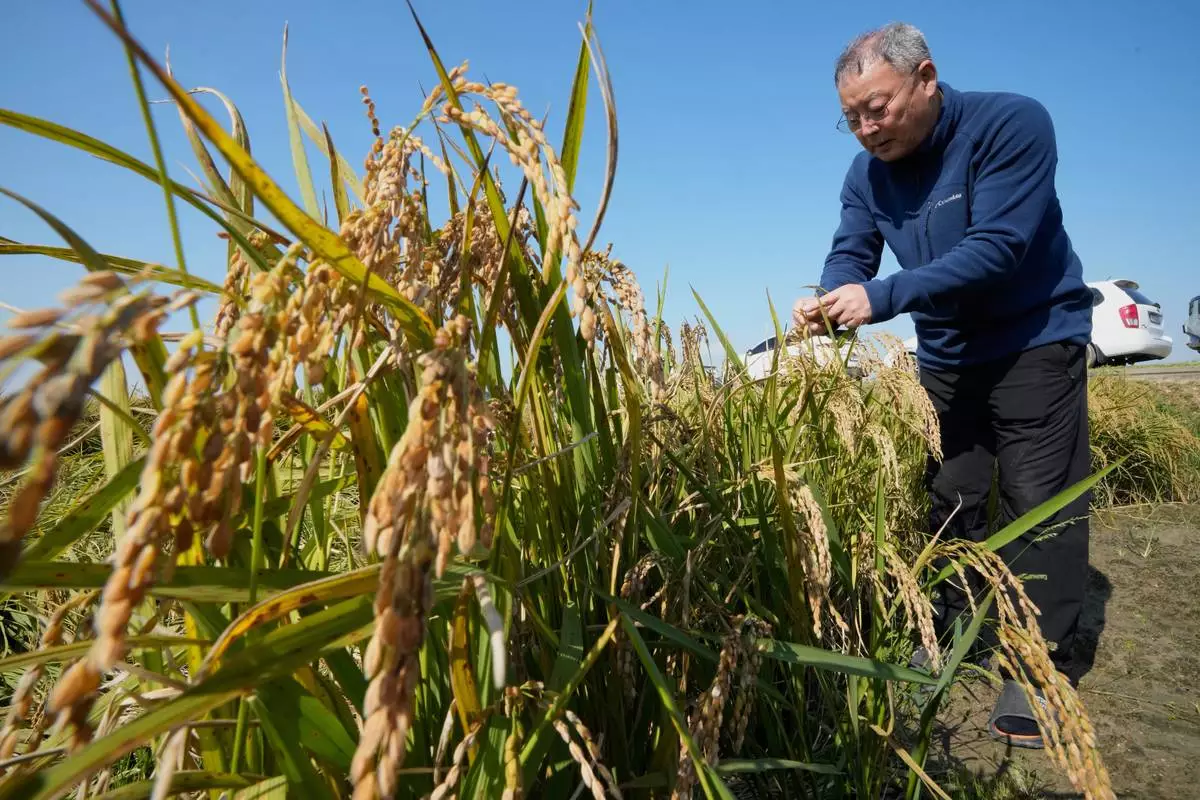
Hwang Seong-yeol, a South Korean rice farmer, watches crops damaged by a fungal disease that spread during an abnormally rainy autumn at his rice paddy in Seosan, South Korea, Monday, Oct. 20, 2025. (AP Photo/Ahn Young-joon)