Employment in China remained generally stable in October, with the urban surveyed unemployment staying well below the target of 5.5 percent set for the year, official data from the National Bureau of Statistics (NBS) showed on Friday.
Fu Linghui, spokesperson and chief economist of the NBS and director general of the Department of Comprehensive Statistics of the NBS, unveiled the data at a press conference.
"In October, the urban surveyed unemployment rate was 5.1 percent, 0.1 percentage points lower than that of the previous month. The surveyed unemployment rate of population with local household registration was 5.3 percent, and that of population with non-local household registration was 4.7 percent. The urban surveyed unemployment rate in 31 major cities was 0.1 percentage points lower than that of the previous month," said Fu.
"Despite the deepening adverse external influences and numerous challenges facing economic operations, China's employment situation has remained generally stable. There has been ongoing improvement in employment for key groups, which plays a crucial role in safeguarding livelihoods and promoting development," Fu added.
The country also previously set a target to create over 12 million urban jobs by the end of 2025. As of September, over 10.5 million had been created.
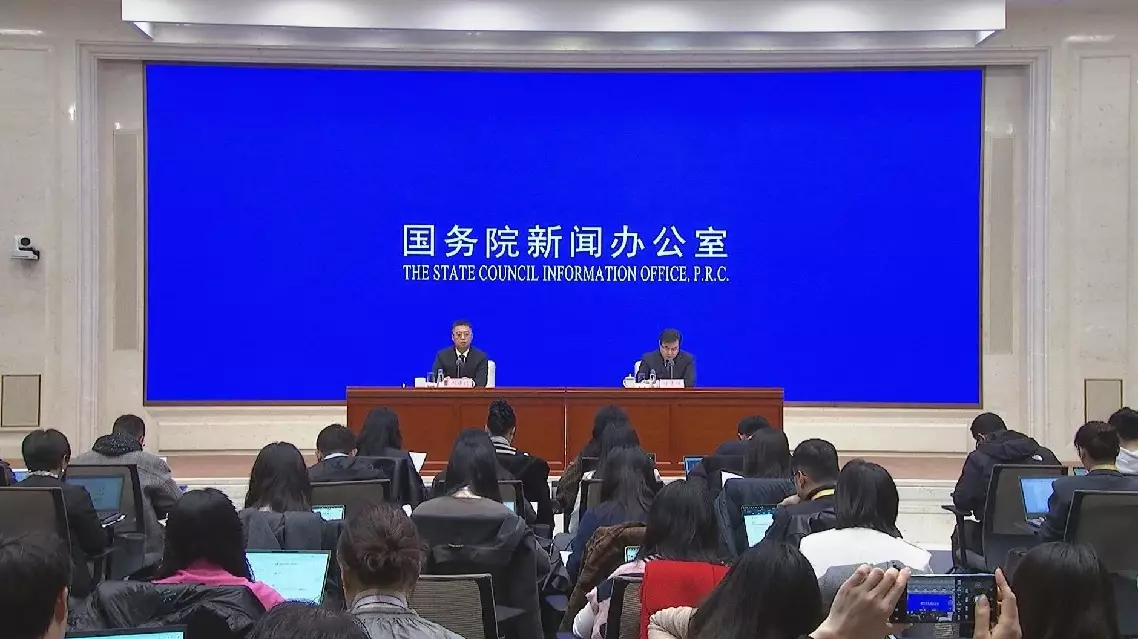
China’s urban surveyed unemployment rate down 0.1 percentage points in October
Myanmar President Min Aung Hlaing has lauded the achievements of China's modernization drive, noting that its development model offers valuable lessons for Myanmar to learn from.
He made the comments in an interview with China Media Group in Beijing on Wednesday, during his five-day state visit to China which ended on Friday. The trip marked his 13th visit to the country and his first since assuming the office of president.
During his extensive past tours, Min Aung Hlaing visited multiple Chinese provinces and cities, gaining firsthand insight into the nation's sweeping modernization efforts.
"Since entering the new era, China has made remarkable progress, and this is clear for all to see. China is developing at a rapid pace, and I often see news reports about China's technological innovation. China's younger generation is diligent and enterprising. They are the main force driving the country's development. I have visited many provinces and cities in China, and development achievements can be seen across the country, not only in the places you mentioned. In addition, China's development is relatively balanced. For example, Beijing, Shanghai, Chongqing and Guangzhou are roughly on par in terms of development, with only slight differences among them. Therefore, China's development model is worth learning from," said Min Aung Hlaing.
He outlined a wide array of high-value sectors ripe for expanded partnership, including advanced engineering, electronics, aerospace, agriculture, and industrial manufacturing.
"China offers valuable lessons for Myanmar in many fields. Infrastructure development is one key area where the two sides should focus their cooperation. Besides, China has advanced engineering, electronics, aerospace, seed breeding, and industrial manufacturing - all of which offer significant cooperation opportunities. We should continue to broaden the scope of Myanmar-China cooperation, while also increasing investment between the two sides and expanding the scale of bilateral trade," said the president.
China has been Myanmar's largest trading partner for many years, as well as its largest source of imports and most important source of investment. Bilateral trade reached 19.4 billion U.S. dollars in 2025, up 19.1 percent year on year, according to official data.

Myanmar president hails China's modernization achievements, calls for expanded cooperation