Skip to Content Facebook Feature Image

Naturalized US citizens thought they were safe. Trump's immigration policies are shaking that belief

News

Naturalized US citizens thought they were safe. Trump's immigration policies are shaking that belief
News

News

Naturalized US citizens thought they were safe. Trump's immigration policies are shaking that belief

2025-11-16 04:37 Last Updated At:04:40

NEW YORK (AP) — When he first came to the United States after escaping civil war in Sierra Leone and spending almost a decade in a refugee camp, Dauda Sesay had no idea he could become a citizen. But he was told that if he followed the rules and stayed out of trouble, after some years he could apply. As a U.S. citizen, he would have protection.

It’s what made him decide to apply: the premise — and the promise — that when he became a naturalized American citizen, it would create a bond between him and his new home. He would have rights as well as responsibilities, like voting, that, as he was making a commitment to the country, the country was making one to him.

More Images
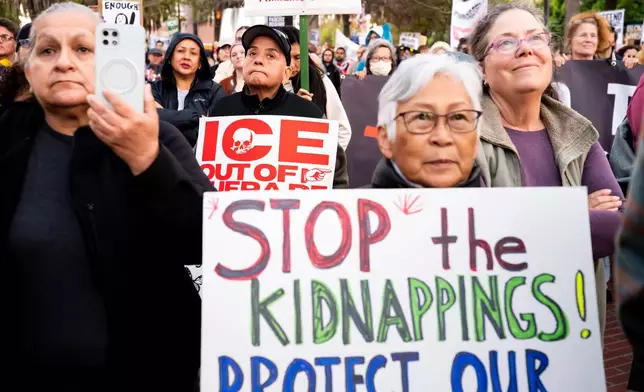
FILE - Protesters rally against immigration raids in San Francisco on Thursday, Oct. 23, 2025. (AP Photo/Noah Berger, File)

FILE - Protesters rally against immigration raids in San Francisco on Thursday, Oct. 23, 2025. (AP Photo/Noah Berger, File)

FILE - Immigration and Customs Enforcement agents escort a detained immigrant into an elevator after he exited an immigration courtroom, Tuesday, June 17, 2025, in New York. (AP Photo/Olga Fedorova, File)

FILE - Immigration and Customs Enforcement agents escort a detained immigrant into an elevator after he exited an immigration courtroom, Tuesday, June 17, 2025, in New York. (AP Photo/Olga Fedorova, File)

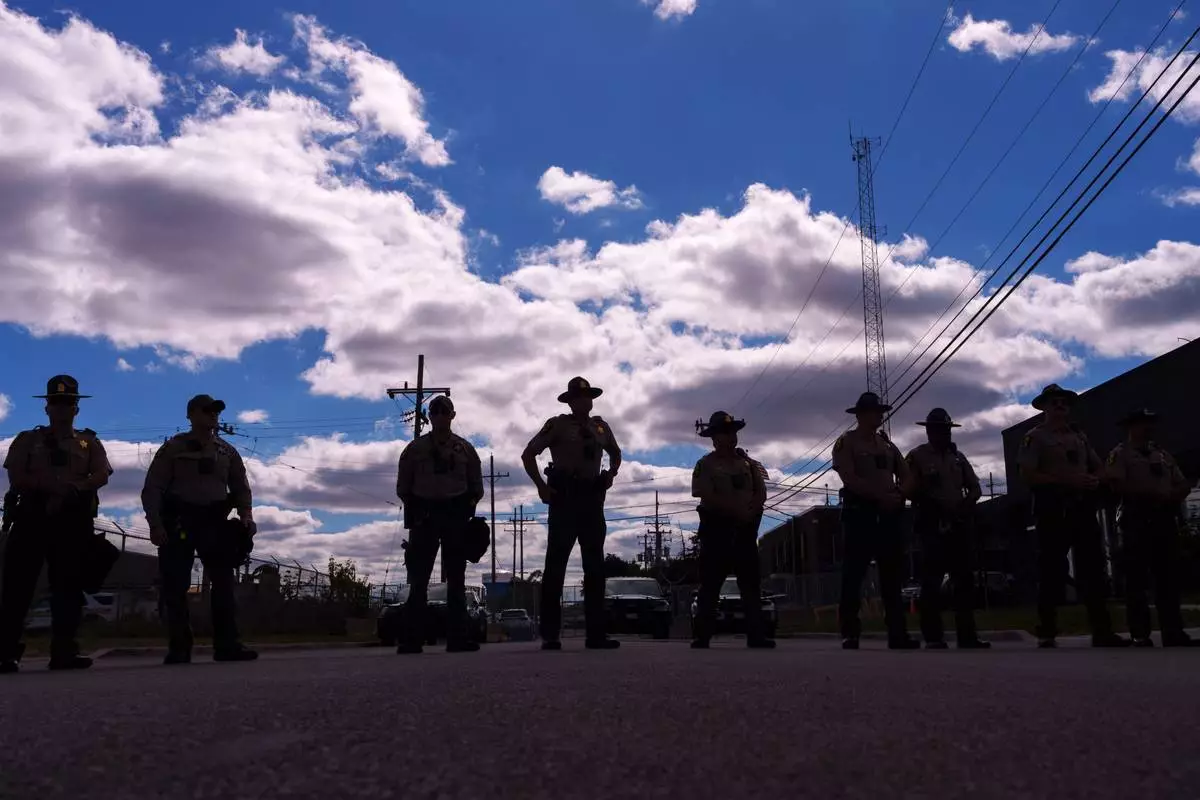
FILE - Illinois State Police stand guard as people including members of the Coalition for Spiritual and Public Leadership (CSPL) gather outside a U.S. Immigration and Customs Enforcement facility in Broadview, Ill., Saturday, Oct. 11, 2025. (AP Photo/Adam Gray, File)

FILE - Illinois State Police stand guard as people including members of the Coalition for Spiritual and Public Leadership (CSPL) gather outside a U.S. Immigration and Customs Enforcement facility in Broadview, Ill., Saturday, Oct. 11, 2025. (AP Photo/Adam Gray, File)

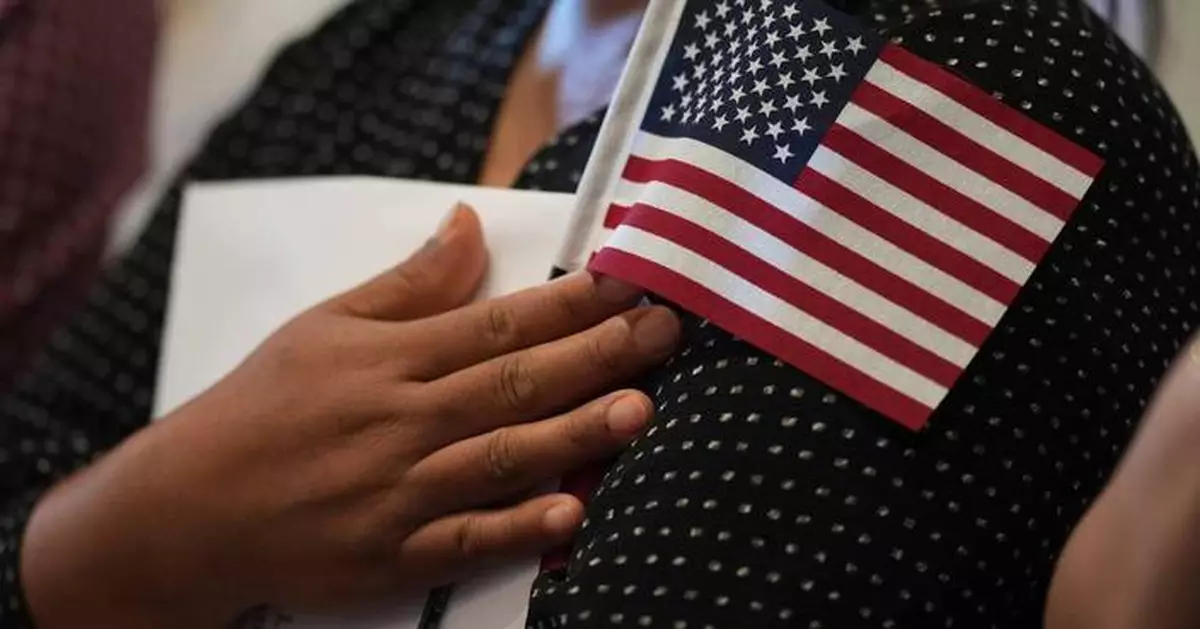
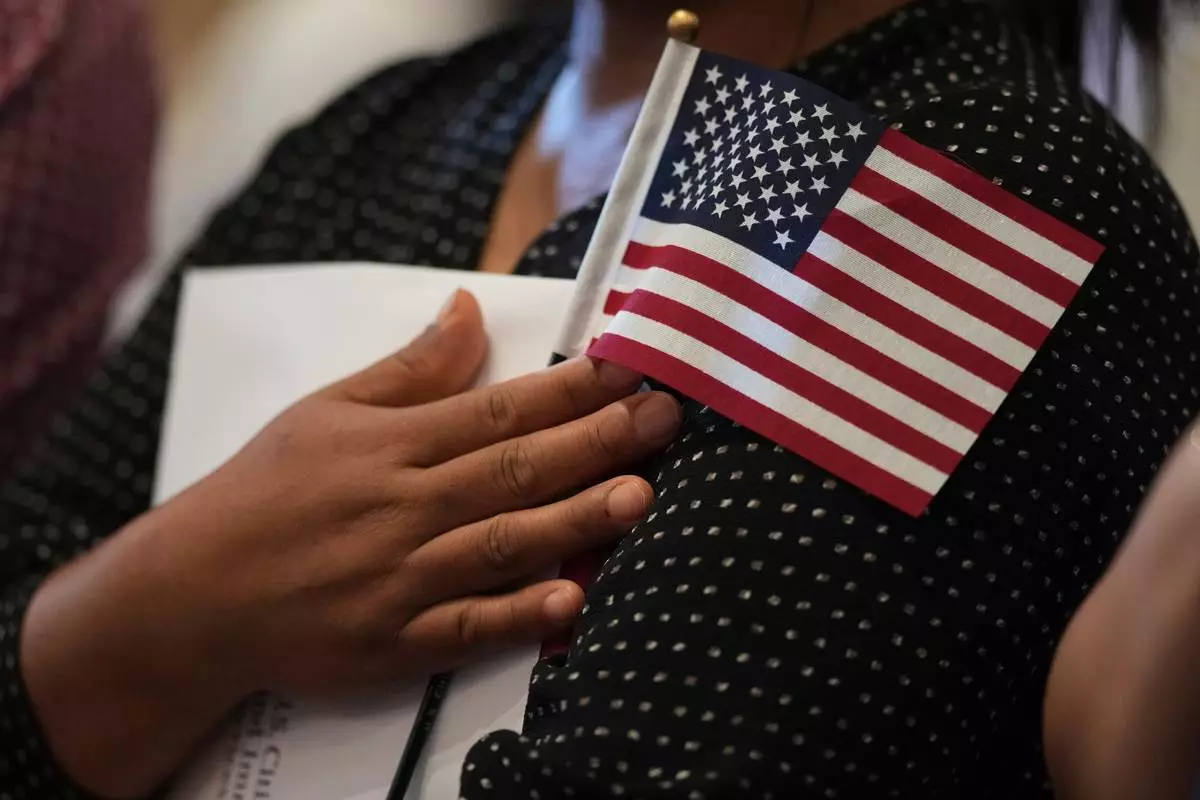
FILE - A woman clutches a U.S. flag as she and applicants from other countries prepare to take the oath of citizenship in commemoration of Independence Day during a Naturalization Ceremony in San Antonio, July 3, 2025. (AP Photo/Eric Gay, File)

FILE - A woman clutches a U.S. flag as she and applicants from other countries prepare to take the oath of citizenship in commemoration of Independence Day during a Naturalization Ceremony in San Antonio, July 3, 2025. (AP Photo/Eric Gay, File)

“When I raised my hand and took the oath of allegiance, I did believe that moment the promise that I belonged,” said Sesay, 48, who first arrived in Louisiana more than 15 years ago and now works as an advocate for refugees and their integration into American society.

But in recent months, as President Donald Trump reshapes immigration and the country's relationship with immigrants, that belief has been shaken for Sesay and other naturalized citizens. There's now fear that the push to drastically increase deportations and shift who can claim America as home, through things like trying to end birthright citizenship, is having a ripple effect.

What they thought was the bedrock protection of naturalization now feels more like quicksand.

Some are worried that if they leave the country, they will have difficulties when trying to return, fearful because of accounts of naturalized citizens being questioned or detained by U.S. border agents. They wonder: Do they need to lock down their phones to protect their privacy? Others are hesitant about moving around within the country, after stories like that of a U.S. citizen accused of being here illegally and detained even after his mother produced his birth certificate.

There has been no evidence of an uptick in denaturalizations so far in this Trump administration. Yet that hasn't assuaged some. Sesay said he doesn't travel domestically anymore without his passport, despite having a REAL ID with its federally mandated, stringent identity requirements.

Immigration enforcement roundups, often conducted by masked, unidentifiable federal agents in places including Chicago and New York City, have at times included American citizens in their dragnets. One U.S. citizen who says he was detained by immigration agents twice has filed a federal lawsuit.

Adding to the worries, the Justice Department issued a memo this summer saying it would ramp up efforts to denaturalize immigrants who’ve committed crimes or are deemed to present a national security risk. At one point during the summer, Trump threatened the citizenship of Zohran Mamdani, the 34-year-old democratic socialist mayor-elect of New York City, who naturalized as a young adult.

The atmosphere makes some worried to speak about it publicly, for fear of drawing negative attention to themselves. Requests for comment through several community organizations and other connections found no takers willing to go on the record other than Sesay.

In New Mexico, state Sen. Cindy Nava says she's familiar with the fear, having grown up undocumented before getting DACA — Deferred Action for Childhood Arrivals, the Obama-era program that protected people brought to the U.S. as children from being deported — and gaining citizenship through her marriage. But she hadn't expected to see so much fear among naturalized citizens.

“I had never seen those folks be afraid ... now the folks that I know that were not afraid before, now they are uncertain of what their status holds in terms of a safety net for them," Nava said.

What citizenship has meant, and who was included, has expanded and contracted over the course of American history, said Stephen Kantrowitz, professor of history at the University of Wisconsin-Madison. He said while the word “citizen” is in the original Constitution, it is not defined.

“When the Constitution is written, nobody knows what citizenship means,” he said. “It’s a term of art, it comes out of the French revolutionary tradition. It sort of suggests an equality of the members of a political community, and it has some implications for the right to be a member of that political community. But it is ... so undefined.”

The first naturalization law passed in 1790 by the new country’s Congress said citizenship was for any “free white person” of good character. Those of African descent or nativity were added as a specific category to federal immigration law after the ravages of the Civil War in the 19th century, which was also when the 14th Amendment was added to the Constitution to establish birthright citizenship.

In the last years of the 19th century and into the 20th century, laws were put on the books limiting immigration and, by extension, naturalization. The Immigration Act of 1924 effectively barred people from Asia because they were ineligible for naturalization, being neither white nor Black. That didn't change until 1952, when an immigration law removed racial restrictions on who could be naturalized. The 1965 Immigration and Naturalization Act replaced the previous immigration system with one that portioned out visas equally among nations.

American history also includes times when those who had citizenship had it taken away, like after the 1923 Supreme Court ruling in U.S. vs. Bhagat Singh Thind. That ruling said that Indians couldn't be naturalized because they did not qualify as white and led to several dozen denaturalizations. At other times, it was ignored, as in World War II, when Japanese Americans were forced into internment camps.

“Political power will sometimes simply decide that a group of people, or a person or a family isn’t entitled to citizenship,” Kantrowitz said.

In this moment, Sesay says, it feels like betrayal.

“The United States of America — that’s what I took that oath of allegiance, that’s what I make commitment to,” Sesay said. “Now, inside my home country, and I’m seeing a shift. ... Honestly, that is not the America I believe in when I put my hand over my heart.”

This story has been corrected to reflect that Dauda Sesay is 48 years old, not 44.

FILE - Protesters rally against immigration raids in San Francisco on Thursday, Oct. 23, 2025. (AP Photo/Noah Berger, File)

FILE - Protesters rally against immigration raids in San Francisco on Thursday, Oct. 23, 2025. (AP Photo/Noah Berger, File)

FILE - Immigration and Customs Enforcement agents escort a detained immigrant into an elevator after he exited an immigration courtroom, Tuesday, June 17, 2025, in New York. (AP Photo/Olga Fedorova, File)
FILE - Immigration and Customs Enforcement agents escort a detained immigrant into an elevator after he exited an immigration courtroom, Tuesday, June 17, 2025, in New York. (AP Photo/Olga Fedorova, File)

FILE - Illinois State Police stand guard as people including members of the Coalition for Spiritual and Public Leadership (CSPL) gather outside a U.S. Immigration and Customs Enforcement facility in Broadview, Ill., Saturday, Oct. 11, 2025. (AP Photo/Adam Gray, File)
FILE - Illinois State Police stand guard as people including members of the Coalition for Spiritual and Public Leadership (CSPL) gather outside a U.S. Immigration and Customs Enforcement facility in Broadview, Ill., Saturday, Oct. 11, 2025. (AP Photo/Adam Gray, File)

FILE - A woman clutches a U.S. flag as she and applicants from other countries prepare to take the oath of citizenship in commemoration of Independence Day during a Naturalization Ceremony in San Antonio, July 3, 2025. (AP Photo/Eric Gay, File)

FILE - A woman clutches a U.S. flag as she and applicants from other countries prepare to take the oath of citizenship in commemoration of Independence Day during a Naturalization Ceremony in San Antonio, July 3, 2025. (AP Photo/Eric Gay, File)
LAGOS, Nigeria (AP) — Benin has joined a growing list of African countries where military officers have seized power since 2020. The military takeover lasted several hours on Sunday before officials announced it was foiled.

In a familiar scene across West Africa, a group of soldiers appeared on Benin ’s state TV on Sunday announcing the removal of President Patrice Talon and the dissolution of the government following the swift takeover of power.

Hours later, Benin's Interior Minister Alassane Seidou said in a video shared online that the coup was foiled. The soldiers in question “launched a mutiny with the aim of destabilizing the state and its institutions,” Seidou said, adding that the military remained ”committed to the republic.”

Here is a timeline of coups in Africa, following a pattern of disputed elections, constitutional upheaval, security crises and youth discontent:

Since August 2020, Mali has witnessed two back-to-back coups. A group of soldiers mutinied and arrested senior military officers just outside the capital, Bamako, after weeks of protests by civilians demanding the then-president, Ibrahim Keïta, resign over accusations of corruption and failing to clamp down on armed groups.

Col. Assimi Goita, the military leader, entered into a power-sharing deal with Bah Ndaw, a civilian president, with Goita serving as the vice president of a so-called transitional government. In 2021, Goita overthrew Ndaw following a series of disagreements and installed himself as president. He postponed an election slated for 2022 to 2077.

Mali is one of a tripartite group of landlocked West African countries, along with Burkina Faso and Niger, run by military juntas that have now formed their own bloc after breaking from the Economic Community of West African states, and have firmly stated their objections to a return to democracy.

Following his father's death in 2021, Mahamat Idris Deby, an army general, quickly seized power, extending his family's three-decade rule of the central African nation.

Three years later, he delivered an election that he promised when he assumed power. Deby was declared the winner of the election, which the opposition claimed was rigged. He has since clamped down on critics. Former Prime Minister Succes Masra, an opposition figure, was sentenced to 20 years in prison earlier this year.

After 11 years in office, Alpha Conde was removed by a group of soldiers led by Mamady Doumbouya. In 2020, Conde had changed the constitution to allow himself to stand for a third term.

Doumbouya is running in the December polls and looking to shed his military fatigues, after a referendum this year allowed junta members to stand in elections and extended the presidential term limit from five to seven years.

The Sudanese military, led by Gen. Abdel-Fattah Burhan, staged a coup in October 2021, deposing Omar al-Bashir, who ruled the country for 26 years.

Burhan went on to share power with Muhammad Dangalo, known as Hedmeti, the leader of the paramilitary Rapid Support Forces.

In April 2023, a simmering feud between them led to one of the world's most catastrophic conflicts, according to the United Nations. The war is still going on.

Like its neighbor Mali, Burkina Faso also witnessed two successive coups. In January 2022, Roch Kaboré was ousted by Lt. Col. Paul-Henri Damiba. In September, Capt. Ibrahim Traoré, the head of an artillery unit of Burkina Faso army, ousted Damiba on the same pretext as the earlier coup — deteriorating security.

Traoré has since ruled the country. In July, he dissolved the independent electoral commission.

Gen. Abdourahamane Tchiani ousted Mohamed Bazoum, ending a rare democratic transition in Niger. The dramatic coup sparked a crisis in the regional ECOWAS bloc, which threatened to invade Niger if Bazoum was not installed and the country returned to democracy.

The crisis split the region, with Niger teaming with Burkina Faso and Mali to form a breakaway Alliance of Sahel States.

Shortly after President Ali Bongo, who had been in power for 14 years and had run for a third term, was declared the winner of an election in 2023, a group of soldiers appeared on television saying they were seizing power. They canceled the election and dissolved all state institutions.

Brice Oligui Nguema, a cousin of Bongo, took power and has since ruled Gabon. He was announced the winner of a presidential election in April.

Expressing their frustration over chronic water shortages and power outages, young people in Madagascar took to the streets to demand former President Andry Rajoelina’s resignation.

Rajoelina instead dissolved his government and refused to resign, leading to a military takeover of the southern African country.

On Nov. 26, Soldiers in Guinea-Bissau followed up a disputed presidential election three days earlier by seizing power. Critics including the opposition called the coup a staged takeover to avoid having the incumbent lose the election.

Incumbent President Umaro Sissoco Embaló and the main opposition candidate, Fernando Dias, both claimed to have won the Nov. 23 presidential election.

Embaló was released and allowed to flee to neighboring Senegal, from where he has since departed. The new military junta made appointments, several of them allies of the deposed president.

Less than two weeks after the coup in Guinea-Bissau, soldiers staged a similar takeover in Benin that followed gunshots heard near the presidential palace.

A group of soldiers, which called itself the Military Committee for Refoundation, appeared on state TV announcing that the West African nation's leader, Talon, has been removed and state institutions dissolved.

The soldiers appointed Lt. Col. Pascal Tigri as president of the military committee.

Hours later, officials said the coup was foiled by the armed forces and that the military remained ”committed to the republic.”

FILE - Benin's President Patrice Talon attends a meeting with Brazilian President Luiz Inacio Lula da Silva at Planalto presidential palace in Brasilia, Brazil, on May 23, 2024. (AP Photo/Eraldo Peres, File)

FILE - Benin's President Patrice Talon attends a meeting with Brazilian President Luiz Inacio Lula da Silva at Planalto presidential palace in Brasilia, Brazil, on May 23, 2024. (AP Photo/Eraldo Peres, File)

Recommended Articles