Skip to Content Facebook Feature Image

Mass displacement, worsening hunger in Sudan as civil war persists

HotTV

HotTV

HotTV

Mass displacement, worsening hunger in Sudan as civil war persists

2025-11-17 15:15 Last Updated At:11-18 12:19

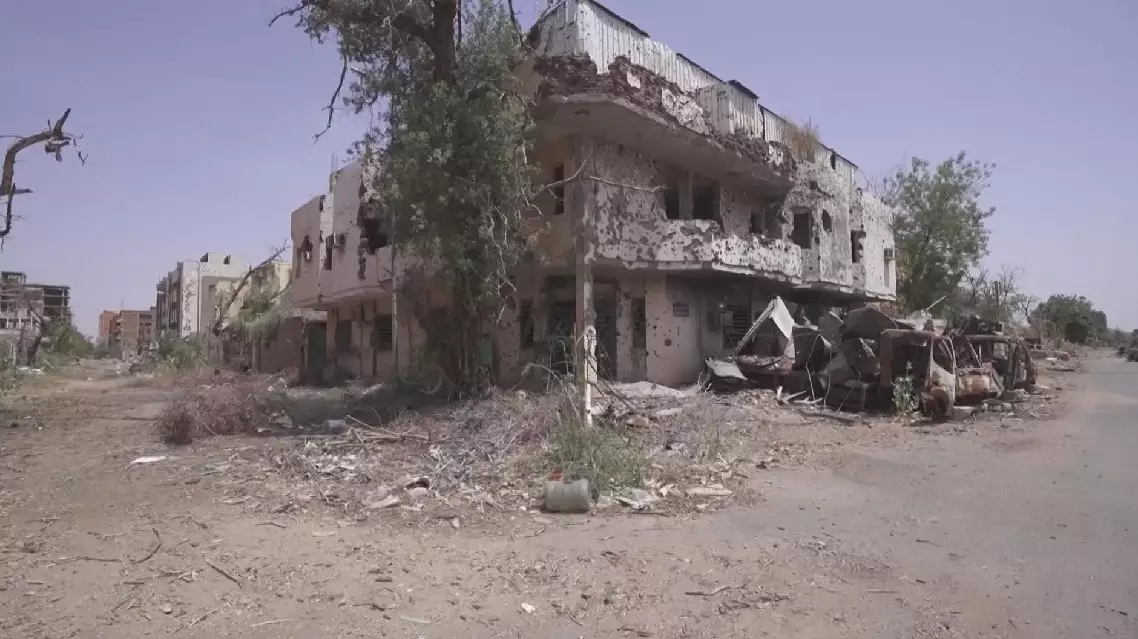
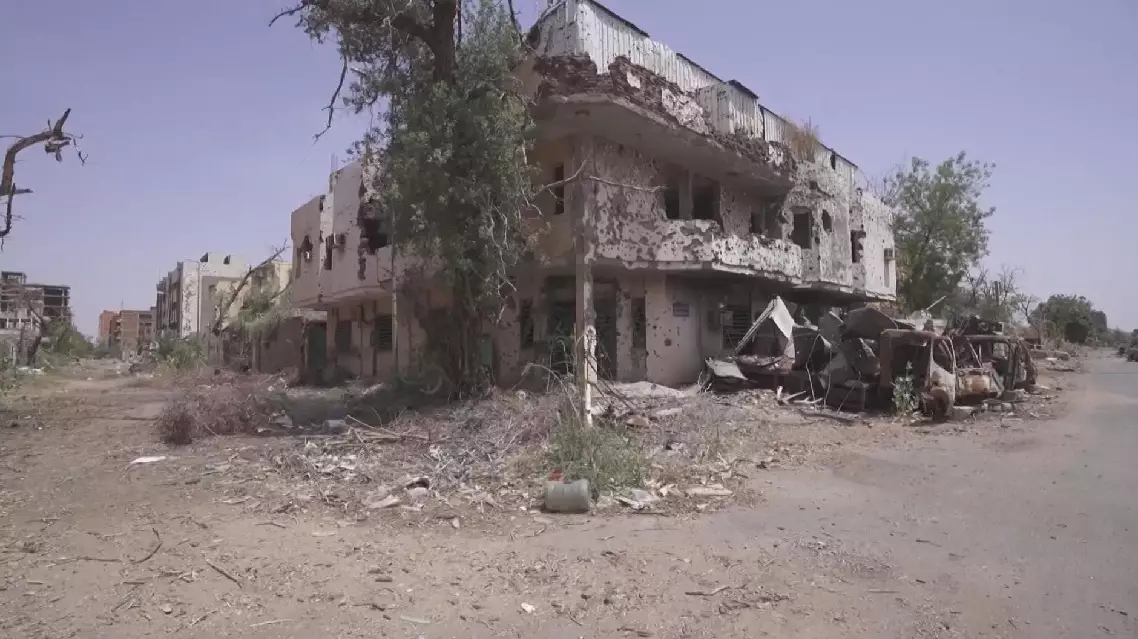
A prolonged civil war that has raged for over two and a half years in Sudan has killed tens of thousands, displaced millions, pushed much of the country to the brink of famine, and reduced once-thriving cities to rubble.

Since the armed conflict between the Sudanese Armed Forces (SAF) and the paramilitary Rapid Support Forces (RSF) erupted on April 15, 2023, the capital city of Khartoum has seen families uprooted, severe shortages of food, and disease outbreaks, in addition to the many casualties during the fighting. Repeated ceasefire calls from the United Nations and regional mediators have failed to bring calm to the country.

"The capital has been occupied by the RSF militia for two years. This prevented any efforts to defeat the epidemic, and even the medical staff were targeted and killed. What I say is that the main reason for the spread of epidemic is the accumulation of the RSF actions. Not only that they rarely prevent the spread of the epidemic, but also they don't put any efforts in aiding those who are injured," said a Sudanese health official Mohamed Altigani.

With hospitals shut down and aid convoys struggling to reach conflict zones, civilians bear the heaviest cost.

"We need more aid and more food supplies. One meal a day is not enough. Sometimes kind charitable people bring lamb or beef, but it's still very few for our basic needs," said Najat Adam, a displaced Sudanese.

For families like hers, Port Sudan offers only fragile safety -- far from the frontlines, but even farther from home.

Elsewhere, the conflict shows no sign of easing, with clashes in the western city of El Fasher further compounding an already desperate humanitarian and health situation. El Fasher, the Sudanese army's last stronghold in the vast Darfur region, has been under intense siege by the RSF since last year.

"What happened in El Fasher is part of what has been happening there for many years. It has always suffered massacres for long periods [of time] in a systematic and organized way by the RSF," said Mohamed Mohamedu, a local journalist.

Valerie Guarnieri, Assistant Executive Director for Program Operations at the World Food Program (WFP), described acute levels of hunger in the region, warning that one-quarter of the population faces extreme deprivation.

"Our assessment shows that everyone is hungry in El Fasher, and one in four people faces extreme hunger. WFP has warned that many families trapped in El Fasher are on the brink of starvation," she said.
Mass displacement, worsening hunger in Sudan as civil war persists
Mass displacement, worsening hunger in Sudan as civil war persists


Mass displacement, worsening hunger in Sudan as civil war persists

Mass displacement, worsening hunger in Sudan as civil war persists

China released the outline of its 15th Five-Year Plan on Friday, highlighting digital intelligence development and high-quality population development as vital drivers of economic and social progress.

Including dedicated sections on the two themes, the plan calls for greater efforts to facilitate AI applications and establish life cycle care to safeguard the people's right to development.

Compared with the 14th Five-Year Plan, which focused on accelerating digitalization, the new concept of "digital intelligence development" places greater emphasis on the integration of artificial intelligence with the real economy, according to a macro economy expert.

"While the previous five-year plan caught the wave of digitalization, the new plan is embracing a new wave. As we all know, the new round of science and technology revolution, featuring the rapid development of AI, is thriving. The 15th five-year plan elaborates in a separate chapter how China can respond to the new trend of science and technology and industrial development. Compared with the previous plan, which emphasized 'digital economy,' the new plan highlights 'new intelligent economic forms,' which requires AI to be integrated into all aspects of economic development and to better empower growth. This will be an important direction for the future," said Dong Yu, Executive Deputy Director of the China Institute for Development Planning at Tsinghua University.

The plan also places new emphasis on high-quality population development, dedicating a separate section to supporting policies throughout the life cycle of its citizens based on China's long-term demographic trends.

"The role of human factors in China's development is becoming increasingly prominent. Economic work now places greater emphasis on combining investment in physical assets with investment in people. By dedicating a separate chapter to population issues, the plan is not focusing solely on birth rates. More importantly, it aims to build a full-chain support system covering needs from birth to growth to elderly care. The tasks laid out in the plan will match these needs, ensuring that the principle of putting people first is reflected across every stage of human development," said Dong.

China’s 15th five-year plan underscores digital intelligence, high-quality population development

China’s 15th five-year plan underscores digital intelligence, high-quality population development

Recommended Articles